
Mastering the Art of AI and Human Collaboration in Writing
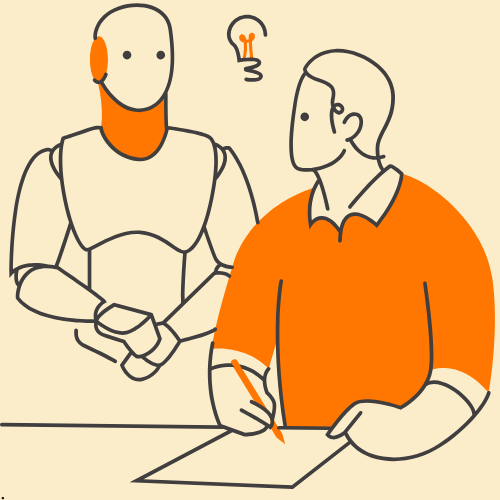
Writing has always been a creative endeavor tied to human intuition, insight, and storytelling. But in the digital age, a new collaborator has entered the scene:
Artificial intelligence.
AI-powered tools like Grammarly, StoryLab.ai, and ChatGPT are revolutionizing the way individuals and businesses approach content creation. The question is no longer whether AI can assist writers but how writers can leverage AI to create impactful, engaging, and high-quality content.
AI’s versatility extends to various specialized fields of writing, offering tailored solutions to meet unique needs. For instance, students and researchers can benefit from tools that enhance their academic work.. By streamlining research, organizing data, or suggesting improvements in tone and clarity, AI empowers users to elevate the quality of their output while saving valuable time.
This article explores how human writers and AI can work harmoniously to enhance creativity, improve efficiency, and produce exceptional results. Whether you’re a seasoned writer, a marketer, or a business leader looking to refine your content strategy, this guide will help you master the art of AI and human collaboration in writing.
Chapters
Understanding the Strengths of AI in Writing
AI has transformed many industries, like a custom dissertation writing service that provides personalized guidance on complex projects, and writing is no exception. To fully grasp how AI and humans can collaborate effectively, it’s vital to understand the unique strengths AI brings to the table.
Speed and Efficiency
One of the most evident advantages AI offers is speed:
AI algorithms can analyze data, generate drafts, and check grammar in a fraction of the time it would take a human. It allows writers to tackle tight deadlines and high content demands without compromising quality.
- Example: AI-powered tools can generate outlines or initial drafts for blog posts, saving hours of preliminary research and brainstorming.
Grammar and Style Accuracy
AI tools excel at spotting errors and inconsistencies that humans may overlook:
From simple spelling mistakes to complex grammatical issues, AI ensures polished and professional content every time.
- Example: Grammarly and ProWritingAid check not only for syntax errors but also for tone consistency, word choice, and sentence structure, helping writers refine their style.
Data-Driven Insights
AI can quickly analyze vast amounts of data to uncover trends and patterns:
Writers can use these insights to shape their content strategy, target audience preferences, and SEO optimization.
- Example: AI tools like Clearscope and SurferSEO suggest keywords and topic ideas based on search trends, helping you create content that ranks high on Google.
Personalization and Scalability
AI can personalize content based on audience segments using user behavior and preferences patterns. It also allows businesses to scale content production while maintaining a consistent brand voice.
- Example: AI-generated email templates or chatbot responses can be tailored to individual customers, enhancing engagement and conversions.
Despite these impressive strengths, it’s essential to recognize that AI is not a writer. It lacks creativity, empathy, and the ability to understand cultural nuance – all crucial to crafting meaningful content. And that’s where human expertise comes in.
The Role of Human Creativity in Writing
While AI might excel at efficiency and data processing, human creativity and emotional intelligence remain unmatched. These qualities are what give content its storytelling power and unique voice.
Emotional Depth and Engagement
Humans can tap into emotions, layering stories with authenticity and relatability. Thoughtful anecdotes or personal experiences can forge deeper connections with the audience – an area where AI struggles to perform.
- Example: A brand campaign built around personal customer stories demonstrates empathy and relatability and is far more effective than AI-curated data.
Context and Cultural Sensitivity
Humans understand the cultural nuances, idioms, and subtexts of language. That enables writers to craft content that resonates with specific demographics without misinformation or offensive oversights.
- Example: A social media manager using native humor in regional campaigns can adapt phrasing that feels relevant to local audiences, unlike AI, which may miss subtle cultural markers.
Creative Problem-Solving
Unlike AI, which relies on existing data, humans excel at out-of-the-box thinking and ideation. They can experiment with new narratives, formats, and wordplay.
- Example: Crafting brand taglines like Nike’s “Just Do It” requires nuance, wit, and cultural resonance that AI cannot replicate.
Ethical Decision-Making
Content creation often involves sensitive topics requiring ethical responsibility. Humans are better equipped to evaluate moral considerations and ensure content aligns with organizational values.
By combining these uniquely human traits with AI’s technological strengths, writers and marketers can strike the perfect balance between efficiency and authenticity.
Steps to Perfecting AI and Human Collaboration

Clarity and strategy are essential to effectively collaborating with AI tools in your workflow. Here are six actionable steps to master the art of AI-human teamwork in writing:
1. Define Your Objectives
Before incorporating AI, determine what you want to achieve. Are you looking to save time, improve grammar, optimize for SEO, or generate ideas? A clear objective will guide how you use AI.
2. Use AI as an Assistant, Not a Replacement
AI is an excellent tool for augmenting human effort, but please don’t view it as a substitute for human creativity. Use AI for routine tasks – such as generating outlines, proofreading, or finding data points – so you can focus on bigger-picture elements like ideation and storytelling.
3. Train Your AI Tools
Many AI tools, such as Jasper or ChatGPT, learn and improve based on the input they receive. Provide specific instructions or examples to train the AI on your style, brand tone, and audience preferences.
- Example: When using AI to write product descriptions, supply it with detailed guidelines about your audience’s buying behavior, preferred tone of voice, and key features.
4. Review and Edit Thoroughly
Ensure that humans are always involved in reviewing AI-generated content. This step is critical for maintaining quality, catching errors, and adding the creative or emotional dimension that AI lacks.
5. Experiment and Iterate
Don’t be afraid to test AI in different writing scenarios to determine what works best for your needs. Experimentation will also reveal the limitations of AI and identify areas where human input is essential.
6. Stay Ethical and Transparent
AI in writing raises questions about originality and authenticity. Be upfront with your audience about when AI tools are used, particularly for creative or sensitive projects.
- Example: Mark ethical usage by including disclaimers, such as “This article was created with assistance from AI and thoroughly reviewed by our editorial team.”
Examples of Successful AI and Human Collaboration
Several companies are successfully blending AI-driven technology with human input for remarkable results:
- The Washington Post uses AI-powered robots like Heliograf to generate data-heavy, straightforward news reports. Human editors then refine the content for tone and accuracy.
- Associated Press leverages AI to generate sports and financial updates, freeing their journalists to focus on in-depth investigative reporting.
- Small Businesses often use AI tools like Canva to design social media graphics or Jasper to create ad copy, all with a personal touch from their creators.
These examples show how human judgment adds immeasurable value to AI’s efficiency.
Elevate Your Writing Game with AI
AI tools have opened up exciting possibilities for writers and content creators, enabling a balance of efficiency and creativity. But it’s the harmonious collaboration between human expertise and artificial intelligence that leads to outstanding results.
Are you ready to explore the possibilities of AI in your writing process? Experiment with AI tools and see how they can complement your creative strengths. Remember, the power of AI lies in how we choose to use it.
Unlock your potential by combining the best of both worlds – human ingenuity and machine intelligence.
FAQ
What does AI–human collaboration in writing mean?
It means writers and AI tools work together—AI generates ideas, drafts, or prompts, while humans refine voice, context, accuracy, and creative tone for polished content.
How can AI support writers without replacing them?
AI boosts inspiration, handles repetitive tasks, and speeds up drafting. Writers retain control, adding nuance, emotional resonance, and strategic intent to the output.
What parts of the writing process benefit most from AI collaboration?
AI helps with brainstorming ideas, creating outlines, drafting sections, generating headlines, summarizing content, and suggesting structure or tone adjustments.
How do writers maintain their unique voice when working with AI?
By customizing prompts, editing outputs generously, injecting authentic stories or experiences, and reviewing tone to ensure consistency with their own style.
Can AI help improve writing quality?
Yes. AI tools can enhance grammar, clarity, flow, vocabulary, and perception of structure—especially when the writer provides feedback and works iteratively.
What are risks of relying too much on AI in writing?
Risks include generic phrasing, lack of originality, tone mismatch, factual errors, and potential disconnect from authentic human voice unless editing is applied.
Are there ethical considerations in using AI for writing?
Yes. Writers should disclose AI-assisted content where relevant, avoid plagiarism risks, respect data privacy, and ensure outputs are factual and responsibly sourced.
How does the collaboration process typically work?
Writers define goals and prompts, AI generates text, writers review and revise, then finalize the draft with human polish and brand alignment.
Can AI support different writing formats?
Absolutely. AI tools work with marketing copy, articles, scripts, social media captions, emails, technical content, storytelling, and more—tailored by format prompts.
How do writers balance AI suggestions with creativity?
They treat AI output as inspiration, not prescription—using prompts to spark ideas, then reshaping AI-generated drafts into meaningful and original stories.
How can AI help overcome writer’s block?
AI offers instant prompts, topic angles, outline starters, dialogue ideas, or scene suggestions to help writers start writing without staring at a blank page.
How do writers ensure factual accuracy in AI‑assisted text?
They verify references, check data points manually, compare with trusted sources, and adjust or remove incorrect claims from the AI-generated draft.
Can AI improve writing workflow efficiency?
Yes. AI reduces drafting cycles, speeds iterations, automates formatting, and provides instant feedback—helping writers focus more on creative refinement.
How do writers maintain consistency across longer content?
Using prompts to keep tone, voice, and structure consistent and manually monitoring flow through drafts ensures uniformity across chapters or sections.
What role does human editing play in AI-human collaboration?
Human editing ensures emotional resonance, logical flow, storytelling depth, factual clarity, and alignment with audience expectations and brand identity.
How does AI adapt to different writer personas?
AI can learn from tone samples or guidelines and match writing style, vocabulary, pacing, and voice for different personas like brand voice or target audience tone.
What guidelines help writers use AI responsibly?
Define ethical boundaries, review outputs carefully, secure data used in prompts, update prompts for bias reduction, and stay transparent about AI involvement.
Can this collaboration model scale across content projects?
Yes. Once prompts and workflows are set, teams can generate consistent drafts quickly across campaigns, saving time while maintaining quality.
How do writers collect feedback on AI collaborations?
They solicit peer reviews, edit logs, audience engagement data, or client feedback to refine prompt quality and improve collaboration outcomes.
What’s the first step to starting AI–human collaboration in writing?
Begin with a small use case—like blog post or email draft—test prompt styles, review outputs, refine prompt strategy, and build a reliable workflow for expansion.
Other Interesting Articles
-
- AI LinkedIn Post Generator
- Gardening YouTube Video Idea Examples
- AI Agents for Gardening Companies
- Top AI Art Styles
- Pest Control YouTube Video Idea Examples
- Automotive Social Media Content Ideas
- AI Agent for Plumbing Business
- Plumber YouTube Video Idea Examples
- AI Agents for Pest Control Companies
- Electrician YouTube Video Idea Examples
- AI Agent for Electricians
- How Pest Control Companies Can Get More Leads
- AI Google Ads for Home Services
Master the Art of Video Marketing
AI-Powered Tools to Ideate, Optimize, and Amplify!
- Spark Creativity: Unleash the most effective video ideas, scripts, and engaging hooks with our AI Generators.
- Optimize Instantly: Elevate your YouTube presence by optimizing video Titles, Descriptions, and Tags in seconds.
- Amplify Your Reach: Effortlessly craft social media, email, and ad copy to maximize your video’s impact.