
100+ Business eBook Idea Examples [+ AI eBook Idea Generator]

Business eBooks can do a lot more than fill a download page. A strong eBook can help a brand build authority, capture leads, support email nurturing, and turn one core topic into multiple content assets. StoryLab.ai already positions this page around a large set of business eBook ideas paired with its AI eBook idea generator, which makes it a useful starting point for anyone brainstorming topics.
The business value usually comes from choosing ideas that solve a specific problem for a specific audience. eBooks are still widely used as lead magnets, especially when they go deeper than a standard blog post and offer something practical readers want to save or share. AI can speed up ideation and drafting, but Google’s guidance still stresses adding real value instead of publishing scaled low-value content.
Are you ready to dive into the world of Business eBook writing? Whether you’re an aspiring author or a seasoned writer looking for fresh ideas, we’ve got you covered. Explore these Business eBook Idea Examples and take advantage of our cutting-edge AI eBook Idea Generator to craft bespoke, innovative eBook concepts tailored to your unique perspective.
Writing an eBook is a significant commitment of time and resources. To ensure you’re investing wisely, it’s crucial to start with the right ideas. With over 100 Business eBook ideas listed below, you’ll find ample inspiration to get started. Additionally, our AI tool can help you generate more ideas, providing new angles and insights that you might not have considered.
Why Use AI for eBook Ideas?
AI technology offers a powerful way to brainstorm and refine your eBook concepts. By leveraging AI, you can:
- Discover Unique Perspectives: AI can suggest fresh and innovative angles you may not have thought of.
- Save Time: Quickly generate a list of potential eBook topics, allowing you to focus more on writing.
- Enhance Creativity: Use AI-generated eBook ideas as a springboard to spark your creativity and develop your own unique content.
Chapters
Using and eBook Idea Generator
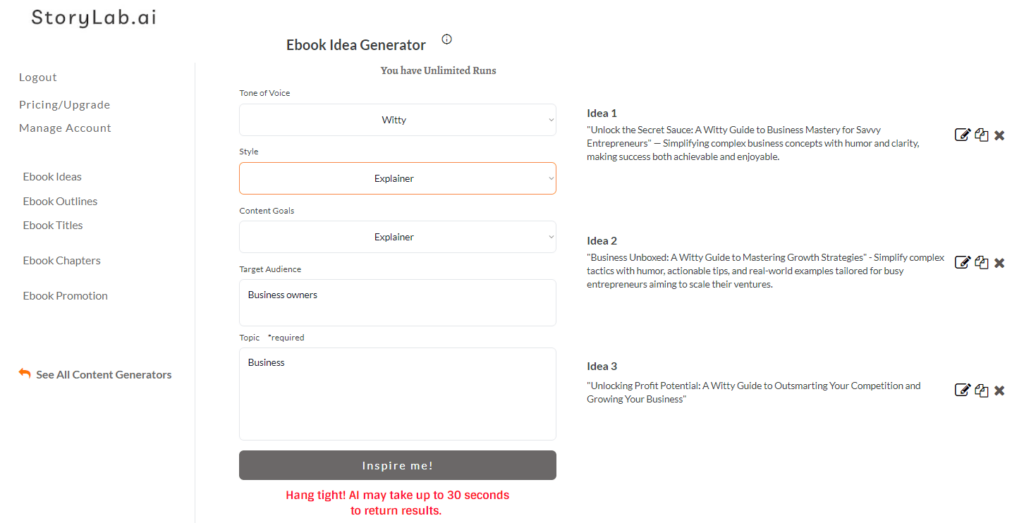
Before we go into the Business eBook Idea Examples, let’s quickly have a look at our AI eBook Idea Generator.
You can start for free within seconds and get AI to help you come up with awesome eBook ideas for your next project.
Simply describe what your eBook is about and let AI work its magic.
Here’s what it looks like:
Business eBook Idea Examples
- Starting a Small Business: From Idea to Launch
- The Ultimate Guide to Digital Marketing
- Building a Strong Brand Identity
- Social Media Strategies for Business Growth
- Effective Leadership and Management Skills
- Financial Planning for Entrepreneurs
- The Role of AI in Modern Business
- E-commerce Success: Strategies and Tactics
- Scaling Your Business: Challenges and Solutions
- Business Analytics and Data-Driven Decision Making
- Developing a Successful Business Plan
- Innovation and Creativity in Business
- The Importance of Customer Experience
- Remote Work: Strategies for Success
- Navigating Business Regulations and Compliance
- Building a Sustainable Business Model
- Effective Networking and Relationship Building
- Content Marketing for Business Growth
- The Future of Work: Trends and Predictions
- Crisis Management for Businesses
- The Role of Technology in Business Transformation
- Time Management and Productivity Hacks
- Strategies for Effective Business Communication
- Employee Engagement and Retention Strategies
- Understanding and Leveraging SEO for Business
- Entrepreneurship in the Digital Age
- Building a Customer-Centric Business
- The Power of Business Intelligence and Analytics
- Personal Branding for Business Professionals
- Creating a Winning Sales Strategy
- The Impact of Globalization on Small Businesses
- Innovation in Product Development
- Navigating Business Funding and Investment
- The Role of Corporate Social Responsibility
- Effective Business Negotiation Techniques
- Building a Strong Company Culture
- The Importance of Market Research
- Sustainable Practices for Modern Businesses
- The Role of Ethics in Business
- Strategic Planning for Long-Term Success
- The Impact of Mobile Technology on Business
- Outsourcing and Its Benefits for Small Businesses
- Developing Effective Marketing Campaigns
- Business Models for the Gig Economy
- Customer Retention Strategies
- Leveraging Social Proof for Business Success
- The Role of Artificial Intelligence in Customer Service
- Strategies for Business Growth in Emerging Markets
- The Impact of Blockchain on Business
- Building an Agile Business: Adaptation and Flexibility
- Building and Leading High-Performing Teams
- Strategic Partnerships and Alliances
- Business Development Strategies
- The Future of Retail: Trends and Innovations
- Effective Project Management Techniques
- Personal Finance for Business Owners
- Employee Training and Development Programs
- Navigating International Business Markets
- The Power of Crowdfunding for Business Ventures
- Enhancing Your Business’s Online Presence
- Customer Service Excellence
- The Impact of Big Data on Business Decisions
- Developing a Robust Cybersecurity Strategy
- Understanding and Implementing Lean Business Practices
- The Role of Mentorship in Business Success
- Franchise Business Opportunities and Challenges
- Innovative Pricing Strategies for Profitability
- Building a Subscription-Based Business Model
- The Role of Influencer Marketing in Business
- Effective Conflict Resolution in the Workplace
- Legal Considerations for Startups
- The Importance of Diversity and Inclusion in Business
- Creating and Managing a Business Budget
- Utilizing Cloud Computing for Business Efficiency
- Building a Mobile App for Your Business
- Understanding Consumer Behavior and Market Trends
- Strategies for Rebranding Your Business
- Implementing Agile Methodologies in Business
- The Role of Virtual Reality in Business
- Developing a Successful Franchise Model
- The Importance of Business Ethics and Compliance
- Leveraging Artificial Intelligence for Competitive Advantage
- Strategies for Successful Product Launches
- Effective Time Management for Entrepreneurs
- The Impact of 3D Printing on Manufacturing
- Customer Relationship Management (CRM) Best Practices
- Financial Forecasting and Modeling for Businesses
- The Role of Environmental Sustainability in Business
- Managing Business Risks and Uncertainties
- The Future of Freelancing and Gig Economy
- Enhancing Employee Productivity with Technology
- Data Privacy and Protection for Businesses
- Building a Resilient Supply Chain
- Social Responsibility and Community Engagement
- Exploring New Revenue Streams for Your Business
- Effective Crisis Communication Strategies
- The Role of Machine Learning in Business Analytics
- Enhancing Business Operations with IoT
- Developing a Strong Business Portfolio
- The Future of Digital Transformation in Business
- How to Develop a Unique Value Proposition
- Strategies for Effective Supply Chain Management
- Building an Effective Business Website
- The Role of Customer Feedback in Business Growth
- Developing a Comprehensive Marketing Plan
- How to Conduct a Successful SWOT Analysis
- The Impact of Automation on Business Processes
- Understanding and Utilizing Market Segmentation
- Creating Effective Employee Incentive Programs
- Strategies for Reducing Business Costs
- Building Brand Loyalty Through Customer Engagement
- Effective Use of Email Marketing for Businesses
- Developing a Corporate Social Media Policy
- The Importance of Intellectual Property Protection
- How to Achieve Work-Life Balance as an Entrepreneur
- Implementing a Successful Omnichannel Strategy
- How to Conduct Market Research on a Budget
- Strategies for Business Growth Through Mergers and Acquisitions
- How to Build a Business from Home
- Effective Event Planning for Businesses
- The Role of AI in Enhancing Sales Performance
- Best Practices for Inventory Management
- The Impact of Digital Transformation on Traditional Industries
- Developing a Strong Public Relations Strategy
- How to Create Engaging Content for Your Business Blog
- The Role of Blockchain in Supply Chain Transparency
- Building a Customer-Centric Sales Team
- Effective Use of Analytics in Marketing Campaigns
- How to Foster Innovation in Your Business
- The Importance of Transparency in Business Operations
- Developing a Strong Visual Brand Identity
- How to Navigate Business Insurance Options
- The Role of Technology in Modern HR Practices
- How to Create a Successful Loyalty Program
- The Importance of Ethics in Marketing
- Developing a Strong Competitive Analysis
- The Role of Mobile Marketing in Business Growth
- How to Build and Manage a Remote Team
- Effective Public Speaking for Business Leaders
- The Impact of GDPR on Business Operations
- Developing a Strong Corporate Culture
- How to Create an Effective Business Presentation
- The Role of Technology in Customer Service Excellence
- How to Build a Successful Affiliate Marketing Program
- Strategies for Managing Business Debt
- How to Write a Winning Business Proposal
- The Impact of Social Media Algorithms on Business Marketing
- Developing a Strong Exit Strategy for Your Business
- How to Leverage User-Generated Content for Marketing
- The Future of B2B Marketing: Trends and Innovations
How to Come up With Great Business eBook Ideas

Coming up with great business eBook ideas involves a combination of understanding your audience, staying informed about industry trends, and leveraging your own expertise and creativity. Here’s a step-by-step guide to help you generate compelling business eBook ideas:
Understand Your Audience
- Identify Your Target Audience: Determine who you are writing for. Are they entrepreneurs, managers, marketers, or business students? Knowing your audience will help tailor your content to their interests and needs.
- Research Audience Needs: Use surveys, social media polls, and forums to gather information on what topics your audience is interested in or what challenges they are facing.
Analyze Industry Trends
- Stay Updated with Industry News: Follow business news, blogs, and journals to stay informed about the latest trends, innovations, and challenges in the business world.
- Identify Emerging Topics: Look for new developments and emerging topics that have the potential to interest your audience. This could be anything from new technologies to changes in business regulations.
Leverage Your Expertise
- Draw from Personal Experience: Use your own experiences and knowledge in the business world as a source of inspiration. Share insights, lessons learned, and practical advice.
- Highlight Success Stories: Write about successful business strategies, case studies, or profiles of successful companies or entrepreneurs.
Brainstorm and Refine Ideas
- Brainstorm Freely: Set aside some time to brainstorm a wide range of ideas without filtering them initially. Write down everything that comes to mind.
- Use Mind Mapping: Create a mind map to explore related topics and subtopics. This can help you visualize connections and expand on initial ideas.
Utilize Tools and Resources
- AI Idea Generators: Use AI-powered tools like StoryLab.ai’s eBook Idea Generator to get fresh and diverse ideas. These tools can provide new perspectives and inspiration.
- Content Research Tools: Use tools like BuzzSumo or Google Trends to see what business topics are currently trending and what type of content is performing well.
Identify Gaps in Existing Content
- Analyze Competitors: Look at what other business eBooks are available and identify any gaps or underserved topics. This can help you find a niche or unique angle.
- Read Reviews: Check reviews and feedback on popular business eBooks to understand what readers liked and what they felt was missing.
Combine and Innovate
- Mix Topics: Combine two or more related topics to create a unique and compelling idea. For example, you could explore the intersection of technology and marketing.
- Innovate Existing Ideas: Take a popular topic and put your own spin on it by adding new insights, examples, or a different perspective.
Seek Feedback and Validate Ideas
- Get Feedback: Share your ideas with peers, mentors, or potential readers to get their input. This can help you refine your concepts and ensure they are relevant and valuable.
- Validate Your Ideas: Conduct a quick validation exercise by posting your ideas on social media or a blog to gauge interest and gather feedback.
Create Detailed Outlines
- Outline Your Ideas: For each potential eBook idea, create a detailed outline that includes key points, chapters, and subtopics. This will help you assess the feasibility and depth of each idea.
- Evaluate Potential: Evaluate each outline based on factors such as audience interest, your expertise, and the availability of research material. Prioritize the ideas that stand out.
Stay Flexible and Evolve
- Be Open to Change: Be prepared to evolve your ideas as you conduct further research and start writing. Flexibility can lead to more refined and comprehensive content.
- Iterate and Improve: Continuously seek feedback throughout the writing process and be willing to make adjustments to improve your eBook.
By following these steps, you can generate a wealth of great business eBook ideas that are both relevant and engaging for your audience.
How AI can help generate better business eBook ideas faster
AI is especially useful at the idea stage because it helps you explore more angles in less time. Instead of stopping at one broad topic like content marketing or sales strategy, you can quickly generate niche eBook concepts for different industries, funnel stages, and audience types.
That makes AI a practical brainstorming tool for marketers, founders, agencies, and content teams. One broad theme can turn into beginner guides, tactical playbooks, trend reports, case-study collections, process frameworks, or audience-specific handbooks. The result is a faster path from rough theme to usable eBook concept.
Business eBook idea examples by category
Different business audiences respond to different eBook formats. Some want practical how-to guides. Others want strategic thinking, benchmarks, templates, or examples they can apply right away.
Examples for marketing eBooks:
- How to Build a Content Strategy That Drives Qualified Leads
- AI Marketing Workflows for Lean Content Teams
- Email Campaign Ideas That Help Businesses Stay Top of Mind
- A Beginner’s Guide to B2B Content Marketing
Examples for sales eBooks:
- How to Build a Sales Process That Scales
- Outbound Prospecting Frameworks for Small Teams
- Sales Follow-Up Templates That Move Deals Forward
- How to Align Sales and Marketing Without More Meetings
Examples for startup and growth eBooks:
- The Startup Growth Playbook for Early-Stage Teams
- How to Find Product-Market Fit Faster
- Customer Retention Tactics for Subscription Businesses
- What Founders Should Track Before Scaling
Examples for operations and productivity eBooks:
- How to Build Better Internal Workflows
- AI Productivity Systems for Busy Teams
- Process Documentation Templates for Growing Companies
- How to Reduce Repetitive Work Across Your Business
AI-focused business eBook ideas
AI has become a strong eBook topic because businesses want practical guidance, not just theory. Readers are looking for ways to use AI in content, workflows, customer experience, research, and campaign production.
Examples:
- AI Use Cases for Small Businesses
- How to Build an AI Marketing Workflow
- AI Content Repurposing for B2B Teams
- A Practical Guide to Using AI Without Losing Brand Voice
- How Businesses Can Use AI to Save Time on Research and Content
- AI Automation Ideas for Marketing and Operations
- The Beginner’s Guide to AI for Business Growth
- How to Roll Out AI Tools Across a Small Team
What makes a business eBook idea worth creating
A good business eBook idea sits at the intersection of audience need and business relevance. It should solve a clear problem, answer a question people already care about, or make a complex topic easier to understand.
The strongest ideas usually go deeper than a normal blog post. Lead magnet guidance regularly points to eBooks, guides, and case studies as strong gated assets because they offer more depth and perceived value than everyday content. That makes topic depth and practical usefulness more important than flashy packaging.
How to use AI for eBook ideation without creating generic topics
AI can generate dozens of ideas in seconds, but the quality of the prompt still shapes the quality of the result. A vague prompt produces generic topics. A specific prompt produces ideas that are easier to turn into a compelling lead magnet.
Instead of asking for “business eBook ideas,” ask for “business eBook ideas for B2B SaaS marketers who want more qualified leads from SEO and AI content workflows.” That level of direction creates sharper concepts with a clearer audience, clearer use case, and stronger positioning.
Business eBook formats worth testing
The format of the eBook matters almost as much as the topic. Some audiences prefer a structured guide. Others want templates, frameworks, or curated examples they can use quickly.
Useful business eBook formats include:
- Beginner guides
- Step-by-step playbooks
- Case study collections
- Industry trend reports
- Templates and worksheet bundles
- Mistakes-to-avoid handbooks
- Comparison guides
- Strategy frameworks
These formats work well because they give readers a clear reason to download. They also make it easier to turn one content theme into a more complete lead magnet.
Why business eBook ideas should connect to a larger content workflow
An eBook works best when it is part of a broader content system. One strong eBook topic can support blog posts, landing pages, email sequences, webinars, social posts, and retargeting campaigns. That makes ideation more valuable because the topic does not end with the PDF.
This is where AI becomes especially useful. Once the core eBook angle is set, AI can help generate supporting headlines, chapter ideas, email promos, landing page copy, ad hooks, and social snippets. The eBook becomes the center of a repeatable content workflow instead of a one-off asset.
Why business eBook topics now need to work for both search and AI discovery
Topic clarity matters more now because content may be discovered through both traditional search and AI-assisted search experiences. Clear, useful, well-scoped topics make it easier for readers and search systems to understand what the content offers.
Google’s documentation around AI-generated content and AI search features keeps pointing back to the same principle: helpful content wins when it delivers real value. That makes strong topic selection a practical advantage, not just a creative exercise.
FAQ
What makes a good business eBook idea?
A good business eBook idea solves a clear problem, targets a specific audience, and offers enough depth to feel more valuable than a regular blog post.
Can AI help generate business eBook ideas?
Yes. AI can quickly generate topic variations, niche angles, and audience-specific concepts that make brainstorming faster and more productive.
Are eBooks still useful for lead generation?
Yes. eBooks are still commonly used as lead magnets because they can package useful information into a deeper, more downloadable resource.
What business eBook formats work well?
Popular formats include beginner guides, step-by-step playbooks, case study collections, templates, industry reports, and practical strategy handbooks.
Does Google allow AI-generated eBook content ideas?
Google focuses on usefulness and value, not whether AI was used. AI can support ideation and drafting, but scaled low-value content can violate spam policies.
How can businesses use one eBook idea across multiple channels?
A strong eBook idea can also support blog posts, landing pages, email campaigns, webinars, and social content, which makes it more valuable as part of a larger content workflow.