
How To Write Press Releases For Optimal Results (With Structure, Examples & Tips)
A press release still does a lot of heavy lifting: it informs journalists, feeds your newsroom, powers your email pitches and, increasingly, shows up in search and AI-generated overviews.
But most press releases never make it past the inbox. They are too long, too vague, too self-promotional, or impossible to scan quickly. Journalists and editors spend seconds deciding whether to read on or delete, and they are looking for clear structure, relevance, data and usable quotes.
The good news is that effective press releases follow a pretty predictable pattern: a sharp headline, a strong lead, clean structure, one or two quotable quotes, and just enough context to make the story easy to cover.
In this guide, you will see how to write a press release for optimal results today: the modern structure (including AI and SEO considerations), how to craft headlines and quotes, how long your release should be, and a practical checklist you can reuse for every announcement.
Chapters
- O que é um comunicado de imprensa?
- A importância de elaborar um comunicado de imprensa
- Como elaborar um comunicado de imprensa vencedor
- 3 dicas para uma distribuição bem-sucedida de comunicados à imprensa
- Estrutura moderna de comunicado de imprensa (amigável para jornalistas e inteligência artificial)
- Como escrever um título de comunicado de imprensa que seja lido.
- Citações que jornalistas realmente usam
- Comprimento e estilo ideais para os comunicados de imprensa de hoje.
- Como tornar seus comunicados de imprensa compatíveis com SEO e IA
- Texto padrão para comunicado de imprensa: Seu discurso de elevador em 100 palavras
- Lista de verificação reutilizável: comunicado de imprensa para resultados ideais
- Onde StoryLab.ai Integra-se perfeitamente ao seu fluxo de trabalho de comunicados de imprensa.
- Perguntas frequentes: Como escrever comunicados de imprensa para obter os melhores resultados
- Conclusão
- Outros artigos interessantes
What is a Press Release?
A press release is a written official statement distributed to the media and other interested parties to announce something newsworthy. The statement is meant to promote awareness and attract media attention.
Great press releases will typically provide details about an event, product launch, milestone, achievement, or other significant developments.
The importance of crafting a press release
Press releases offer a multitude of benefits that make them a crucial tool to include in your PR strategy, here are the key ones.
- Publicity
When you effectively distribute a press release about a newsworthy event or product, you attract the attention of journalists, media outlets, and the general audience. This increased visibility will lead to wide publicity in the press, from newspapers to digital magazines, and even social media.
- SEO benefits
By including relevant keywords and links in the news release, you can improve your online visibility, which then impacts your search engine rankings.
The increased visibility will also get the media’s attention. News outlets, online publications, and journalists will pick up your compelling press release, and most probably publish it with backlinks to your company’s website. This will help boost your backlink profile, which positively impacts your ranking.
- Secure media coverage
Media outlets are always looking for great fresh stories to publish, and releases are one of the most reliable sources. As I mentioned earlier, securing media coverage through press releases will help you enhance brand visibility.
- Build credibility
Press releases highlight significant achievements, awards, or milestones. The positive news coverage will help reinforce your brand’s credibility within its sector, which helps earn the target audience’s trust.
How to craft a winning press release
So how do you write a press release that helps you easily grab your target audience’s attention and generate interest? Here are some key elements of a well-written press release:
Begin with a compelling headline
Your release headline is the first thing journalists and readers will see, so ensure it draws people in and entices them to read further.
Keep your release headline clear and concise. Avoid jargon or overly complicated language that may confuse readers.
Also, center your headline around the most newsworthy aspect of your release. For instance, you can just tell what this Samsung product launch release is about just from the headline.
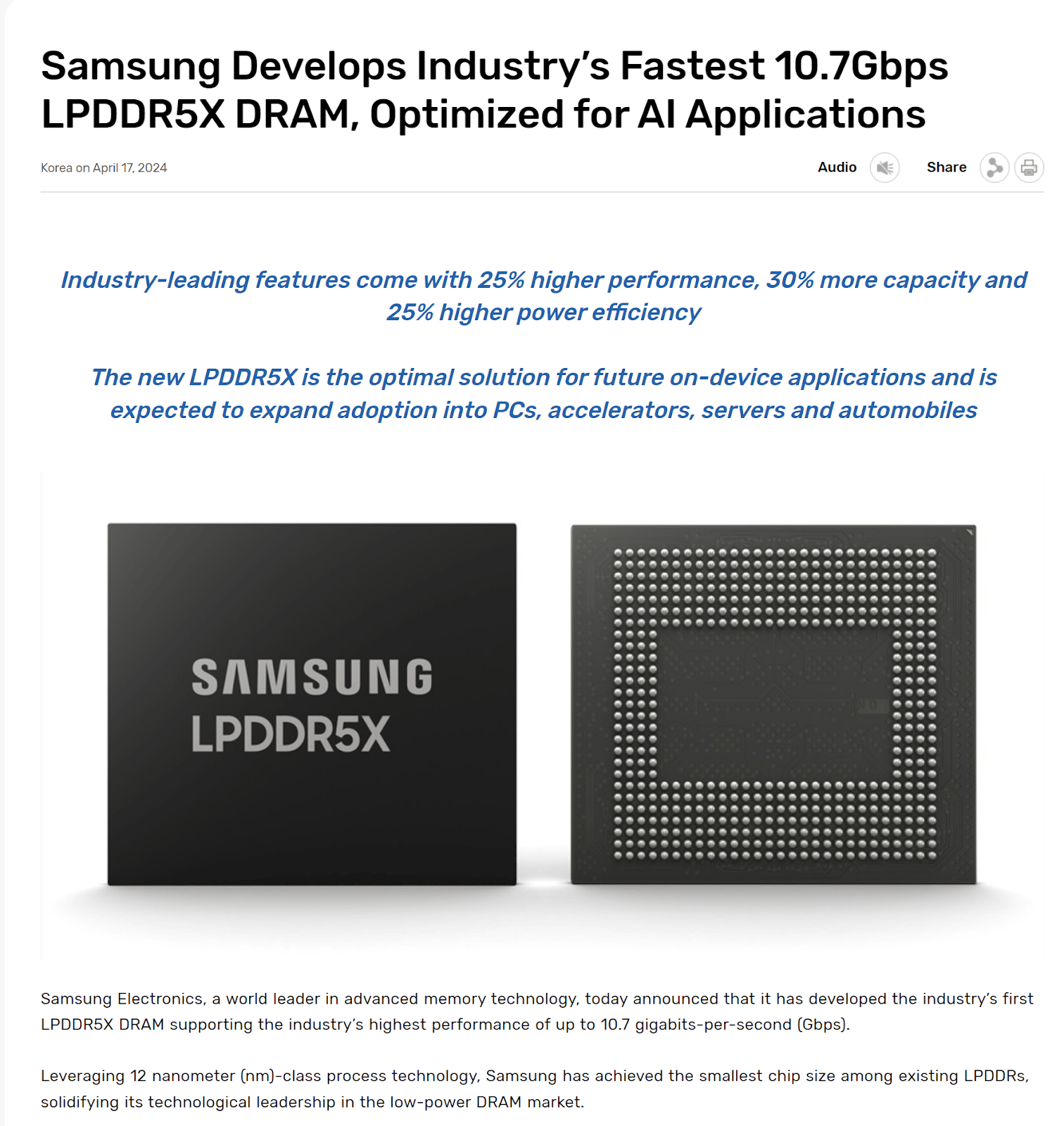
Additionally, incorporate strong, action verbs into your headline. These verbs help create a sense of urgency and excitement that easily draws readers in.
Besides that, avoid clickbait or sensationalized headlines that misrepresent your press release content. Your headline should accurately reflect the story you’re telling and set appropriate expectations for readers.
Deliver key details clearly and concisely
Focus on delivering the most important facts and information upfront. Stick to the essential details that answer the who, what, when, where, why, and how of your story, and avoid including unnecessary filler content.
Also, structure your press release in a logical and organized manner to make it easy for readers to follow. Use short paragraphs, bullet points, or subheadings to break up the text and highlight key points.
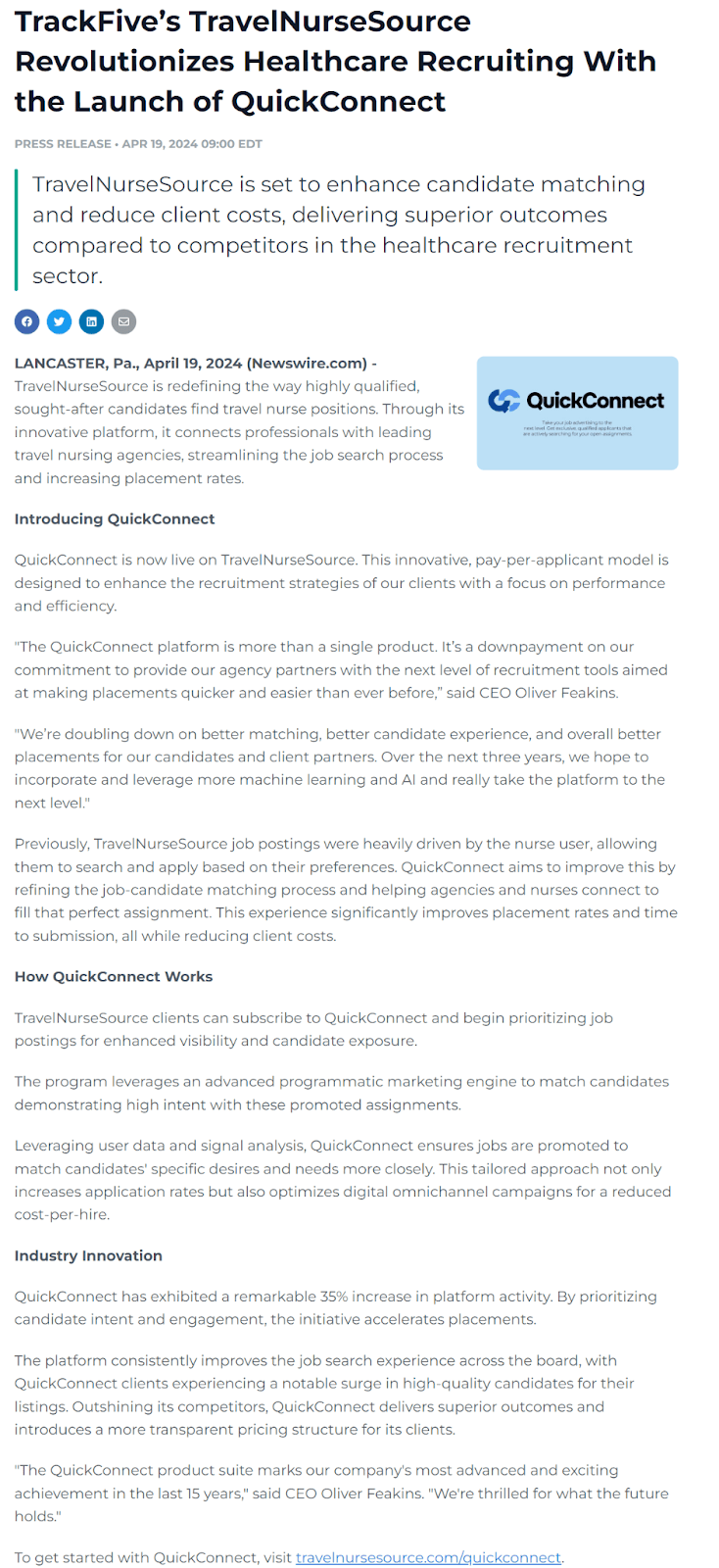
In addition, ensure you take the time to edit and revise your press release. Remove any unnecessary words or phrases and tighten up your writing to make it as concise as possible without sacrificing clarity. You can always consult an organization or individual that offers great PR services to ensure you get it right.
Elaborate on the story
While you must keep your press release concise, it’s also crucial that you provide context that helps readers understand why your news is important and why it matters to them.
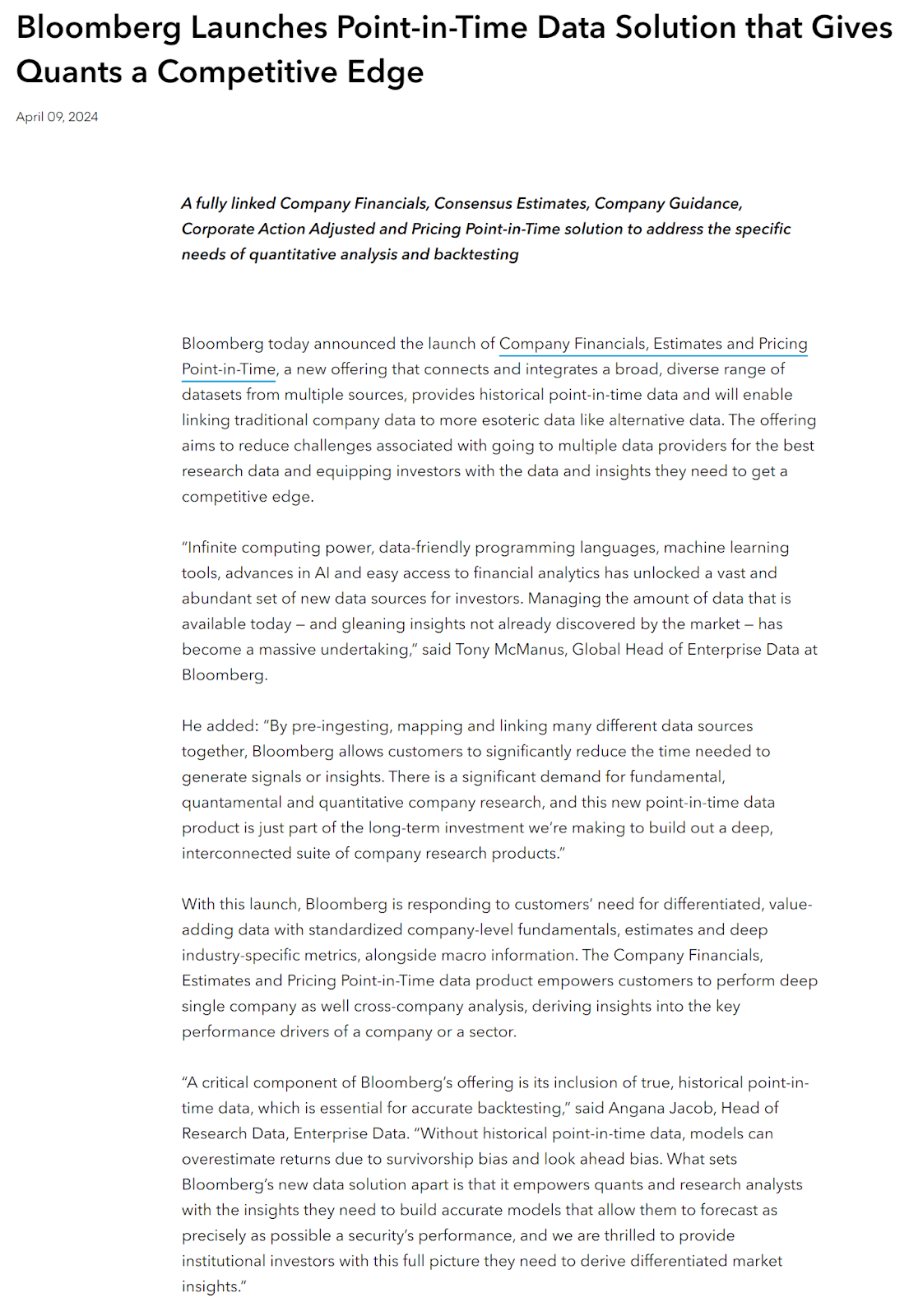
So expand on the story with relevant background information and supporting data or statistics. Additionally, incorporate relevant quotes from key stakeholders or relevant experts to add credibility and authenticity to your story.
For instance, Bloomberg in the example below includes direct quotes from their respective leaders in enterprise data.
You can also use real-life examples, case studies, or success stories. Doing this will provide more information that helps readers understand the practical implications of your story. Additionally, it will make the story more relatable and compelling.
Additionally, you can include links throughout the release that lead readers to your extensive knowledge base, where they can get more information.
Incorporate appropriate visuals
Incorporating appropriate visuals into your press release will make it more engaging, memorable, and shareable.
So include high-quality visuals that are relevant to your story and appealing. Avoid using generic visuals like stock photos and use original visuals that capture the essence of your message.
Place the images, infographics, or videos near relevant sections of your story to enhance comprehension. Additionally, include alt text and descriptive captions to provide context and ensure accessibility for all readers. Check out how Apple does this in the release example below.
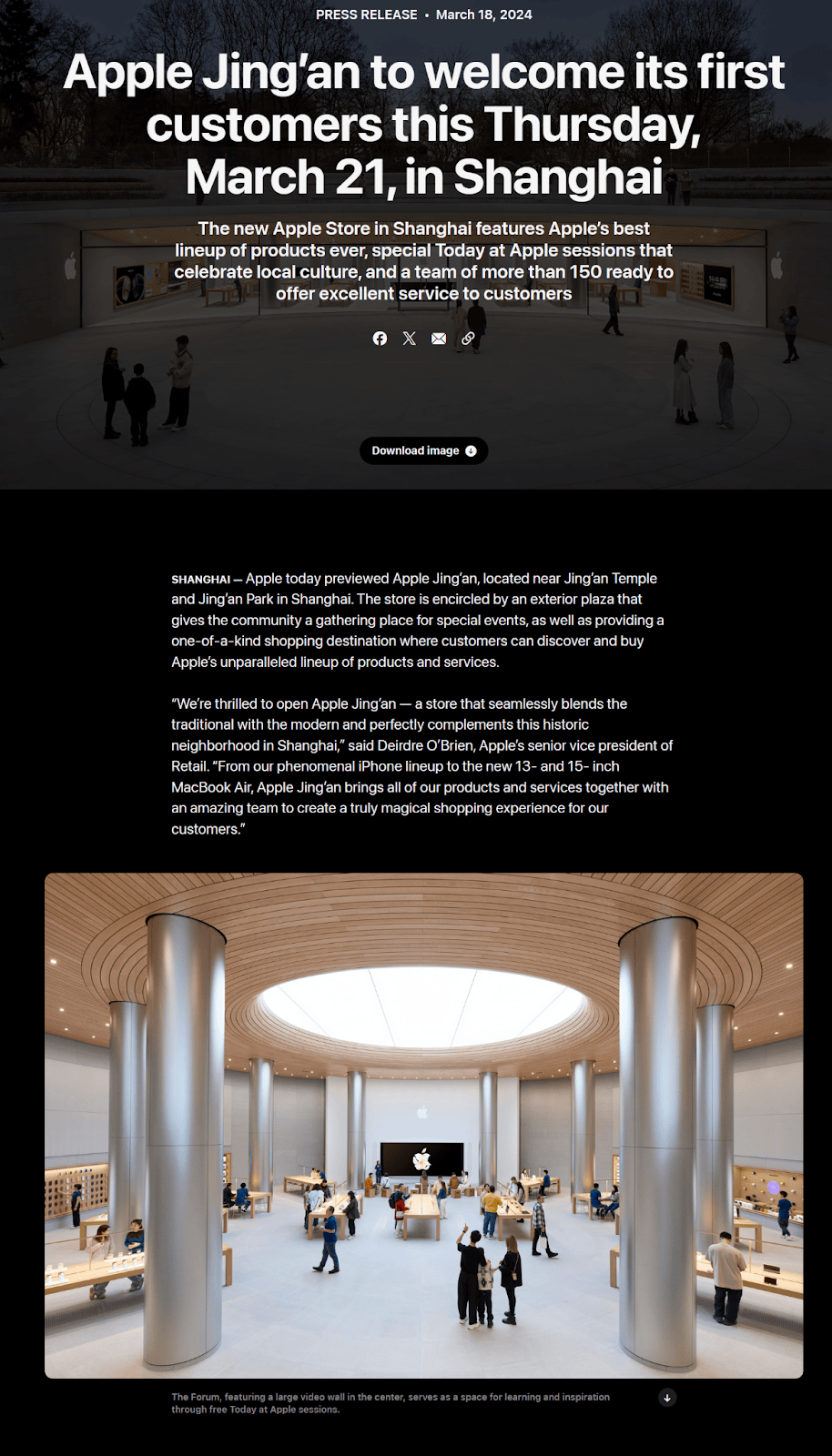
Ensure your visuals are well-optimized to ensure compatibility with different devices and platforms.
Conclude with contact details
By providing your contact information, you make it easy for interested parties to follow up on your news.
Ensure you provide multiple ways for readers to get in touch with your organization, such as a phone number, email address, and website URL. This ensures that individuals can choose the method that is most convenient for them.
If your organization is active on social media, consider including relevant links to your social profiles. This provides another avenue for engagement and also allows individuals to connect with your organization on social platforms. Check out how this release does this.
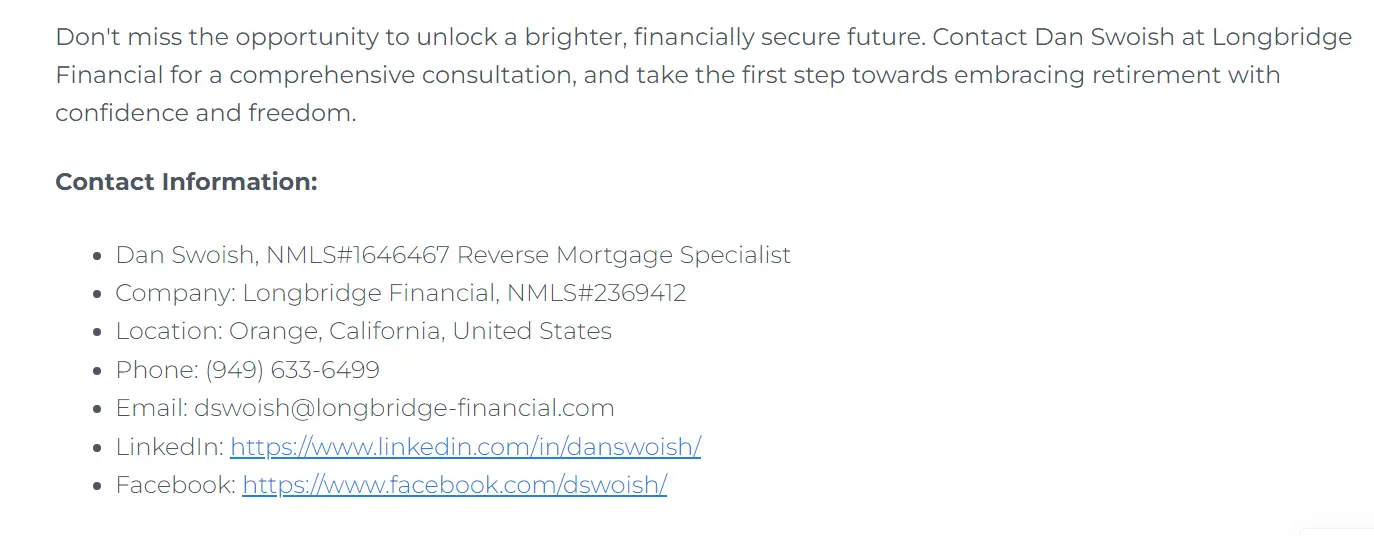
With these tips, you’ll write a successful press release. However, thanks to tech advancement, you no longer have to struggle to write a press release from scratch. For instance, you can use AI templates to write an entire press release in minutes.
3 Tips for successful press release distribution
All your efforts to craft a compelling press release will be in vain if it doesn’t reach the right audience. So how do you ensure yours does?
Contact targeted journalists directly
Rather than relying solely on mass distribution services, personalize your outreach by contacting journalists directly.
Research and identify relevant journalists, editors, bloggers, and influencers who cover topics relevant to your press release. Then, craft tailored pitches that highlight why your story is newsworthy and why their audience would be interested.
Reach out to media outlets with tailored pitches
You should also research each outlet’s audience demographics, editorial guidelines, and previous coverage. Then customize your pitch to fit the preferences and needs of each media outlet you contact.
The personalization demonstrates that you’ve done your homework and increases the chances of your press release resonating with the recipient media outlet.
Ensure you follow up on your pitches, but avoid being overly persistent or pushy.
Engage a PR expert to handle distribution
You should also consider enlisting the help of a PR expert or agency to handle the distribution of your press release.
These PR professionals offer various PR services and have the expertise, industry connections, and resources to ensure that your news reaches the right people and gets the attention it deserves.
They can easily craft compelling pitches, identify the relevant media contacts for your release, and coordinate outreach efforts to maximize coverage.
While hiring a PR expert may require an investment, it can yield significant returns in terms of media exposure, brand visibility, and credibility which are often hard to achieve on your own.
Modern Press Release Structure (Journalist & AI-Friendly)
Most current best-practice guides agree on a standard format:
- Headline (H1) – clear, specific, news-driven
- Subhead / deck (H2) – 1–2 sentences adding context, data, or impact
- Dateline – CITY, Country – Date
- Lead paragraph – one or two sentences that answer who, what, when, where, why
- Body paragraphs – details, background, supporting data
- Quotes – from a spokesperson or customer to add voice and insight
- Call to action (optional) – link to more information, assets, or sign-ups
- Boilerplate – 60–100 words about your company
- Media contact – name, role, email, phone
That structure matters more than ever. Journalists, search engines and AI models are trained to scan releases in this order, looking for the “what happened” and “why it matters” in the first lines.
How To Write A Press Release Headline That Gets Read
Your headline is the first (and sometimes only) thing people see.
Aim for:
- Clarity over cleverness – say what actually happened, in concrete terms
- Specifics – name, product, numbers, location, timeframe
- Concise length – often 8–14 words for scannability
Examples of strong angles:
“Acme Launches AI-Powered Analytics Tool To Cut Reporting Time By 60%”
“City Hospital Opens 24/7 Pediatric Emergency Unit Serving 50,000 Families”
In 2025+ you also want to think SEO and AI: weave one or two natural keywords into the headline and subhead (for example “AI analytics tool”, “pediatric emergency unit”) without stuffing.
The First Paragraph: Nail The 5 Ws Fast
The lead paragraph should read like a short news story:
- Who is making the announcement
- What is happening
- Where and when it happens or becomes available
- Why it matters (impact, audience, scale)
Keep it to one or two sentences. If your lead is vague (“We are excited to announce…”) or buried in hype, you will lose readers and lower the chance of being quoted in full.
Quotes That Journalists Actually Use
Good quotes are not filler. They add perspective and lines that can be lifted straight into an article.
Recent advice from journalists and PR pros:
- Keep quotes short – think 1–2 punchy sentences, not a whole paragraph of corporate speak
- Avoid fluff like “We’re excited…” or “We’re pleased to announce…”
- Back up the headline – if your headline promises something bold, echo that idea in a quote tied to a named person
- Use human language – speak like a real person would talk in an interview
Example (stronger):
“With this launch, small retailers can see exactly which campaigns drive revenue in real time, without hiring a data team,” said Jane Doe, CEO of Acme.
Compare that to:
“We are pleased to announce the launch of our new solution, which represents an exciting step forward for our company.”
Only one of those is likely to be quoted.
Ideal Length & Style For Today’s Press Releases
Most modern sources recommend roughly 300–500 words for digital press releases: enough detail to cover the story, but short enough to scan.
Style tips that keep showing up across PR guides:
- Short paragraphs and sentences
- Plain language, minimal jargon
- Active voice
- Factual, not salesy – reserve overt selling for your landing page
- Think “news item”, not brochure.
Making Your Press Releases SEO & AI-Ready
Press releases now live in three worlds: inboxes, newsrooms, and search/AI systems. A few extra steps help across all three.
Use clear structure and headings
Headline as H1, subhead as H2, then body text.
This makes parsing easier for both humans and AI models.
Include relevant keywords naturally
Phrases like “customer data platform press release” or “sustainability initiative announcement” in the headline, lead or boilerplate.
Avoid keyword stuffing; write for humans first.
Add data, not just adjectives
Journalists consistently say that specific data or statistics are a major factor in deciding what to cover.
Use numbers to show impact: users, revenue, time saved, emissions reduced, etc.
Link to rich assets
Media kits, images, charts, short videos or demos to support the story.
Make the online version easy to share
Clean URL, social sharing image and meta description, and internal links to relevant landing pages on your site.
Press Release Boilerplate: Your 100-Word Elevator Pitch
Your boilerplate is the copy-and-paste description that appears at the end of every release. Treat it as an evergreen mini-about section.
Best practices:
Keep it under 100 words
Include: what you do, who you serve, scale (locations, customers, markets), and what makes you different
Skip fluff and buzzwords; write something a journalist could drop into a story without editing heavily
Refresh your boilerplate at least once a year or when your positioning changes.
Reusable Checklist: Press Release For Optimal Results
You can paste this near the end of your article as a ready-to-use checklist. It is also great for SEO around “press release checklist” and “how to write a press release step by step”.
Before writing
- Is this genuinely newsworthy for your audience or industry?
- What single story angle are you leading with?
- Who is the primary reader: trade press, local news, investors, customers?
Drafting the release
- Headline: clear, specific, includes one key keyword
- Subhead: adds context, data, or impact in 1–2 sentences
- Dateline: CITY, Country – Date
- Lead paragraph: covers who, what, when, where, why in 1–2 sentences
- Body: 2–4 short paragraphs with details, data and background
- Quotes: 1–2 punchy, human quotes that echo the main message
- Call to action: where to learn more, register, or see assets
- Boilerplate: updated 60–100 word company description
- Media contact: name, role, email, phone
Final polish
- Word count ~300–500
- Spelling, grammar and names double-checked
- Links tested and working
- Release formatted for web and email (short paragraphs, plenty of white space)
Where StoryLab.ai Fits In Your Press Release Workflow
StoryLab.ai can support every stage where you are fighting the blank page:
- Angle development – generate alternative story angles or headlines before you commit
- Headline and subhead options – create multiple variations, then choose or combine
- Lead and body drafting – turn bullet points into clear, factual paragraphs
- Quote polishing – rework stiff quotes into natural, quotable lines that still sound like your spokesperson
- Boilerplate & localization – adapt your boilerplate for different regions or verticals while keeping the core consistent
You stay responsible for accuracy and sign-off; StoryLab.ai speeds up the writing and helps you test more options in less time.
FAQ: Writing Press Releases For Optimal Results
What are the essential parts of a press release?
A standard press release includes: headline, subhead, dateline, lead paragraph, body paragraphs, at least one quote, a call to action, boilerplate and media contact details. This “universal” structure makes it easier for journalists and AI systems to understand and reuse your story.
How long should my press release be?
Aim for about 300–500 words. That is enough space to explain the news, add a quote and give context without overwhelming busy readers. Many PR and newsroom guides recommend staying within a single page for digital distribution.
How many quotes should I include?
Most releases need one or two strong quotes from key stakeholders (for example a CEO, product lead, partner or customer). More than that can feel bloated. Focus on lines that add perspective, not restate facts already in the body.
Do I need to optimise press releases for SEO?
Yes, but lightly. Incorporate relevant keywords in your headline, subhead and lead, link to your site and make sure the online version is easy to crawl and share. Avoid stuffing; releases are primarily for journalists and readers, with SEO as a useful bonus.
How do I make my press release stand out in 2025 and beyond?
Focus on:
- A genuinely newsworthy angle and clear audience
- Specific data points and outcomes, not vague claims
- Sharp, human quotes
- Clean, predictable structure and concise writing
- Helpful assets (images, charts, links)
Recent best-practice roundups also highlight optimizing releases for AI-driven news consumption: clear structure, explicit dates and entities, and factual leads all increase your chances of being surfaced and cited.
Conclusion
With the right approach, your press release can become an invaluable tool for capturing attention and driving meaningful engagement with your target audience.
As I’ve discussed above, to write a press release that generates a buzz, start with a compelling headline, then deliver key details concisely, and also ensure you elaborate on your story. Don’t forget to include visuals and your contact information.
Once you have an effective press release, don’t stop there! Ensure you distribute it through media outlets, journalists, release distribution services, or PR experts to boost media coverage and brand visibility.
Now go ahead and write a press release that stands out. All the best!
By Chris Norton, host of the UK’s 7th largest marketing podcast, which celebrates marketing mistakes, Socially Unacceptable, and Founder of award-winning B2C specialist PR agency Prohibition. His social media training blog is listed in the UK’s top 10 PR blogs. For tons of digital PR tips, you can follow Chris here @chris_norton.
Other interesting articles
- Nextify.ai Review: A Practical Look at an AI Avatar Video Generator
- Why You Should Hire Custom Software Development Service
- Making Royalty-Free Music with GAM
- Email Deliverability Blueprint: Mastering SPF, DKIM, and DMARC
- AI Generated Animated Videos for SaaS Marketing
- Google Ads Headline Generator for Local Service Businesses
Master the Art of Video Marketing
AI-Powered Tools to Ideate, Optimize, and Amplify!
- Spark Creativity: Unleash the most effective video ideas, scripts, and engaging hooks with our AI Generators.
- Optimize Instantly: Elevate your YouTube presence by optimizing video Titles, Descriptions, and Tags in seconds.
- Amplify Your Reach: Effortlessly craft social media, email, and ad copy to maximize your video’s impact.