
How to Create a Digital Magazine with the Help of AI
Let AI-Powered Marketing Copy Generators help you create awesome Online Magazines

Creating a digital magazine is no longer just about moving print pages onto a screen. Readers expect a fast, mobile-friendly, visually strong experience that feels easy to browse, easy to read, and worth returning to.
That shift matters because digital publishing is changing quickly. We Are Social’s Digital 2026 report highlights the scale of digital behavior globally, while digital publishing trend coverage for 2026 points to stronger demand for mobile-first experiences, accessibility, multi-platform distribution, and selective AI use in publishing workflows.
A strong digital magazine now needs more than attractive layouts. It needs a clear editorial identity, a reading experience built for modern devices, and a production workflow that can keep quality high without slowing the team down. That is where AI can help, especially with research, repurposing, content planning, summaries, and distribution support.
Index
Choosing the right Digital Magazine Type
There are quite some types of Digital Magazines you can choose from. Which one is the best for you?
You can roughly choose to create a:
- PDF Magazine;
- Flipbook Magazine;
- Flash Magazine;
- Native App Magazine;
- HTML-5 Based Magazine.
Among these options, a Flipbook Magazine is a great choice for creating interactive content. Tools like Publuu, make it easy to turn your PDFs into engaging online magazines with smooth page turns and multimedia elements, helping your readers enjoy a more dynamic experience.
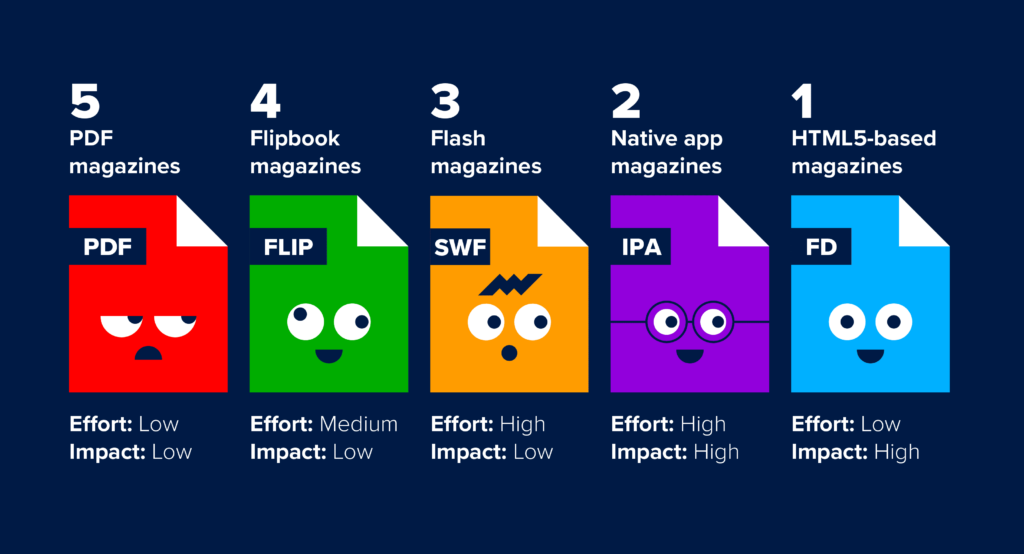
Check out the complete in-depth guide on choosing the right Digital Magazine Types.
You need to understand what you’re getting into when creating your magazines as interactive PDFs or as HTML-5 magazines.
Applying a Good Editorial Formula to Your Online Magazine

A good editorial formula serves as your magazine’s foundation, especially if you publish on a frequent basis. Readers will recognize your magazine by its page formula. Eventually, you’ll be able to consult statistics to optimize your readers’ experience. Awesome!
Remind me. What is an editorial formula again?
By writing down important basics like objectives, tone of voice, and text-to-image ratio, you will always have a convenient document to consult. Don’t forget to mention recurring topics in your editorial formula. It is also very handy to be able to provide external parties with your editorial formula when they are working on your magazine (text, images, animations, video, etc). An editorial formula is slightly different than a Brand Style Guideline as it goes deeper into what makes your magazine unique.
Think about your Online Magazine Page flow
When publishing your magazine on a quarterly, monthly, or weekly basis, you’ll need something to lean on, both as a content creator and as a reader. It’s always handy if your magazine has a table of contents, and of course, it’s wise to combine long interviews with short articles. You can’t measure the success of your structure, but you can ask people about their user experience. Ask them if the scroll depth is too long or if you have struck a good content balance. A good formula means your readers will know what to expect, and they will find their favorite topics or stories easily. Furthermore, you’ll always have a good starting point for your next edition.
How do I define the right page flow?
It all starts with setting up a schematic overview including the number of pages in your magazine and the content to be included. You can set this up in Word or Excel. You can insert main categories and complement them with new topics every time you create a new issue. Remember to vary short and long items, and style your articles differently. For example, one article might explain an answer to a question, while the next text block might contain just a single quote. You can make your magazine more lively by adding video, music, or interactive content.
Tip: keep your communication strategy in mind. What do you wish to communicate? Write down themes for every issue that need to be taken into consideration.
What’s the link between a page flow and the right number of pages?
It’s quite difficult to define the right number of pages for your magazine. Generally speaking, readers cope well with a maximum of 8-10 pages in an online magazine, making it easy to scan. You can easily add or remove pages in online magazines, but please bear in mind: vary in moderation from issue to issue. Readers like to estimate the time needed for reading a magazine. So it’s better to publish more frequently with fewer pages, than to publish less frequently with dozens of pages and gobs of information filling them.
Tip: mention the estimated reading time for a long-read article. On average, people read at a rate of 200 words per minute. Place the estimated reading time below the title or in another clear position (estimated reading time: 3 minutes).
Where can I find inspiration for good Magazine topics?
Readers enjoy encountering recurring topics, provided they match your page flow. Defining a good topic can be a difficult affair. In the past, you might have found inspiration in other magazines / white papers / websites, but in this day and age, AI can help with coming up with content ideas.
Ideas for topics and AI-Powered Content Idea Generator
Before your start using an AI-powered Content Idea generator, you need to come up with themes or topics for your magazine. Here are a couple of examples:
Behind the scenes: Take a look behind the scenes (photo collage) at other branches or offices.
Let me introduce you: Introduce new or special colleagues using the slider template.
The week/shopping bag of: A colleague shares a story about his or her work week. Or a loyal customer shows what’s in his or her shopping bag. The hotspot template is ideal for this type of content. You just need to add your own eye-popping visual.
Colleague with a passion for: Write about your colleague’s or customer’s hobbies, passions, or volunteer work.
Then, head over to StoryLab.ai’s Content Idea Generator and play around to get some cool content ideas for your next issue.
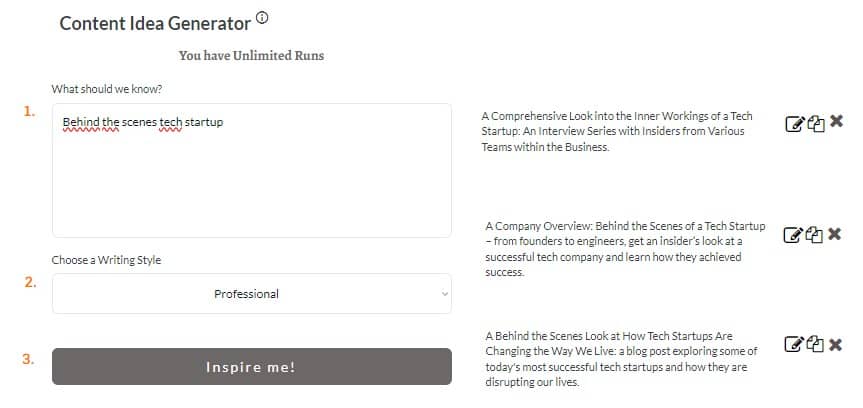
Here’s what that can look like. In this example, we’re a tech startup and want to create a behind-the-scenes magazine edition. The input for the Content Idea Generator was:
“Behind the scenes tech startup”
Here’s what the AI Tool generated on the first run:
Content Idea Generator Outputs:
- A Comprehensive Look into the Inner Workings of a Tech Startup: An Interview Series with Insiders from Various Teams within the Business.
- A Company Overview: Behind the Scenes of a Tech Startup – from founders to engineers, get an insider’s look at a successful tech company and learn how they achieved success.
- A Behind the Scenes Look at How Tech Startups Are Changing the Way We Live: a blog post exploring some of today’s most successful tech startups and how they are disrupting our lives.
We don’t want to stop after having a short list of just three ideas, so we can the Content Idea Tool a couple more times and here’s what we got:
- A Candid Look at a Tech Startup: an in-depth article examining the challenges and successes of a newly launched company from its executives’ perspectives.
- Take a Peek at Startup Success: A Look into the Innovative Strategies of Tech Startups and What We Can Learn From Them.
- An In-Depth Look at Tech Startups: A blog series that dives into the unique challenges and strategies that tech startups use to stay ahead of the competition.
- Founder’s Story: Share the journey of the founder(s) and how they started the company, what inspired them, and the challenges they faced.
- Product Development: Give an inside look into the product development process, including how the team comes up with product design ideas, builds prototypes, and tests new features.
- Company Culture: Highlight the unique company culture and values that drive the team, including team building activities, remote work policies, and diversity and inclusion initiatives.
- Tech Stack: Explain the technology stack that the company uses to build and maintain its products, including programming languages, frameworks, and tools.
- User Experience: Discuss the user experience design process, including user research, user testing, and how the team implements feedback to improve the product.
- Marketing and Growth: Share how the company acquires new users and customers, including marketing strategies, growth tactics, and user retention strategies.
- Investor Relations: Explain how the company secures funding and investor relations, including pitching to investors, fundraising milestones, and growth plans.
- Industry Trends: Analyze industry trends and how they impact the company’s growth and development, including emerging technologies and competitive landscapes.
- Partnerships and Collaborations: Highlight any partnerships or collaborations the company has with other organizations, including joint ventures, strategic alliances, and co-marketing initiatives.
- Employee Spotlights: Feature employees and their roles within the company, including how they contribute to the team, their unique skills, and their personal interests outside of work.
With this list, we’re pretty confident we’ll be able to choose a nice topic and create an engaging digital magazine our audience will love.
We’ve picked the topic:
“Founder’s Story: Share the journey of the founder(s)”
Create Catchy Headlines with an AI Title Generator
Next up, let’s create a catchy title for our magazine. For this, we turn to our AI-Powered Title Generator. The title of your magazine is important to catch people’s attention wherever you promote your magazine. Email, Social Media, your Blog, you name it. Be sure to take the time to create a great title and don’t just focus on your main headline. Every page of your Magazine needs to entice people to read on. Make sure your sub-headlines are also inviting people to read more.
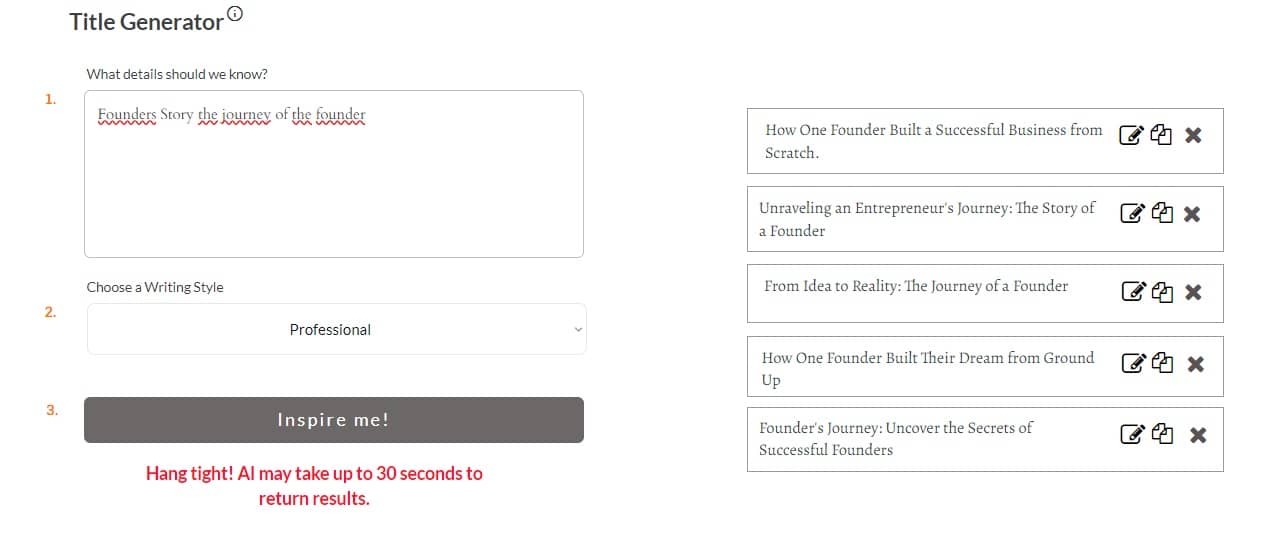
Let’s fire up the Title Generator. Our input was the topic we’ve just selected:
“Founders Story the journey of the founder”
Here’s what the Title Creator Generated for us on the first run:
Title Generator Outputs:
- How One Founder Built a Successful Business from Scratch.
- Unraveling an Entrepreneur’s Journey: The Story of a Founder
- From Idea to Reality: The Journey of a Founder
- How One Founder Built Their Dream from Ground Up
- Founder’s Journey: Uncover the Secrets of Successful Founders
Just like when coming up with ideas for your magazine, we don’t want to stop generating ideas for headlines. So we ran the AI Tool a couple more times and got the following title examples:
- From Idea to Reality: The Founder’s Journey
- Starting from Scratch: A Founder’s Story
- Trailblazing Entrepreneurs: A Founder’s Tale
- The Challenges and Triumphs of Starting a Company: A Founder’s Perspective
- Navigating the Ups and Downs of Entrepreneurship: A Founder’s Journey
- The Road Less Traveled: A Founder’s Story of Building a Startup
- The Grit and Determination of Founders: A Journey to Success
- Building a Dream: A Founder’s Story of Entrepreneurship
- Taking the Leap: A Founder’s Journey to Building a Successful Startup
- Lessons Learned on the Path to Entrepreneurship: A Founder’s Story
- From Passion to Profit: A Founder’s Tale of Entrepreneurship
- The Story Behind the Startup: An Inside Look at a Founder’s Journey
- Turning Adversity into Opportunity: A Founder’s Story of Resilience
- Breaking the Mold: A Founder’s Journey to Disrupt an Industry
- The Entrepreneurial Mindset: A Founder’s Journey to Building a Company
- The Founders Behind the Brand: A Story of Collaboration and Innovation
- The Power of Perseverance: A Founder’s Journey to Overcoming Obstacles
- The Journey of Self-Discovery in Entrepreneurship: A Founder’s Story
- Innovation and Creativity: A Founder’s Journey to Disrupting the Status Quo
- Passion, Purpose, and Persistence: A Founder’s Story of Entrepreneurial Success
We loved a couple of examples but decided to take this one and change it a bit:
- The Power of Perseverance: A Founder’s Journey to Overcoming Obstacles
Changed it to:
- A Founder’s Journey to Overcoming Obstacles [The Power of Perseverance]
Do you believe it’s helpful to get AI to help you come up with ideas?
Create Great Intros with an AI Intro Generator
We got our idea, we got our main headline. Let’s create an Introduction for our Magazine with the help of AI. But first, here are a couple of things you might want to think about when creating your intro:
What a great intro or hook does, essentially, is filter your audience. Along with the title, and, if you’re using that, the subtitle, the intro tells the reader a few things about your magazine, to help them decide if this is for them:
- Is the frame of reference that this piece is using relatable to me? Are you using examples that your intended audience can relate to?
- Is the problem this piece can help me solve something that I recognize or that interests me?
- Is the writing style a fit for me?
And, by extension, is the personality of this writer and this piece a fit for me?
It’s always good to keep those Intro Copywriting Best Practices in mind when creating your magazine. Now let’s see how AI can help us come up with ideas again.
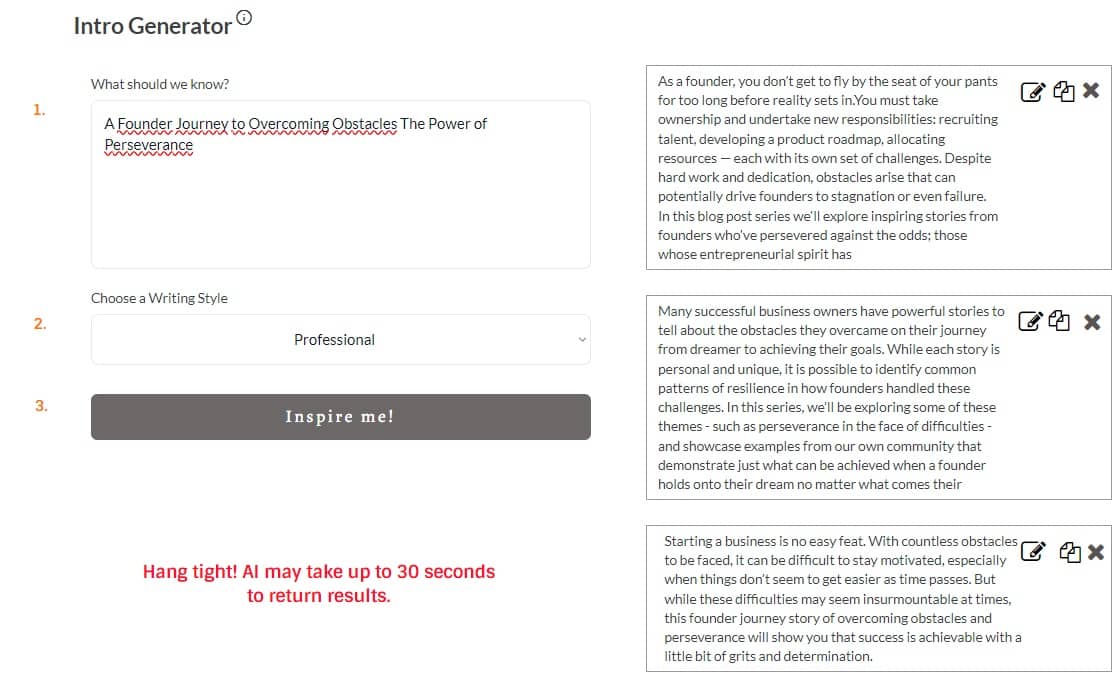
This time, we’ve turned to our AI-Powered Intro Generator, and we’ve used the title as our input. Here’s what that looks like:
Intro Generator Outputs:
As a founder, you don’t get to fly by the seat of your pants for too long before reality sets in. You must take ownership and undertake new responsibilities: recruiting talent, developing a product roadmap, allocating resources, each with its own set of challenges. Despite hard work and dedication, obstacles arise that can potentially drive founders to stagnation or even failure. In this blog post series, we’ll explore inspiring stories from founders who’ve persevered against the odds; those whose entrepreneurial spirit has
Many successful business owners have powerful stories to tell about the obstacles they overcame on their journey from dreamer to achieving their goals. While each story is personal and unique, it is possible to identify common patterns of resilience in how founders handled these challenges. In this series, we’ll be exploring some of these themes – such as perseverance in the face of difficulties – and showcase examples from our own community that demonstrate just what can be achieved when a founder holds onto their dream no matter what comes their way
Starting a business is no easy feat. With countless obstacles to be faced, it can be difficult to stay motivated, especially when things don’t seem to get easier as time passes. But while these difficulties may seem insurmountable at times, this founder journey story of overcoming obstacles and perseverance will show you that success is achievable with a little bit of grit and determination.
We can now choose to:
- Re-run the intro generator.
- Take one of the ideas we like, add our unique human touch, and perfect it.
You can use the intro generator for all your sub-chapters. It’s an easy way to get your creative juices flowing when you’re feeling stuck.
Promote your Digital Magazine
This is more of a bonus tip and friendly reminder. Creating your Digital Magazine is only half the battle. No matter if you created a Flipbook Magazine, or opted in for a HTML-5 one, you’ve put a lot of effort into creating it and you want to be seen by people that find it useful. Therefore, distribution should also be a top priority.
Check out our tips on Promoting your Digital Magazine.
Start with a clear editorial angle, not just a design idea
A digital magazine needs a reason to exist beyond looking polished. Before thinking about templates, article layouts, or visual style, define the editorial angle clearly. What kind of reader is this magazine for? What problems, interests, or themes will it cover repeatedly? Why should someone return after reading one issue or one article?
This matters because focused publications are easier to grow than broad ones. When the editorial direction is clear, the tone becomes easier to maintain, the visuals become easier to align, and the content becomes easier to plan. A digital magazine should feel like a recognizable product, not a random collection of articles.
The clearer the editorial identity, the stronger everything else becomes. Readers understand what they are getting, contributors understand what fits, and your content strategy becomes easier to sustain over time.
Design for mobile-first reading from the beginning
A digital magazine should be designed for how people actually read now, not how publishers used to design for desktop. Mobile-first reading experiences matter because many readers discover and consume content on phones, then continue across tablets, laptops, or social platforms.
That means layouts should be clean, responsive, and easy to navigate. Headlines should be readable at a glance. Paragraphs should breathe. Images should support the story instead of crowding the page. Calls to action should feel natural. Interactive features should improve the experience rather than slowing it down.
A digital magazine that looks impressive on a large screen but feels awkward on mobile will lose readers quickly. Modern publishing trends increasingly point toward responsive experiences instead of static page-flip replicas, especially when publishers want stronger engagement and better retention.
Build sections that encourage exploration
The best digital magazines do not only deliver single articles well. They make people want to keep browsing. That usually comes from structure.
Strong recurring sections help readers understand what to expect and what to click next. Examples might include feature stories, short takes, expert interviews, industry roundups, opinion pieces, practical guides, trend breakdowns, or visual spotlights. These sections make the publication feel consistent and easier to navigate.
This also improves content planning. When the structure is clear, the editorial team can build issues and publishing calendars faster. It becomes easier to identify gaps, vary article length, and create a better rhythm between deep features and lighter content.
Use AI to speed up production without flattening the voice
AI can help digital magazine teams move faster, but it works best as a support layer rather than a replacement for editorial judgment. It is useful for brainstorming issue themes, clustering related topics, drafting article outlines, generating summary copy, repurposing long-form features into social snippets, and speeding up metadata or newsletter support.
The key is keeping the publication’s voice intact. A digital magazine should still feel curated, human, and intentional. AI is most useful when it reduces repetitive work and gives editors more time to refine, sharpen, and shape the final product.
This is especially valuable for smaller teams. A lean editorial operation can use AI to publish more consistently, create stronger promotion around each issue, and test more content ideas without lowering standards.
Create visual consistency across every issue or article set
A digital magazine feels stronger when its visual language stays consistent. That includes typography, spacing, image treatment, color usage, section intros, and how recurring content is presented.
Consistency builds trust. It makes the magazine feel intentional and easier to recognize. Readers may not always describe that feeling directly, but they notice when a publication feels polished and coherent.
This does not mean every issue needs to look identical. It means there should be a clear system underneath the creative variation. A strong visual system gives each new article or issue room to feel fresh while still belonging to the same publication.
Plan distribution as part of the magazine, not after it
A digital magazine should not rely on the homepage alone. Distribution needs to be part of the editorial process from the start. Each article, section, or issue should be created with promotional reuse in mind.
That might include quote graphics, short-form video angles, newsletter teasers, carousel summaries, LinkedIn post versions, Pinterest titles, or issue launch snippets. AI can help here by turning one feature into multiple promotional assets more efficiently.
This matters because even strong magazine content can disappear if distribution is treated as an afterthought. A better workflow builds every issue with discoverability and repurposing already in mind.
Focus on readability, accessibility, and pace
A digital magazine should feel easy to move through. That means strong pacing between longer and shorter pieces, useful hierarchy in headings, and accessible formatting that supports more readers.
Accessibility is not only a technical requirement. It improves the publication for everyone. Clear structure, readable contrast, logical navigation, and thoughtful image use all help readers stay engaged longer.
The stronger the reading experience, the easier it becomes for the magazine to build loyalty. Good content matters, but so does the feeling of moving through it without friction.
Measure what makes people come back
A digital magazine should be judged by more than pageviews. Look at return visits, time spent, scroll depth, newsletter signups, saves, shares, and how often readers move from one article to another.
Those signals often say more than raw traffic because a magazine is usually trying to build an audience, not just attract one-off clicks. A strong publication creates a habit. Readers come back because they trust the editorial direction, enjoy the format, and know the experience will be worth their time.
That is the long-term goal of creating a digital magazine. Not just publishing content, but building something people want to revisit.
FAQ
Why is mobile-first design important for a digital magazine?
Mobile-first design matters because readers increasingly consume digital content on phones and tablets. A digital magazine needs responsive layouts, easy navigation, and readable formatting across smaller screens.
How can AI help create a digital magazine?
AI can help with topic planning, outlining, summaries, repurposing, metadata, and distribution support. It is most useful when it speeds up workflow while editors still shape the final voice and quality.
Should a digital magazine still have recurring sections?
Yes. Recurring sections help readers understand the publication, improve navigation, and make editorial planning easier. They also make a magazine feel more structured and recognizable over time.
What metrics matter most for a digital magazine?
Beyond pageviews, useful metrics include return visits, time on page, scroll depth, shares, saves, and newsletter signups. These better reflect whether readers are actually engaging and coming back.
Is digital magazine publishing still worth it?
Yes, especially for brands and publishers with a clear niche, strong editorial positioning, and multi-platform distribution. Current publishing trends still point to growth in digital readership, mobile consumption, and niche content demand.
What is involved in creating a digital magazine with AI?
AI assists in content creation, layout design, and audience targeting for digital magazines.
How does AI improve the design process of digital magazines?
AI streamlines design with templates, layout suggestions, and automated graphics.
Can AI generate content for digital magazines?
Yes, AI can write articles, create visuals, and curate content.
Is AI helpful in audience analysis for digital magazine publishers?
AI provides insights into reader preferences and engagement patterns.
How does AI handle the personalization of digital magazine content?
AI tailors content based on reader demographics and behavior.
Can AI integrate multimedia elements into digital magazines?
Yes, it can automate the integration of videos, audio, and interactive features.
How does AI contribute to the scalability of digital magazine production?
AI enables efficient scaling of content production and distribution.
Does AI assist with the marketing of digital magazines?
AI tools aid in targeted marketing campaigns and SEO optimization.
Can AI help in optimizing the digital magazine for different devices?
AI ensures content is responsive and optimized for various screens.
Is using AI cost-effective for small-scale digital magazine publishers?
AI can be a cost-effective solution, especially for automating repetitive tasks.
How does AI ensure the quality and accuracy of content in digital magazines?
AI utilizes fact-checking and quality control algorithms to maintain content standards.
Can AI tools create accessible content for all readers, including those with disabilities?
AI can ensure content is accessible, adhering to web accessibility standards.
How does AI impact the editorial process in digital magazine publishing?
AI streamlines the editorial process with suggestions for improvement and coherence.
Is it possible to automate social media promotion for digital magazines using AI?
AI can automate and optimize social media marketing strategies for digital magazines.
How does AI manage language and translation in digital magazines for a global audience?
AI can translate and localize content for diverse international readers.
Can AI tools help in curating user-generated content for digital magazines?
AI efficiently sorts and selects relevant user-generated content.
How does AI enhance interactive features in digital magazines?
AI integrates and optimizes interactive elements like quizzes and polls.
How does AI support environmental sustainability in digital magazine production?
AI-driven digital publishing reduces paper usage and carbon footprint.
Can AI provide insights into the best publishing times for digital magazines?
AI analyzes reader habits to suggest optimal publishing schedules.
How does AI contribute to creating a seamless reader experience in digital magazines?
AI tailors content and layout for an engaging, seamless reading experience.
Author bio
 Ritesh is a digital marketing manager with years of experience in driving growth. He’s currently the director of inbound marketing at Foleon. You can find more about him on his LinkedIn profile.
Master the Art of Video Marketing
AI-Powered Tools to Ideate, Optimize, and Amplify!
- Spark Creativity: Unleash the most effective video ideas, scripts, and engaging hooks with our AI Generators.
- Optimize Instantly: Elevate your YouTube presence by optimizing video Titles, Descriptions, and Tags in seconds.
- Amplify Your Reach: Effortlessly craft social media, email, and ad copy to maximize your video’s impact.