
Best AI Marketing Tools to Boost Your Content Strategy

AI marketing tools are no longer just writing assistants. The best ones now help marketers research topics, plan campaigns, generate content, repurpose assets, personalize messaging, analyze performance, and improve speed across the full content workflow.
That shift matters because AI is becoming a core part of modern marketing operations. HubSpot’s 2026 State of Marketing reports that 80% of marketers use AI for content creation and 75% use it for media production, while Salesforce’s State of Marketing highlights how marketers are treating generative and predictive AI as part of everyday marketing execution.
The opportunity is no longer just to create more content. It is to build a smarter content strategy where AI helps teams move faster, test more ideas, personalize at scale, and turn content into measurable business growth.
Key Takeaways:
- AI marketing tools streamline every stage of content creation, from ideation to localization, improving efficiency and consistency.
- Marketers using AI report higher campaign success rates, faster execution, and better audience engagement.
- With support for global reach and deep personalization, AI tools are essential for scaling content strategies in 2026.
Artificial intelligence has become indispensable in modern content marketing. From crafting email campaigns to translating content for international markets, AI tools are reshaping how marketing teams operate. In 2026, these tools go beyond automation; they now offer strategic advantages in creativity, speed, and scale. With AI content marketing tools increasingly integrated into daily workflows, marketers can ideate faster, optimize smarter, and reach global audiences with unprecedented ease.
According to recent industry data, 88% of marketers now use AI tools as part of their daily workflows, a strong indicator of how integrated artificial intelligence has become in marketing operations. Among them, 85% specifically leverage AI for content creation, from drafting blog posts to optimizing ad copy.
These tools not only enhance productivity but also speed up time-to-market for campaigns. In fact, companies using AI report up to a 25% improvement in campaign success rates, demonstrating the strategic advantage of automation.
Furthermore, the momentum behind AI adoption shows no signs of slowing down. Over 85.8% of marketing professionals plan to increase their use of AI in the next two to three years. This shift underscores a growing consensus: intelligent automation is no longer a novelty, it’s a central pillar of modern marketing strategy.
Chapters
Why Marketers Need Smarter Tools in a Global Landscape

Content marketing must balance personalization, speed, and localization. The average brand creates and distributes dozens of content assets per week, often across multiple languages and platforms. Traditional methods can’t keep up. AI-powered marketing platforms fill this gap by offering scalable solutions that adapt to brand voice, target audience, and local context.
In a globalized marketplace, marketers face increased complexity. Consumers expect messages that are culturally relevant, timely, and personalized. AI tools enable this by automating content generation, ensuring brand consistency, and providing insights into audience behavior. Marketers equipped with the right tools can localize content without delays, personalize experiences across buyer journeys, and measure performance in real time
Ideation and Planning
StoryLab.ai: Spark Ideas with AI Prompts
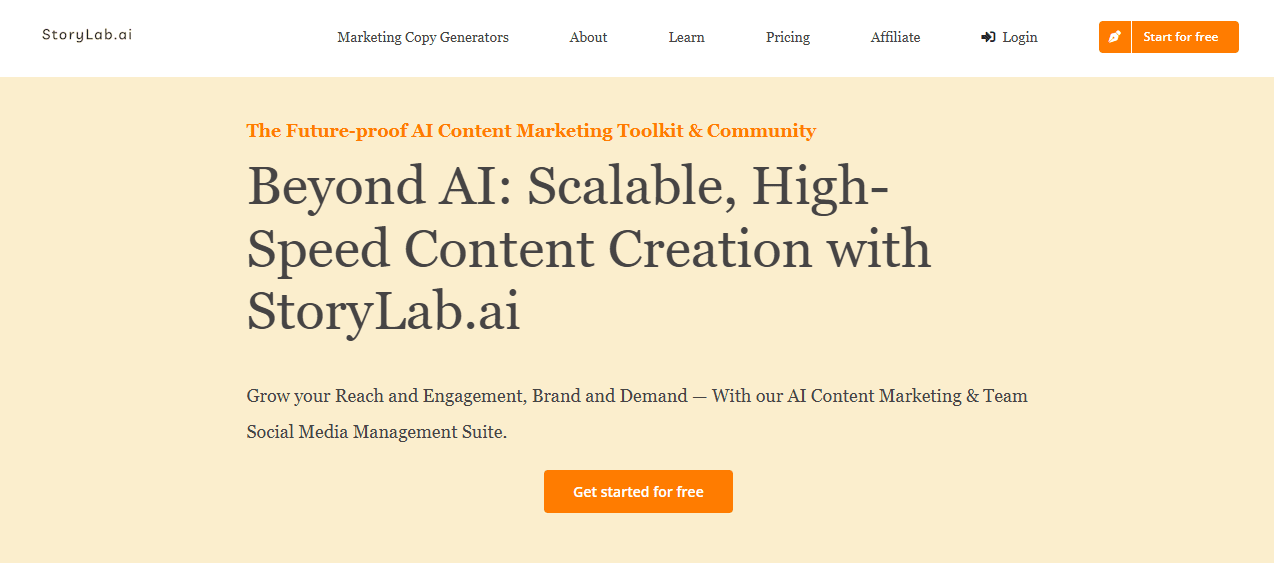
StoryLab.ai is an AI-powered ideation tool designed to streamline the brainstorming phase of content marketing. It uses intelligent prompts to help generate a wide array of creative assets, including blog titles, email subject lines, and social media hooks. Users simply enter a topic or keyword, and StoryLab.ai delivers multiple-angle suggestions optimized for different tones and audience types.
- AI Prompt Generator: Suggests unique content hooks based on your input, speeding up creative development.
- Audience & Tone Customization: Adjusts outputs to align with specific campaign goals, tone of voice, or platform style.
- Time-Saving Content Ideation: Empowers marketers to rapidly test different approaches without hitting creative blocks.
StoryLab.ai is particularly effective for solo marketers and small teams who need to maintain high content output. It keeps creative momentum going, enabling faster launches and richer content calendars.
Jasper: AI Writing That Matches Your Brand Voice
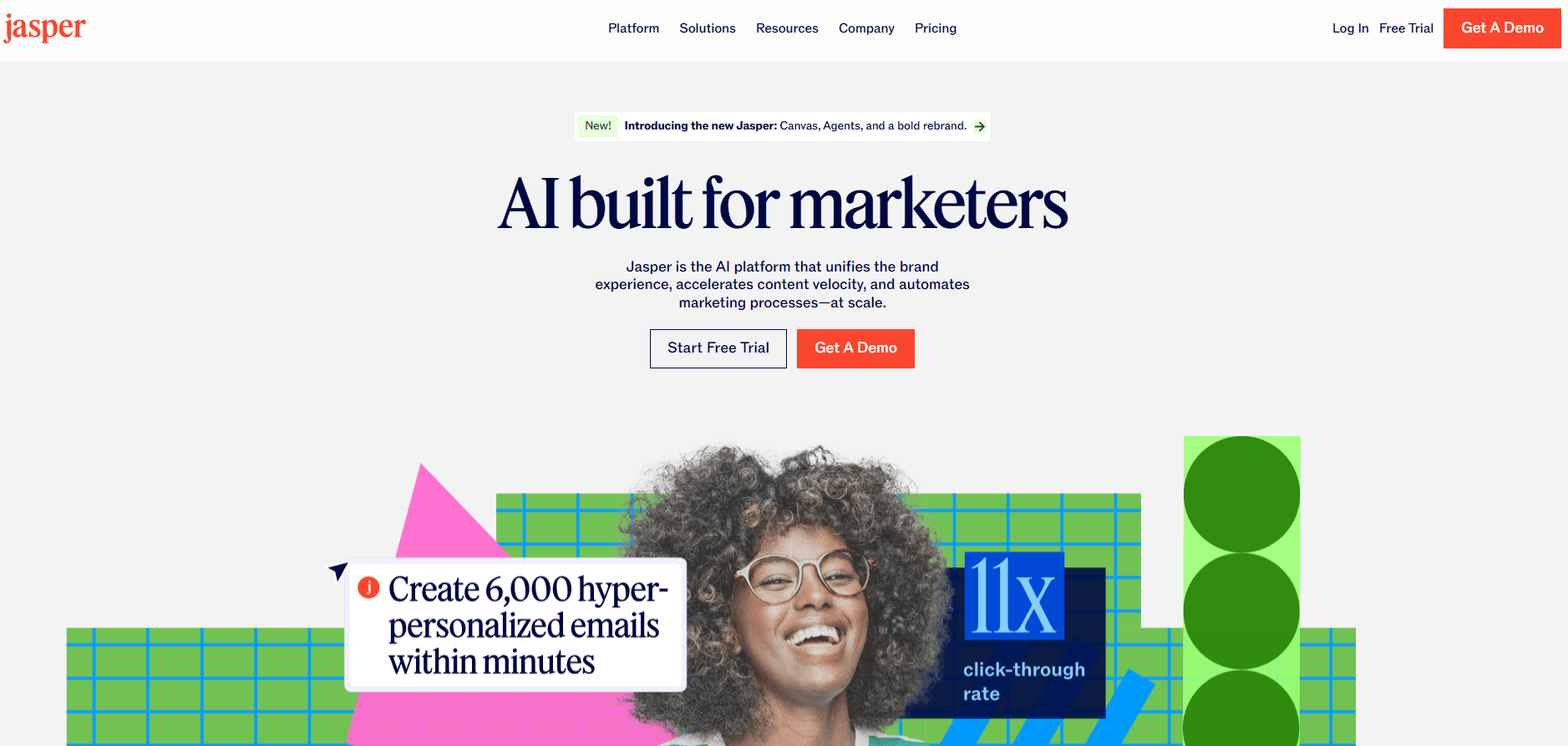
Jasper is a robust AI writing assistant designed to help marketers scale content production while maintaining brand consistency. It generates full-length blog posts, product descriptions, and landing pages based on minimal prompts, all while ensuring the final output reflects your unique voice and messaging.
- AI-Powered Content Generator: Transforms short briefs into long-form, high-quality content within minutes.
- Tone and Voice Control: Offers advanced settings to match your brand guidelines and preferred communication style.
- Platform-Specific Adaptation: Tailors writing style for different use cases—from formal white papers to casual social posts.
- Surfer SEO Integration: Enhances content with built-in SEO optimization tools, making Jasper a comprehensive writing and optimization solution.
Whether you’re producing evergreen blogs or launching fast-moving ad campaigns, Jasper speeds up the process and elevates your content strategy with AI-driven precision.
Content Creation and Optimization
Webnode: AI website builder for small businesses
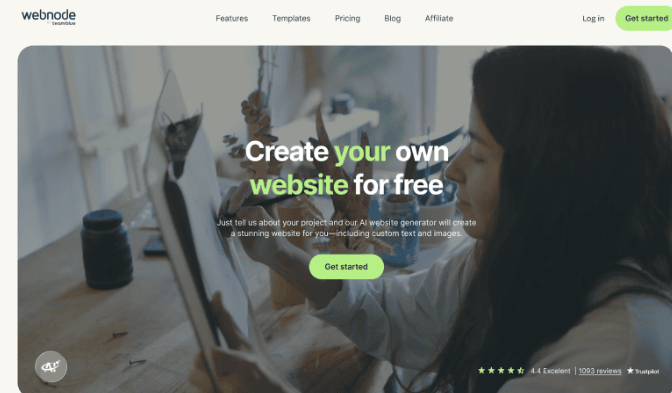
Webnode is an AI-powered website builder that generates a fully functional site based on your business type, without any coding or design experience needed. Once your site is ready, you edit everything through a simple drag-and-drop interface, adding your own text, images, contact form, or online store in minutes.
- AI-Powered Site Generation: Create full websites with custom text and images by simply describing your project.
- Intuitive Editor & Templates: Drag-and-drop editing combined with modern, responsive templates makes design and customization easy.
- Built-In SEO & Marketing Tools: Tools like customizable URLs and SEO basics help your site get noticed online.
This AI-powered solution is ideal for small business owners, creatives, and anyone who wants to look polished online without steep learning curves.
Copy.ai: Instant Copy for Ads, Blogs, and Emails
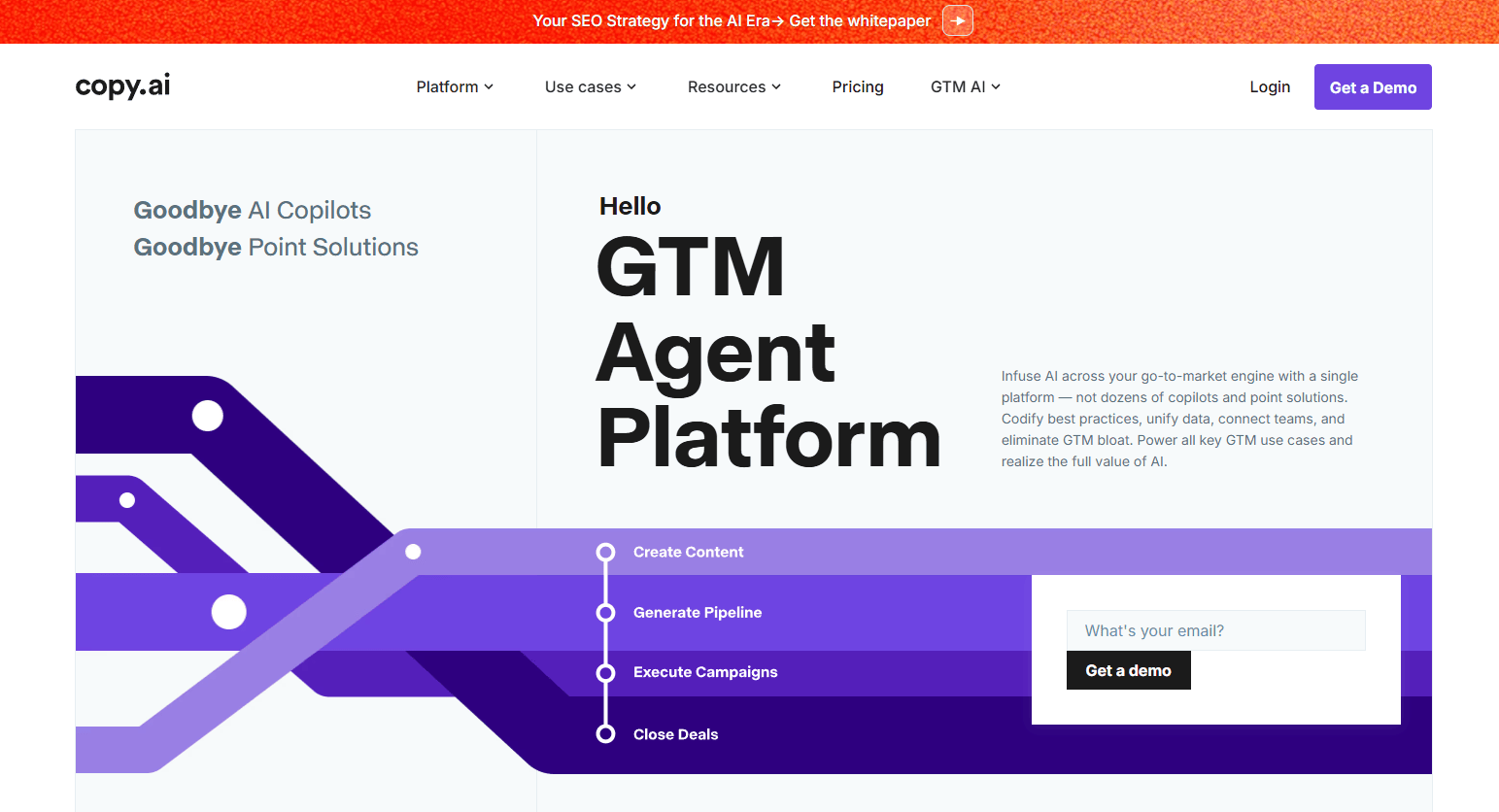
Copy.ai is a flexible AI writing tool designed to support fast content generation across a variety of marketing formats. Marketers can input a simple product description or campaign brief, and Copy.ai produces a range of content options, including ad copy, email sequences, and blog introductions, in seconds.
- Multi-Format Content Creation: Produces ready-to-publish content for emails, blogs, ads, and more based on a few input keywords.
- Rapid Ideation and A/B Testing: Offers multiple variations instantly, ideal for message testing and performance optimization.
- Channel-Specific Messaging: Enables social media managers and growth marketers to maintain brand voice in cross channel campaigns across platforms with minimal effort.
By reducing creative bottlenecks, Copy.ai helps teams maintain consistent messaging and meet tight deadlines without sacrificing originality or quality.
Surfer SEO: Content Optimization in Real Time
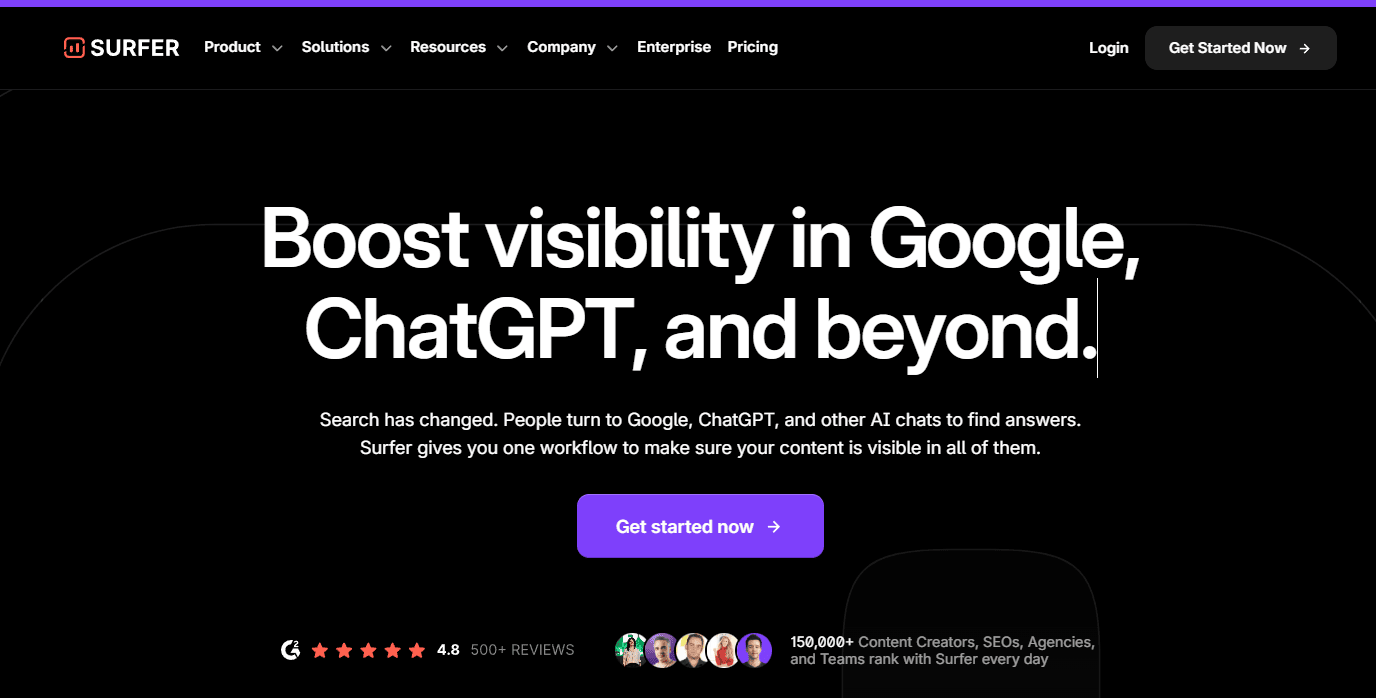
Surfer SEO combines artificial intelligence with real-time optimization tools to help marketers create content that not only reads well but also performs in search rankings. As you draft content, Surfer analyzes top-ranking pages and delivers on-the-fly recommendations for keywords, structure, and readability.
- Real-Time SEO Guidance: Provides keyword and structure suggestions as you write, based on current SERP data.
- Content Brief Generator: Builds a detailed framework for your content, including word count, headings, and relevant topics.
- Optimization and Audit Tools: Helps teams enhance existing content to align with evolving SEO trends and improve visibility.
Ideal for content teams producing SEO-driven articles and landing pages, Surfer bridges the gap between writers and SEO experts, ensuring every piece is not only engaging but also discoverable.
GrammarlyGO: Smarter Writing with Generative AI
GrammarlyGO enhances traditional grammar checking with the power of generative AI. It enables marketers to rephrase, expand, or simplify text while preserving tone, meaning, and intent, making it ideal for refining all types of marketing communications.
- AI Rewriting Assistant: Reconstructs sentences for tone, clarity, and brevity, based on user intent.
- Tone Customization: Allows marketers to shift writing from casual to formal, friendly to assertive, or anywhere in between.
- Multilingual Clarity Support: Reduces language ambiguity and enhances professionalism across global teams.
Whether you’re drafting emails, blog posts, or press releases, GrammarlyGO ensures your message is polished and precise, making it easier to build trust and engage with diverse audiences.
Global Reach and Localization
Lara Translate: Context-Aware Translation for Multilingual Marketing
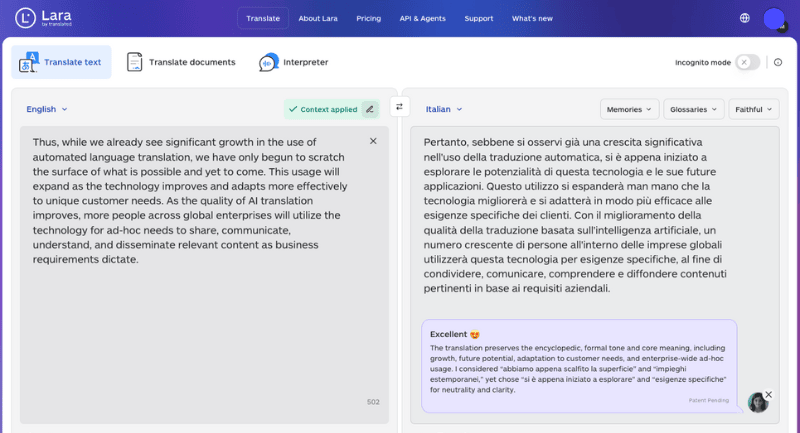
Lara Translate helps marketing teams turn content into any target language while preserving tone, intent, and brand terminology. Upload documents or paste copy, apply glossaries and translation memories, and get layout-preserving outputs reviewers can trust.
- Multilingual Content at Scale: Translate blogs, emails, landing pages, and creative assets with consistent brand voice.
- Document Translation: Upload PDFs, DOCX, PPTX, and 55 more file formats. Keep layout, lists, tables, and visuals intact so files are ready to share.
- Glossaries & Translation Memories: Lock key terms and reuse approved segments to cut rework and maintain consistency.
- Reviewer-Friendly Outputs: Get explanations of choices and ambiguity flags so marketing and legal can approve faster.
By removing guesswork from localization, Lara Translate helps teams repurpose top-performing content for new markets, shorten review cycles, and ship campaigns faster without sacrificing quality.
MachineTranslation.com: Enterprise-Grade AI Translation
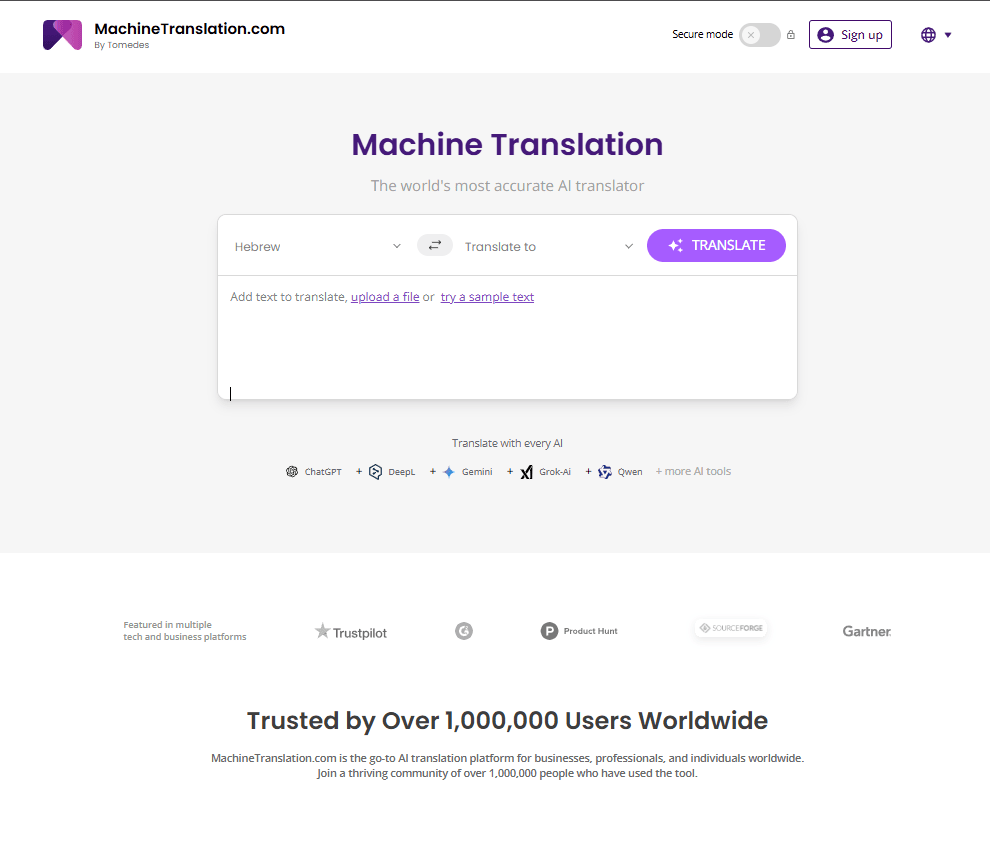
MachineTranslation.com is one most accurate AI translators, developed by a translation company, Tomedes, built for fast, brand-consistent localization at scale. It aggregates outputs from top AI engines, including DeepL, Google, ChatGPT, and more, allowing users to compare translations and select the best fit. But the real power lies in its advanced personalization.
- AI Translation Agent: This feature refines translations using AI-generated questions based on your source text. Registered users benefit from memory-based learning, meaning the agent improves over time by adapting to your terminology and tone preferences.
- Key Term Translations: For any text, the platform identifies up to 10 critical industry-specific terms and presents top translation options in a user-friendly table. It ensures accuracy for technical, legal, or branded content.
- Segmented Bilingual UI: This allows line-by-line comparison of source and translation, making editing faster and clearer.
- 270+ Language Support: From widely spoken to emerging languages, MachineTranslation.com helps brands expand globally without compromising on quality.
Whether you’re localizing eCommerce listings or global press releases, MachineTranslation.com turns complex multilingual tasks into a few intuitive steps. It’s an essential AI marketing solution for multilingual campaigns and global growth.
Audience Engagement and Performance Tracking
Persado: Emotionally Optimized Messaging
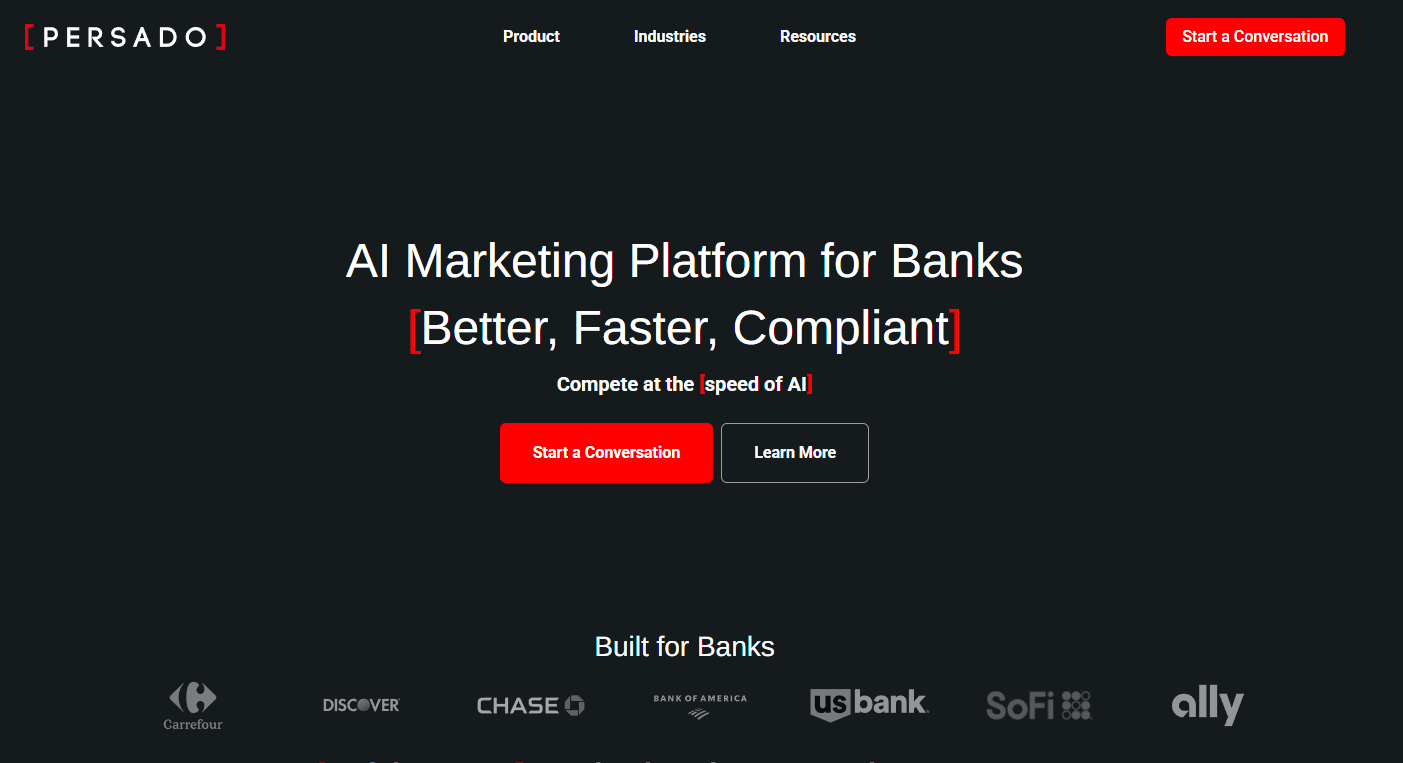
Persado uses AI to analyze language and suggest emotionally charged words, phrases, and tones that drive engagement. It’s especially effective for email subject lines, landing page headlines, and call-to-action buttons. By testing different emotional frameworks, such as urgency, curiosity, or trust, Persado helps marketers increase conversions through data-driven creativity.
- Emotion Optimization Engine: Suggests emotionally resonant language tailored to specific audiences and goals.
- Real-Time Message Testing: Continuously learns from audience engagement to refine performance.
- Versatile Application: Enhances campaigns across email, ads, landing pages, and more.
Persado empowers marketers to connect more deeply with audiences by transforming how messages are crafted and tested, boosting ROI with scientifically driven language.
Seventh Sense: Precision Email Timing
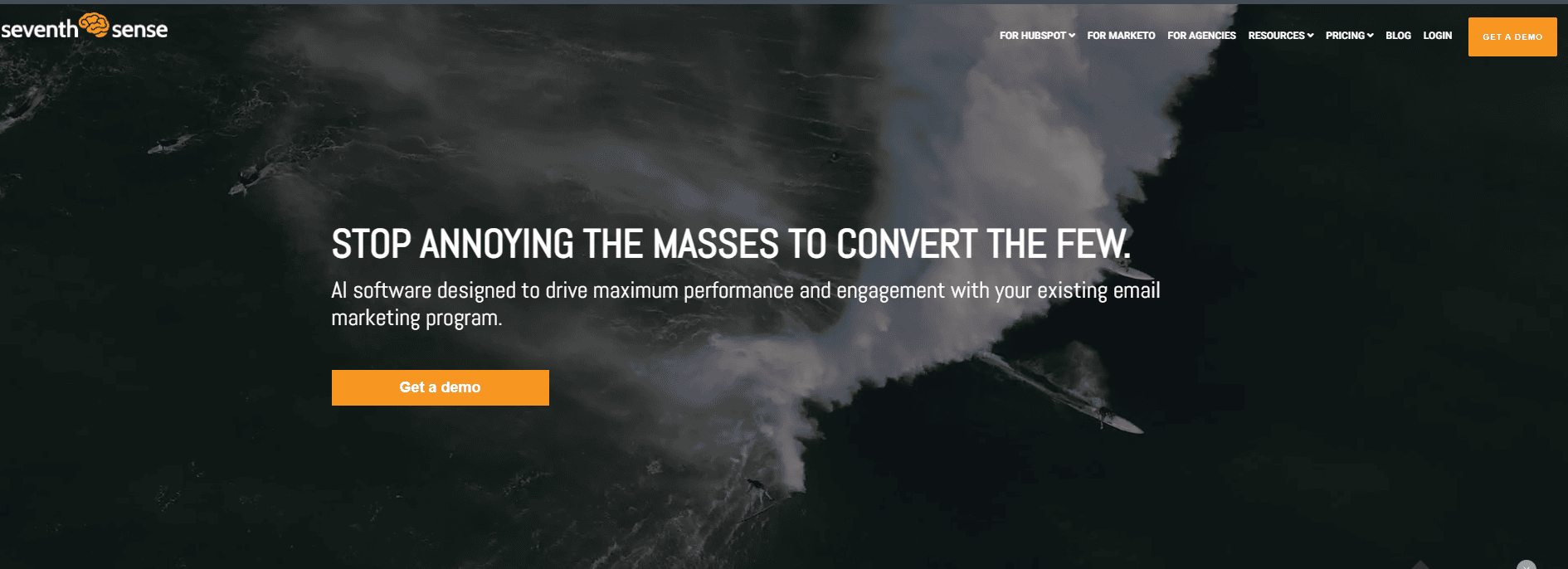
Seventh Sense is a behavioral email optimization platform designed to improve the effectiveness of your campaigns through AI-powered send-time personalization. By studying engagement habits at the individual level, it ensures each message arrives at the moment a recipient is most likely to act.
- Behavioral Send-Time Optimization: Uses historical interaction data to schedule emails at peak engagement times for each contact.
- CRM Platform Integration: Works seamlessly with HubSpot, Marketo, and other marketing systems to enhance workflow automation.
- Deliverability Enhancement: Reduces unsubscribes and boosts email open and click-through rates through targeted delivery timing.
Especially beneficial for B2B teams and high-volume email senders, Seventh Sense helps marketers overcome inbox fatigue and get better results from every email.
HubSpot AI Tools: Smart CRM and Content Sync
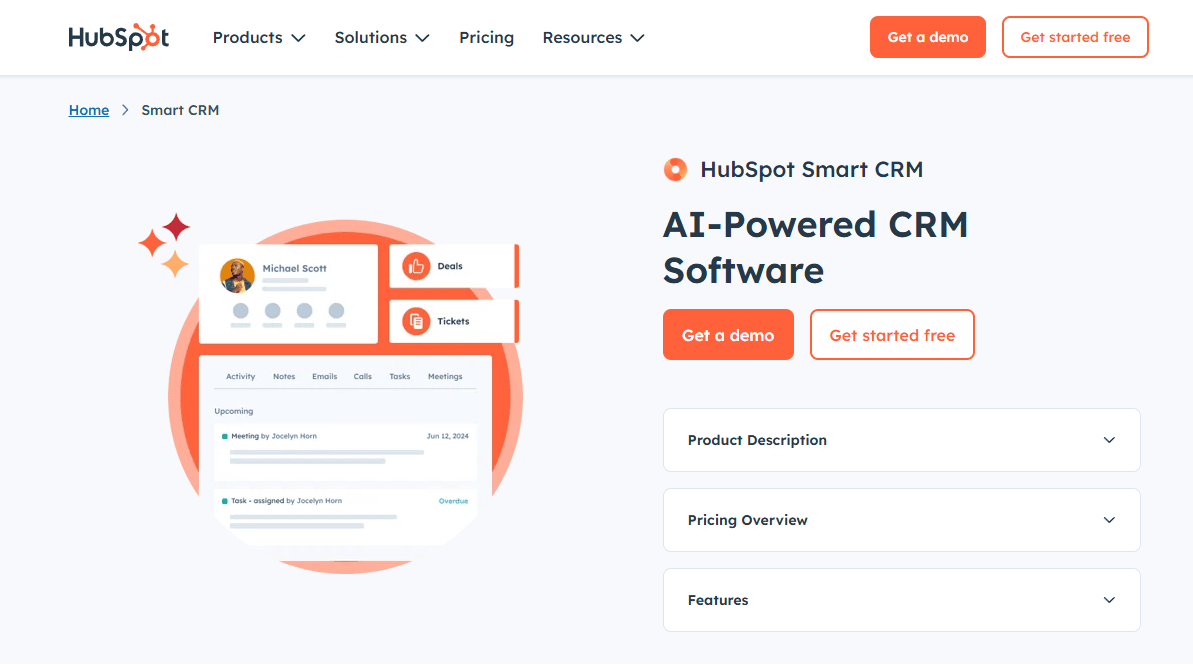
HubSpot has developed a powerful suite of AI-driven features to support content marketers and sales teams across the full funnel. From attracting leads to personalizing experiences and optimizing conversion, its tools are built to make marketing smarter and more efficient. For businesses exploring HubSpot CRM alternatives, it’s useful to compare how other platforms handle similar AI-driven features.
- Predictive Lead Scoring: Identifies and prioritizes high-potential leads based on AI-driven behavioral analysis.
- Smart Content Recommendations: Suggests tailored content for each user based on their interactions and journey stage.
- Customer Journey Mapping: Visualizes and automates interactions across channels to optimize conversions and engagement.
With integrated analytics, HubSpot enables continuous performance tracking and campaign improvement. Whether you’re nurturing leads or scaling a product launch, HubSpot’s AI ecosystem drives better results with less guesswork.
Hootsuite’s OwlyWriter AI: Platform-Specific Social Content
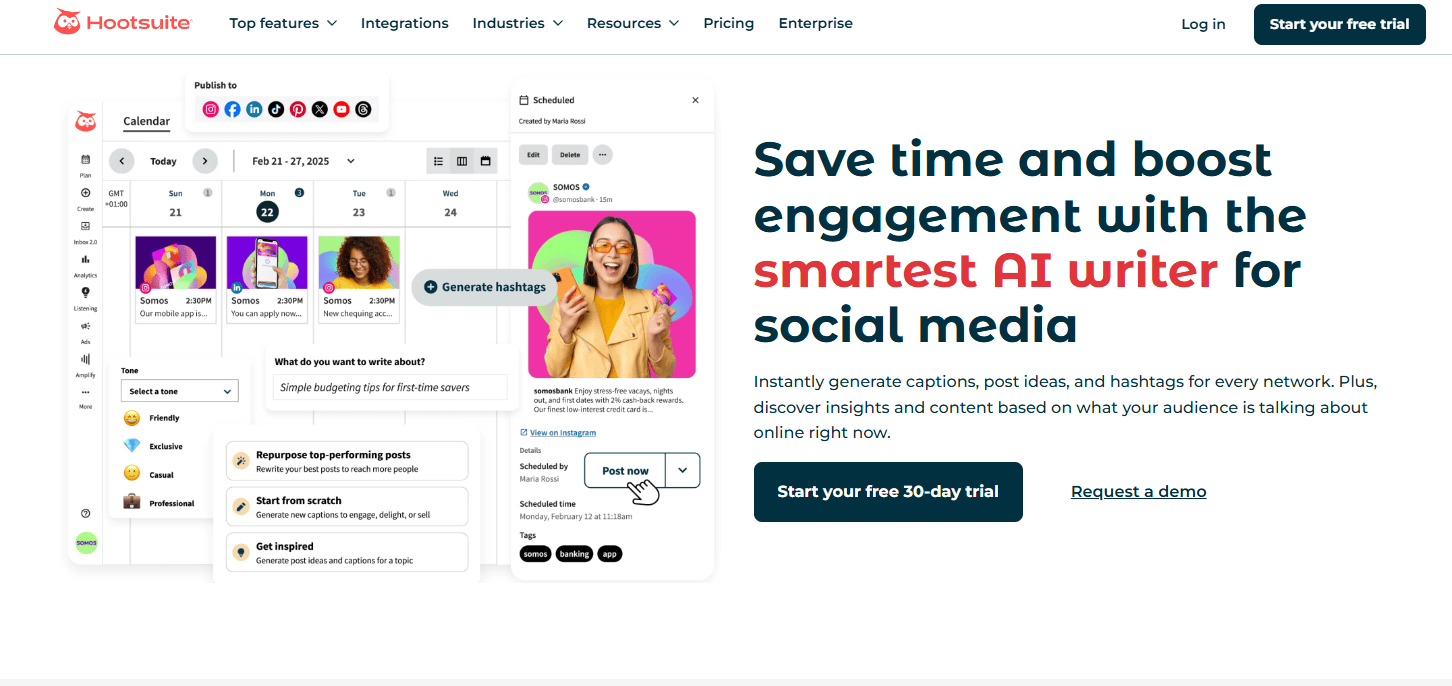
OwlyWriter AI is Hootsuite’s integrated AI content assistant built specifically for social media teams. It generates captions, post ideas, and content variations tailored to each platform’s tone, format, and audience behavior.
- Platform-Specific Content Generation: Crafts tailored captions and posts for Instagram, LinkedIn, Twitter, Facebook, and more.
- Trend-Based Prompts: Suggests post angles around trending topics to keep content timely and engaging.
- Content Repurposing Engine: Transforms blog posts or announcements into bite-sized social media content.
OwlyWriter AI helps busy social teams maintain content velocity without burning out. Whether managing multiple accounts or responding to real-time events, it keeps your brand active, consistent, and on-trend.
Why AI marketing tools now matter for content strategy
A strong content strategy depends on more than publishing consistently. It depends on choosing the right topics, understanding audience intent, creating the right formats, and keeping production moving without sacrificing quality. That is where AI marketing tools now add real value.
Instead of using one tool only for drafting blog posts, marketers are using AI across the whole workflow. AI can help surface content ideas, cluster keywords, generate outlines, write social variations, repurpose long-form assets, suggest campaign angles, and speed up reporting. Google describes this broader shift as marketers moving from predictive and generative AI into more agentic forms of AI support inside marketing workflows.
That changes how teams should think about content strategy. The goal is not just to publish faster. It is to make strategy, production, and optimization work together more efficiently.
The best AI marketing tools support the full content workflow
The strongest AI marketing tools are useful before, during, and after content creation. Before content is made, they can help with research, topic discovery, keyword grouping, competitive pattern analysis, and content brief creation. During production, they can support outlines, drafts, rewrites, creative testing, headline ideas, visual creation, and repurposing. After publishing, they can help analyze performance, surface winning patterns, and generate follow-up assets.
This matters because content strategy often breaks down at the handoff points. Research sits in one place, writing happens somewhere else, social promotion becomes rushed, and reporting arrives too late to shape the next campaign. AI tools can help close those gaps by making the workflow more connected.
The best tools do not just create text. They support planning, iteration, distribution, and learning.
Use AI marketing tools to repurpose instead of constantly starting over
One of the biggest content strategy wins comes from repurposing. Most marketing teams already have more raw material than they fully use. Blog posts, webinars, reports, customer stories, podcasts, newsletters, and product launches can all become multiple pieces of content.
AI tools make that easier. A long-form article can become LinkedIn posts, email copy, short-form video scripts, ad angles, carousel text, and FAQ sections. A webinar can become blog ideas, summary posts, quote graphics, and nurture content. HubSpot’s reporting shows that AI is already deeply embedded in how marketers handle content creation and media production, which makes repurposing one of the most practical use cases for scaling output.
For content strategy, that means AI helps teams get more value from every campaign instead of forcing them to create everything from scratch.
AI tools can improve personalization without slowing teams down
Personalization has always been valuable, but it has often been difficult to scale. AI marketing tools make it easier to tailor headlines, calls to action, audience angles, campaign variants, and content recommendations without rebuilding the entire asset library manually.
That matters because modern content strategy is not only about reach. It is about relevance. Salesforce highlights personalization and AI as major priorities in modern marketing, while Google continues to frame AI as a way for marketers to improve efficiency and better adapt messaging to real customer needs.
The strongest content teams use AI to create more relevant versions of the same core message for different audiences, channels, and stages of the journey.
What to look for in the best AI marketing tools
The best AI marketing tools are not always the ones with the longest feature list. They are the ones that fit your workflow and help your team move faster without creating more cleanup work later.
Look for tools that support practical use cases such as research, ideation, outlining, repurposing, performance analysis, workflow automation, and cross-channel adaptation. It also helps when a tool can work with your existing stack instead of forcing content teams into disconnected systems.
A good AI marketing tool should save time, improve strategic clarity, and help maintain quality as output grows. If it only produces generic content quickly, it may increase volume without improving results.
How AI marketing tools fit into a stronger content strategy
AI should support strategy, not replace it. The strongest content strategy still depends on brand positioning, audience understanding, editorial judgment, and clear business goals. AI makes those things easier to execute, but it does not remove the need for them.
This is where many teams get better results. They use AI for acceleration, variation, and workflow support while keeping human oversight on message, quality, and differentiation. Microsoft’s Work Trend Index and Google’s AI marketing guidance both point toward a future where AI works alongside humans to expand capability, not just automate isolated tasks.
For content strategy, that means the best use of AI is often not replacing marketers. It is helping them research faster, create smarter, and optimize more consistently.
Common mistakes when using AI marketing tools for content strategy
A common mistake is using AI only for first drafts and never for planning, repurposing, or performance analysis. Another is publishing AI-assisted content too quickly without editing for clarity, originality, and brand fit. Some teams also add too many tools at once, which creates fragmentation instead of efficiency.
A stronger approach is to start with a few high-value use cases. For example, use AI to speed up content briefs, turn one asset into many channel-specific pieces, improve headline testing, or create faster reporting loops. Once that workflow is solid, expand into other use cases.
The best AI marketing tool stack is not the biggest one. It is the one that helps your team create better content strategy decisions and better campaign execution.
Conclusion: Smarter Marketing for a Global Audience
As AI marketing tools become more sophisticated, they offer holistic support across the content lifecycle. From initial brainstorming with StoryLab.ai to global localization via MachineTranslation.com, these tools empower marketers to scale efforts without sacrificing quality.
Statistics back up this trend: 88% of marketers use AI daily, 85% for content creation, and 93% report faster execution. With 90% of professionals planning to increase AI adoption in 2026, the momentum is undeniable.
Together, these ten tools help marketers:
- Brainstorm and plan campaigns faster
- Produce and optimize content more efficiently
- Translate and localize for global audiences
- Engage users with targeted, data-informed messaging
The future of content marketing lies in intelligent automation. Adopting the right AI tools now will position your team for faster growth, stronger engagement, and greater global impact in 2026 and beyond.
FAQ
What kind of AI tools support content marketing?
AI tools assist with content ideation, keyword research, blog writing, social media generation, topic clustering, SEO optimization, video creation, and performance tracking.
How do AI tools streamline content ideation?
AI generates topic ideas, headlines, outlines, and content briefs based on target keywords or audience interests, making it faster to launch campaigns.
Can AI tools improve SEO for marketing content?
Yes. Many tools analyze search trends, optimize metadata, suggest internal links, and provide readability scores to improve content visibility.
How do tools help with speed of content production?
They produce drafts, social snippets, video scripts, or caption ideas quickly. Writers refine AI output instead of starting from scratch.
Which tools support multi-channel content planning?
Some platforms allow scheduling and generating content for blogs, newsletters, social posts, and video scripts from one dashboard.
Can AI adapt content for different audiences or tones?
Yes. Users can set parameters for tone, style, or target audience—such as casual, technical, or authoritative—and AI tailors content accordingly.
What tools help track content performance after publishing?
Tools often include dashboards showing traffic, engagement, ranking, conversion, and lead generation metrics so you can refine strategy.
Are AI tools useful for generating visual content or videos?
Yes. Many AI tools create branded visuals, short video clips, captions, animation storyboards, and thumbnails aligned with your content theme.
Is human editing still needed after using AI tools?
Absolutely. Human review ensures accuracy, emotional tone, strategic alignment, brand voice, and that outputs feel authentic.
How can AI tools help with content repurposing?
They transform long-form content into social posts, headlines, summaries, scripts, and infographics—maximizing reach on multiple platforms.
Do these tools support collaboration among marketing teams?
Yes. Many offer shared editing, feedback loops, role assignments, version control, and centralized content planning features.
Can AI tools scale content production for small teams?
They allow small teams to generate more ideas, draft more content, and maintain consistent cadence without adding headcount.
How are AI tools helpful in optimizing content for search engines?
AI may suggest optimal word count, keyword density, related keywords, internal linking, and structure to boost search ranking potential.
What role do these tools play in A/B testing content hooks?
AI can quickly generate multiple headline or brief variations to test on email, social, or ad platforms to refine performance.
How do tools integrate with existing marketing tech stacks?
Many integrate with CMS platforms, content calendars, email marketing tools, SEO dashboards, and analytics systems for seamless workflow.
What are common limitations of AI marketing tools?
Limitations include generic phrasing without prompts, a need for manual brand alignment, and occasional repetitions without human oversight.
What metrics should marketers track when using AI tools?
Key metrics include organic traffic, keyword rankings, engagement rate, conversion rate, time on page, and cost per lead.
How do marketers choose the right AI marketing tool?
Consider feature sets (writing, graphics, analytics), ease of use, integration options, pricing, and alignment with your content goals.
How do AI tools impact content marketing ROI?
By reducing time to publish, improving quality and consistency, and widening distribution channels, these tools increase output while lowering cost.
What is the first step to using AI tools for marketing?
Begin by testing tools that match your goals, generating sample outputs, evaluating results, and establishing a workflow that blends AI with human editing.
Other Interesting Articles
- AI LinkedIn Post Generator
- Gardening YouTube Video Idea Examples
- AI Agents for Gardening Companies
- Top AI Art Styles
- Pest Control YouTube Video Idea Examples
- Automotive Social Media Content Ideas
- Plumber YouTube Video Idea Examples
- AI Agents for Pest Control Companies
- Electrician YouTube Video Idea Examples
- How Pest Control Companies Can Get More Leads
- AI Google Ads for Home Services
- 60-Second Training Videos Are the New Corporate Standard
- Cybersecurity PR Pricing: Retainers, Deliverables & ROI
- Best AI Tools for Product Consistency in E-Commerce Video
Master the Art of Video Marketing
AI-Powered Tools to Ideate, Optimize, and Amplify!
- Spark Creativity: Unleash the most effective video ideas, scripts, and engaging hooks with our AI Generators.
- Optimize Instantly: Elevate your YouTube presence by optimizing video Titles, Descriptions, and Tags in seconds.
- Amplify Your Reach: Effortlessly craft social media, email, and ad copy to maximize your video’s impact.