
Sales Tools That Close Deals: CRM, Calls, Proposals

Sales tools should help your team sell better, not create more dashboards to manage.
The right sales stack makes it easier to follow up fast, understand buyer intent, coach reps, keep CRM data clean, and remove friction from the final steps of a deal. The wrong stack does the opposite. It adds admin, fragments customer data, and forces reps to spend more time managing software than speaking with prospects.
That is why choosing sales tools should start with one simple question:
Where are deals getting stuck?
Some teams need better outreach. Others need stronger call coaching, faster proposal workflows, cleaner CRM data, or clearer next steps after the demo. AI-powered sales tools can help across all of these areas, but only when they are connected to the way your team already sells.
Below, we break down the best sales tools that help teams close more deals, plus how to choose the right mix based on your sales motion, team size, and biggest bottleneck.
Most “best sales tools” lists are really “best sales tools that look nice in screenshots.”
This isn’t that list.
These tools help you close deals by doing at least one of the following:
- Speeding up follow-up (so leads don’t go cold)
- Improving deal execution (next steps, accountability, forecasting)
- Coaching reps using real conversation data (not vibes)
- Removing closing friction (proposals, signatures, contracting)
A quick stat that explains why tools matter
Speed-to-lead is a deal killer. Re:work highlights that responding within 5 minutes can increase conversion dramatically (commonly cited as up to 21x compared with slower response).
That’s the point of a good sales stack: help you move fast, consistently, without relying on heroics.
Why waste valuable time on repetitive sales tasks when the right tools can handle them for you? Our testing of 19 leading sales solutions shows that smart automation gives reps back an average of three hours each week. That adds up to 156 hours a year that can be spent closing deals rather than wrestling with paperwork.
Sales tools are no longer optional extras. They are critical to hitting targets and staying ahead of the competition. Market data confirms their impact, with platforms like Weflow saving teams more than five hours a week while maintaining 92 percent forecast accuracy. Close CRM, with its 4.7 out of 5 G2 rating, is another example of how these solutions are reshaping modern sales.
In this guide, we share the results that matter most. Our team has tested and compared the strongest tools on the market so you can build a sales tech stack that works.
These 6 platforms go beyond flashy dashboards, delivering practical automation, AI-driven insights, and deal-tracking power that help teams win more business.
Chapters
Sales Tech Matcher
Find the Right Tool
What's your biggest pain point?
Select a problem to find the solution.
Top Pick: --
--
--
Time is Money
See how much admin work costs you.
Avg rep spends ~30% time on admin.
Per Year (Team Total)
Demo Day Checklist
Ask these questions before you buy.
How to choose sales tools that actually move deals forward
Before picking tools, answer these three questions:
Where do deals stall?
Common bottlenecks: slow follow-up, weak discovery, unclear next steps, proposal delays, procurement chaos, poor handoffs.
What’s your sales motion?
Inbound-heavy teams need routing + speed + scheduling. Outbound-heavy teams need engagement + deliverability + personalization. Enterprise needs mutual action plans + CPQ + CLM.
What’s the smallest stack that fixes the bottleneck?
Every extra tool adds training time, admin, and messy data.
The “close deals” rule of thumb
If a tool doesn’t improve one of these, it’s probably a distraction:
- Speed-to-lead
- Deal execution (tasks, next steps, pipeline hygiene)
- Buyer alignment (shared plan, clear milestones)
- Proposal + signature cycle time
- Coaching + consistency
Best Sales Tools That Actually Close Deals
Cirrus Insight
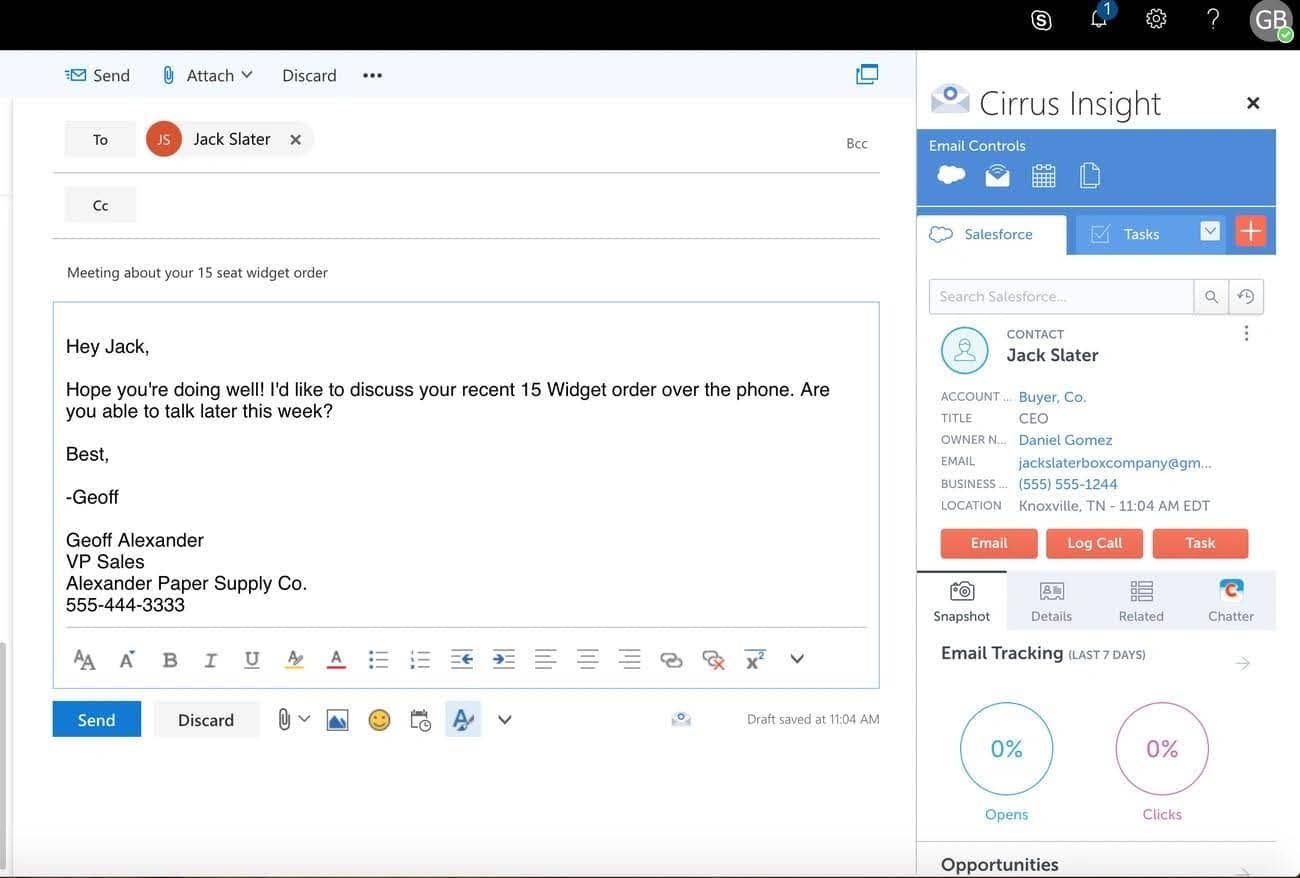
Cirrus Insight is a sales productivity platform designed to bridge the gap between email and CRM, reducing the burden of manual data entry and administrative work that often slows down sales teams. Studies show that non-selling tasks consume more than half of a rep’s time, highlighting the need for automation.
Cirrus Insight addresses this with features such as Salesforce Sync, which automatically connects emails, calendar events, and tasks to Salesforce, saving thousands of hours each year. Meeting AI prepares reps before calls, ensuring they arrive informed, while Buyer Signals identifies promising leads by tracking prospect interactions.
Cirrus Insight prices vary by tier:
- Salesforce Sync: $14.00 per user monthly (standard bi-directional or one-way sync of emails, events, and tasks)
- Pro: $21.00 per user monthly (has Salesforce Sync plus inbox, sidebar, and personal scheduling)
- Expert: $49.00 per user monthly (has all Pro features plus team scheduling, email blast, and email tracking)
- Scheduling: $14.00 per user monthly (personal scheduling page and meeting booking)
- Scheduling+: $24.00 per user monthly (has all Scheduling features plus automated routing engine)
- Meeting AI: Pricing available upon request (pre-meeting research and automated AI meeting prep)
Users love Cirrus Insight. The platform scores 4.2/5 from 113 reviews. It gets similar marks for ease of use (4.2/5), value (4.0/5), support (4.1/5), and features (4.1/5).
Patrick Armstrong from SecureFutures says: “Cirrus helps with setting meetings with prospects and connecting all our email conversations into our CRM (Salesforce). It’s very helpful with those processes”.
For teams evaluating their options, exploring Cirrus Insight vs Yesware can provide valuable perspective. Both platforms aim to simplify workflows and improve sales productivity, but Cirrus Insight stands out for its deep CRM integration and AI-driven features that reduce administrative burdens.
Understanding these differences can help sales leaders choose the tool that best aligns with their team’s daily challenges and long-term goals.
Storydoc
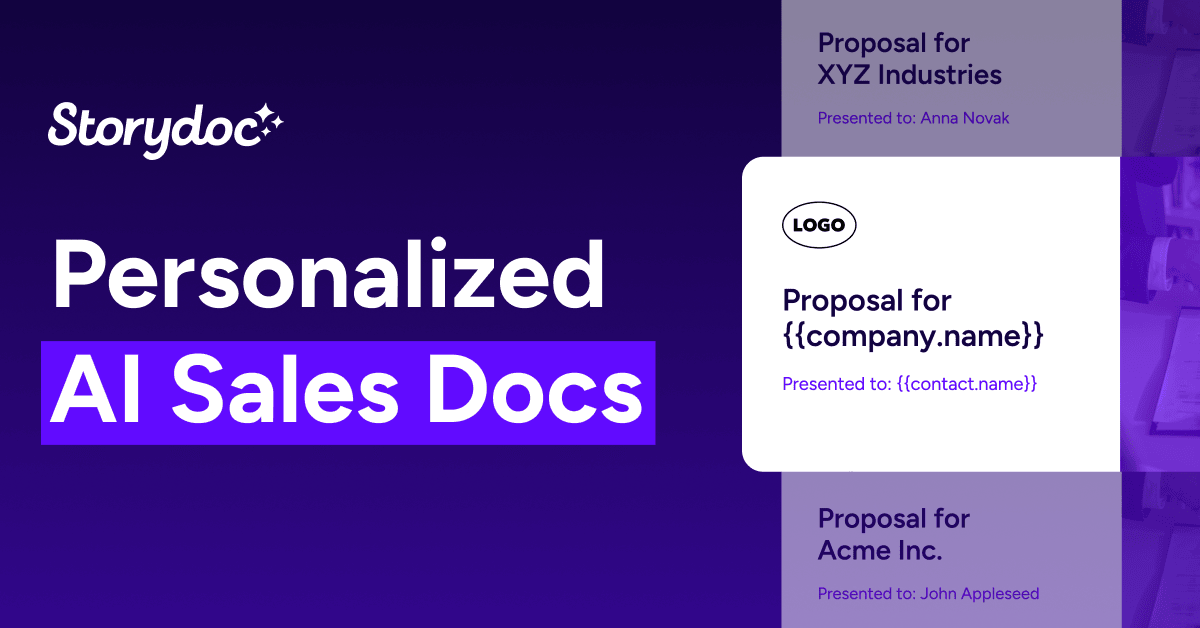
Storydoc is an AI-powered sales and marketing collateral platform that automates the creation of personalized, buyer-facing documents. Shifting the paradigm from static PDFs and PowerPoints, it pulls live data from your CRM to generate interactive proposals, pitch decks, one-pagers, so sales reps spend less time working on documents and more time closing deals.
You can train its content engine on your brand voice with past materials, and website content to produce branded collateral with minimal effort. Storydoc also tracks how prospects engage with your content and triggers timely follow-ups based on real interaction signals, giving your team the visibility needed to act at the right moment.
The platform goes well beyond document creation:
- CRM-driven personalization pulls live data from Salesforce, HubSpot, and other tools to tailor content dynamically for each recipient, far beyond basic name or company fields
- Automated follow-up decks generate post-meeting materials with agreed next steps, timelines, and key discussion points using AI and call insights
- StoryBrain content engine learns your brand voice, templates, and past decks to produce highly relevant, on-brand materials faster
- Real-time engagement analytics show exactly how prospects interact with your content, so reps know precisely when and how to follow up
Instead of manually personalizing every proposal, a sales rep can trigger a fully tailored deck from a single CRM update, and have something ready to send in seconds. Deals close faster, and salespeople free up their time for what actually matters.
It integrates with Salesforce, HubSpot, and hundreds of other tools via Zapier, Make, or its native API, making it easy to plug into existing workflows without technical overhead.
Outreach.io
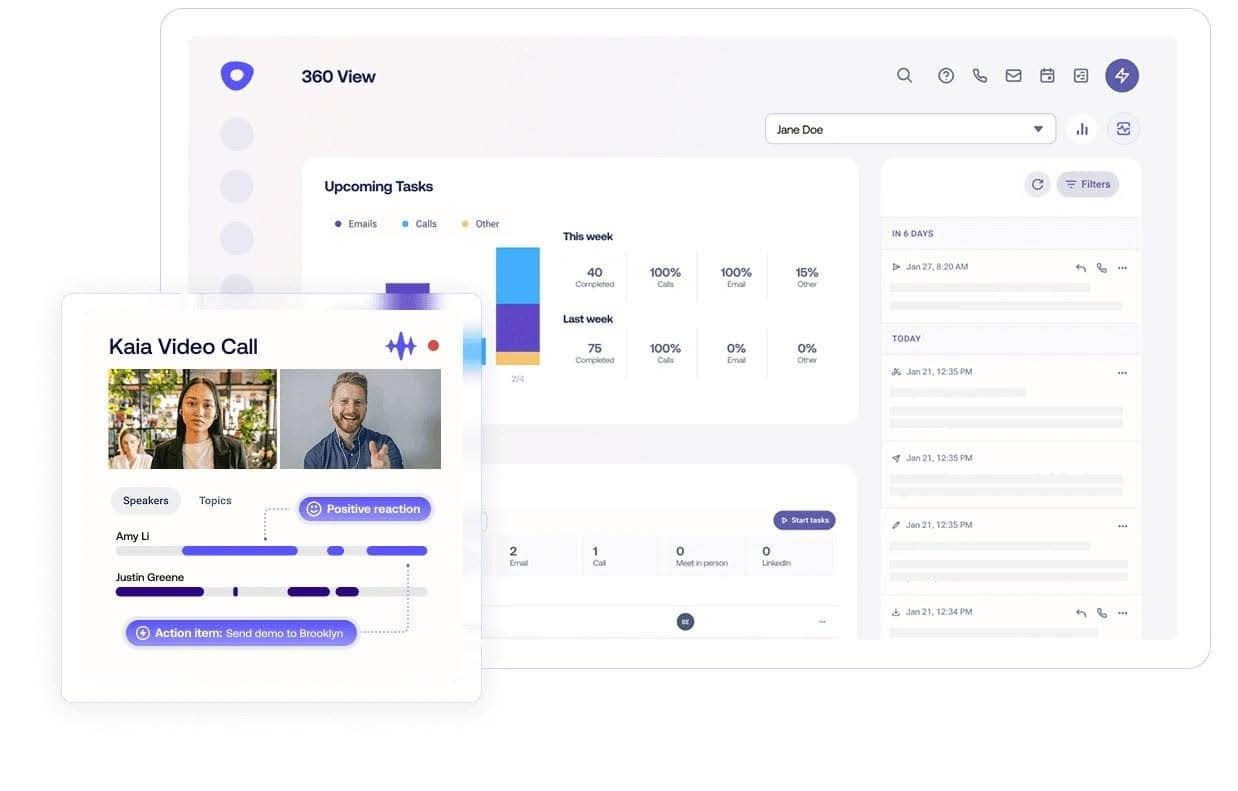
Outreach is a leading sales execution platform that helps teams streamline prospecting, deal management, and forecasting through automation and AI. By centralizing the sales process, reps can update pipeline deals in one place, saving time and boosting efficiency.
Companies like Trint report closing deals 30 percent faster thanks to better visibility of account activity. Sales managers also benefit from Outreach as it provides a complete view of deal health, highlighting risks, tasks, and recent interactions so teams can take quick action where it matters most.
Key features include:
- Deal Grid: Edit pipeline deals from one view with automatic CRM updates
- AI Assist: Spot deal risks, next steps, and opportunities with smart recommendations
- Kaia: Conversation intelligence tool that captures calls, action items, and key moments
- LinkedIn Integration: Connect with tools like Hublead to automatically sync LinkedIn profile data into HubSpot
- Success Plans: Collaborative workflows that increase win rates by aligning buyers and sellers
HubSpot Sales Hub
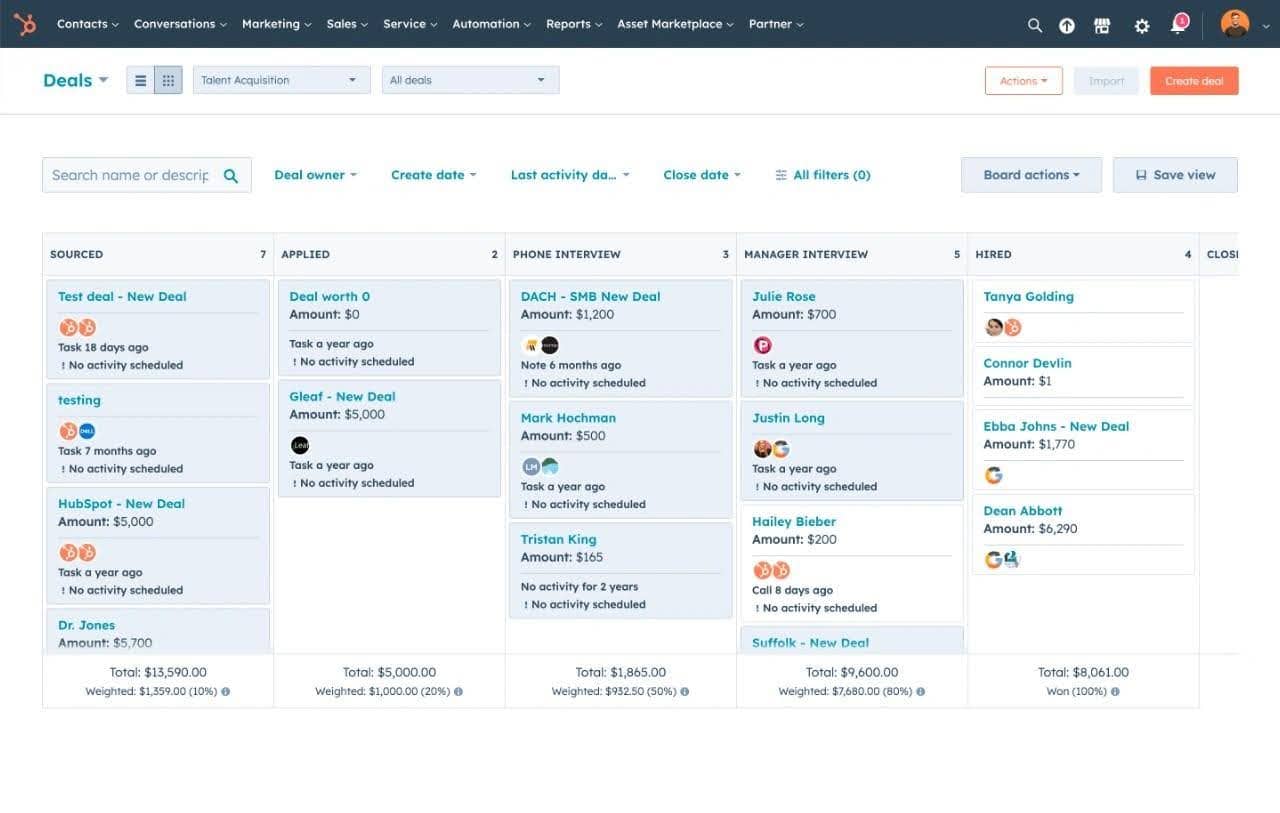
HubSpot Sales Hub is an AI-powered platform that helps sales teams work more efficiently by automating repetitive tasks and providing powerful analytics. Sales teams using it close 35 percent more deals and save significant time, with 76 percent of professionals reporting higher win rates.
The platform is designed for usability, combining smart defaults with customization options so that even complex tasks are easy to manage. Quick implementation, averaging just 36 days, ensures teams see results and ROI faster than with traditional enterprise CRM systems.
Key features include:
- AI Guided Selling: Surfaces top leads and daily action summaries
- Deal Pipelines: Add, score, and track deals with task assignments
- Meeting Scheduler: Automates prep, follow-up, and meeting notes
- Sales Automation: Multi-channel outreach that adapts to engagement
- Conversation Intelligence: Brings customer insights into the CRM
By integrating seamlessly with Gmail, Outlook, and over 1,100 partner apps, HubSpot Sales Hub creates a connected ecosystem that boosts collaboration across departments. With its balance of simplicity, automation, and insight, it has become one of the most effective sales tools for teams.
Gong
Gong is a revenue intelligence platform that helps sales teams close more deals by analyzing conversations across Zoom, Google Meet, and Microsoft Teams. Acting as a virtual participant, Gong records, transcribes, and studies calls to provide actionable insights. Its AI is trained on billions of real sales interactions, allowing it to detect patterns, highlight risks, and surface buying signals.
Key features include:
- Deal Intelligence: Real-time insights and risk detection in customer engagements
- Conversation Intelligence: Transcribes calls and identifies winning tactics
- Revenue Intelligence: Combines data sources for full pipeline visibility
- Coaching and Development: Tracks performance and creates coaching opportunities
Sales teams benefit through faster onboarding, stronger pipelines, and more consistent results. Gong integrates with over 90 platforms, including Salesforce, HubSpot, and Microsoft Dynamics, ensuring that every interaction contributes to smarter forecasting and better sales execution. Despite its cost, many companies view it as a valuable investment for improving efficiency and win rates.
Chorus
Chorus, part of the ZoomInfo suite, is an AI-powered platform that helps sales teams improve by analyzing conversations across calls, meetings, and emails. Acting like a virtual sales coach, it records and studies interactions to reveal patterns, highlight key moments, and provide practical coaching insights.
Sales leaders benefit from real examples of what works, which leads to better training, stronger communication, and faster onboarding for new hires. By turning customer conversations into actionable steps, Chorus helps teams close deals more effectively.
The platform does much more than basic transcription:
- Smart Themes spots conversation patterns and organizes them to find insights quickly. It starts working after analyzing just a few hundred hours of conversations
- Smart Playlists creates collections of important call moments to train reps. These include “Wow! Moments,” “Engaging Discovery Calls,” and “High Risk Calls”
- Deal Intelligence watches how deals progress by checking engagement, meeting frequency, and who’s involved
- Performance Benchmarking lets teams see how they stack up against top performers by studying successful deals
Sales leaders love how Chorus changes coaching. Research shows 60% of reps will quit if their manager can’t coach well. The platform fixes this by showing managers real examples of what works. They can coach better using actual conversation data instead of just opinions.
The platform tackles the tough job of getting new hires up to speed. New team members can watch recordings of successful sales calls, which cuts training time by a lot. They learn directly from top performers’ real conversations instead of just theory.
Lavender
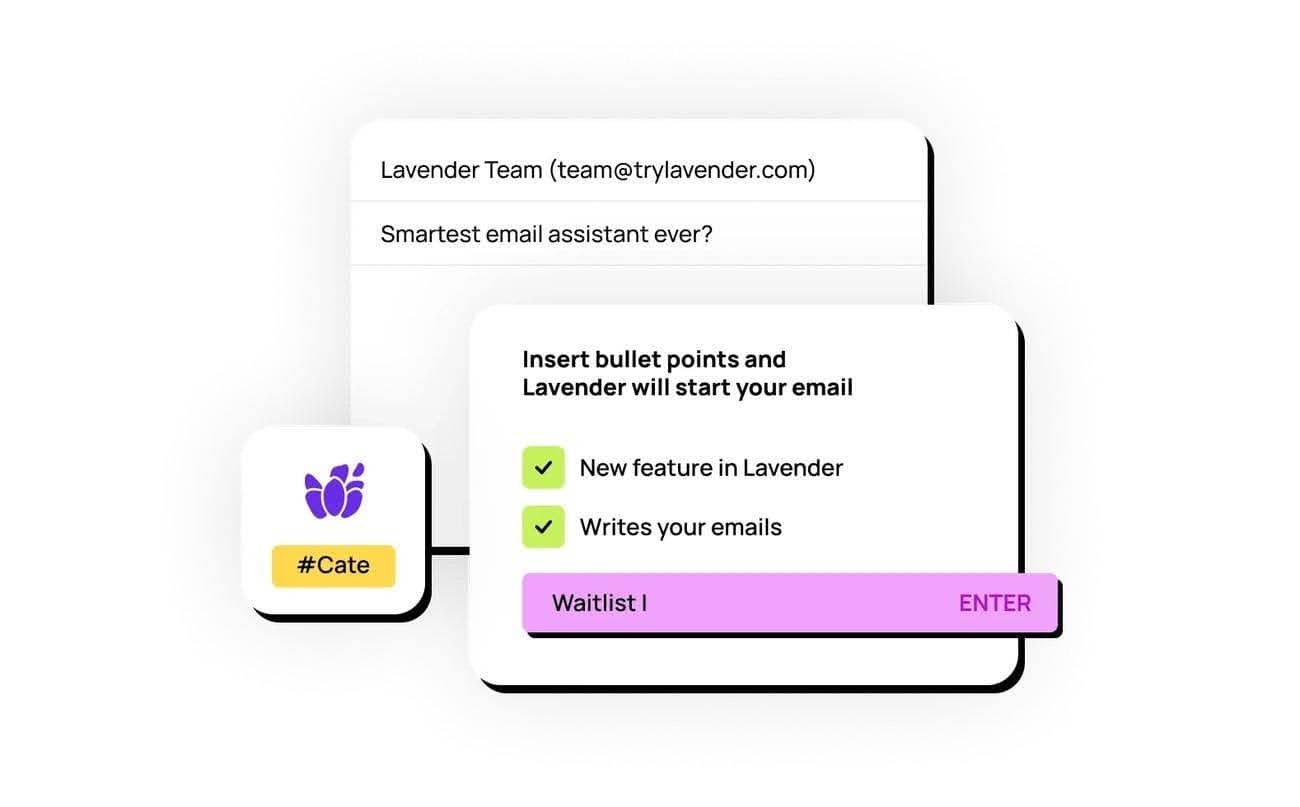
Lavender is an AI-powered email assistant built to improve sales outreach by analyzing messages against best practices drawn from over 100 million cold emails. While the average reply rate for sales emails is just 1 to 5 percent, Lavender users achieve over 20 percent on average.
The platform combines AI, psychology, and data science to help representatives write more effective emails in less time, turning outreach into a guided and measurable process. It not only boosts response rates but also teaches the principles of good email writing so sales teams build long-term communication skills.
Key features include:
- AI Email Coach: Real-time scoring and suggestions to increase response rates
- Personalization Assistant: Fast, research-driven personalization to strengthen connections
- Start My Email: Generates drafts from notes to overcome writer’s block
- Mobile Editor: Ensures emails look polished on smartphones, where most are read
Lavender integrates with Gmail, Outlook, HubSpot, and other popular platforms, fitting naturally into existing workflows. With flexible pricing and team coaching dashboards, it helps individuals and organizations create consistent, effective outreach that saves time and drives results.
The easiest way to build a stack (based on team size)
Pick the smallest stack that fixes your bottleneck. Use this as a starting point, not a religion.
| Team type | Primary goal | Suggested stack (minimal) | Why it works |
|---|---|---|---|
| Solo / very small team | Stay organized + follow up fast | CRM + scheduling + simple sequences | Prevents leaks without heavy process |
| Small B2B team (SDR + AE) | Consistency + pipeline visibility | CRM + engagement + conversation intelligence | Improves follow-up and coaching, tightens forecasting |
| Mid-market | Increase win rate + reduce deal slippage | CRM + engagement + conversation intelligence + proposals/e-sign | Fixes the post-demo bottlenecks that delay revenue |
| Enterprise | Control complex deals | CRM + conversation intelligence + MAPs + CPQ/proposals + CLM + e-sign | Aligns stakeholders and accelerates procurement/legal |
Sales tools that close deals (tool-to-job map)
| What’s slowing your deals? | Tool category | What it fixes | Examples (include your picks) |
|---|---|---|---|
| Leads go cold after form fill | Routing + speed-to-lead | Instant response, correct owner, SLA discipline | CRM automation / lead routing features |
| Reps forget follow-ups | Sales engagement | Cadences, tasks, multi-touch execution | Outreach |
| Discovery is inconsistent | Conversation intelligence | Coaching, talk tracks, deal risk | Gong, Chorus |
| CRM is always outdated | Inbox/CRM sync | Auto-logging, meeting prep, activity capture | Cirrus Insight |
| “Send a proposal” creates delays | Proposal/quote automation | Templates, tracking, approvals | Proposal tools and CPQ platforms |
| Signatures take forever | E-sign | Fast signing + reminders + audit trail | DocuSign-style tools |
| Legal/procurement drags on | CLM | Clause libraries, redlines, approval workflows | CLM suites (category) |
| Deals “ghost” after the demo | Mutual action plans | Shared timeline, steps, stakeholders | MAP tools or shared docs inside your CRM |
| Emails don’t get replies | Email coaching | Clarity, brevity, personalization quality | Lavender |
| Forecasting is unreliable | Deal inspection / forecasting workflows | Deal health signals, next steps, stage hygiene | Revenue intelligence tools + CRM discipline |

How AI Is Changing the Modern Sales Stack
AI is quickly becoming part of the sales workflow, but the best use cases are practical. Sales teams do not need AI for every part of the process. They need AI where it removes friction, improves timing, or helps reps make better decisions.
A strong AI sales stack can help with:
- Summarizing sales calls and meetings
- Identifying deal risks
- Suggesting next steps
- Prioritizing leads
- Writing better outreach emails
- Personalizing follow-ups
- Improving CRM data quality
- Coaching reps based on real conversations
- Forecasting based on pipeline activity
The value is not “more automation” by itself. The value is better sales execution.
For example, AI can help a rep prepare for a meeting by summarizing account history, recent interactions, open objections, and likely buyer priorities. After the call, it can capture action items, update the CRM, and suggest a follow-up email. That gives reps more time to focus on discovery, trust, negotiation, and closing.
Sales teams should look for AI tools that support real revenue moments, not tools that simply generate more content, more notifications, or more reports.
The Sales Tool Categories Every Team Should Understand
Most sales tools fall into a few practical categories. Understanding these categories makes it easier to build a stack that supports the full buyer journey instead of collecting disconnected software.
CRM tools
A CRM is the central system for contacts, companies, deals, tasks, activities, and pipeline visibility. It helps sales teams know who they are speaking with, where each deal stands, and what needs to happen next.
Best for:
- Tracking deals
- Managing contacts
- Assigning owners
- Forecasting revenue
- Keeping sales activity organized
Sales engagement tools
Sales engagement platforms help teams run outreach sequences, follow-up cadences, and multi-touch sales workflows across email, calls, LinkedIn, and other channels.
Best for:
- Cold outreach
- Follow-up consistency
- SDR workflows
- Lead nurturing
- Reducing forgotten tasks
Conversation intelligence tools
Conversation intelligence tools record, transcribe, and analyze sales calls. They help managers coach reps, spot deal risks, understand objections, and identify what top performers do differently.
Best for:
- Sales coaching
- Discovery improvement
- Objection handling
- Call reviews
- Deal risk analysis
AI email coaching tools
AI email assistants help sales reps write clearer, shorter, and more personalized emails. These tools are especially useful for outbound teams that depend on reply rates and fast message testing.
Best for:
- Cold emails
- Follow-ups
- Personalization
- Shorter sales copy
- Improving response quality
Proposal and closing tools
Proposal, quote, e-sign, and contract tools help reduce the friction that happens near the end of a deal. These tools are important because many deals slow down after the buyer has already shown interest.
Best for:
- Faster proposals
- Quote approvals
- E-signatures
- Procurement workflows
- Contract handoffs
How to Match Sales Tools to the Buyer Journey
A good sales stack supports the full path from first contact to signed deal. Instead of buying tools by feature list, map each tool to a specific stage of the buyer journey.
First contact
At this stage, speed and relevance matter most. Sales tools should help your team respond quickly, route leads correctly, personalize outreach, and avoid generic messaging.
Useful tools:
- CRM
- Lead routing
- Sales engagement
- AI email coaching
- Scheduling
Discovery
Discovery is where reps learn what the buyer actually needs, why now matters, who is involved, and what could block the deal.
Useful tools:
- Conversation intelligence
- Call recording
- CRM notes
- Meeting summaries
- AI research assistants
Demo or sales conversation
During demos and sales calls, tools should help reps stay focused on the buyer instead of scrambling to take notes or remember every detail.
Useful tools:
- Call transcription
- AI meeting notes
- Conversation intelligence
- Mutual action plans
- Demo follow-up templates
Proposal
At the proposal stage, speed, clarity, and alignment matter. Buyers need to understand the offer, pricing, scope, next steps, and approval path.
Useful tools:
- Proposal software
- CPQ tools
- E-signature tools
- Deal room software
- CRM automation
Closing and handoff
The final stage should reduce confusion. Sales, customer success, finance, legal, and onboarding teams need the same information.
Useful tools:
- CRM
Contract lifecycle management
E-signature
Sales-to-CS handoff workflows
Shared onboarding notes
Signs Your Sales Stack Is Hurting Your Close Rate
More tools do not automatically mean more revenue. A bloated sales stack can slow reps down and make the buyer experience worse.
Watch for these warning signs:
Reps update the same information in multiple places
If reps have to enter notes, tasks, contacts, and deal updates in several tools, your stack is creating admin instead of reducing it.
Managers still do not know why deals are stuck
If dashboards show pipeline value but not deal risk, stakeholder gaps, missing next steps, or buyer objections, your tools are not giving enough practical insight.
Buyers receive generic follow-ups
If your outreach tools make it easy to send more emails but not better emails, they may hurt trust instead of improving conversion.
CRM data is unreliable
If the CRM is outdated, forecasting becomes guesswork. Sales tools should help capture activity automatically and keep deal information current.
Reps avoid using the tools
Low adoption is often a sign that the tool does not fit the sales workflow. The best tools feel helpful during the work, not like extra reporting after the work.
What to Look for in AI Sales Tools
AI features are now common in sales software, but not every AI feature improves sales performance. Look for AI that makes the rep’s next action clearer.
Strong AI sales tools should help answer questions like:
- Which leads need attention first?
- Which deals are at risk?
- What changed since the last conversation?
- What should the rep do next?
- Which objections keep coming up?
- Which follow-up email fits this buyer?
- Which stage has the most friction?
- Which reps need coaching on discovery, pricing, or next steps?
Avoid tools that only produce more generic content. Good sales AI should improve decision-making, timing, personalization, and execution.
How to Build a Sales Stack Without Overcomplicating It
The easiest way to build a better sales stack is to start small.
Begin with your biggest revenue bottleneck. Then choose one tool category that solves that problem.
If leads go cold, improve speed-to-lead and follow-up.
If reps struggle with outreach, add sales engagement and AI email coaching.
If discovery is weak, add conversation intelligence.
If deals stall after the demo, improve proposals, mutual action plans, and e-signature workflows.
If forecasting is unreliable, clean up CRM usage and deal inspection.
A simple sales stack that your team uses every day is more valuable than a complex stack that looks impressive but slows everyone down.
Best Practices for Getting More Value From Sales Tools
Sales tools work best when they are connected to clear sales habits. The software can support the process, but it cannot replace the process.
Define what a healthy deal looks like
Create clear rules for deal stages, required next steps, decision-makers, close dates, and buyer commitments. This makes CRM and forecasting tools more useful.
Keep follow-up simple and fast
Speed matters, but relevance matters too. Use templates and AI assistance to help reps respond quickly without sounding robotic.
Review real sales conversations
Call recordings and transcripts are only useful when teams learn from them. Use conversation intelligence to coach around discovery, objections, pricing, and next-step control.
Reduce manual CRM work
Look for tools that automatically log emails, calls, meetings, and notes. Reps are more likely to keep the CRM clean when the process is easy.
Track tool adoption
A tool that reps do not use will not improve revenue. Review adoption, workflow fit, and actual impact on sales activity before adding more software.
Connect sales and marketing data
Sales tools become more powerful when they connect with marketing data. This helps teams understand which campaigns, content, landing pages, and lead sources create conversations that turn into revenue.
Conclusion
The best sales tools do more than streamline workflows. They give sales teams the power to focus on meaningful conversations, stronger relationships, and smarter strategies. From automating data entry to turning conversations into actionable insights, each of these platforms helps remove the friction that slows down growth. The result is more time spent selling and less time wasted on repetitive tasks.
Choosing the right tools is no longer optional. With AI-driven insights, seamless integrations, and user-friendly designs, these solutions prove that technology can drive measurable improvements in revenue. Teams that invest wisely will not only close more deals but also build a sustainable foundation for long-term success.
FAQ
What are the most important sales tools?
A CRM is usually the foundation. After that, the “most important” tool depends on your bottleneck: follow-up consistency (sales engagement), coaching (conversation intelligence), or closing friction (proposal + e-sign + contracting). HubSpot’s own positioning emphasizes an all-in-one Sales Hub approach for engaging leads and closing more deals.
What sales tools help close deals faster?
Tools that reduce delays: speed-to-lead systems, engagement cadences, proposal automation, and e-sign. If you’re slow to respond, you’re often losing deals before they start.
Do conversation intelligence tools really improve results?
They can, especially in call-heavy sales motions where coaching improves discovery, objection handling, and next-step control. Gong publishes case studies reporting measurable improvements (example: SpotOn reported a 16% win rate increase).
What’s the difference between Gong and Chorus?
Both are conversation intelligence platforms that record/transcribe calls and surface insights. Chorus is part of ZoomInfo’s suite and is often chosen by teams already using ZoomInfo data and workflows.
What’s a sales engagement tool and do I need one?
Sales engagement tools run sequences/cadences, track touches, and help reps execute follow-up consistently. Outreach is a well-known platform in this category.
If you’re doing high-volume outreach or you have many leads that need structured follow-up, it’s usually worth it.
What’s the best sales stack for small teams?
Usually: CRM + scheduling + basic sequences. Add conversation intelligence once you have enough calls to coach and learn from.
What tools help most with the “last mile” of closing?
Proposal automation + e-sign + (for larger deals) CLM. Proposal automation reduces back-and-forth and keeps everything trackable.
E-sign reduces signature delays.
Are “average reply rates” really 1–5%?
Reply rates vary wildly by list quality, offer, and targeting. Your post currently claims a 1–5% average and “20%+ with Lavender.” A safer approach is to cite Lavender’s benchmarking/claims about reply rate improvements (and present it as their data, not universal truth).
Other Interesting Articles
- AI LinkedIn Post Generator
- Gardening YouTube Video Idea Examples
- AI Agents for Gardening Companies
- Top AI Art Styles
- Pest Control YouTube Video Idea Examples
- Automotive Social Media Content Ideas
- Plumber YouTube Video Idea Examples
- AI Agents for Pest Control Companies
- Electrician YouTube Video Idea Examples
- How Pest Control Companies Can Get More Leads
- AI Google Ads for Home Services
- 60-Second Training Videos Are the New Corporate Standard
- Cybersecurity PR Pricing: Retainers, Deliverables & ROI
- Best AI Tools for Product Consistency in E-Commerce Video
Master the Art of Video Marketing
AI-Powered Tools to Ideate, Optimize, and Amplify!
- Spark Creativity: Unleash the most effective video ideas, scripts, and engaging hooks with our AI Generators.
- Optimize Instantly: Elevate your YouTube presence by optimizing video Titles, Descriptions, and Tags in seconds.
- Amplify Your Reach: Effortlessly craft social media, email, and ad copy to maximize your video’s impact.