
Why Used Phone Grading Disputes Happen Between Buyers and Sellers

Quick Answer
Used phone grading disputes usually happen because buyers and sellers do not interpret device condition in the same way. A seller may classify a smartphone as Grade A based on its internal grading rules, while the buyer expects a nearly flawless device with no visible scratches or marks.
Other disagreements arise from inconsistent inspection methods, unclear defect descriptions, differences in lighting, undisclosed functional issues, and a lack of photographic evidence.
The best way to prevent these disputes is to define grading criteria before a transaction. Both parties should agree on what each grade means, which defects are acceptable, how devices will be inspected, and how cosmetic condition differs from functional performance.
Chapters
Why Do Buyers and Sellers Disagree on Used Phone Grades?

A grade is supposed to communicate a device’s condition before the buyer receives it. However, labels such as Grade A, Grade B, and Grade C do not always mean the same thing across suppliers, refurbishers, wholesalers, and resale channels.
One supplier might classify a phone with minor screen scratches as Grade A. Another might place the same device in Grade B. Both may be following their own internal rules.
The World Bank’s report on the circular economy in electronics highlights this issue: there is no single internationally standardized grading system for refurbished handsets. It describes the commonly used A-to-C scale but also notes that refurbishers may use additional grades.
This creates a practical problem for businesses buying used phones in bulk. If the buyer and seller have not agreed on the grading definitions, a shipment can meet the seller’s expectations but fail the buyer’s acceptance criteria.
7 Common Reasons Used Phone Grading Disputes Happen
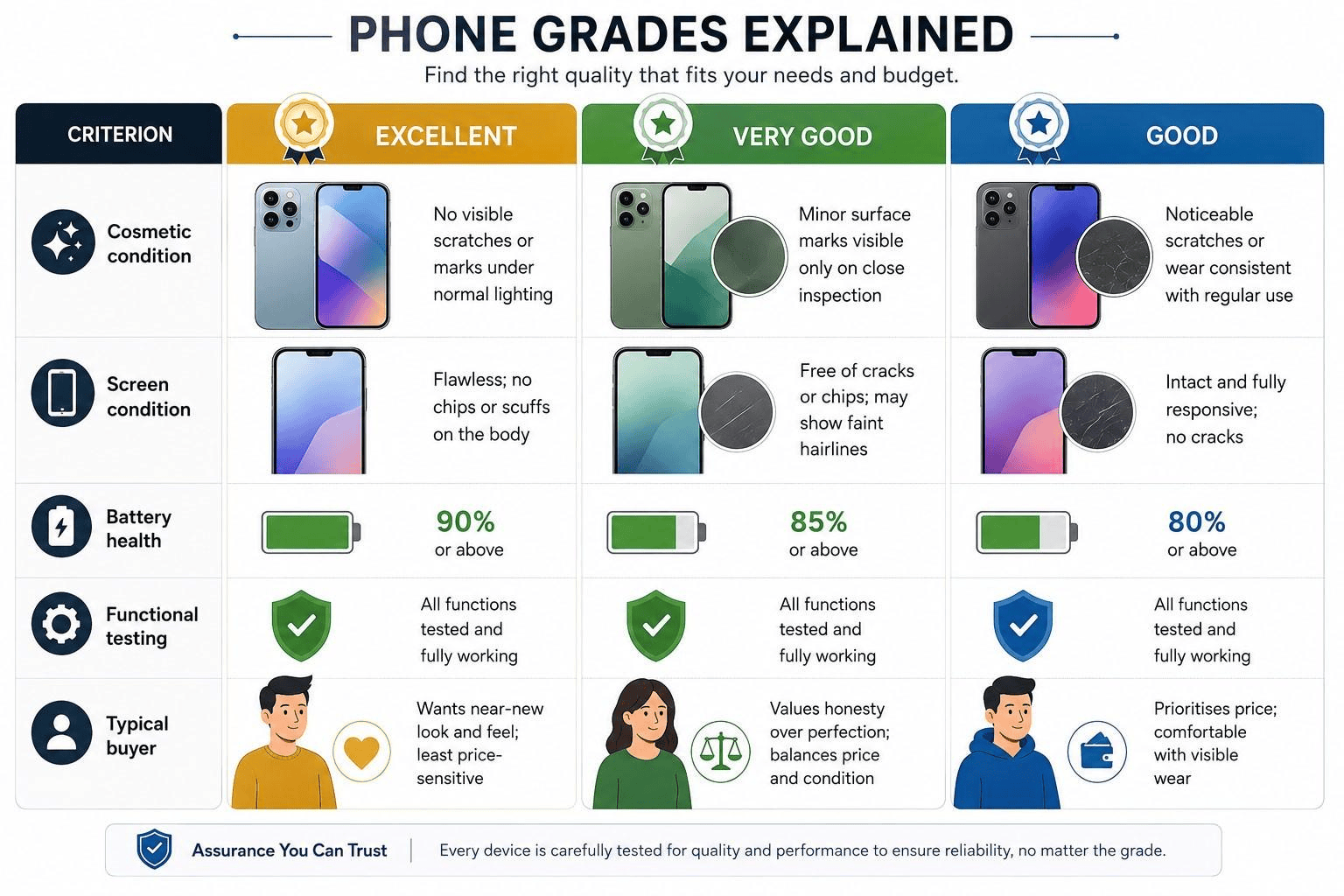
1. Different definitions of Grade A, B, and C
This is one of the most common sources of disagreement.
Consider two businesses using the same three-grade system:
| Grade | Seller's Possible Interpretation | Buyer's Possible Expectation |
|---|---|---|
| Grade A | Minor marks may be acceptable under certain lighting | Almost no visible signs of previous use |
| Grade B | Visible scratches and light scuffs are acceptable | Only minor wear, with no noticeable screen scratches |
| Grade C | Heavy cosmetic wear, but the phone remains functional | Significant wear is acceptable, but cracks may not be |
These are illustrative examples, not universal definitions. The important point is that grade labels need written descriptions.
If you purchase 200 phones based only on a Grade A specification, you may discover that the seller’s definition allows cosmetic defects that your customers would consider unacceptable.
2. Cosmetic condition and functionality are mixed together
A smartphone’s appearance and its technical condition are two different things.
A phone can have a scratched back panel and still work perfectly. Another may look almost new but have a faulty charging port, weak battery, damaged camera, or display issue.
Disputes happen when a single grade is expected to communicate both conditions.
A clearer approach is to record cosmetic and functional condition separately.
| Assessment Area | What It Covers | Example |
|---|---|---|
| Cosmetic grading | Visible external condition | Screen scratches, dents, frame marks |
| Functional testing | Whether device features work correctly | Cameras, speakers, buttons, charging |
| Battery assessment | Battery condition based on the selected test or measurement | Reported battery health or capacity |
| Device status | Restrictions that affect use or resale | Activation lock or enterprise enrollment |
For example, a phone may receive a cosmetic Grade B while passing all required functional tests. Another phone may look like Grade A but fail a functional check.
Keeping these results separate makes the condition description more accurate and reduces the risk of a buyer interpreting a cosmetic grade as a guarantee of every technical feature.
3. Inspection conditions are inconsistent
The same scratch can look different depending on how and where you inspect a phone.
A mark may be difficult to notice under ordinary indoor lighting but become obvious under direct light. Screen scratches may also appear differently when the display is on or off.
If the seller inspects devices under one set of conditions and the buyer uses another, both parties may reach different conclusions.
To reduce this problem, agree on inspection conditions such as:
- Lighting type and intensity
- Viewing distance and angle
- Whether the screen is on or off
- Whether protective films and cases are removed
- Which device surfaces must be inspected
- How scratches, dents, chips, and cracks are classified
The inspection method should be repeatable. A grading decision should not depend entirely on how one individual happens to view the device.
4. Defect descriptions are too vague
Terms such as “minor wear,” “light scratches,” and “good condition” leave room for interpretation.
For example, a seller may describe a phone as having light scratches. The buyer may understand that to mean a few barely visible marks, while the actual device has multiple scratches across the display.
Instead of relying on general descriptions, document defects by location, type, and severity.
| Defect | Details Worth Recording |
|---|---|
| Screen scratches | Number, approximate length, visibility, and location |
| Frame damage | Dents, paint loss, chips, or deformation |
| Back panel | Scratches, cracks, scuffs, or discoloration |
| Camera area | Lens scratches, cracks, or surrounding damage |
| Display | Dead pixels, discoloration, lines, or touch issues |
| Battery | Reported health or relevant test result |
Specific descriptions help buyers understand what they are purchasing and give both parties a more objective basis for reviewing a disputed device.
5. Sample inspections do not represent the full shipment
Bulk purchases create another challenge: buyers may inspect a sample before accepting a large shipment.
Suppose you order 500 smartphones and inspect 20 before confirming the purchase. Those 20 devices may look consistent, but the remaining inventory could contain a different mix of cosmetic conditions.
The sample may also fail to represent variations between models, suppliers, or batches.
To reduce the risk:
- Agree on the sampling method before the shipment arrives.
- Define the acceptable defect rate and rejection threshold.
- Keep device-level identifiers linked to inspection results.
- Record defects found during the sample inspection.
- Define what happens when the full shipment differs from the sample.
For high-value or high-risk inventory, a more extensive inspection may be appropriate. The right sampling approach depends on the order size, supplier history, contract terms, and cost of accepting defective stock.
6. Photographic evidence is missing or unclear
A grade without supporting evidence can be difficult to challenge or verify.
Imagine a buyer reports that 15 phones have deep screen scratches, while the seller insists that all devices were classified correctly. If neither party has clear photographs or device-level inspection records, resolving the disagreement becomes harder.
Useful photographic evidence should:
- Show the actual device rather than a generic reference image.
- Include the relevant screen, back, frame, and camera areas.
- Make the reported defect visible.
- Be linked to the device’s IMEI or internal inventory ID.
- Be captured using consistent lighting and angles.
Photos do not replace physical inspection or functional testing, but they make cosmetic grading decisions easier to review.
7. Buyer expectations are not aligned with the resale channel
A phone’s acceptable condition can depend on where you intend to sell it.
A device suitable for a discount resale channel may not meet the appearance requirements of a premium refurbished-phone listing. Similarly, a wholesale buyer purchasing devices for parts recovery may accept cosmetic damage that a retail buyer would reject.
This means the buyer should communicate the intended resale channel before agreeing on a price and grade.
A clear agreement should cover the expected condition, permitted defects, functional requirements, and any separate battery or accessory specifications.
How Can Buyers and Sellers Prevent Grading Disputes?

The most effective solution is to agree on the inspection rules before devices change hands.
Create a written grading specification
Do not rely on grade labels alone. Create a document that explains the condition requirements for every grade.
Include details such as:
- Acceptable screen scratches
- Permitted frame and back-panel marks
- Rules for dents, chips, and cracks
- Camera lens condition
- Functional requirements
- Battery condition requirements, if applicable
- Conditions that automatically disqualify a device from a grade
Use photographs of representative devices to make the specification easier to understand.
Agree on the inspection process
Both parties should know how a device will be assessed.
For example, you can specify that screens must be checked with the display both on and off, that the frame must be inspected from all sides, and that cosmetic checks must use consistent lighting.
A written inspection process helps prevent disputes caused by different viewing conditions or subjective decisions.
Separate cosmetic and functional results
Avoid using one grade to describe everything about a smartphone.
A better condition record could look like this:
| Field | Example Result |
|---|---|
| Cosmetic grade | Grade B |
| Screen condition | Light scratches |
| Frame condition | Minor edge scuffs |
| Functional status | Passed required tests |
| Battery result | 87% reported health |
| Lock status | No detected activation lock |
| Final acceptance | Accepted |
The values above are illustrative. Actual results should come from the inspection and testing process.
Establish an acceptance and dispute-resolution policy
Your purchase agreement should explain what happens when delivered devices do not match the agreed specification.
Define:
- The inspection window after delivery
- The method for reporting a disputed device
- The evidence required from each party
- The sampling or full-inspection rules
- The acceptable variance, if any
- The options for replacement, credit, return, or price adjustment
- The person responsible for approving the resolution
Without these details, even a relatively small disagreement can delay payment, inventory processing, and resale.
How Can Automated Phone Grading Reduce Disagreements?
Manual grading depends heavily on the operator’s experience, attention, and interpretation of written criteria. Two employees may inspect the same phone and assign different grades, especially when the differences between condition categories are subtle.
Automated grading can help make cosmetic assessment more consistent by applying predefined criteria and analyzing device images. However, automation should support a documented grading process rather than replace clear standards.
An AI-assisted grading workflow may help businesses:
- Apply the same configured cosmetic criteria across devices.
- Analyze images to identify visible damage.
- Map detected defects to relevant areas of the device.
- Keep grading records linked to individual devices.
- Reduce differences between operators and processing locations.
For example, NSYS Autograding uses AI-assisted image analysis to assess smartphone cosmetic condition. Its configurable grading criteria and damage mapping capabilities can support businesses that want a more consistent approach to cosmetic assessment.
The quality of the result still depends on suitable image capture, appropriate criteria, supported device conditions, and human review where needed. Functional testing should remain a separate part of the overall inspection process.
FAQs
Why do buyers and sellers disagree on used phone grades?
They may use different definitions for Grade A, B, and C, apply different inspection conditions, or have different expectations about acceptable defects. Written grading criteria and supporting evidence help reduce these disagreements.
Is Grade A the same across all used phone suppliers?
No. There is no single internationally standardized grading system for refurbished smartphones. Always request the supplier’s written grading specification instead of assuming that Grade A means the same thing everywhere.
Can a Grade B phone be fully functional?
Yes. Cosmetic grades generally describe appearance, not technical performance. A Grade B phone can pass all required functional tests while showing visible scratches or other permitted cosmetic wear.
How should buyers verify the grade of bulk used phones?
Agree on grading definitions and inspection rules before purchase. Then inspect devices using the agreed method, record device-level results, and compare the delivered inventory with the supplier’s specification. For larger orders, define a sampling and rejection policy in advance.
Can AI grading eliminate disputes completely?
No. AI-assisted grading can improve consistency, but it cannot eliminate every disagreement. Results still depend on image quality, grading criteria, device condition, and how the buyer and seller interpret the agreed specification.
Final Takeaway
Used phone grading disputes are often caused by unclear expectations rather than the physical condition of the devices alone. A Grade A label is only useful when both buyer and seller understand exactly what it represents.
Before placing a bulk order, agree on written cosmetic criteria, separate appearance from functionality, standardize inspection conditions, and define how disputed devices will be handled.
When both parties work from the same grading specification and maintain device-level evidence, they can reduce disagreements, protect transaction margins, and build more reliable supplier relationships.
Other Interesting Articles
- AI LinkedIn Post Generator
- Gardening YouTube Video Idea Examples
- AI Agents for Gardening Companies
- Top AI Art Styles
- Pest Control YouTube Video Idea Examples
- Automotive Social Media Content Ideas
- Plumber YouTube Video Idea Examples
- AI Agents for Pest Control Companies
- Electrician YouTube Video Idea Examples
- How Pest Control Companies Can Get More Leads
- AI Google Ads for Home Services
- 60-Second Training Videos Are the New Corporate Standard
- Cybersecurity PR Pricing: Retainers, Deliverables & ROI
- Best AI Tools for Product Consistency in E-Commerce Video
Master the Art of Video Marketing
AI-Powered Tools to Ideate, Optimize, and Amplify!
- Spark Creativity: Unleash the most effective video ideas, scripts, and engaging hooks with our AI Generators.
- Optimize Instantly: Elevate your YouTube presence by optimizing video Titles, Descriptions, and Tags in seconds.
- Amplify Your Reach: Effortlessly craft social media, email, and ad copy to maximize your video’s impact.