
Omnichannel Marketing Strategies: How to Build a Connected Customer Journey
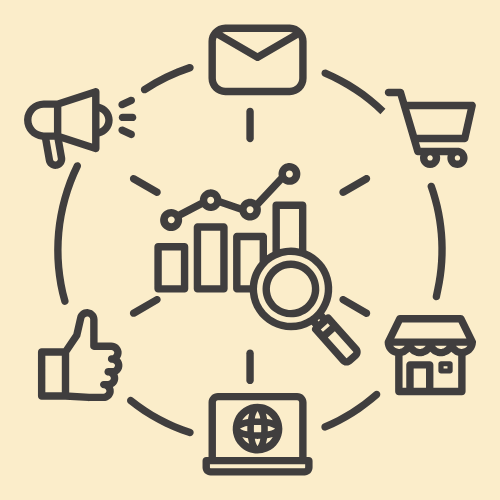
A customer signs up for a software trial, navigates the dashboard and completes the initial setup. The following morning they are prompted to complete registration by email. Later they get a push notification to begin that same setup. Then another promotional message. But the problem is not that we don’t have enough channels of communication. It’s that those channels don’t operate with a shared understanding of what the customer has already done.
This is where effective omnichannel marketing strategies make a difference. Rather than simply expanding a brand’s presence across email, SMS, social media, push notifications, and websites, businesses need to connect customer context across every interaction. Each touchpoint should reflect previous actions, current needs, and the next relevant step. The goal is to build one coordinated customer journey instead of several not connected marketing campaigns.
Chapters
Start With One Journey and One Clear Goal
The first step is not choosing channels or purchasing new software. It is identifying one customer journey that needs improvement.
Multichannel marketing uses several communication channels to reach customers, while omnichannel marketing connects those interactions through shared customer information, coordinated messaging, and consistent journey logic. Customers should not have to repeat actions or receive irrelevant reminders when moving between email, websites, and mobile applications.
Marketing teams should start with one journey and a measurable business objective. A SaaS company might aim to help new trial users complete their first project, while an ecommerce retailer might focus on encouraging first-time buyers to make a second purchase.
Before building the journey, define five essential elements:
- Audience: Identify who should enter, such as new trial users, first-time buyers, or inactive customers.
- Entry event: Specify what starts the journey, such as account registration, a completed purchase, or a product view.
- Desired action: Define the measurable outcome, such as completing setup or making another purchase.
- Measurement window: Establish how long customers have to complete the action, such as seven days for trial activation.
- Exit condition: Decide when communication should stop, such as successful setup, payment, or purchase completion.
These decisions prevent teams from designing campaigns around available channels rather than actual customer needs.
A clearly defined journey also makes performance easier to evaluate. Teams can identify where customers progress, where they disengage, and which interactions need improvement.
Connect Customer Data and Give Each Channel a Role
A connected customer journey depends on reliable information, but businesses do not necessarily need an expensive customer data platform (CDP) to get started. A CRM, ecommerce platform, product analytics system, and consistent customer records can provide a practical foundation.
The priority is ensuring that different systems recognize the same customer and reflect their latest activity. At a minimum, collect six types of information:
- User identifier: A consistent ID connecting customer activity across systems.
- Behavior: Actions such as registrations, product views, purchases, and completed setups.
- Conversion status: Whether the customer has achieved the intended goal.
- Channel availability: Which communication channels can reach the customer.
- Preferences: Preferred communication methods and frequency.
- Permission: Appropriate consent and legal permission for communication.
Data accuracy is just as important. Purchase events should contain customer IDs, order IDs and timestamps. Duplicate or delayed events need to be addressed so that conversion tracking is not incorrect or unnecessary reminders are not sent.
Once these signals are available, assign each channel a specific responsibility.
| Channel | Primary Role | Appropriate Use |
|---|---|---|
| Detailed communication | Onboarding, education, and recommendations | |
| Push Notifications | Short, timely reminders | Relevant updates and prompts |
| SMS / WhatsApp | Direct communication | Delivery updates and important notifications, subject to permission |
| Website / Application | Immediate interaction | Setup guidance, recommendations, and support |
Maintain the basic message, vary the structure. Email can deliver detailed instructions, push notifications can catch a customer’s attention to take immediate action, and in-app messages can offer guidance when customers need it.
Do not use the same message in all channels. Use two complementary channels (email and in-app) as a starting point and only grow when customer needs dictate.
Last but not least, maintain consent and opt-out records across systems. When communicating with UK business customers, businesses must follow the relevant local laws, as well as the ICO’s electronic marketing guidance.
Build a Journey That Responds to Customer Actions
Once customer data and channel roles are established, the next step is creating a journey that adapts to customer behavior. Unlike basic automated sequences that send messages at fixed intervals, responsive journeys use triggers, waiting periods, conditional branches, and exit rules to determine the next action.
Consider a hypothetical SaaS business aiming to help new trial users create their first successful project.
| Customer Signal | Next Action | Channel | Condition | Stop Rule |
|---|---|---|---|---|
| Trial account created | Send welcome and setup instructions | Valid contact details and applicable permission | Exit if trial is canceled | |
| Setup remains incomplete | Send a relevant reminder | No completion after 24 hours | Stop when setup is completed | |
| User gets stuck during setup | Display contextual guidance | Application | User revisits setup without progressing | Stop when setup advances |
| Repeated setup errors | Offer support | Email / In-app | Error threshold is reached | Stop when support takes ownership |
| First project created | Confirm progress and suggest the next feature | Application / Email | Project creation is verified | Exit activation journey |
The process should be based on real progress. If a user completes setup in less than an hour, there should be no further reminders the following day. If someone has a technical problem, they need help, not an additional promotion.
There are five controls that make this process effective:
- Identify what activities initiate or trigger the journey, for example, when people register for an account or complete a project.
- Allow customers reasonable time before sending reminders (waiting periods).
- Branching: Provide alternate routes for finishing, no action taken, and technical issues.
- Frequency limits: Ensure there is no over-communication between channels.
- Conversion exits: Automatically remove users who are performing the desired action, and send them into the next appropriate journey.
An unopened email should not automatically trigger an SMS. Instead, use verified customer activity or an unmet need to determine the next communication.
Finally, respect customer preferences, local quiet hours, and channel-specific opt-outs. Alternative channels must not be used to bypass marketing opt-outs. The objective is to build a journey that responds to customer progress rather than simply following a predetermined calendar.
Choose Tools That Support the Journey
The right technology should help businesses connect customer data, coordinate communication, and respond to changing customer behavior. Having multiple channels in one platform is not enough. The system must understand what customers have already done and determine what should happen next.
1. Check Data Integration and Segmentation
Choose a platform that can collect customer activity from websites, applications, CRM systems, and ecommerce platforms. It should recognise events such as account creation, product views, cart abandonment, and completed purchases.
Look for consistent customer identification, real-time or timely event updates, and behavioral segmentation so audiences change automatically as customers progress.
2. Evaluate Journey Automation
Look for features like behavioral triggers, waiting periods, conditional branches, and exit rules based on conversions. For example, a SaaS user who completes onboarding should receive a different communication from someone who encounters a setup problem. The system should automatically stop unnecessary reminders when the intended action is completed.
3. Assess Channel Coordination
Email, push notifications, SMS and WhatsApp should all work from the same customer context. Verify that the platform offers options for restricting communication volume, client preferences, permission management, quiet hours, and cross-channel suppression. This way duplicate messages and irrelevant reminders are prevented.
4. Review Reporting and Scalability
Look for reporting that tracks journey completion, drop-offs at each stage, delivery failures, conversions, and client engagement. Remember to think about integration costs, technical support, pricing and how easy it is to implement.
When evaluating marketing automation tools, test whether customer events can change the next step of a journey rather than simply trigger another message.
Before committing, build a small test journey with an entry event, two behavioral branches, and a conversion exit. If the platform handles these conditions reliably, it is more likely to support a genuinely connected customer experience.
Measure Business Outcomes and Improve One Step at a Time
A connected journey should be measured by whether customers complete the intended action, not simply by how many messages they open or click.
For SaaS businesses, the primary metric might be the percentage of eligible trial users who create their first project within seven days. For ecommerce businesses, it could be the percentage of first-time buyers who make a second purchase within a defined period.
Maintain the measurement window and denominator. For instance, in a seven-day activation rate, only the users who have been observed for the entire seven day period should be included. Otherwise, comparisons might lead to wrong results.
- Alongside the primary goal, monitor supporting metrics:
- Stage-level drop-off: Identify where customers leave the journey.
- Time to completion: Measure how long customers take to achieve the desired action.
- Delivery errors: Track failed messages and invalid contact details.
- Unsubscribes and complaints: Identify communication-related friction.
- Cost per conversion: Include messaging, platform, and operational expenses.
- Conversion rate: Measure the percentage of eligible customers achieving the goal.
Avoid counting the same conversion multiple times across channels. If a customer receives an email and push notification before making a purchase, that purchase should count once in overall business reporting.
Use a randomized no-message control group when sample sizes allow. Compare customers who received the journey to a comparable set of customers who did not receive journey messages, using the same observation window and conversion definition. This helps assess whether the trip had an effect on the outcome.
Don’t assume that higher before and after scores imply causation. Campaigns and performance can be affected by seasonal demand, price changes etc.
Lastly, change one factor at a time. If customers are dropping off the onboarding process, determine if it is confusing or cumbersome. Test a single change before making more changes to the journey.
This approach helps teams optimize meaningful customer outcomes rather than focusing exclusively on message engagement.
Conclusion
Effective omnichannel marketing strategies begin with a connected understanding of the customer, not a longer list of communication channels. Choose one journey, define its goal, connect the essential customer signals, and give each selected channel a clear role.
Knowing how to build conditions that match real behavior, consider customers’ preferences and end communication when an objective has been met. Then measure completion and improve the weakest step in the journey.
The objective is simple: make every interaction reflect what the business already knows about the customer and what that customer needs next.
Other Interesting Articles
- AI LinkedIn Post Generator
- Gardening YouTube Video Idea Examples
- AI Agents for Gardening Companies
- Top AI Art Styles
- Pest Control YouTube Video Idea Examples
- Automotive Social Media Content Ideas
- Plumber YouTube Video Idea Examples
- AI Agents for Pest Control Companies
- Electrician YouTube Video Idea Examples
- How Pest Control Companies Can Get More Leads
- AI Google Ads for Home Services
- 60-Second Training Videos Are the New Corporate Standard
- Cybersecurity PR Pricing: Retainers, Deliverables & ROI
- Best AI Tools for Product Consistency in E-Commerce Video
Master the Art of Video Marketing
AI-Powered Tools to Ideate, Optimize, and Amplify!
- Spark Creativity: Unleash the most effective video ideas, scripts, and engaging hooks with our AI Generators.
- Optimize Instantly: Elevate your YouTube presence by optimizing video Titles, Descriptions, and Tags in seconds.
- Amplify Your Reach: Effortlessly craft social media, email, and ad copy to maximize your video’s impact.