
Examples of Great Environmental Blog Post Titles That Will Inspire You

Are you running a website or blog and are you covering various Environmental challenges and solutions?
Creating content and telling great stories are key to educating your audience.
Unfortunately, it can be hard to create great content at scale. That’s where we want to help with our AI Tool.
We’ve created a list of inspirational Environmental Blog Post Titles using our Blog Title Generator.
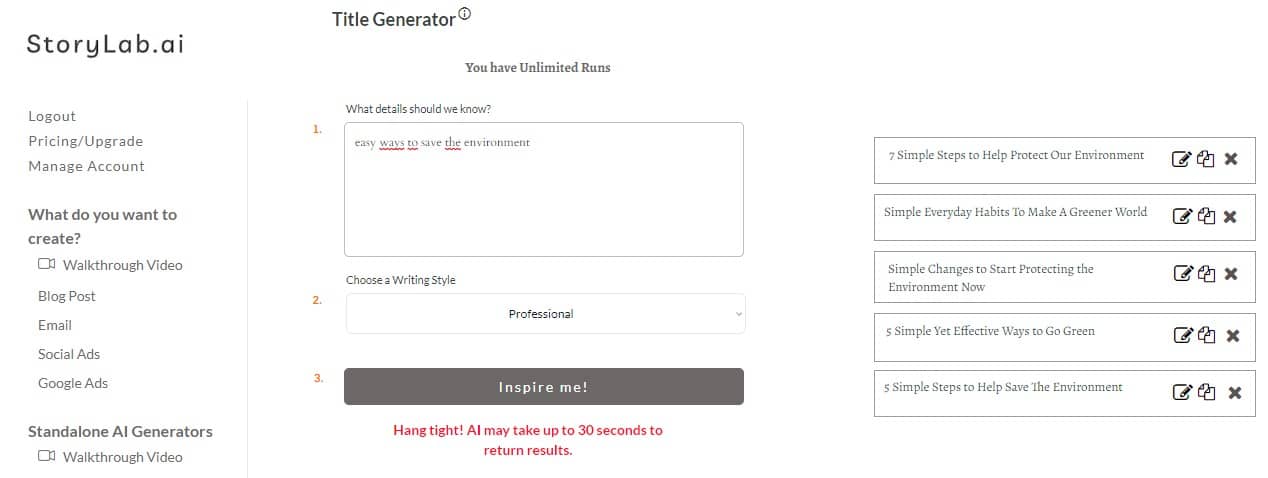
Check out the image below to see how easy it is to get started with our tool. Simply enter the content of your article and you’ll receive new ideas in seconds.
Second, take what you like and perfect the title with your unique human touch.
Check out the Environmental Blog Post Title Examples we’ve created below.
Optimize your Environmental Blog Titles for SEO
In addition to crafting an attention-grabbing blog post title, it is essential to incorporate the appropriate keywords and optimize it for search engine optimization (SEO). Ideally, you should place your primary keyword at the beginning of your H1 and Meta Title. In this particular article, we have included our main keyword, “Environmental Blog Post Title Examples,” at the start.
Avoid guessing the most suitable keywords to use. Instead, utilize tools such as SEMRush to determine the exact terms people are searching for. Enter your topic, access a wealth of data, and choose the best keyword based on volume and difficulty. Give it a try at no cost and get the data you need.
Check out the video tutorial and find out how to find hidden gems with Semrush’s keyword research tools.
Use our link and get a 14-day free Semrush trial instead of the normal 7-day trial.
Examples of Great Environmental Blog Post Titles
- 11 Solutions to the Great Plastic Pollution Problem
- 6 Things you did not Know about Recycling
- 2 Teen Sisters Committed to Banning Plastic Bags in Bali
- Why Plastic Straws are getting Banned in many Countries
- How you can make your Home more Environmentally Friendly Today
- 33 Solutions to Climate Change
- How much Water does it take to make 1 Cup of Coffee?
- Why Taking Care of the Environment Should be your Top Priority
- The Social Enterprise turning Plastic Waste into Currency
- 11 Apps that Can Help you Save The Environment
- How to Easily Plant Trees and Reverse Climate Change
- Is our Environment really Hurting?
- 13 Environmental Blogs you should Follow
- 15 Things you Probably did not Know is Hurting the Environment
- How to Build a Habit of Using Less Water
- How Governments are Helping to solve Climate Change
- How Plants Help Boost your Mood and are Good for the Environment
- Plant-Based Eating and the Impact on the Environment
- How Entrepreneurs are Fighting Climate Change
- Why you should Join a Community of Environmentally Friendly People
- 13 Books you should Read about our Environment
- 50 Famous Environmentalists from all over the World
- 7 Ways you can Reduce Carbon Emissions
- Planting one Billion Trees. What is the Impact?
- 3 Countries that are Fighting Desertification on a Large Scale
- 5 Alternatives to Paper Note Books
- The Story Behind the Country that went Carbon Neutral
- What is the Impact of Eating Meat One day Less
- Which Crops can you Simply Grow at Home?
- How to Track your own Environmental Footprint
- How to Start a Conversation about the Environment with Friends
- 7 ways any Company can help the Environment
- Which Foods Require the most Water?
- Can Plastic actually be Recycled?
- Why not 100% of our Plastic is being Recycled
- 7 Recycling no-nos you should Know
- 10 Simple Ways to Go Green at Home
- The Top 5 Most Endangered Species in the World
- The Benefits of Composting: Why You Should Start Today
- How to Reduce Your Carbon Footprint in 5 Easy Steps
- The Importance of Biodiversity and What You Can Do to Protect It
- Why We Need to Protect Our Oceans and Marine Life
- 10 Ways to Make Your Home More Energy Efficient
- The Impact of Climate Change on Our Planet
- The Top 10 Greenest Cities in the World
- Why Sustainable Agriculture Is Crucial for Our Future
- The Dangers of Plastic Pollution and What You Can Do to Help
- How Renewable Energy Can Help Save the Planet
- The Benefits of Growing Your Own Food
- The Importance of Tree Planting and Reforestation
- The Effects of Deforestation on Our Environment
- Why We Need to Protect Endangered Species
- The Top 5 Eco-Friendly Fashion Brands
- How to Create a Zero-Waste Home
- The Impact of Fast Fashion on Our Planet
- Why We Need to Ban Single-Use Plastics
- 10 Simple Swaps to Reduce Your Plastic Waste
- The Importance of Bees and Other Pollinators
- The Top 10 Wildlife Conservation Organizations to Support
- Why You Should Choose Sustainable Tourism
- The Benefits of Green Spaces in Cities
- How to Build a Sustainable Wardrobe
- The Effects of Climate Change on Wildlife
- The Top 5 Eco-Friendly Cleaning Products
- The Importance of Eco-Friendly Transportation
- How to Reduce Food Waste and Save Money
- The Impact of Overfishing on Our Oceans
- The Benefits of Going Vegan for the Environment
- Why We Need to Protect Our Wetlands
- The Top 5 Green Beauty Brands
- How to Reduce Your Water Usage at Home
- The Effects of Air Pollution on Our Health
- Why We Need to Protect Our Coral Reefs
- 10 Ways to Make Your Office More Eco-Friendly
- The Benefits of Solar Energy for Your Home
- The Top 5 Eco-Friendly Home Decor Brands
- The Importance of Sustainable Fishing Practices
- The Impact of Microplastics on Our Oceans
- How to Start a Community Garden
- The Top 10 Eco-Friendly Travel Destinations
- Why We Need to Protect Our Rainforests
- The Benefits of Using Public Transportation
- The Effects of Climate Change on Our Food Supply
- How to Reduce Your Energy Usage at Home
- The Importance of Sustainable Forestry
- The Top 5 Green Tech Innovations
Generate your own Environmental Blog Title Examples with our AI Generator for free.
How to Run a Successful Environmental Blog
Running a successful environmental blog requires a strategic approach to engage readers who are passionate about sustainability and environmental issues. Here are essential tips to help you establish and grow an influential environmental blog:
Identify Your Niche: The environmental sector is broad, encompassing topics like conservation, renewable energy, sustainable living, and more. Pinpoint a specific area where you can offer unique insights and expertise.
Know Your Audience: Understand who your readers are, what they care about, and what environmental issues resonate most with them. Tailor your content to meet their interests and needs.
Provide Valuable Content: Offer well-researched, informative, and actionable content. Whether you’re explaining complex environmental issues, providing tips for greener living, or reviewing sustainable products, ensure your content is authoritative and practical. You can achieve this goal with the help of QuillBot’s tools, which can generate text in very little time.
Engage with Stories: Use storytelling to make environmental issues more relatable. Share stories of real people, communities, and organizations making a difference. This can inspire readers and make abstract issues feel more tangible.
Leverage SEO: Use search engine optimization to increase your visibility. Research and include relevant keywords that potential readers might use to find information on environmental topics.
Use Diverse Content Formats: Incorporate different types of content, such as articles, infographics, videos, and podcasts. This diversity can cater to various preferences and expand your reach.
Encourage Community Engagement: Foster a community by encouraging comments, hosting forums, or creating social media groups. Engage with your audience by responding to comments and participating in discussions.
Promote Your Blog: Utilize social media, collaborations with other bloggers or influencers, guest posts, and email newsletters to promote your blog and reach a wider audience.
Regular Updates: Maintain a consistent posting schedule to keep your audience engaged and informed. Regular updates can help build a loyal following.
Measure and Adapt: Use analytics tools to track your blog’s performance. Analyze metrics like visitor numbers, bounce rates, and engagement levels to understand what works and refine your strategy accordingly.
Be Visually Appealing: Use high-quality images and videos to enhance your posts. Visuals can be particularly effective in environmental blogging, helping to showcase the beauty of nature and the impact of environmental issues.
Call to Action: Include clear calls to action in your posts. Encourage your readers to take specific steps towards environmental conservation, whether it’s signing petitions, participating in clean-ups, or making sustainable lifestyle changes.
How to Run a Successful Environmental Blog
If you’re passionate about sustainability, creating an environmental blog can be a powerful way to inspire change and build a loyal audience. But enthusiasm alone isn’t enough. You need structure, strategy, and a deep understanding of what your readers care about.
Here’s how to grow a blog that educates, engages, and drives impact.
1. Identify Your Niche
The environmental space is wide. Focus on a specific area—such as zero-waste living, climate science, ocean conservation, or green technology. Choosing a niche helps you stand out and become a go-to source for a dedicated audience.
2. Know Your Audience
Before you write, understand who you’re writing for. Are they college students, eco-conscious parents, policy advocates, or beginner environmentalists? Tailor your content to their goals, pain points, and reading level.
3. Provide Valuable Content
Every article should deliver value. This could be through detailed guides, practical eco-tips, breakdowns of scientific findings, or honest product reviews. Use clear, engaging language that breaks down complex topics without oversimplifying them.
4. Leverage the Power of Storytelling
Facts matter, but stories stick. Share real-world examples, spotlight activists and changemakers, and let your personality shine. This helps readers form emotional connections with the issues you cover.
5. Use SEO to Increase Reach
Optimize each post with keywords, metadata, headers, and structured formatting. Tools like Ubersuggest, Ahrefs, or Google Keyword Planner can help you find phrases your audience is searching for—like your main keyword. Including these naturally can boost your visibility in search engines.
6. Diversify Your Content Formats
Mix things up with infographics, videos, downloadable checklists, and interviews. Repurpose blog posts into Instagram carousels or short-form videos. Variety keeps your content fresh and appealing across platforms.
7. Build a Community
Encourage discussion through comments or integrate a small forum. Launch a newsletter or start a Facebook Group where people can share wins and challenges. Make your readers feel like they belong.
8. Promote Your Blog Effectively
Don’t rely solely on organic traffic. Share your content through social media, partner with other eco-bloggers, guest post on relevant sites, or run collaborations with green brands. Promotion is just as vital as content creation.
9. Stay Consistent
Publish on a regular schedule—whether that’s weekly, biweekly, or monthly. Consistency builds trust, and over time, your audience will know when to expect fresh content.
10. Track, Learn, and Adapt
Use Google Analytics or other tracking tools to see what’s resonating. Look at bounce rates, time on page, and social shares. Test different content types and publishing times to improve your strategy.
11. Make It Visual
High-quality visuals make a huge difference. Use original photos, creative graphics, or embedded videos to grab attention and clarify your points. A strong visual identity also strengthens your brand.
12. Inspire Action
End each post with a call to action. Ask readers to leave a comment, share the post, sign a petition, or start a small sustainable habit. Engagement leads to impact.
Master the Art of Video Marketing
AI-Powered Tools to Ideate, Optimize, and Amplify!
- Spark Creativity: Unleash the most effective video ideas, scripts, and engaging hooks with our AI Generators.
- Optimize Instantly: Elevate your YouTube presence by optimizing video Titles, Descriptions, and Tags in seconds.
- Amplify Your Reach: Effortlessly craft social media, email, and ad copy to maximize your video’s impact.
Looking for more Blog Post Title Examples? Check out.
- Examples of Business Blog Titles
- Gardening Blog Post Title Examples
- B2B Blog Post Title Examples
- Higher Education Blog Title Examples
- Accounting Blog Title Examples
- Crypto Blog Post Title Examples
- Examples of E-Commerce Blog Titles
- Banking Blog Post Title Examples
- Environmental Blog Post Title Examples
- Food Blog Post Title Examples
- Examples of Nonprofit Blog Post Titles
- Real Estate Blog Title Examples
- Examples of Startup Blog Post Titles
- Airline Blog Post Title Examples
- Technology Blog Post Title Examples
- Examples of Travel Blog Titles
- Examples of Fitness Blog Post Titles
- Automotive Blog Title Examples
- Examples of Vegan Blog Titles
Or, check out all other examples like Blog Intros, Google and Facebook ad copies and more.
Write great Marketing Copy in half the time
There is nothing worst than staring at a blank piece of paper. StoryLab.ai’s Marketing Copy Generators help you to get new ideas and even complete copy with a click of a button.
Get inspired by how many different ways there are to describe your blog titles, Instagram captions, ad copy and more. Next to generating new ideas and creating new copy, you can reword existing copy with our paraphrase generator.
Our Marketing Copy Generators run on GPT-5. Trained, as the largest and qualitatively best Natural Language Processing model. Check out our resource hub and see how AI Marketing can help you reach your goals faster. The time to start using this new technology is now.