
Examples of Great Food Blog Post Titles That Will Inspire You

A strong food blog post title does more than name a recipe or topic. It gives readers a reason to click. It tells them what they will get, who the content is for, and why this post is worth their time.
That matters even more in food blogging, where readers are often scanning quickly. They may want a fast dinner idea, a healthier swap, a baking guide, a seasonal recipe, or a way to use one ingredient they already have at home. The best titles make that value obvious right away.
Below, you will find food blog post title examples across different content categories, along with practical headline formulas you can reuse. You will also see how AI can help you turn one food topic into multiple title angles faster, so building your content pipeline feels much easier.
Writing great blog titles can be hard. If you are struggling to come up with a good title, check out our examples of Food Blog Post Titles below and create your own using our free tool. No more staring at a blank page or taking 15 minutes to come up with a perfect blog headline.
Check out what we’ve created with our Blog Title Generator in a couple of minutes. Use these Food Blog Post Titles to Inspire your next piece of content.
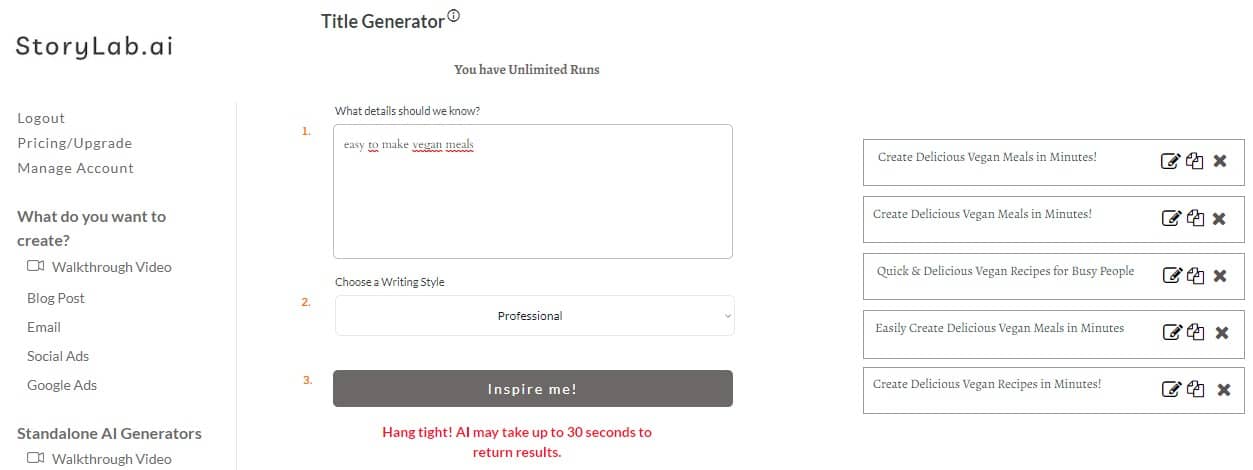
How to use StoryLab.ai’s Blog Title Generator (image below):
Optimize your Food Blog Titles for SEO
In addition to crafting an attention-grabbing blog post title, it is essential to incorporate the appropriate keywords and optimize it for search engine optimization (SEO). Ideally, you should place your primary keyword at the beginning of your H1 and Meta Title. In this particular article, we have included our main keyword, “Food Blog Post Title Examples,” at the start.
Avoid guessing the most suitable keywords to use. Instead, utilize tools such as SEMRush to determine the exact terms people are searching for. Enter your topic, access a wealth of data, and choose the best keyword based on volume and difficulty. Give it a try at no cost and get the data you need.
Check out the video tutorial and find out how to find hidden gems with Semrush’s keyword research tools.
Use our link and get a 14-day free Semrush trial instead of the normal 7-day trial.
Examples of Great Food Blog Post Titles
- How to Eat Tasty Foods Without Losing your Health
- The 13 Most Nutritious Foods You Can Eat That Actually Taste Good
- Not all Diets are Created Equal. Here’s What You should Know
- Five Tips for Staying Healthy on the Road
- Top 11 Foods that Cut Down Your Cholesterol
- Breakfast: Your Most Important Meal of The Day
- 6 Healthy Foods to Combat Arthritis Pain
- 25 Most Delicious European Food Dishes
- Nutritious Food Can Also Be Delicious, Here’s How You Can Make it at Home
- How to Eat Healthy for Less Money
- Top 14 Health Bloggers You Need to Follow in 2022
- 7 Food Hacks to Lose Weight
- Delicious Breakfast Meals that Don’t include Bread
- Weird Foods You Should Actually Eat
- How to Prep your Foods like a Pro
- Top 10 High Protein Vegan Recipes. No more eating a chicken a day
- How to Cook Healthy during the Holidays
- How to Survive Christmas without Gaining 10 pounds
- The 3 Steps to Starting a Healthy Diet: A Guide for Beginners
- Top 7 Low-Carb Breakfast Meals
- A Guide for Choosing Healthy Meals when Eating Out
- Today’s Recipe: Fried Chicken Cutlet with Mashed Potatoes
- 7 Tips to Eat Healthy While on the Road
- 10 Delicious Food Recipes You Can Make in Less Than 15 Minutes
- How to Forever Say “No” to Fast Food
- 5 Superfoods That Will Make You Slim without Going to the Gym every day
- How to Stay Healthy During the Holidays
- How to make the perfect scrambled eggs
- The ultimate guide to baking bread
- 10-minute meals for busy weeknights
- The best healthy snacks for weight loss
- 5 ways to use avocado in your cooking
- The most delicious homemade pizza recipe
- Top 10 vegetarian meals you can make in under 30 minutes
- 5 easy and healthy breakfast ideas
- The best chocolate cake recipe you’ll ever taste
- How to cook steak like a pro
- 10 amazing dessert recipes to try at home
- Quick and easy meal prep ideas for the week
- How to make homemade pasta from scratch
- Delicious smoothie recipes for a healthy start to your day
- 5 healthy snack ideas for work or school
- How to roast a whole chicken perfectly
- 10 easy meal ideas for picky eaters
- The ultimate guide to making homemade ice cream
- Easy one-pot meals for a stress-free dinner
- Healthy meal ideas for people on a budget
- The perfect summer BBQ recipes
- How to make the best guacamole ever
- 10 delicious vegetarian soups to warm you up this winter
- The ultimate guide to making sushi at home
- Quick and easy appetizer ideas for your next party
- How to make the perfect cup of coffee at
Generate your own Food Blog Title Examples with our AI Generator for free.
How to Write a Catchy Title for a Food Blog Post

Incorporate Keywords
Use relevant keywords that your audience might be searching for. This not only helps with SEO but also ensures your title is relevant to your content. For example, “Easy Vegan Breakfast Recipes” or “Quick Gluten-Free Dinner Ideas.”
Use Descriptive Language
Paint a picture with your words. Use descriptive language to make the food sound delicious and appealing. For instance, “Decadent Chocolate Lava Cake” is more enticing than “Chocolate Cake Recipe.”
Include Numbers and Lists
Titles with numbers can attract attention because they promise specific, digestible information. Examples include “7 Delicious Summer Salads” or “5-Minute Breakfast Smoothies.”
Create a Sense of Urgency or Exclusivity
Phrases like “limited time,” “must-try,” or “secret” can make readers feel like they need to check out your post immediately. For example, “5 Secret Tips for Perfect Homemade Pizza.”
Ask a Question
Asking a question can engage readers’ curiosity and make them want to find out the answer. For example, “What’s the Secret Ingredient in This Spaghetti Sauce?”
Promise a Benefit
Clearly state what readers will gain from reading your post. For instance, “How to Make the Fluffiest Pancakes Ever” or “The Ultimate Guide to Meal Prep for Busy People.”
Use Power Words
Incorporate words that evoke emotion and excitement, such as “ultimate,” “delicious,” “easy,” “essential,” and “quick.” Examples include “The Ultimate Guide to Grilling” or “Deliciously Easy One-Pot Meals.”
Be Specific
Specific titles are more appealing and informative. Instead of “Healthy Snacks,” try “10 Healthy Snack Ideas Under 100 Calories.”
Keep It Concise
Aim for titles that are clear and to the point. Long, complicated titles can be off-putting. For example, “Simple Vegan Desserts” is more effective than “How to Make Simple and Delicious Vegan Desserts at Home.”
Incorporate Trends
Stay current by incorporating food trends into your titles. For example, “Top Keto Recipes for Beginners” or “How to Make Trendy Dalgona Coffee at Home.”
Use Alliteration
Alliteration can make your title more memorable and fun. For example, “Sizzling Summer Salads” or “Perfect Pumpkin Pie.”
Test Different Variations
If possible, test multiple title variations to see which one performs best. Tools like A/B testing can help you determine the most effective title for your audience.
Food blog title examples by search intent
The strongest food blog titles match what the reader is actually trying to find. Some people want quick recipes. Others want comfort food, healthy meal ideas, ingredient guides, or beginner-friendly kitchen advice. When your title aligns with search intent, your content feels more useful before the click even happens.
Here are common search intent angles for food content:
Quick meal intent
Easy Dinner Ideas for Busy Weeknights
Quick Pasta Recipes You Can Make in Under 30 Minutes
Fast Lunch Ideas That Do Not Feel Boring
Healthy eating intent
Healthy Breakfast Ideas That Actually Keep You Full
Lighter Dinner Recipes That Still Feel Satisfying
Simple High-Protein Meals for Busy Days
Ingredient-specific intent
What to Make With Chickpeas Beyond Salad
Best Ways to Use Overripe Bananas in Baking
Easy Recipes to Make With Ground Turkey
Comfort food intent
Cozy Soup Recipes for Cold Evenings
Comfort Food Dinners the Whole Family Will Love
Homemade Pasta Dishes That Feel Like a Treat
Beginner cooking intent
Easy Recipes for People Who Are Just Learning to Cook
Beginner-Friendly Meals With Simple Ingredients
What to Cook First When You Want More Confidence in the Kitchen
Thinking in terms of search intent helps you create titles that are clearer, sharper, and more likely to attract the right readers.
Food blog title formulas that work across many niches
You do not need to invent a brand-new title structure every time. Many high-performing food blog titles follow simple formulas that are easy to adapt to different topics.
Try patterns like these:
How-to
How to Make Crispy Roasted Potatoes at Home
List post
11 Easy Dinner Recipes for Stressful Weeknights
Problem and solution
Tired of Dry Chicken? Try These Better Cooking Tips
Time-based
20-Minute Meals for Days When Time Is Tight
Beginner-focused
A Beginner’s Guide to Baking Soft and Chewy Cookies
Seasonal
Fresh Spring Recipes That Feel Light and Flavorful
Budget-focused
Cheap Family Meals That Still Taste Great
Comparison
Olive Oil vs Butter in Baking: When to Use Each One
These title types work well because they quickly tell the reader what to expect and why the post is useful.
Food blog title examples for different content categories
Food blogs usually cover more than recipes alone. The most engaging blogs mix recipe posts with tutorials, ingredient explainers, seasonal ideas, meal planning content, and opinion pieces. Creating title ideas by category helps you build a more rounded content strategy.
Recipe titles
Easy One-Pot Dinners for Busy Weeknights
Crowd-Pleasing Pasta Recipes for Family Dinners
Homemade Dessert Ideas That Feel Special but Stay Simple
Baking titles
Foolproof Cookie Recipes for Soft and Chewy Results
Baking Tips That Help Cakes Turn Out Better Every Time
Easy Bread Recipes for New Home Bakers
Ingredient-focused titles
What to Cook With Spinach Before It Goes Bad
Best Recipes to Make With Chicken Thighs
Smart Ways to Use Leftover Rice in Fast Meals
Meal prep titles
Meal Prep Ideas That Make Lunch Easier All Week
Simple Breakfast Meal Prep for Busy Mornings
Family Meal Prep Tips That Save Time Without Stress
Lifestyle and opinion titles
What I Learned After Cooking at Home More Often
My Favorite Kitchen Habits for Easier Weeknight Meals
Food Trends Worth Trying and Which Ones to Skip
Review and roundup titles
Best Kitchen Tools for People Who Cook Every Day
My Honest Review of Meal Planning Apps for Home Cooks
Best Pantry Staples to Keep for Quick Homemade Meals
This kind of variety helps attract readers with different needs while making your blog feel more useful overall.
How to use AI to generate stronger food blog titles
AI can help you brainstorm title ideas much faster, especially when you already know your topic but want better angles. Instead of asking for general food blog title ideas, guide AI with context so the outputs feel more focused and relevant.
For example, try prompts like:
- Food blog title ideas for quick high-protein lunches
- SEO-friendly food blog titles about beginner baking
- Food blog title examples for budget family dinners
- Recipe headline ideas for seasonal comfort food
- Blog title ideas for healthy meal prep content
This helps AI create more useful suggestions because it knows the audience, the topic, and the goal. It can also help you expand one idea into several angles for different readers.
That makes AI useful not only for brainstorming. It also supports a smarter AI marketing workflow by helping you generate content ideas that can turn into blog posts, social captions, newsletters, and video hooks.
How to make food blog titles more clickable
Food content is competitive, so your title needs to be clear and appealing without sounding forced. Readers are more likely to click when they can quickly understand the value of the post.
A few ways to improve your titles:
Be specific
“Easy Chicken Dinner Ideas for Busy Families” is stronger than “Chicken Recipes.”
Lead with the benefit
Show whether the value is speed, comfort, simplicity, health, budget, or flavor.
Use natural language
Write the way people search and speak. Clear wording usually performs better than clever wording.
Add context that matters
Words like quick, healthy, beginner-friendly, budget, family, seasonal, and one-pot make the title more useful.
Avoid vague hype
A title should create interest, but it should still feel honest. Readers respond better to clear promises than broad claims.
The goal is not to make every title bigger. It is to make every title easier to understand and harder to ignore.
Turning one food topic into multiple content angles
One food topic can support many strong blog post titles if you look at it from different angles. This is one of the easiest ways to build more content without starting from scratch every time.
Take “pasta recipes” as an example. That one topic can become:
- Easy Pasta Recipes for Busy Weeknights
- Healthy Pasta Recipes That Still Taste Comforting
- Budget Pasta Meals That Feed a Family
- Creamy Pasta Recipes for Special Dinners at Home
- Vegetarian Pasta Recipes With Everyday Ingredients
- Pasta Meal Prep Ideas for Easier Lunches
This makes your content strategy much more flexible. It also helps you target long-tail searches that are often easier to rank for and more closely matched to reader intent.
Common mistakes that weaken food blog post titles
A lot of food blog titles underperform because they stay too broad or fail to highlight the real benefit. Stronger titles usually come from making the promise more specific.
Common mistakes include:
Using generic wording
Titles like “Best Food Ideas” or “Cooking Tips” do not say enough.
Hiding the value
The reader should know what they will gain right away.
Ignoring the audience
A beginner cook and an experienced baker need different types of headlines.
Overusing the same structure
If every post uses the same title style, your blog can start to feel repetitive.
Trying too hard to sound clever
Creative phrasing can work, but clarity usually wins first.
Small changes in wording can make a title feel much more useful and much more clickable.
Build a stronger food content workflow with AI
Once you have a strong title, AI can help you turn it into more than a single blog post. It can support the full content workflow around that headline, helping you move faster without losing focus.
A title like “Easy Dinner Ideas for Busy Weeknights” can become:
- a detailed blog outline
- alternative headline options
- Pinterest titles
- email subject lines
- Instagram caption ideas
- short-form video hooks
- related blog post ideas around ingredients, prep, and substitutions
That makes title generation part of a broader AI marketing workflow. Instead of treating titles as a last-minute task, you can use them to shape a more consistent and scalable content strategy.
FAQ
What makes a good food blog post title?
A good food blog post title is clear, specific, and relevant to what the reader wants. It usually combines the topic with a benefit such as speed, simplicity, flavor, health, or budget.
How do I write more clickable food blog titles?
Use natural wording, highlight the value of the post, and make the topic specific. Titles that clearly show what the reader will get are usually more appealing than vague ones.
Should food blog titles include keywords?
Yes. Relevant keywords help readers and search engines understand the topic quickly. The best titles include keywords naturally without sounding forced.
Can AI help create better food blog title ideas?
Yes. AI can help brainstorm stronger title angles, generate variations for different audiences, and turn one food topic into multiple blog ideas faster.
What types of food blog titles perform well?
How-to titles, list posts, beginner guides, seasonal ideas, ingredient-driven headlines, and quick-recipe titles often perform well because they clearly communicate the value of the post.
Why is search intent important for food blog titles?
Search intent matters because readers click when a title matches what they are looking for. A title that reflects the reader’s goal feels more relevant and more useful.
Should I create multiple blog titles for one food topic?
Yes. One topic can often support several angles such as quick, healthy, budget, family-friendly, beginner, or seasonal. This helps you build a broader content plan and target more specific searches.
Looking for more Blog Post Title Examples? Check out.
- Examples of Business Blog Titles
- Gardening Blog Post Title Examples
- B2B Blog Post Title Examples
- Higher Education Blog Title Examples
- Accounting Blog Title Examples
- Crypto Blog Post Title Examples
- Examples of E-Commerce Blog Titles
- Banking Blog Post Title Examples
- Environmental Blog Post Title Examples
- Food Blog Post Title Examples
- Examples of Nonprofit Blog Post Titles
- Real Estate Blog Title Examples
- Examples of Startup Blog Post Titles
- Airline Blog Post Title Examples
- Technology Blog Post Title Examples
- Examples of Travel Blog Titles
- Examples of Fitness Blog Post Titles
- Automotive Blog Title Examples
- Examples of Vegan Blog Titles
Or, check out all other examples like Blog Intros, Google and Facebook ad copies and more.
Write great Marketing Copy in half the time
There is nothing worst than staring at a blank piece of paper. StoryLab.ai’s Marketing Copy Generators help you to get new ideas and even complete copy with a click of a button.
Get inspired by how many different ways there are to describe your blog titles, Instagram captions, ad copy and more. Next to generating new ideas and creating new copy, you can reword existing copy with our paraphrase generator.
Our Marketing Copy Generators run on GPT-5. Trained, as the largest and qualitatively best Natural Language Processing model. Check out our resource hub and see how AI Marketing can help you reach your goals faster. The time to start using this new technology is now.
More Resources For Food Content Creators
Instagram Posts
Blog Titles
YouTube Video Titles
Social Media Content Ideas
Master the Art of Video Marketing
AI-Powered Tools to Ideate, Optimize, and Amplify!
- Spark Creativity: Unleash the most effective video ideas, scripts, and engaging hooks with our AI Generators.
- Optimize Instantly: Elevate your YouTube presence by optimizing video Titles, Descriptions, and Tags in seconds.
- Amplify Your Reach: Effortlessly craft social media, email, and ad copy to maximize your video’s impact.