
AI Chat Tools That Actually Save Hours Every Week

AI chat tools are easy to talk about in vague ways. People say they boost productivity, speed up workflows, and change the way teams work. But what actually matters is much simpler: do they save real time during a normal week?
In many cases, they do. Not because they magically do everything for you, but because they cut down the time spent on repetitive thinking, rough drafting, summarizing, organizing, and getting from blank page to first useful version. That is where hours often disappear during the workweek.
The biggest value of AI chat tools is not that they replace people. It is that they help people move faster through the parts of work that slow momentum down. For marketers, creators, founders, support teams, and operations staff, that can mean less time stuck and more time improving work that already has a clear direction.
Below, you will find practical ways AI chat tools actually save hours every week, where they fit best in modern workflows, and how to use them more effectively as part of a stronger AI marketing and productivity system.
We’ve all been there. You’re staring at a 90 page PDF report, knowing the answer to your question is buried somewhere in those dense paragraphs. Or maybe you’re watching potential customers bounce off your website because they couldn’t find what they needed fast enough. Either way, you’re losing time and money.
The good news? AI powered chat tools have evolved dramatically over the past two years. What started as clunky, frustrating experiences have transformed into genuinely useful solutions that feel almost like talking to a knowledgeable colleague. These tools now understand context, remember previous questions, and deliver answers that actually make sense.
But here’s the challenge: the market is flooded with options. Everyone claims to have the “best” AI chat solution, and separating marketing hype from genuine capability takes serious effort. Some tools excel at parsing documents while others shine when embedded on websites. A few manage to do both remarkably well.
This guide cuts through the noise. We’ve evaluated the leading options based on real world performance, not just feature lists. You’ll discover which tools genuinely deliver on their promises and which ones might leave you frustrated. Whether you need something for personal productivity or a solution to transform how your business handles customer inquiries, there’s an option here worth your attention.
The criteria we focused on? Speed, accuracy, ease of setup, pricing transparency, and that often overlooked factor: how natural the conversations actually feel. Nobody wants to interact with a bot that sounds like it’s reading from a script written in 1995.
Let’s explore the tools that are genuinely changing how people work with information.
Chapters
Understanding the Two Main Categories of AI Chat Tools

Before jumping into specific tools, it helps to understand what you’re actually looking for. AI chat solutions generally fall into two camps, though the lines are increasingly blurring.
Document chat tools focus on letting you upload files and have conversations about their contents. Think PDFs, Word documents, spreadsheets, and research papers. You upload your material, and the AI becomes an instant expert on that specific content. Need to find every mention of quarterly revenue across a 200 page annual report? These tools handle that in seconds.
Website chat solutions take a different approach. They live on your site, interact with visitors, answer questions, and guide people toward what they need. The sophisticated ones learn from your existing content and can handle surprisingly complex queries without human intervention.
The magic happens when a tool combines both capabilities effectively. That’s where you start seeing real productivity gains and business impact.
Top Tools for Chatting With Your Documents
Denser
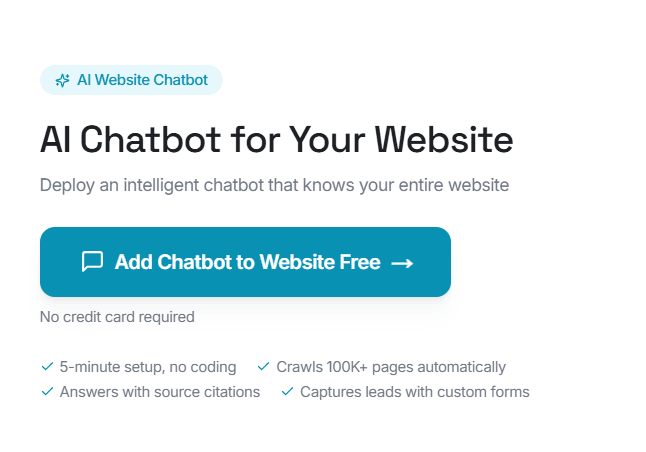
Here’s where things get interesting. Denser Studio positions itself as an all in one solution that handles both document interactions and website deployment. The platform lets you create AI assistants trained on your specific content, whether that’s internal documentation, product information, or customer resources.
What sets Denser apart is the flexibility. You can build a knowledge base from various sources, then deploy that intelligence wherever it’s needed. The same AI that helps your team find information in dense technical documents can power a website chatbot that assists customers around the clock.
The setup process takes minutes rather than hours, which matters for teams without dedicated technical resources. You upload your content, customize the behavior, and embed the solution wherever it needs to live. The AI handles the rest, learning from your materials and responding to queries with information pulled directly from your approved sources.
Pricing stays reasonable for small teams, with options that scale as needs grow. The analytics dashboard shows you what questions people are asking, which helps identify gaps in your documentation or training materials.
ChatPDF
This tool does exactly what the name suggests, and it does it well. Upload a PDF, start asking questions, and get answers pulled directly from your document. The interface stays refreshingly simple, which matters when you just need quick answers without a learning curve.
ChatPDF handles academic papers particularly well. Students and researchers appreciate how it can summarize complex sections, explain technical jargon, and locate specific information across lengthy documents. The free tier offers enough functionality for casual users, while paid plans unlock longer documents and more queries.
Where it falls short: the tool focuses exclusively on PDFs. If your workflow involves multiple file formats, you’ll need additional solutions.
Claude (Anthropic)
Claude has earned a reputation for nuanced, thoughtful responses that often feel more natural than competing AI assistants. When it comes to document analysis, Claude excels at understanding context and providing detailed explanations rather than surface level summaries.
Upload a document or automatically integrate your data into Claude, so the AI assistant can discuss it in depth, draw connections between different sections, and answer follow up questions that build on previous responses. The conversation flows naturally, which makes extended research sessions more productive and less tedious.
The downside? Claude works as a general purpose assistant rather than a dedicated document tool. This means the interface isn’t specifically optimized for document heavy workflows.
PDF.ai
Another strong contender in the document chat space, PDF.ai offers solid performance with a clean interface. The tool handles multiple documents simultaneously, which proves useful when you need to cross reference information across several files.
The summarization features work well for quickly getting the gist of lengthy reports. You can ask for bullet point summaries, detailed explanations, or specific data extraction. The AI usually delivers relevant responses, though accuracy occasionally dips with heavily formatted documents or complex tables.
Choosing the Right Website Chat Solution

Moving beyond document analysis, let’s talk about tools designed to interact with your website visitors. This category has exploded recently, with options ranging from simple FAQ bots to sophisticated AI assistants that can handle complex conversations.
What Makes a Great Website Chat Tool?
The best solutions share several characteristics. They understand natural language rather than requiring visitors to use specific keywords. They learn from your existing content rather than demanding you write hundreds of predefined responses. They integrate smoothly with your existing systems. And perhaps most importantly, they know when to escalate to a human.
Nobody wants to argue with a bot that keeps misunderstanding their question. The tools worth your money recognize their limitations and hand off gracefully when needed.
Intercom
A veteran in the customer communication space, Intercom has added AI capabilities to its already robust platform. The tool combines live chat, chatbot functionality, and help desk features into a unified system.
Intercom’s AI component, Fin, draws from your knowledge base to answer customer questions automatically. The responses generally feel natural, and the system learns over time which answers work best. Setup requires more effort than some alternatives, but the depth of customization justifies that investment for many teams.
The pricing sits at the higher end, making Intercom more suitable for established businesses with real budgets. Startups and small teams might find better value elsewhere.
Drift
Focused heavily on B2B sales conversations, Drift uses AI to qualify leads and book meetings without requiring human intervention. The chatbot engages visitors, asks qualifying questions, and routes hot prospects to the right salespeople.
The tool integrates well with popular CRM systems, keeping your sales data synchronized and your team informed. The conversational flows feel polished, though they lean heavily toward sales oriented interactions.
Companies not focused on lead generation might find Drift’s strengths misaligned with their needs. The platform is built for sales first, support second.
Tidio
For smaller businesses and e-commerce stores, Tidio offers accessible AI chat without enterprise pricing. The platform combines live chat, chatbot building, and email integration in a package designed for teams without technical expertise.
The AI assistant handles common questions automatically while allowing seamless handoff to human agents when needed. Template flows help you get started quickly, though customization options feel somewhat limited compared to more expensive alternatives.
Making Your Decision: Key Questions to Ask
Selecting the right tool depends entirely on your specific situation. Before committing to any solution, work through these considerations.
What’s your primary use case? Document analysis and website chat serve different purposes. Some tools try to do both, but many specialize. Match the tool to your actual needs rather than being swayed by features you’ll never use.
How technical is your team? Some platforms require development resources to implement properly. Others offer genuine no code setup. Be honest about your capabilities and choose accordingly.
What’s your budget flexibility? Pricing models vary wildly in this space. Some tools charge per conversation, others per seat, and some offer flat monthly rates. Calculate the actual cost based on your expected usage before committing.
How important is customization? Off the shelf solutions work fine for basic needs. If you require deep integration with existing systems or highly specific conversational flows, you’ll need platforms that offer that flexibility.
Implementation Tips That Actually Work
Getting value from these tools requires more than just signing up and hoping for the best. A few practices separate successful implementations from abandoned experiments.
Start with quality content. AI chat tools are only as good as the information they’re trained on. Garbage in, garbage out applies here more than anywhere. Invest time in organizing and cleaning your source materials before feeding them to any system.
Set realistic expectations. These tools augment human capability rather than replacing it entirely. They handle routine queries brilliantly and free up your team for complex situations. Expecting perfection from day one leads to disappointment.
Monitor and iterate. Every platform offers some form of analytics. Use them. See what questions the AI struggles with. Identify patterns in failed conversations. Improve your knowledge base based on actual user behavior.
Train your team. Even automated systems require human oversight. Make sure your people understand how the tools work, when to intervene, and how to provide feedback that improves performance over time.
Where AI chat tools save the most time
AI chat tools are most useful when they reduce friction in work that repeats often. That could be writing, planning, summarizing, idea generation, research prep, or turning messy thoughts into a clearer first draft.
A few of the most common time-saving use cases include:
- turning rough notes into usable outlines
- drafting emails, blog sections, captions, and internal updates
- summarizing long articles, meeting notes, or transcripts
- rewriting content for clarity, tone, or different audiences
- brainstorming angles, hooks, and headline options
- organizing scattered ideas into a cleaner structure
- turning one asset into multiple content variations
- answering common internal questions faster
- helping teams move past blank-page delays
The biggest time savings usually come from speed at the start. AI helps people begin faster, structure faster, and get to an editable version with much less drag.
How AI chat tools help marketers save hours every week
Marketing teams often lose time in places that do not look dramatic at first. A campaign brief takes longer than expected. Caption writing turns into a long back-and-forth. One blog post needs to become five social posts, an email, and a landing page update. A small task expands into an entire afternoon.
This is where AI chat tools can become especially useful.
Marketers often use them to:
- brainstorm campaign ideas faster
- generate headline and hook options
- turn blog posts into social media content
- rewrite copy for different channels
- summarize research before writing
- create first drafts for emails and landing pages
- simplify complex ideas into clearer language
- build faster content workflows across teams
Instead of treating AI chat as a novelty, smart teams use it as a daily support layer for content production and marketing operations.
AI chat tools for writing, rewriting, and content repurposing
One of the clearest ways AI chat tools save time is by reducing how long it takes to create and reshape written content. Starting from zero usually takes longer than improving something that already exists. AI helps create that starting point faster.
For example, one blog post can become:
- multiple social captions
- newsletter snippets
- headline variations
- short video hooks
- LinkedIn post versions
- FAQ answers
- summary paragraphs for internal sharing
This is one of the strongest use cases for AI marketing workflows. Instead of creating each asset separately, teams can build from one strong source and use AI chat to adapt it into several channel-ready versions.
How AI chat tools reduce low-value busywork
A lot of weekly work is not hard because it is complex. It is hard because it is repetitive, fragmented, or mentally draining. AI chat tools help most when they reduce this kind of low-value busywork.
Examples include:
- rewriting the same idea in a different format
- cleaning up messy notes
- drafting repetitive replies
- summarizing what was said in meetings
- turning bullet points into presentable copy
- organizing research into useful sections
- generating examples or variations on demand
That does not mean every task should be automated. It means people can spend less time on repetitive setup work and more time on judgment, editing, decision-making, and higher-level thinking.
Practical weekly tasks AI chat tools can speed up
The value of AI chat becomes easier to see when you look at actual weekly tasks instead of broad promises.
In a normal workweek, AI chat tools can help with:
- Monday planning and priority setting
- turning meeting notes into action items
- drafting follow-up emails
- writing first-pass content outlines
- creating short summaries for leadership or clients
- building talking points for presentations
- generating content ideas when the calendar feels empty
- rewriting copy that feels flat or unclear
- preparing answers for common customer questions
- turning one topic into several usable content angles
This is why teams often say the time savings come from accumulation. A few minutes saved here and there adds up quickly across a week.
AI chat tools work best when paired with human judgment
The biggest mistake is expecting AI chat tools to think exactly like a strong operator, strategist, or writer without guidance. The best results usually come when a person brings direction and the AI helps speed up execution.
That means AI works especially well when you already know:
- the audience
- the goal
- the tone
- the format
- the constraints
- what a good result looks like
In that setup, AI chat becomes much more than a writing shortcut. It becomes a way to move through routine work faster while keeping humans in charge of quality and decision-making.
How teams build better workflows with AI chat tools
The strongest gains usually happen when AI chat is built into recurring workflows instead of used randomly. A one-off prompt can help, but a repeatable system helps much more.
A stronger workflow often looks like this:
- use AI to brainstorm angles
- use AI to draft a rough version
- refine the structure and message
- use AI to create channel-specific variations
- review and edit for accuracy and tone
- publish or share the best version
- repeat the same process next time with better prompts
This helps teams save time more consistently because the tool supports a real workflow instead of becoming an occasional experiment.
Common mistakes that stop AI chat tools from saving time
AI chat tools do not always save time. Sometimes they create more work because the prompt is too vague, the task is poorly defined, or the output still needs heavy cleanup.
Common mistakes include:
- asking for content without enough context
- expecting final-quality output from the first prompt
- using AI for tasks that need expert review
- generating too much low-quality text
- not having a clear workflow for reviewing outputs
- treating AI as a replacement for thinking instead of a support layer
Time savings improve when the task is clear, the prompt is focused, and the user knows how to guide the output toward a useful result.
Who benefits most from AI chat tools
AI chat tools can help many kinds of professionals, but the biggest gains often go to people whose work includes writing, organizing, summarizing, research prep, ideation, or communication-heavy tasks.
That often includes:
- marketers
- content teams
- founders
- consultants
- support teams
- sales teams
- operations managers
- recruiters
- educators
- small business owners
If a role includes repeated communication or content shaping, AI chat usually has multiple ways to save time each week.
How to get more real value from AI chat tools
The best results often come from using AI chat with more precision. Instead of asking for something broad like “write a blog post,” it helps to give the tool a clearer job.
Better prompts often include:
- the audience
- the goal
- the content type
- the tone
- the key points to include
- what to avoid
- examples of the desired direction
This usually leads to faster, better output and reduces how much editing is needed later.
AI chat tools as part of a broader AI marketing system
The biggest value does not come from one prompt. It comes from connecting AI chat to the rest of your workflow. A good idea becomes a draft. A draft becomes several assets. Those assets become a campaign, a content calendar, an email sequence, or a knowledge base update.
That is where AI chat tools become more than productivity helpers. They become part of a broader AI marketing system that helps teams:
- create faster
- repurpose smarter
- reduce content bottlenecks
- keep momentum across channels
- spend more time improving strong ideas instead of starting over
When used this way, AI chat tools do not just save scattered minutes. They help teams reclaim meaningful time every single week.
The Bottom Line
AI chat tools have matured dramatically. What felt gimmicky two years ago now delivers genuine productivity gains and improved customer experiences. The key is matching the right solution to your specific situation rather than chasing the flashiest features.
For document heavy workflows, options like ChatPDF, Claude, and Denser Studio offer powerful capabilities without overwhelming complexity. Each brings different strengths, so consider whether you need pure document analysis or a platform that extends to website deployment.
For customer facing applications, the choice depends on your scale, budget, and technical resources. Enterprise teams might appreciate Intercom’s depth. Smaller operations often find Tidio’s accessibility more appropriate. Sales focused organizations gravitate toward Drift’s specialized approach.
Whatever you choose, remember that implementation matters as much as the tool itself. Start small, learn what works, and expand from there. The productivity gains are real, but they come from thoughtful deployment rather than simply buying software.
Your documents and your website visitors deserve better than the status quo. These tools make that improvement surprisingly achievable.
FAQ
Do AI chat tools actually save time?
Yes. AI chat tools can save time by speeding up drafting, summarizing, brainstorming, rewriting, and organizing routine work. The biggest savings usually come from reducing blank-page time and repetitive content tasks.
What tasks can AI chat tools automate or speed up?
AI chat tools are often used to draft emails, summarize notes, generate ideas, rewrite content, create outlines, and turn one piece of content into multiple variations.
How do marketers use AI chat tools to save hours every week?
Marketers use AI chat tools to brainstorm campaigns, write faster first drafts, repurpose blog content into social posts, generate headline options, and simplify research into usable content.
Can AI chat tools help with content repurposing?
Yes. AI chat tools are useful for turning one source asset into multiple outputs such as captions, summaries, email copy, headline options, and channel-specific variations.
Do AI chat tools replace human work?
No. They work best as support tools that help people move faster through drafting, organizing, and repetitive tasks while humans still guide strategy, judgment, editing, and accuracy.
What kinds of teams benefit most from AI chat tools?
Teams that spend a lot of time writing, summarizing, researching, planning, or communicating often benefit most. That includes marketers, support teams, founders, operations teams, and content creators.
Why do AI chat tools sometimes fail to save time?
They usually save less time when prompts are vague, the task is unclear, or the output still needs heavy cleanup. Clear direction usually leads to better and faster results.
How do you get better results from AI chat tools?
Give clear prompts with the audience, goal, format, tone, and key points. The more specific the input, the more useful the output usually becomes.
Other Interesting Articles
- AI LinkedIn Post Generator
- Gardening YouTube Video Idea Examples
- AI Agents for Gardening Companies
- Top AI Art Styles
- Pest Control YouTube Video Idea Examples
- Automotive Social Media Content Ideas
- Plumber YouTube Video Idea Examples
- AI Agents for Pest Control Companies
- Electrician YouTube Video Idea Examples
- How Pest Control Companies Can Get More Leads
- AI Google Ads for Home Services
- 60-Second Training Videos Are the New Corporate Standard
- Cybersecurity PR Pricing: Retainers, Deliverables & ROI
- Best AI Tools for Product Consistency in E-Commerce Video
Master the Art of Video Marketing
AI-Powered Tools to Ideate, Optimize, and Amplify!
- Spark Creativity: Unleash the most effective video ideas, scripts, and engaging hooks with our AI Generators.
- Optimize Instantly: Elevate your YouTube presence by optimizing video Titles, Descriptions, and Tags in seconds.
- Amplify Your Reach: Effortlessly craft social media, email, and ad copy to maximize your video’s impact.