
How to Build a High-Converting B2B Landing Page With AI

A B2B landing page has one job: help the right visitor take the next step.
That step might be booking a demo, downloading a guide, requesting pricing, starting a trial, signing up for a webinar, or speaking with sales. Whatever the goal is, every part of the page should support that action.
B2B landing pages are different from simple consumer pages because the buying process is usually more complex. Visitors may need to understand the problem, compare options, justify the investment, involve other decision-makers, and trust that your company can deliver.
That means strong B2B landing pages need more than a headline and a form. They need clear positioning, buyer-specific messaging, proof, friction reduction, useful content, fast performance, and a follow-up experience that supports the sales process.
AI can also help marketers improve landing pages faster by generating copy variations, analyzing audience segments, summarizing customer language, identifying conversion gaps, and creating test ideas. The goal is not to let AI write generic landing pages. The goal is to use AI to create sharper, more relevant pages for the people you want to convert.
Related: How to Improve Lead Generation with the Help of AI.
Chapters
What is a B2B Landing Page?
What is a B2B landing page? At its core, it’s a page on your B2B business site that provides information about a specific product or campaign. B2B companies can bring in traffic to these pages, persuading visitors to take a specific action. Here’s how you can refocus your efforts from sales to marketing.
You can develop various B2B landing pages for different things- the services you provide, the webinar you’re hosting, and the features your customers are looking for. They help you rank for specific terms that they’re optimized for and will ask people to do something related to the topic that you’re discussing. Work with a WordPress agency if you don’t have experience in building and ranking a landing page.
Simple landing page design
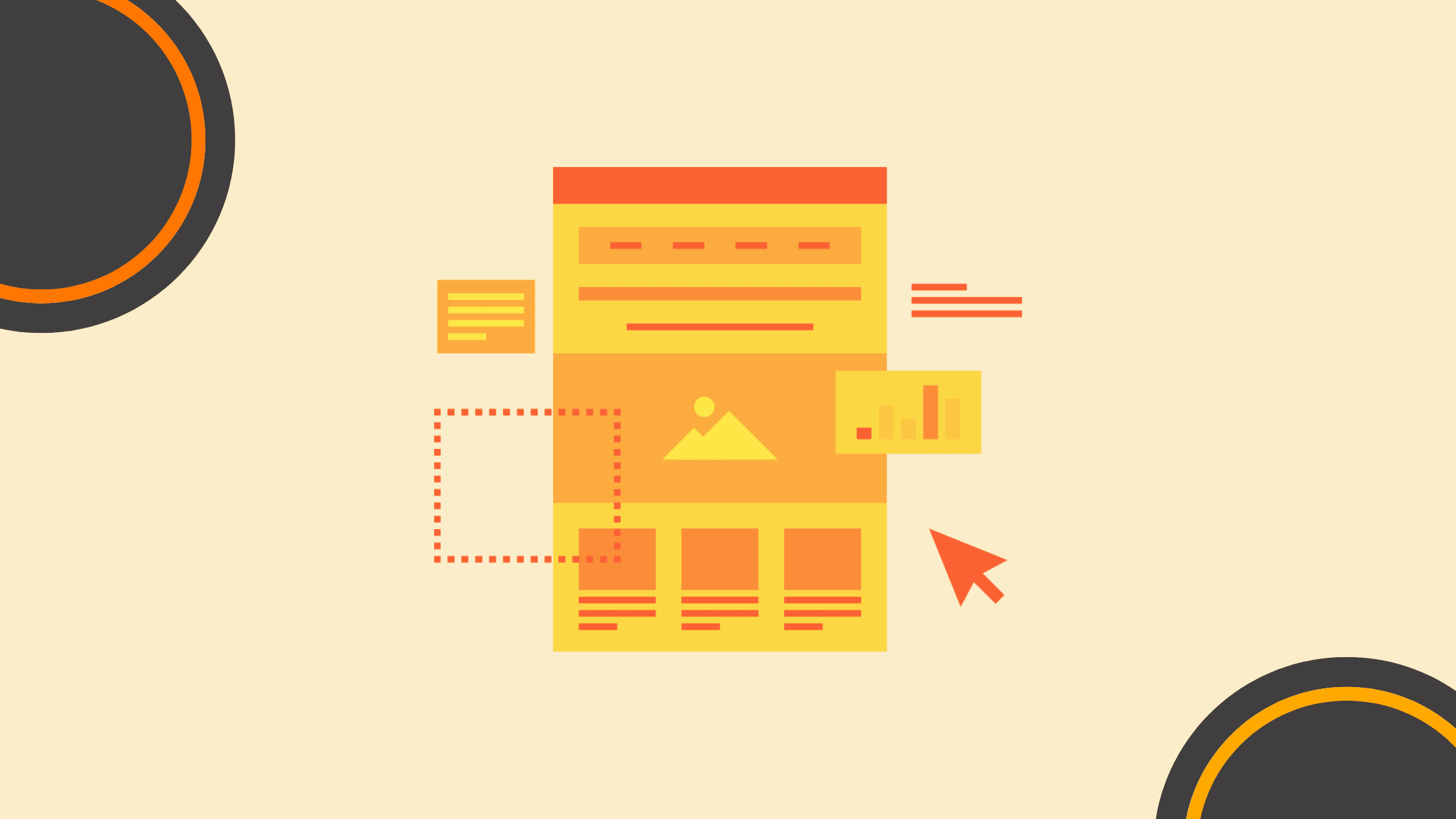
The simpler the design of your page, the better. That’s because simple sites are also easier to load and use.
So, make sure you place global navigation at the top of the page with the search box in the upper right corner. If you place this elsewhere, users will leave your site dissatisfied.
The hero shot
The hero shot is a visual representation of your product or offer. Whatever you’re selling, visualization allows the users to see what it is and how it will help them. Are you selling software? Then make sure that a photo of the interface is included.
Furthermore, videos that show your products in action are also an excellent option for your hero shot. However, your content needs to be easy to digest and can easily comprehended.
Strong Call-to-actions (CTA)
Call-to-actions (CTAs) are short statements that are specifically designed to give your readers an instant response. One of the most common examples includes “Join our Newsletter” or “Sign Up Today!”
Ideally, the best CTAs don’t include confusing language. Instead, they’re straight up and have clear, concise wording that compels users to take action.
You also have to be precise with the placement of your CTAs. It should immediately be in front of your visitors. Don’t allow them to scroll through text folds without letting them take action.
Ideally, avoid misusing CTAs since they’ll only push away users and eventually hurt your sales.
Concise lead form

A lead form is vital since some users won’t be willing to convert without getting more information about your products and services. Moreover, getting lead information is a win since you can use it for your remarking and email campaigns. It’s another conversion form for your end, and you shouldn’t miss out.
So, make your lead forms short and to the point. Make sure to place it above the fold- place it as high as possible on your page to help maximize your conversions, and only ask for the information you need.
Finally, social proof on your lead forms persuades more people to take your desired action and boost your conversions.
Attention-grabbing headline
When prospects land on your landing page, they might wonder whether they should stay or hit the back button.
Most landing pages fail to capture the attention of your prospects because they try to do everything at once. Your headline has only one job that it needs to do, and that is to capture your reader’s attention.
Thus, you must develop a compelling argument for your prospect to convert. Your headline will make readers stop whatever they’re doing and then focus their attention on it. If you’re not able to this entirely from your end then you can take help from a headlines generator for creating compelling and attention-grabbing headlines. It helps to brainstorm and generate multiple options for headings by providing suggestions based on the input provided.
So, how do you create headlines that entice them to stay?
Here are some tips:
- Base your headline on a question
- Base it on a statistic or interesting fact
Base it on a deep-seated desire, hope, or what they want to hear. It should be something that you know your readers are struggling with yet can’t put the words themselves.
Clear and compelling copy
Your landing page isn’t your entire site. That’s why there’s no reason to tell everything about your business on a single page. What you need to do is to say to readers precisely the thing that they want to know and then highlight your credibility.
You should also narrow your page’s content in a way that captures the reader and then engage them to follow through with a conversion. Ideally, you only have a few seconds to convince readers to convert before they close a landing page.
Ensure you use compelling visuals, a clear headline, and subheadings to maximize your content’s skim-ability. It would help if you also used bullets to get your message across quickly. If you provide more text than that, there’s a high chance visitors will leave.
Compelling social proof
The internet is already filled with products and offerings. Most B2B professionals know that the products they choose are well respected and are already proven and tested products in the industry.
Social proof reassures them, especially if it comes from well-known companies and individuals in the same industry. So, put a section on your landing page highlighting reviews, quotes, and custom logos.
Thank you page
A thank you page is another essential component of your landing page because once users submit their info, you want to show what they have to do next to look for the resource.
Including a thank you page will redirect them after they’re done submitting the lead generation on your site. This primary purpose is to provide visitors a link to the link magnet they opted for, help them with the next step, or thank them for opting in.
Quick load landing pages

A slow-loading site affects not only your conversion rates but your search engine rankings, too. So, if you want a fast-loading B2B landing page, stay away from oversized images.
You can compress your images using tools like ImageResize, Imagetotextconverter, or TinyPNG before you use them on your landing page.
Now that you understand the importance of website speed optimization let’s discuss how to optimize your website for speed. Here are some ways to improve your website’s page load speed:
Use a Content Delivery Network (CDN): A CDN is a network of servers distributed across multiple locations that deliver content to visitors from the server closest to their location. This can significantly reduce the load time of your website by delivering content quickly and efficiently.
Minimize HTTP Requests: The more HTTP requests your website makes, the longer it will take to load. To reduce the number of HTTP requests, you can minimize the number of images, scripts, and stylesheets on your website.
Optimize Images: Large images can slow down your website’s load time significantly. To optimize images, you can compress them, reduce their size, and use appropriate image formats like JPEG, PNG, or WebP.
Use Browser Caching: Browser caching allows your website’s visitors to store frequently used resources like images, scripts, and stylesheets on their browser cache. This can reduce the load time for returning visitors to your website.
Enable Gzip Compression: Gzip compression compresses your website’s files before sending them to visitors’ browsers, reducing the file size and improving load time.
Minify CSS and JavaScript: Minification removes unnecessary characters from your website’s CSS and JavaScript files, reducing their file size and improving load time.
Reduce Server Response Time: A slow server response time can significantly impact your website’s load time. To improve server response time, you can use a dedicated server, upgrade to a higher hosting plan, or optimize your website’s code.
Match the Landing Page to One Clear Conversion Goal
A B2B landing page should not try to do everything.
Before writing copy or designing the page, define the main conversion goal. Is the page meant to capture demo requests, generate leads, promote a webinar, sell a report, invite trial signups, or support a paid campaign?
The page goal should shape the entire experience.
A demo page needs proof, use cases, pain points, and a strong reason to talk to sales. A lead magnet page needs a clear explanation of what the visitor will get and why it is worth sharing their information. A webinar page needs speaker credibility, topic relevance, and urgency.
When a page has too many goals, visitors hesitate. They see multiple CTAs, mixed messages, and unclear next steps.
A strong B2B landing page keeps the path simple:
- One main audience
- One main offer
- One main action
- One clear reason to act
Secondary links can still exist in some cases, but they should not distract from the main conversion path.
Write for the Buyer’s Problem, Not Just the Product
Many B2B landing pages start with the company or product too quickly.
Visitors usually arrive because they have a problem, goal, pressure, or opportunity. Your page should show that you understand that situation before asking for a conversion.
Strong B2B landing page copy should answer:
- What problem does the visitor want to solve?
- What happens if they delay?
- What outcome are they looking for?
- Why is this solution relevant now?
- How does the offer help them move forward?
- What makes this different from other options?
Instead of leading with a vague product statement, connect the message to a real business challenge.
For example, instead of:
“Powerful AI marketing software for modern teams.”
Try:
“Create campaign content faster without losing brand voice or approval control.”
The second version is more specific. It connects the product to a pain point and a desired outcome.
Use AI to Improve Landing Page Message-Market Fit
AI can help improve B2B landing page messaging when it is trained on the right inputs.
Instead of asking AI to write a landing page from scratch, give it customer research, sales call notes, survey responses, competitor positioning, product benefits, objections, and examples of your brand voice.
AI can help identify:
- Common customer pain points
- Recurring objections
- High-intent phrases
- Industry-specific language
- Benefit-focused headlines
- Alternative CTA ideas
- FAQ topics
- Proof points to highlight
- Audience segments
- Content gaps
This can help marketers create landing pages that sound closer to how real buyers think and speak.
The final page should still be reviewed by a human who understands the product, audience, positioning, and offer. AI can speed up the process, but buyer insight makes the page persuasive.
Add Above-the-Fold Clarity
The first screen of a B2B landing page should quickly explain what the offer is, who it is for, why it matters, and what to do next.
Visitors should not need to scroll to understand the page.
A strong above-the-fold section usually includes:
- A clear headline
- A short supporting sentence
- One primary CTA
- A relevant visual
- A trust signal
- A clear benefit
Avoid vague claims like “Transform your business” or “Unlock growth.” These phrases sound polished but do not explain enough.
A better hero section gives the visitor confidence that they are in the right place.
For example:
Headline: “Build AI-powered content campaigns without losing brand control.”
Supporting copy: “Plan, create, repurpose, and approve marketing content faster with workflows built for growing teams.”
CTA: “Book a demo”
Trust signal: “Used by marketing teams to speed up campaign production.”
The faster visitors understand the value, the easier it is for them to keep reading or take action.
Address Buyer Objections Before the Form
B2B buyers often have questions before they convert.
If your landing page does not answer those questions, the form can feel like too much commitment.
Common objections include:
- Is this right for my company size?
- How long does setup take?
- Does this work with our current tools?
- Is pricing flexible?
- Can my team use it easily?
- Is support included?
- Is our data secure?
- Can I see examples first?
- What happens after I submit the form?
Answering these questions directly can reduce hesitation.
You can address objections with short FAQ sections, proof points, comparison blocks, product screenshots, use cases, testimonials, security notes, or “what happens next” copy near the form.
A good landing page makes the next step feel low-risk and useful.
Build Trust With Specific Proof
Trust signals are essential for B2B landing pages.
Generic claims like “trusted by many businesses” are less persuasive than specific evidence.
Useful proof elements include:
- Customer logos
- Short testimonials
- Case study snippets
- Review ratings
- Before-and-after examples
- Usage numbers
- Security badges
- Partner logos
- Awards
- Screenshots
- Customer quotes
- Industry-specific results
- Recognizable integrations
The most effective proof is connected to the page’s main promise.
If the landing page is about saving time, include proof about time saved. If it is about improving lead quality, include proof about better leads. If it is about reducing manual work, show examples of workflows becoming easier.
Nielsen Norman Group highlights design quality, transparency, useful content, and connection to the broader web as credibility signals. For B2B landing pages, that means trust should be built into the page experience, not added as an afterthought.
Personalize Landing Pages by Audience Segment
Different B2B buyers care about different things.
A CEO may care about growth and efficiency. A marketing manager may care about execution speed. A sales leader may care about lead quality. An IT decision-maker may care about security and integrations.
One generic landing page may not convert all of them well.
Create landing page variations for:
- Industry
- Company size
- Job role
- Use case
- Pain point
- Traffic source
- Campaign type
- Product feature
- Funnel stage
For example, a SaaS company could create separate pages for agencies, ecommerce teams, enterprise marketers, and small businesses.
AI can help create first-draft variations from one core page, but each version should include audience-specific proof, examples, language, and objections.
Personalization works when it makes the page more relevant, not when it simply swaps a word in the headline.
Align Landing Page Copy With Traffic Source
The message that brings someone to the page should match what they see after they click.
If someone clicks an ad about “AI email subject line testing,” the landing page should not send them to a broad AI marketing platform page. If someone clicks a LinkedIn post about B2B lead generation, the landing page should continue that conversation.
Strong message match improves trust and reduces confusion.
Review landing pages by traffic source:
- Google Ads
- LinkedIn Ads
- Organic search
- Email campaigns
- Webinars
- Partner campaigns
- Retargeting ads
- Social media posts
- Sales outreach
- Referral links
Each source may require a slightly different headline, intro, proof point, or CTA.
B2B buyers are busy. When the page instantly matches their expectation, they are more likely to stay.
Add a “What Happens Next” Section
Many B2B landing pages ask for a form submission without explaining what happens after.
This creates friction, especially for demo requests or sales conversations.
A short “what happens next” section can make the conversion feel easier.
For example:
- Submit the form
- Get a confirmation email
- Speak with a product specialist
- Receive a tailored walkthrough
- Ask questions and see relevant use cases
This helps visitors understand the process and reduces uncertainty.
It is especially useful for high-intent CTAs like “Request a demo,” “Talk to sales,” or “Get a consultation.”
Clear expectations make the next step feel more professional and less risky.
Improve B2B Landing Pages With AI Testing Ideas
AI can help marketers generate landing page test ideas faster.
Instead of guessing what to test, use AI to review page copy, customer objections, analytics data, heatmap notes, and campaign goals.
AI can suggest tests for:
- Headlines
- CTA text
- Form length
- Hero copy
- Social proof placement
- FAQ sections
- Visuals
- Page structure
- Offer framing
- Audience-specific versions
- Trust signals
- Follow-up messaging
The best tests are tied to a specific question.
For example:
- Does a benefit-focused headline convert better than a feature-focused headline?
- Does a shorter form improve lead volume without lowering quality?
- Does adding customer proof above the form increase demo requests?
- Does role-specific copy improve conversions from LinkedIn Ads?
AI can help create more ideas, but analytics should decide what actually works.
Optimize Forms for Lead Quality and Friction
Shorter forms often reduce friction, but B2B lead generation also needs enough information to qualify leads.
The right form length depends on the offer.
A newsletter signup may only need an email address. A demo request may need work email, company name, role, company size, and use case. A high-value consultation may justify a few more fields.
Good form optimization means balancing conversion volume with lead quality.
Ask only for information you actually use.
Useful form improvements include:
- Clear field labels
- Fewer required fields
- Smart defaults
- Progressive profiling
- Privacy reassurance
- Error messages that help
- Mobile-friendly form design
- Clear submit button copy
- A short note explaining what happens next
If sales needs more detail, consider collecting it after the initial conversion instead of making the first form too long.
Use Landing Page Analytics to Improve Conversions
Landing page optimization should be based on behavior, not opinions.
Useful data points include:
- Conversion rate
- Traffic source
- Bounce rate
- Scroll depth
- Form starts
- Form completions
- CTA clicks
- Lead quality
- Demo show rate
- Page speed
- Device performance
- Heatmap patterns
- Session recordings
Google Analytics can help show where visitors come from and how different traffic sources perform. Google Search Console can help show how organic landing pages appear in search.
For B2B pages, do not only measure form submissions. Track whether those leads are qualified, whether they attend demos, whether they enter pipeline, and whether they become customers.
A landing page with fewer but better leads may be more valuable than a page with more low-quality form fills.
Connect Landing Pages to Sales Follow-Up
A B2B landing page does not work alone.
What happens after someone converts can affect whether the lead becomes a customer.
Strong follow-up should include:
- Fast response times
- Relevant confirmation emails
- Clear next steps
- Lead routing
- Sales context from the form
- Use case information
- Source tracking
- CRM updates
- Helpful follow-up content
- Personalized outreach
If a visitor downloads a guide, send related resources. If someone requests a demo, make sure sales understands what page they converted from and which problem they likely care about.
Landing page performance improves when marketing and sales are aligned around the same buyer journey.
FAQ
What is a B2B landing page, and how does it differ from other types of web pages?
A B2B landing page is a standalone web page designed specifically to convert visitors into leads or customers by offering a targeted offer, such as a whitepaper download or product demo. Unlike other web pages, B2B landing pages are optimized for a single conversion goal and often feature minimal distractions to encourage action.
What elements should be included on a B2B landing page to maximize conversions?
Key elements to include on a B2B landing page for maximum conversions include a compelling headline and subheadline, a clear value proposition, relevant imagery or visuals, a concise form for lead capture, persuasive copy that addresses pain points and benefits, social proof such as testimonials or case studies, and a strong call-to-action (CTA).
How can B2B businesses optimize their landing page forms to increase conversions?
B2B businesses can optimize their landing page forms for higher conversions by minimizing the number of form fields to only collect essential information, using clear and descriptive form labels, providing context or incentives for form completion, and utilizing inline validation to reduce user errors and friction.
What role does A/B testing play in optimizing B2B landing pages?
A/B testing, also known as split testing, allows B2B businesses to compare different variations of their landing pages to identify which elements or designs lead to higher conversion rates. By testing variables such as headlines, imagery, CTA buttons, and form fields, businesses can make data-driven decisions to optimize their landing page performance.
How important is mobile responsiveness for B2B landing pages?
Mobile responsiveness is crucial for B2B landing pages, as an increasing number of users access the internet and browse websites on mobile devices. Ensuring that landing pages are optimized for mobile devices improves user experience, reduces bounce rates, and increases the likelihood of conversions among mobile users.
What strategies can B2B businesses use to drive traffic to their landing pages?
B2B businesses can drive traffic to their landing pages through a variety of strategies, including email marketing campaigns, social media promotion, search engine optimization (SEO), pay-per-click (PPC) advertising, content marketing efforts such as blog posts or guest articles, and targeted outreach to relevant industry influencers or partners.
How can B2B businesses use personalization to enhance the effectiveness of their landing pages?
B2B businesses can use personalization to enhance the effectiveness of their landing pages by tailoring content, offers, and messaging to the specific needs and preferences of individual visitors. Personalization techniques may include dynamically updating content based on past interactions, geolocation targeting, or personalized recommendations based on user behavior.
What are common mistakes to avoid when designing B2B landing pages?
Common mistakes to avoid when designing B2B landing pages include using generic or unclear headlines, overwhelming visitors with too much information or too many form fields, neglecting to include social proof or trust signals, failing to optimize for mobile devices, and having a weak or ambiguous call-to-action (CTA).
How can B2B businesses measure the effectiveness of their landing pages?
B2B businesses can measure the effectiveness of their landing pages by tracking key performance indicators (KPIs) such as conversion rate, bounce rate, average time on page, and form completion rate. Additionally, integrating landing page data with analytics tools and CRM systems allows businesses to attribute conversions and track leads through the sales funnel.
What are best practices for optimizing B2B landing pages for lead generation and conversion?
Best practices for optimizing B2B landing pages for lead generation and conversion include conducting thorough audience research to understand target personas and pain points, designing clear and visually appealing layouts, testing and iterating on page elements, providing valuable offers or incentives, and continuously analyzing data to refine and improve performance over time.
How can B2B businesses optimize their landing page copy for clarity and effectiveness?
B2B businesses can optimize their landing page copy by focusing on clear and concise messaging that highlights the value proposition and benefits of their offering. Use language that resonates with the target audience, addresses pain points, and clearly communicates the next steps or actions visitors should take.
What role does visual hierarchy play in designing B2B landing pages?
Visual hierarchy plays a crucial role in guiding visitors’ attention and emphasizing key elements on B2B landing pages. Use visual cues such as contrasting colors, bold typography, and strategic placement of images or graphics to draw attention to the headline, value proposition, and call-to-action (CTA) button.
How can B2B businesses create trust and credibility on their landing pages?
B2B businesses can create trust and credibility on their landing pages by showcasing industry certifications, client logos or testimonials, awards or accolades, and security badges such as SSL certificates. Additionally, providing transparent pricing information, contact details, and privacy assurances can help reassure visitors and increase confidence in the brand.
What strategies can B2B businesses use to optimize their landing page loading speed?
B2B businesses can optimize their landing page loading speed by optimizing images and multimedia content, minifying CSS and JavaScript files, leveraging browser caching, using a content delivery network (CDN), and choosing a reliable hosting provider. Faster loading times improve user experience and reduce bounce rates.
How can B2B businesses use retargeting ads to re-engage visitors who have left their landing pages?
B2B businesses can use retargeting ads to re-engage visitors who have left their landing pages by placing tracking pixels or cookies on their websites to identify and target these visitors with relevant ads as they browse other sites or social media platforms. Retargeting helps keep the brand top-of-mind and encourages return visits.
What role does social proof play in influencing conversions on B2B landing pages?
Social proof, such as customer testimonials, case studies, or user reviews, helps build trust and credibility by demonstrating the positive experiences of previous customers or clients. Including social proof on B2B landing pages can alleviate concerns and objections, leading to increased conversions and lead generation.
How can B2B businesses use persuasive design elements to encourage action on their landing pages?
B2B businesses can use persuasive design elements such as directional cues, urgency indicators, and scarcity tactics to encourage action on their landing pages. Techniques like using arrows or visual cues pointing towards the CTA button, highlighting limited-time offers, or displaying countdown timers can create a sense of urgency and motivate visitors to act.
What are some effective ways to optimize B2B landing pages for SEO?
Effective ways to optimize B2B landing pages for SEO include conducting keyword research to target relevant search terms, optimizing meta titles and descriptions, using descriptive URLs, incorporating target keywords naturally into page content, optimizing image alt text, and ensuring fast loading times and mobile responsiveness.
How can B2B businesses use lead magnets to entice visitors to provide their contact information on landing pages?
B2B businesses can use lead magnets, such as e-books, guides, or templates, to entice visitors to provide their contact information on landing pages. Promote the lead magnet prominently on the page and clearly communicate the value it offers in exchange for the visitor’s email address or other details.
What role does continuous testing and optimization play in improving B2B landing page performance?
Continuous testing and optimization allow B2B businesses to identify areas for improvement on their landing pages and make data-driven adjustments to increase conversion rates. A/B testing different page elements, experimenting with new designs or offers, and analyzing user behavior help refine landing page performance over time.
Over to You
So, there you have it. Make sure you keep learning about these essential elements and apply these best practices to help maximize your leads and landing page conversions.
Focus on building powerful landing pages that are conversion-focused, and build lasting relationships with customers and leads. Good luck!
Author Bio
Alexe works as an Outreach Community Specialist from California USA. She works with different companies, and when she’s not working, she’s at home reading books and sipping the best local wine. Her goal is to drive awareness to people through her writings.
Top AI Marketing Generators
Master the Art of Video Marketing
AI-Powered Tools to Ideate, Optimize, and Amplify!
- Spark Creativity: Unleash the most effective video ideas, scripts, and engaging hooks with our AI Generators.
- Optimize Instantly: Elevate your YouTube presence by optimizing video Titles, Descriptions, and Tags in seconds.
- Amplify Your Reach: Effortlessly craft social media, email, and ad copy to maximize your video’s impact.