
How to Build a Stronger Ecommerce Brand Through Consistent Website Messaging

What makes a brand attractive? Is it just the quality of the products and services it sells? Or is there more to standing out, even in competitive markets?
Let’s look at how consumers discover brands and products. Research shows that search engine results, TV ads, and social media ads remain the three most common sources of brand discovery. Do these sources have anything in common? All of them require catchy, engaging messaging to attract and hold onto consumer attention. And all of them (should) lead to your website.
But let’s face it. Attractive claims aren’t enough to build a strong market presence that can stand the test of time (and passing trends). That outcome requires a more strategic approach: one that relies on clarity, relevance, and, most of all, consistency.
So, what does it take to build a strong ecommerce brand through consistent website messaging? And why is maintaining a cohesive communication style so impactful in building customer relationships? This guide explores some of the best tactics to optimize your on-site messaging to drive initial interest, engagement, and, ultimately, purchase intent.
Chapters
Establish a Clear Brand Identity Across Every Customer Touchpoint
Consumers don’t make buying decisions after a single interaction. They need to see a brand’s content several times, using up to 10 touchpoints across the buyer’s journey, before they decide to convert.
But here’s the deal. You’re very unlikely to draw new leads into your funnel if your brand identity isn’t consistent. Why? Because consumers actively gravitate toward familiar brands that offer clear, relevant value. Ipsos research found that 77% of shoppers are more likely to trust a new product from a brand they already know.
So, the biggest secret to building a stronger ecommerce brand through website messaging isn’t about what you say to attract your target audience. It’s about how you position your business. A clear, recognizable brand identity will engage new leads. An unpredictable presence, however, will become lost in the sea of ads shoppers see every day.
To establish a clear, recognizable, and attractive brand identity across every customer touchpoint, use consistent marketing messaging, product descriptions, visuals, and calls to action. These will help your audience understand what your business offers. More importantly, they’ll boost brand recognition, making your company more familiar to potential prospects.
Maintain this consistency throughout your website. Ensure your homepage, category, and product pages deliver a cohesive, recognizable customer experience. Additionally, extend the same branding approach to other digital channels, especially social media, where prospects are likely to encounter your brand and products for the first time.
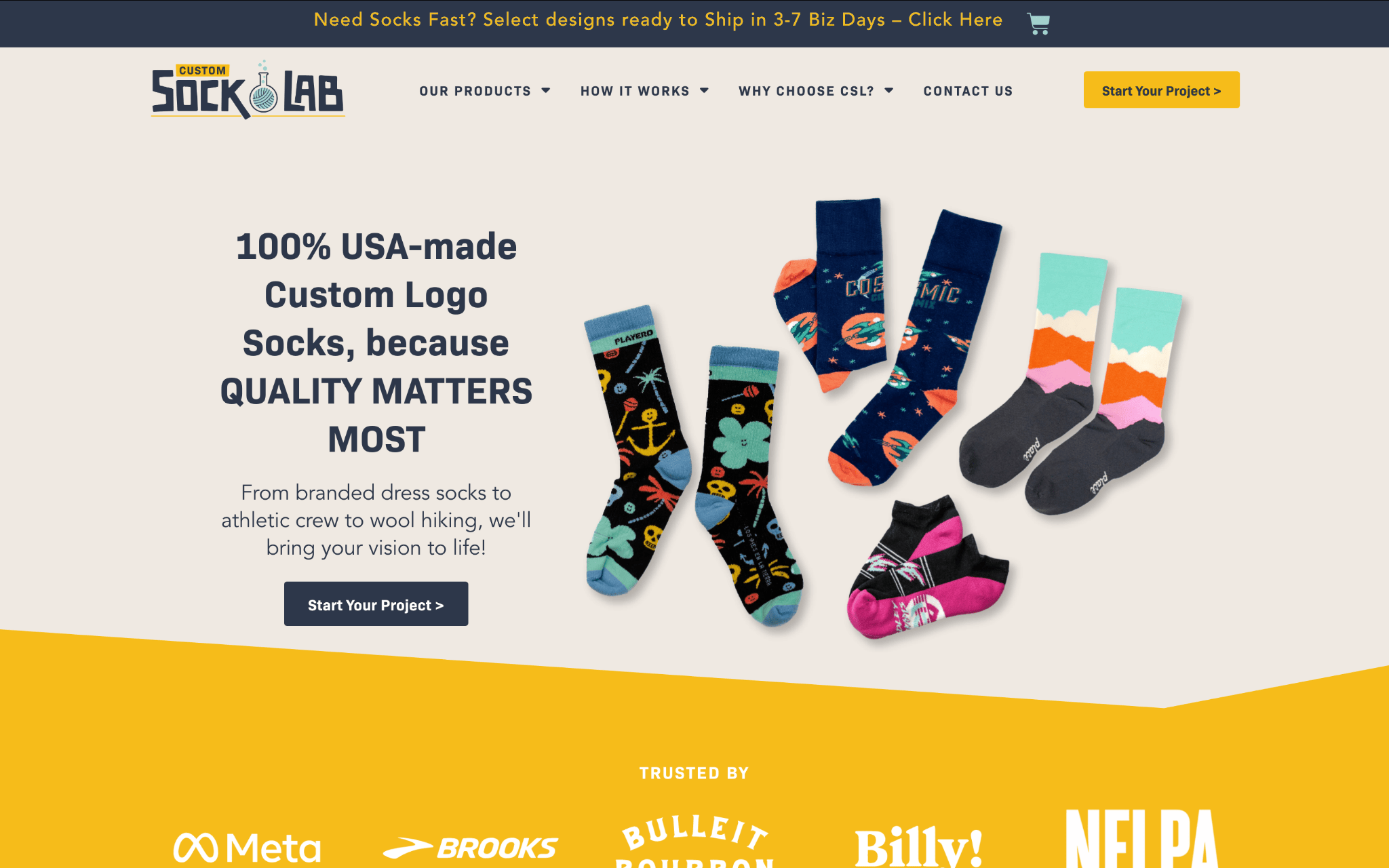
Custom Sock Lab is an excellent example of a brand whose website establishes a clear brand identity, ensuring leads know exactly what the business does and what to expect. From the brand’s name and logo to its unique value propositions, product descriptions, and calls to action, Custom Sock Lab builds a strong, recognizable brand identity prospects will remember and look for once they’re ready to convert.
Build Brand Messaging Around a Core Customer Problem
How many irrelevant marketing messages do consumers see every day? More importantly, how many of these do they ignore? Consumer behavior research shows people tune out most promotional content that doesn’t seem relevant to their wants and needs.
So, if you’re looking to build a stronger ecommerce brand through consistent website messaging, ensure your value propositions address (and promise to solve) a core customer problem.
Ultimately, shoppers don’t (usually) buy because they’ve got an itch to scratch. Their motivations depend on real needs. Show you understand those needs and can genuinely solve them, and web visitors will pay attention.
When communicating your offer’s purpose and relevance, remember you don’t have time to waste. Either make your value clear immediately or watch your leads go elsewhere for a solution. This means you shouldn’t make your audience search for information that verifies your offer’s relevance. Moreover, avoid populating your website with confusing or unrelated claims. Show leads how you can help, and answer any of their questions that might come up during the buyer’s journey.
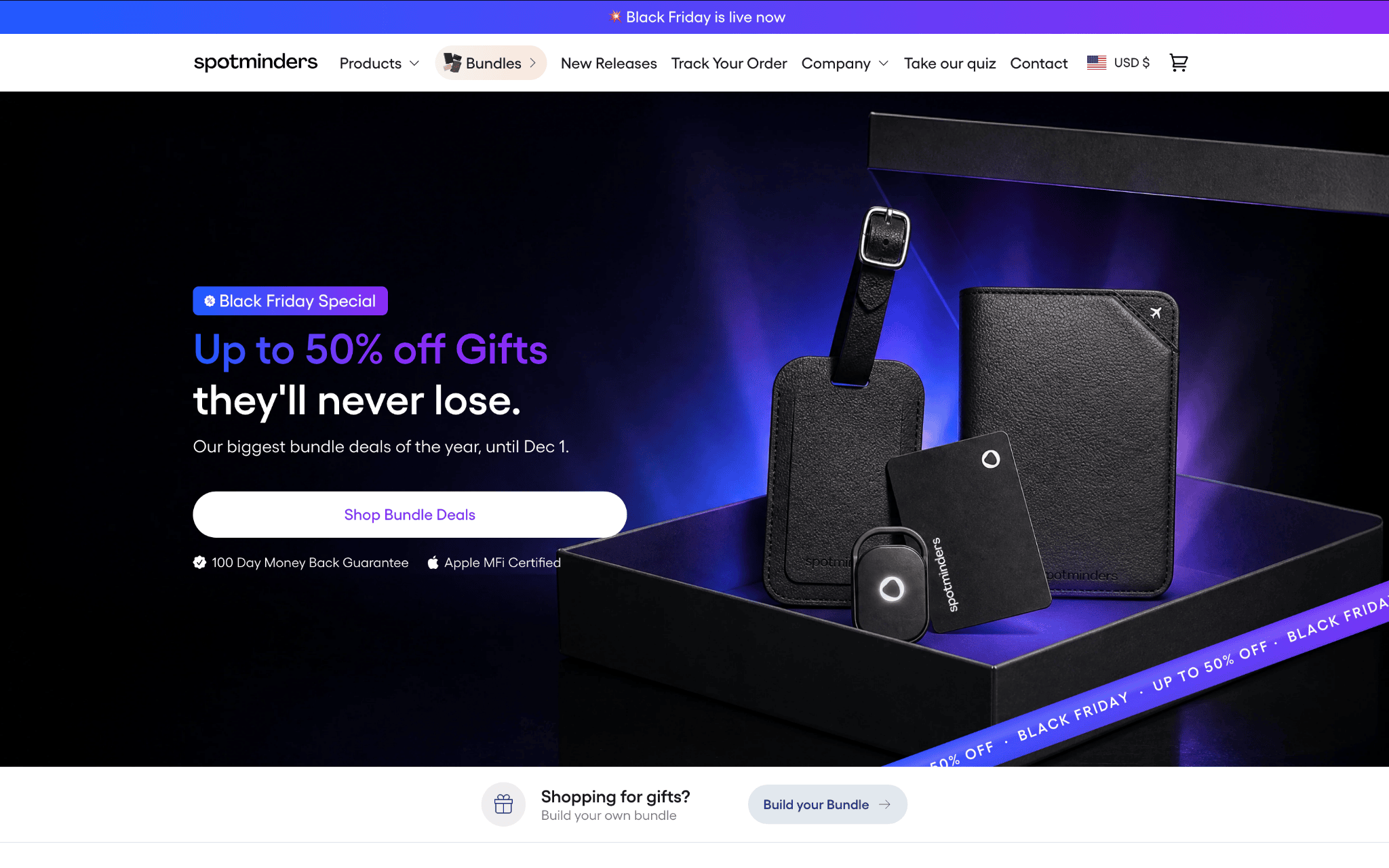
The Spotminders website is an excellent example of how brands can build their messaging around a core customer problem. Throughout its online presence, this business emphasizes that it helps customers track their valuables. Spotminders’ trackers help customers keep an eye on a variety of items. Plus, the solutions work for multiple use cases, from everyday life to travel. By consistently focusing on and returning to the same customer need, Spotminders builds a strong brand and engages its audience with relevant promises they don’t want to miss.
Keep Product Information Consistent with Brand Promises
What’s the best way to build a brand reputation? Many business owners (and even experienced marketers) think that bold claims work best. But is this really the case?
Impressive value propositions can and do attract consumer attention. But how many brands can actually deliver after setting excessively high customer expectations? Not that many, to be honest.
Here’s another reason to pay close attention to brand promises: consumer trust in ads is relatively low. Research shows that only 40% of people consider marketing messages credible. So, yes, good marketing is a solid foundation for building a strong brand presence. But trust and credibility are far more important for driving real results. Not convinced? Data shows that brand trust influences buying decisions for 88% of shoppers.
In other words, brand promises matter a lot for building a strong brand. And one of the best ways to use website messaging to maximize credibility and user engagement is to keep product information consistent with your value propositions.
Don’t fall into the trap of promising more than you can deliver. Instead, give your audience detailed product descriptions, accurate specifications, practical buying guidance, and transparent explanations of product features. That way, you will avoid disappointing your target audience. More importantly, you’ll deliver an enjoyable, consistent shopping experience that builds customer confidence and reduces conversion obstacles.
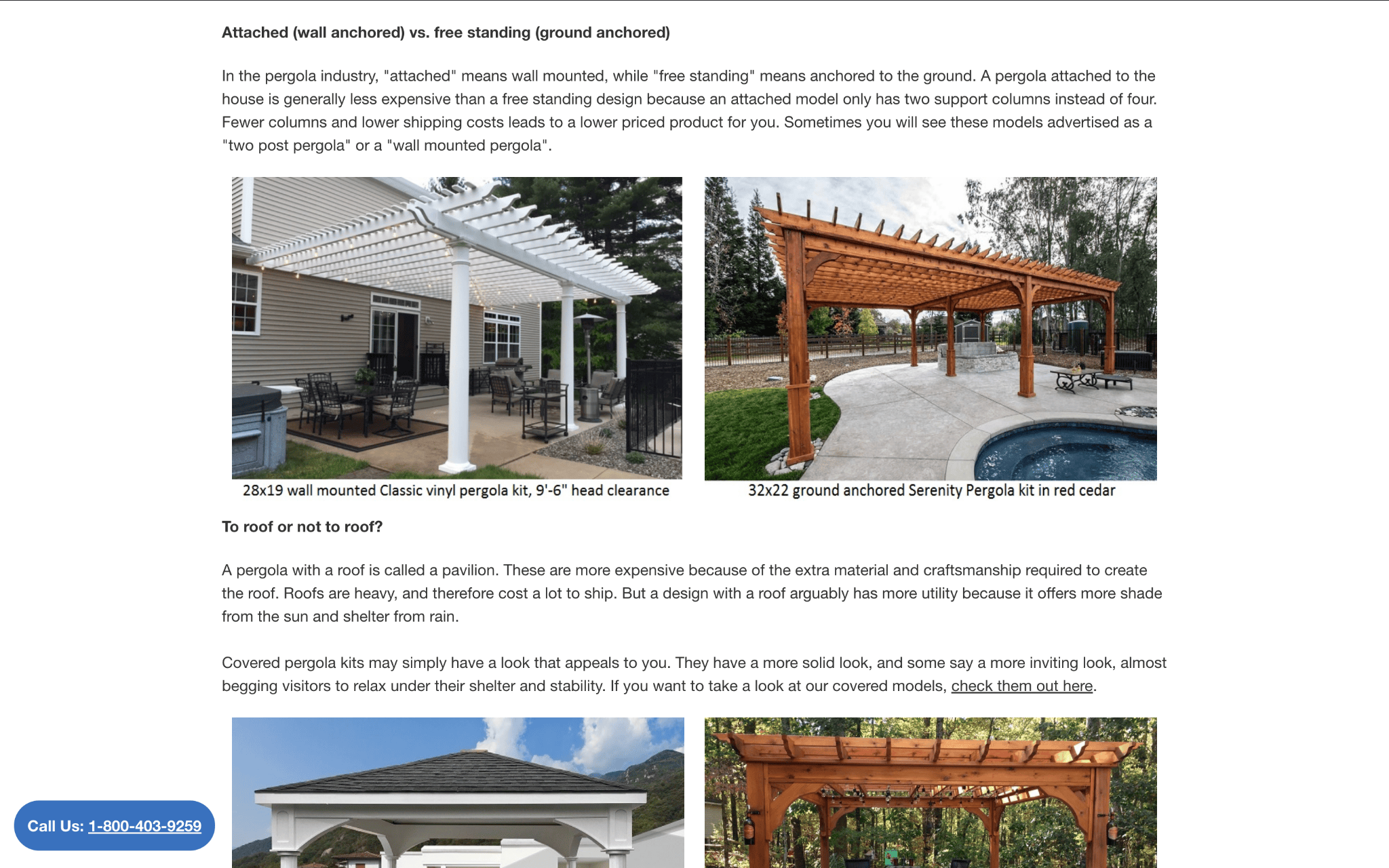
Pergola Kits USA is an excellent example of a brand that uses this tactic successfully. Instead of trying to impress web visitors with over-the-top messaging, the business prioritizes customer education. It clearly outlines each product’s benefits and potential drawbacks. Additionally, Pergola Kits aligns its brand messaging and product information, creating a smooth, trustworthy buying journey for all web visitors, regardless of their previous knowledge about shade structures.
Maintain a Consistent Brand Voice Across Different Content Formats
Why is consistency so powerful in marketing? Yes, it drives recognition. But that’s not all. More importantly, a consistent online presence builds familiarity and influences consumer preferences. So, your brand’s voice needs to remain consistent across communication channels.
But what about the different content formats you use throughout your website? Those need to align too. Why? Because your target audience will likely interact with multiple different content types before deciding to convert.
Look at the typical buyer’s journey and how consumers build brand/product awareness. Yes, they may see an ad and perceive it as relevant to their needs. But they’re much more likely to hear about your offer after actively looking for solutions to their pain points. That means their first interaction with your business can happen on multiple webpages. They could end up directly on your homepage. They might come across one of your inbound marketing resources. Or they could go straight to one of your product pages.
To ensure all customer segments have a consistently enjoyable brand experience, maintain a consistent brand voice. That means your communication style, the terminology you use, how you explain new concepts to top-of-the-funnel consumers, and how much detail you give leads need to depend on the resource’s purpose.
Ultimately, informational content can be just as, if not more, powerful at driving purchase intent as promotional content. Moreover, research shows shoppers are 131% more likely to convert after interacting with an educational resource. To ensure your leads have a consistently enjoyable brand experience, adhere to your brand’s editorial guidelines.
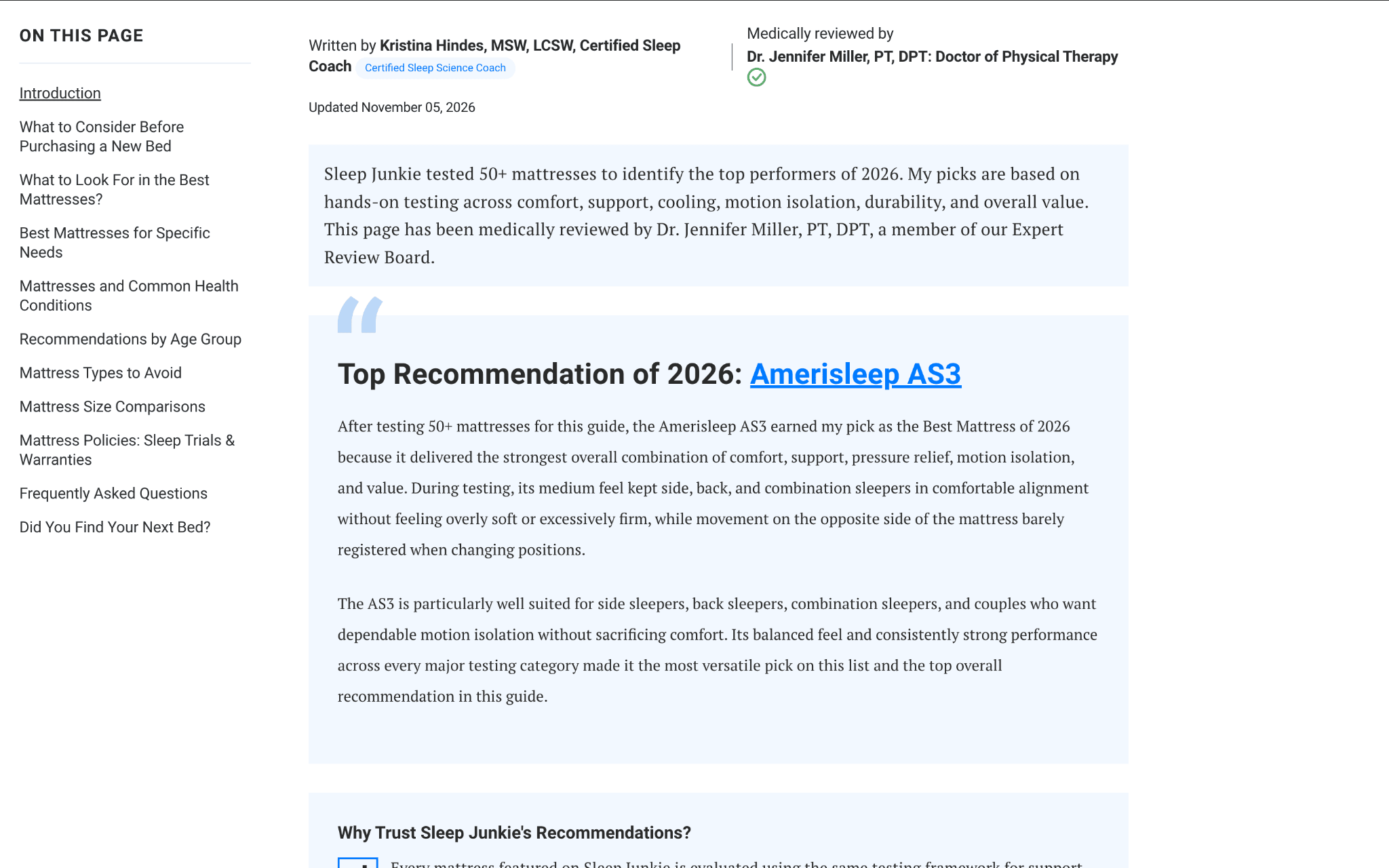
The Sleep Junkie buying guides are an excellent example of educational content that aligns with a brand’s overall website messaging strategy. With attention to detail and a commitment to objective buying advice, this brand sets clear expectations for web visitors. It delivers throughout the buyer’s journey, whether that involves review content, buying guides, or proprietary sleep science research. And it builds the brand image of a reliable resource for all things sleep-related, ensuring prospects return every time they need buying advice.
Use Consistent Calls to Action to Guide the Customer Journey
Consistent website messaging builds a cohesive, conversion-inspiring browsing experience. But it’s not all-powerful. In fact, it’s incredibly easy to cancel out the positive effects of consistent website messaging. All it takes is a few generic calls to action.
In the typical buyer’s journey, consumers collect information until they are ready (or until you prompt them) to take action. If that prompt seems inconsistent with everything you did up to that point, it leads to uncertainty.
Want to ensure your online presence reliably guides prospects from awareness to purchase? Pay attention to how you entice your audience to buy. On-brand CTAs that outline relevant (and desired) customer outcomes and reflect your brand’s communication style are a must. Additionally, do your best to educate prospects on what happens once they click the ‘Buy’ button. Clarity always builds confidence. So, if your audience doesn’t have to speculate about what happens once they commit to a purchase, they’re far more likely to follow through.
Furthermore, don’t leave your calls to action to do all the hard work. Supporting microcopy and trust messaging are just as important in guiding leads toward a buying decision, especially in high-risk or low-trust industries.
The Warby Parker website is an excellent example of a brand whose CTAs align with its promotional messaging in highlighting the convenience it offers. The brand doesn’t just invite visitors to shop for eyeglasses or take a style quiz. It also uses trust-building copy to promote benefits like free shipping, 30-day returns, 20% off for first-time buyers, and vision benefits. These promises align with the identity the business has built over the years, aligning the shopping experience to buyer expectations, which is a surefire way to ensure customer satisfaction.
Reinforce Brand Trust Through Consistent Policies and Customer Support Messaging
So far, we’ve touched on how brand trust drives conversions. But here’s the thing. Telling your target audience they can trust your brand is not enough to earn credibility. In 2026, reaching that outcome requires proof of your company’s commitment to customer satisfaction.
One of the best ways to deliver that proof through website messaging is to reinforce brand trust through customer support content.
Think product manuals, support materials, shipping and returns policies, or even contact options. If your leads recognize the same level of customer-centricity and attention to detail in these resources, they’re sure to form a positive perception of your business. If, however, these key resources fail to meet the expectations you’ve set with your marketing messages, you’re much more likely to lose your prospects’ trust, which is very difficult to earn back.
So, to build a stronger ecommerce brand, pay attention to the more technical elements of the customer experience. Make your policies easy to understand. Help consumers find them with little effort. And don’t advertise CX benefits you can’t deliver.
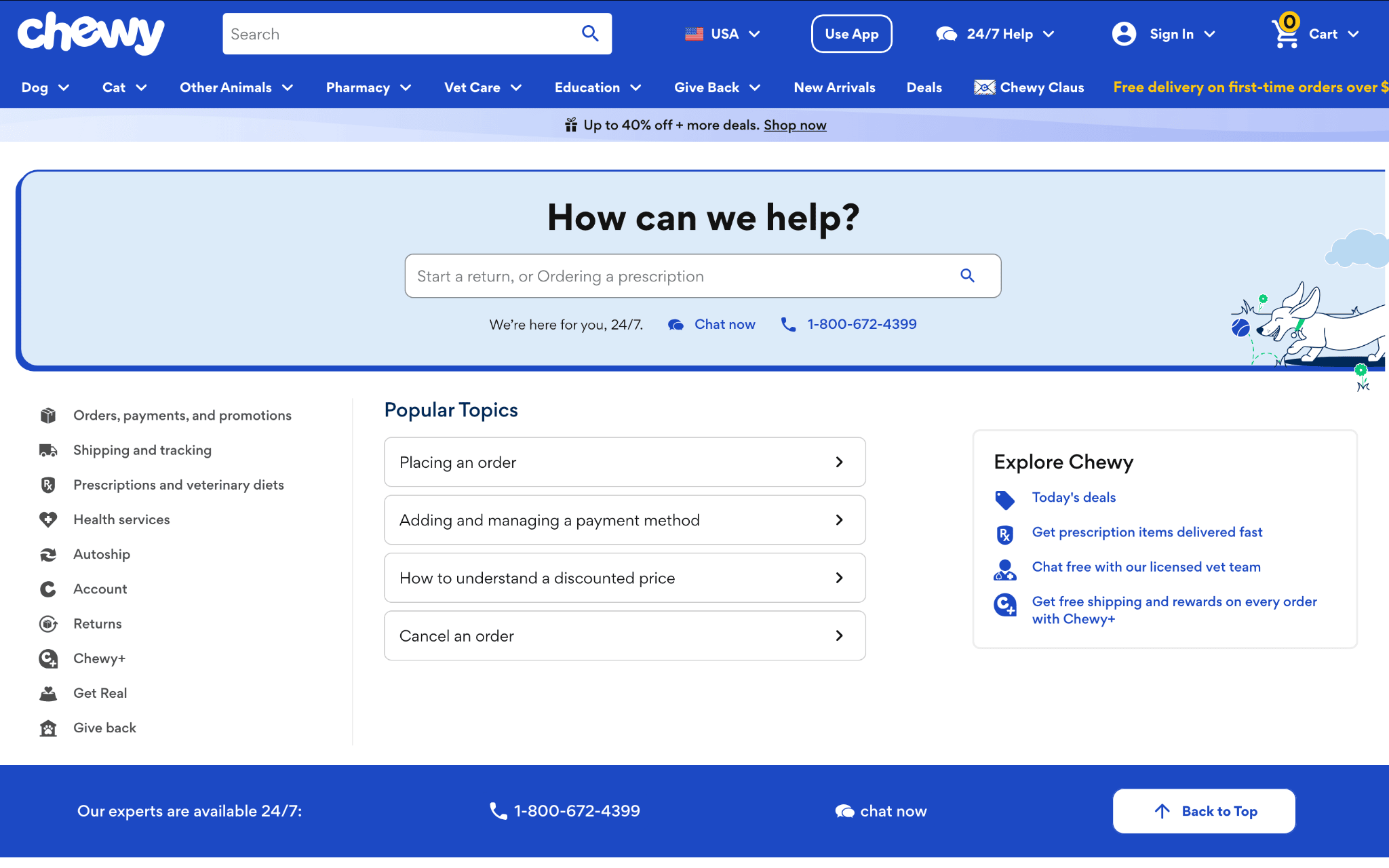
Chewy’s customer support content is a great example of this website messaging strategy. The brand explains all of its customer experience value propositions (like shipping, discounts, and standing orders). It also makes it really easy for shoppers to find any information they may need during the buying process. By highlighting two alternative contact points for web visitors (chat and phone support), the brand shows its unwavering commitment to customer satisfaction, reinforcing its reputation as a trustworthy business.
Final Thoughts
Paying attention to website messaging is a marvelous way to make your marketing campaigns and conversion efforts go further. However, whether you do the bare minimum or go all in on aligning brand communications with customer needs and expectations, keep in mind that building a recognizable brand identity is never a one-and-done deal.
Real results take continuous effort. That means regularly reviewing your online presence to catch and remove any messaging inconsistencies. Furthermore, it requires reevaluating (and potentially changing) your brand communication methods as needed.
Use the tactics from this guide as a checklist to cover all your bases. Of course, don’t just take the advice as-is (or, worse yet, copy the examples). Go deep into who your brand is and what your audience needs and wants from you. Then develop a brand voice that is uniquely you. Yes, it may take a bit longer than using well-known marketing phrases. But it’s also one of the best ways to strengthen your ecommerce brand and make it stand out.
Other Interesting Articles
- AI LinkedIn Post Generator
- Gardening YouTube Video Idea Examples
- AI Agents for Gardening Companies
- Top AI Art Styles
- Pest Control YouTube Video Idea Examples
- Automotive Social Media Content Ideas
- Plumber YouTube Video Idea Examples
- AI Agents for Pest Control Companies
- Electrician YouTube Video Idea Examples
- How Pest Control Companies Can Get More Leads
- AI Google Ads for Home Services
- 60-Second Training Videos Are the New Corporate Standard
- Cybersecurity PR Pricing: Retainers, Deliverables & ROI
- Best AI Tools for Product Consistency in E-Commerce Video
Master the Art of Video Marketing
AI-Powered Tools to Ideate, Optimize, and Amplify!
- Spark Creativity: Unleash the most effective video ideas, scripts, and engaging hooks with our AI Generators.
- Optimize Instantly: Elevate your YouTube presence by optimizing video Titles, Descriptions, and Tags in seconds.
- Amplify Your Reach: Effortlessly craft social media, email, and ad copy to maximize your video’s impact.