
A Simple Guide to Writing Blog Posts That People Actually Read

Writing a blog post seems like an easy task. But writing one that people actually want to read is not so straightforward. People may click on the blog and scroll a little and then leave. No comments. No engagement. Nothing.
This is not always due to the topic. It might be due to the way the blog is written. Either it lacks information, or it is simply not worth people’s time.
However, with the right method, you can write blogs that people actually read. Let’s learn this method in simple steps below.
Chapters
Simple Steps to Write a Blog Post Worth Reading

The following are some basic but essential steps to write blog posts that are worth your audience’s time.
Start with a Strong and Clear Introduction
When you start writing the blog post, give a keen focus on the first lines. They are often the most important lines in the post. If they feel dull, the reader might leave instantly.
It should state a problem that the reader can relate to. Show your concern that you understand what the reader is going through. Simply give them a reason to continue reading.
For example, rather than starting with generalities, you can get straight to the point. What the post is about. Add a little hook. Then tell them what they will get out of reading further.
This way, the readers can connect to the message and may continue reading.
Focus on One Clear Idea at a Time
It is common for writers to stuff multiple ideas into a single sentence. This doesn’t do any good. It only confuses the readers.
You can read the blogs written by experts like Semrush or Backlinko. They rarely stuff multiple ideas in sentences. Many of their sentences are concise and readable by all types of readers.
Your paragraphs should be tight. Readers don’t prefer reading large blocks of text. The goal should be to write scannable information that gives the eyes some rest. Also, keeping the readers moving forward. As shown in the image below:

From the image above, you can see that the information on the left side is not so welcoming and takes a good amount of focus to understand. The same information is broken down into chunks on the right side, focusing on one idea at a time. This helps the readers to quickly scan the information and keep moving forward.
Add Subheadings to Guide the Reader
You can take the subheadings as signposts. They tell the reader what’s coming next.
It is true that readers do not read everything word by word. They first scan the blog. If they find subheadings relevant to their query, they are more likely to pause and read that section. This is the point where they decide to continue reading or leave.
So you should add clear and direct subheadings that tell readers what each section will cover.
For example, if a user searches for how to get in better shape, they would scan the page and expect to read about a diet plan, exercise plan, or sleep routine. If you have covered this in a blog by making separate subheadings, they would likely stop and read the whole blog. This way, you can make your blogs engaging so that users actually read them.
Write as You Speak
When you write something for your blog, think of it like a conversation. Write as if you are talking to someone. So follow a natural tone and don’t try hard to sound formal.
Keep your writing focused. Avoid language that causes confusion. You can ask simple everyday questions as well, which makes readers stop and think. This keeps them engaged and interested.
For example, consider the following sentences,
Version 1: “It is essential to maintain clarity in your written communication to ensure reader engagement.”
Version 2: “Keep your writing clear. If it’s confusing, why would anyone keep reading?”
From the above example, you can see that the second version conveys the same meaning as the first one, but it sounds more natural and can be understood easily.
Create Flow Between Sections
Your blog should not sound disconnected. It should have a proper connection between its sections. You can use small transitions to link ideas. As shown in the image below:
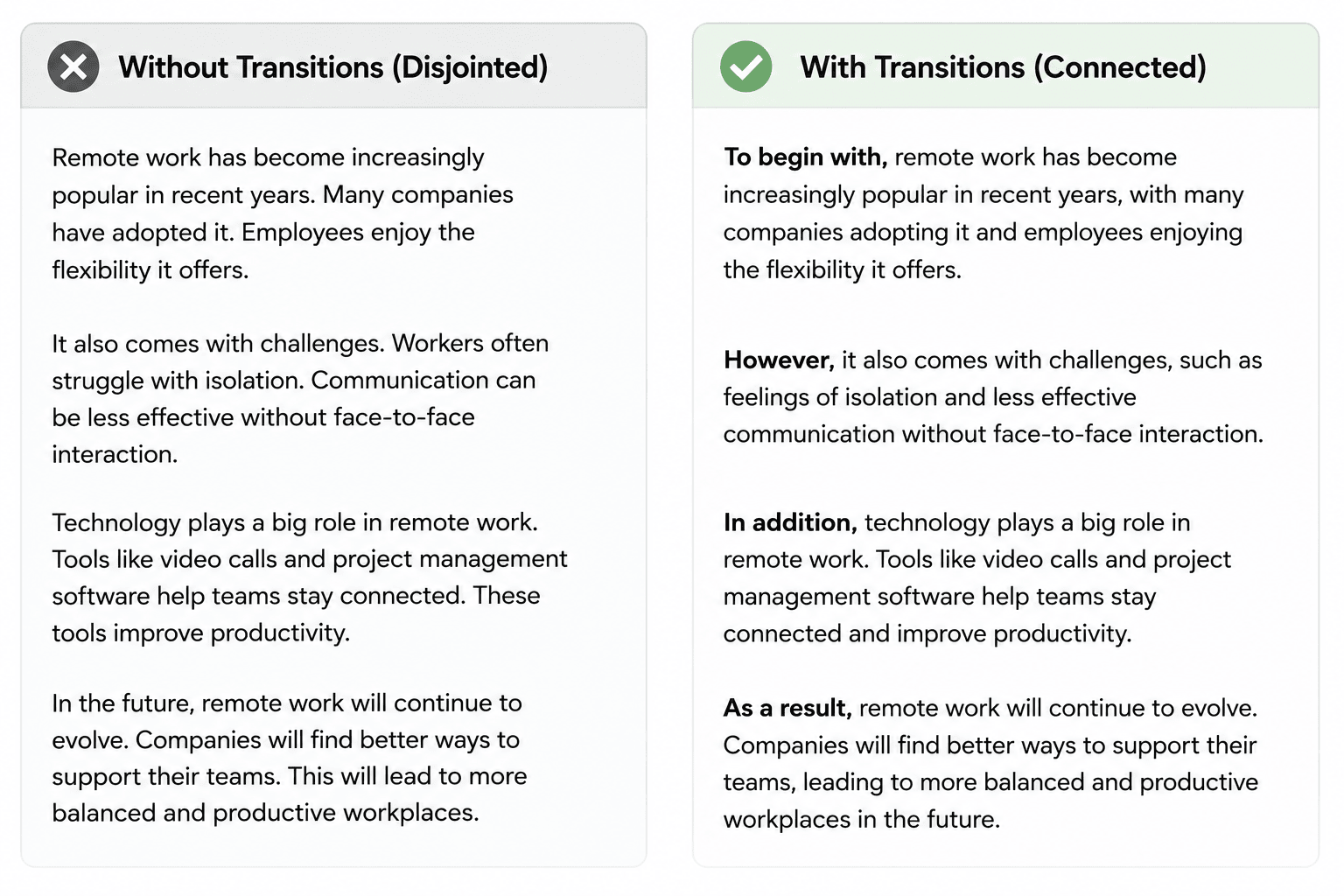
From the image above, you can see that the paragraphs are connected through simple transitions. This helps avoid the disconnected feel and keeps the information linked.
However, you should not overuse transition words, as this can make the text seem stiff. Only use them where they fit naturally and contextually.
Use Examples to Make Things Clear
Anything explained through an example is generally better understood by the readers. You can apply the same technique to writing blogs.
Examples help understand difficult concepts easily. When you feel a section of your blog involves explaining something complex, explain it through an example.
For instance, if you talk about how short sentences feel impactful, show one. Then show a longer version of the same sentence. This makes the difference clear between the two sentences and helps the users better understand the concept.
Add Depth to Thin Content
Writers often have to write multiple blogs per day. They often end up writing paragraphs that feel shallow or thin, and sometimes they may struggle to continue with their writing.
In such cases, take a little break, move around a bit, and sit again to work. You’ll notice that your mind gets fresh, and you can continue writing with new thoughts. It’s about thinking out of the box and presenting something useful for your audience.
If you still feel stuck, you can take help from online tools such as paragraph writer to brainstorm writing ideas and add value to your shallow content. All you need to do is enter your topic or prompt, and the tool will generate a detailed paragraph around it. You can refine and add your thoughts to it. Think of it as a writing assistant that helps you add depth to your thin paragraphs.
End with a Clear Final Thought
This section of the blog is what gives it a complete feel. Here, the users can get a complete overview of what they have read. Without the final thoughts, the readers may be left unsatisfied.
So end your blog with clear final takeaways. Summarize the whole blog and write in a few concise paragraphs. This gives the readers something to think about and makes your blog more meaningful.
Summing Up
For writing blog posts that people actually read, you need to follow a structured approach.
It involves starting with strong introductions and focusing on one clear idea at a time. You have to write like you are having a conversation with someone.
Use relevant examples and subheadings that users can quickly scan after opening your blog. There should be a proper flow between sections. You can use simple transitions to achieve this.
If you face any difficulty converting your ideas into sentences, you can get help from an online tool.
In the end, you have to mention clear final thoughts. This should summarize the whole content. Blogs written with this approach are more likely to satisfy the people’s intent, and there is a high chance that people will actually read them.
Other Interesting Articles
- AI LinkedIn Post Generator
- Gardening YouTube Video Idea Examples
- AI Agents for Gardening Companies
- Top AI Art Styles
- Pest Control YouTube Video Idea Examples
- Automotive Social Media Content Ideas
- Plumber YouTube Video Idea Examples
- AI Agents for Pest Control Companies
- Electrician YouTube Video Idea Examples
- How Pest Control Companies Can Get More Leads
- AI Google Ads for Home Services
- 60-Second Training Videos Are the New Corporate Standard
- Cybersecurity PR Pricing: Retainers, Deliverables & ROI
- Best AI Tools for Product Consistency in E-Commerce Video
Master the Art of Video Marketing
AI-Powered Tools to Ideate, Optimize, and Amplify!
- Spark Creativity: Unleash the most effective video ideas, scripts, and engaging hooks with our AI Generators.
- Optimize Instantly: Elevate your YouTube presence by optimizing video Titles, Descriptions, and Tags in seconds.
- Amplify Your Reach: Effortlessly craft social media, email, and ad copy to maximize your video’s impact.