
The Role of Technology and AI in Modern Education

Technology has changed education far beyond replacing textbooks with tablets.
Students can now:
- attend lessons remotely;
- collaborate across countries;
- access educational resources instantly;
- use interactive simulations;
- receive personalized practice;
- translate information;
- ask AI tutors follow-up questions.
Teachers can use technology to:
- prepare lessons;
- monitor progress;
- create learning materials;
- provide feedback;
- communicate with families;
- support students with different needs.
Artificial intelligence is pushing that transformation much further.
The OECD reports that 37% of lower-secondary teachers used AI for their work in 2024, while 57% agreed that AI helps them write or improve lesson plans.
At the same time, 72% believe AI can harm academic integrity by allowing students to pass off AI-generated work as their own.
That tension captures the role of technology in modern education surprisingly well.
Technology can make education:
more accessible + more personalized + more interactive + more efficient
but only when it supports learning rather than replacing it.
The important question is no longer:
Should technology be used in education?
It is:
Which technology should be used, for whom, for what purpose, and what evidence shows that it actually improves learning?
Chapters
- Technology and AI in Education Statistics
- The StoryLab.ai Technology in Education Framework
- Technology Expands Access to Education
- Access Does Not Automatically Mean Equity
- Technology Makes Learning More Interactive
- AI Can Support Personalized Learning
- Available Learning Apps
- Interactive Learning
- Personalized Learning
- Remote Learning
- Collaboration and Communication
- Innovative Teaching Methods
- AI Can Help Teachers Prepare Lessons
- Technology Can Improve Accessibility
- Technology Supports Collaboration
- Technology Changes Assessment
- Students Need AI Literacy
- Critical Thinking Becomes More Important, Not Less
- AI Should Not Remove Productive Struggle
- Technology Can Support Teachers Without Replacing Them
- Education Technology Needs Evidence
- Student Privacy Needs to Be Designed In
- FAQ
Technology and AI in Education Statistics
37% of lower-secondary teachers use AI for their work
The OECD reports that 37% of lower-secondary teachers used AI for their jobs in 2024.
Among teachers surveyed:
- 57% agreed AI can help write or improve lesson plans;
- 72% believed AI can threaten academic integrity.
AI is therefore already part of teaching.
The challenge is deciding how to use it well.
Students using AI do not automatically learn more
OECD research highlights one of the most important lessons emerging from AI in education:
performing better with AI is not the same as learning more.
PISA data found that students who used AI for specific schoolwork activities such as summarizing, drafting, or researching scored around 20 points lower in science on average than students who did not use AI for those tasks.
However, students who regularly used AI more generally and also had opportunities at school to develop AI literacy tended to perform slightly better.
The lesson is not that AI is automatically good or bad.
How students use it matters.
13 million children use AI for learning and homework
UNICEF analysis drawing on data from 10 countries estimates that at least 20 million children have used AI.
Around 13 million said they use AI to support learning and homework.
UNICEF also found that more than 2 million children, around one in ten, use AI for advice about things that worry them.
This makes AI literacy more than a future skill.
Children are already using these systems.
Around half of lower-secondary schools globally have internet for teaching
UNESCO’s global education technology research found that approximately 50% of lower-secondary schools worldwide were connected to the internet for pedagogical purposes.
It also found that around one-quarter of schools globally lacked electricity.
The future of digital education therefore cannot be discussed without addressing access.
A sophisticated AI tutor is not very useful to a student without reliable internet or a device.
The StoryLab.ai Technology in Education Framework
Technology creates the most educational value when it strengthens one or more of six areas.
| Area | Role of Technology | Example |
|---|---|---|
| Access | Make education available beyond a physical classroom | Online courses and digital learning platforms |
| Personalization | Adapt learning to student needs and progress | Adaptive practice and AI tutoring |
| Engagement | Make concepts interactive and easier to explore | Simulations, multimedia and gamified learning |
| Teacher Support | Reduce repetitive work and improve preparation | Lesson planning, assessment support and summaries |
| Accessibility | Reduce barriers for students with different needs | Captions, text-to-speech and translation |
| Skills | Prepare students for a technology-rich world | Digital literacy, AI literacy and critical thinking |
Technology Expands Access to Education
One of technology’s most significant contributions is making educational resources accessible beyond the classroom.
Students can access:
- recorded lectures;
- online courses;
- digital textbooks;
- tutorials;
- educational videos;
- practice exercises;
- virtual classrooms.
This can benefit people who:
- live far from educational institutions;
- work alongside their studies;
- have mobility limitations;
- need flexible schedules;
- want to study topics unavailable locally.
The traditional model assumes:
student goes to education
Digital education can increasingly allow:
education to come to the student
Access Does Not Automatically Mean Equity
There is an important limitation.
Digital learning depends on access to:
- electricity;
- internet;
- devices;
- software;
- digital skills.
UNICEF’s Digital Education Strategy specifically prioritizes closing digital divides related to:
- income;
- geography;
- disability;
- gender;
- language.
Technology can increase access.
Poor implementation can also widen existing inequality.
Technology Makes Learning More Interactive
Traditional education is sometimes presented as:
teacher talks → student listens
Modern learning technology can add:
- simulations;
- quizzes;
- videos;
- interactive diagrams;
- virtual laboratories;
- educational games;
- collaborative exercises.
Imagine studying the solar system.
A textbook can explain how planets orbit the sun.
An interactive simulation lets the student:
- rotate the system;
- change perspective;
- compare distances;
- explore each planet.
Both approaches can teach the topic.
The second provides a different way to experience it.
Interactive Does Not Automatically Mean Educational
Adding animation, badges, sound effects, and games can make a lesson more entertaining.
That does not necessarily make it more effective.
The U.S. Department of Education recommends asking five straightforward questions about educational technology:
- What learning problem does it solve?
- When should it be used?
- For whom should it be used?
- For how long should it be used?
- What evidence demonstrates that it improves learning?
That is a useful framework for any school.
Do not ask:
Is this technology impressive?
Ask:
Does it improve the learning experience?
AI Can Support Personalized Learning
Students do not all:
- understand concepts at the same speed;
- struggle with the same topics;
- require the same explanation;
- learn from the same examples.
Technology can adapt.
An AI-assisted learning environment might identify that a student understands multiplication but repeatedly struggles with fractions.
It can then provide:
- another explanation;
- simpler examples;
- more practice;
- immediate feedback.
Another student may move ahead more quickly.
This creates the possibility of more personalized learning at scale.
AI Tutors Can Ask Questions Instead of Simply Giving Answers
The most useful AI tutor may not be the system that gives the fastest answer.
It may be the one that asks:
“How did you reach that answer?”
or:
“What would happen if we changed this variable?”
or:
“Which part are you unsure about?”
The OECD’s Digital Education Outlook highlights dialogue-based AI tutoring as one promising application when systems are intentionally designed around learning science.
This distinction is crucial.
AI should help students think.
Not simply think for them.
Available Learning Apps
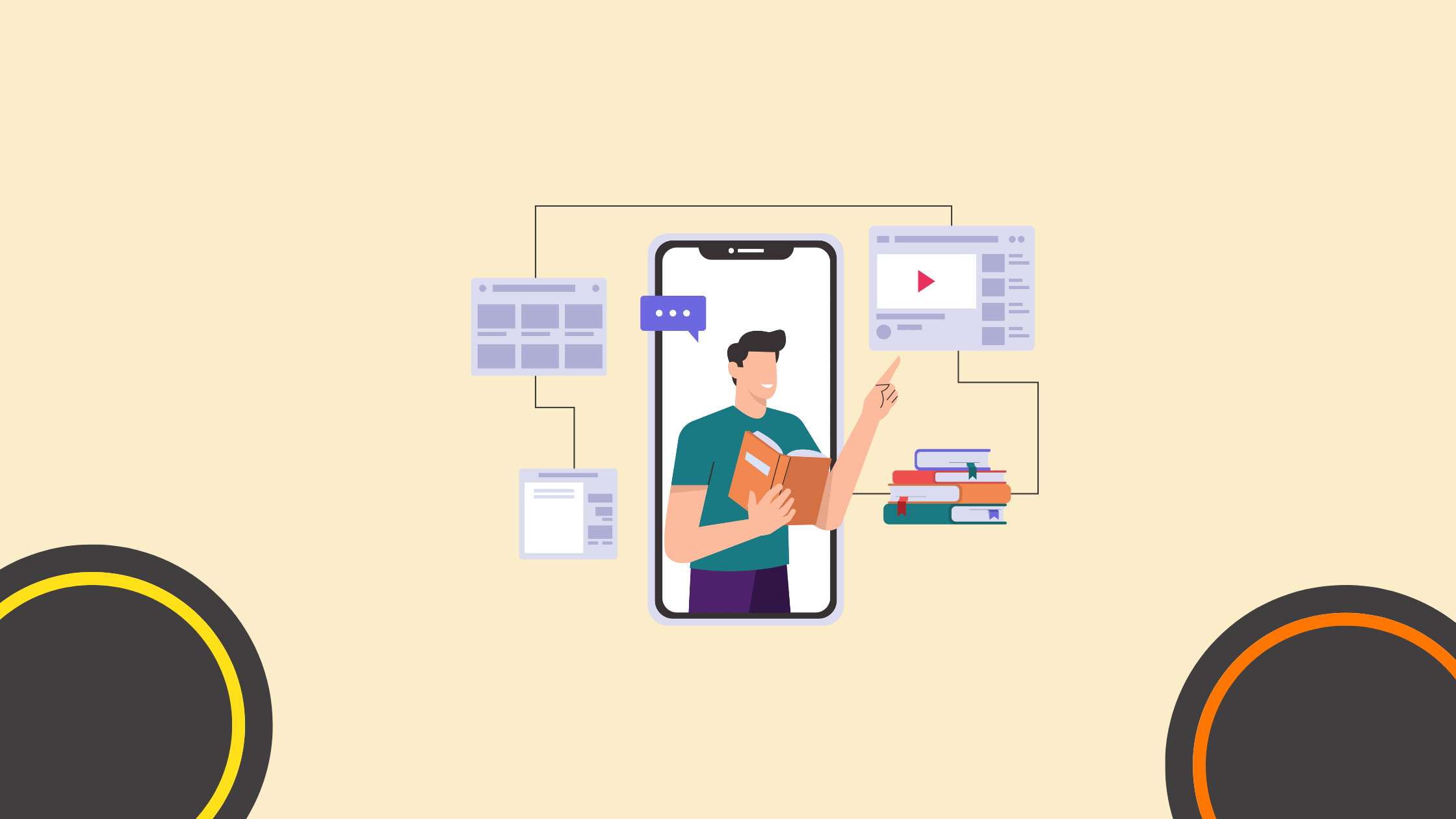
One of the most significant impacts of technology on modern education is the availability of learning apps. These educational apps cover a wide range of subjects and offer interactive learning experiences for students. From language learning to math and science, there are countless apps available that cater to different learning styles and needs.
Moreover, there are platforms that combine and enable you to find all the tools and apps you need for your learning process. For instance, as highlighted by the team behind AppsAnywhere, students can easily access educational apps through a single platform, making it easier for them to stay organized and focused on their studies. This enables them to spend less time searching for apps and materials to enjoy more time actually learning.
Interactive Learning
Gone are the days when education was limited to lectures and note-taking. Technology has transformed the learning experience by making it more interactive and engaging. With tools like interactive whiteboards, educational apps, and gamified online course platforms, students can now actively participate in their learning process.
These tools not only make learning more fun and interesting but also help to improve retention and understanding of concepts. Additionally, interactive learning also caters to different learning styles, making it easier for students to grasp complex topics.
Personalized Learning
One size does not fit all when it comes to education, and technology has made it possible for personalized learning to become a reality. With adaptive learning software and data-driven analytics, teachers can tailor their teaching methods based on individual student needs. This allows for a more personalized approach to education, where students can learn at their own pace and receive targeted support where needed.
This is especially beneficial for students with learning disabilities or those who struggle with traditional teaching methods. With technology, personalized learning has become more accessible and effective than ever before.
Remote Learning

In the face of a global pandemic, technology has played a crucial role in ensuring that education continues despite physical barriers. With remote learning tools such as video conferencing software, online classrooms, and virtual simulations, students can continue their education from the safety of their homes.
Remote learning has allowed for the continuation of education during unprecedented times, but it has also opened up opportunities for students who may not have had access to traditional education methods. It has also encouraged schools and institutions to be more innovative in their approach to education. This shift is also visible in professional education, where flexible online programs such as a Graduate Certificate in Digital Health allow learners to build specialised digital skills while continuing to work or study.
Online education has made higher learning more accessible, allowing students to pursue academic qualifications while managing other commitments. Those interested in computer applications, programming, and software development can explore an online BCA course to build a foundation in computing and prepare for technology-related careers.
Collaboration and Communication
Technology has made it easier for students and teachers to collaborate and communicate with each other, regardless of geographic barriers. With tools like online discussion forums, group chats, and collaborative platforms, students can now work together on projects and assignments from anywhere in the world.
Collaboration and communication are essential skills for the workplace, and technology has made it possible for students to develop these skills from a young age. It also allows for a more diverse range of perspectives to be shared in the learning process.
Innovative Teaching Methods
Last but not least, technology has brought about innovative teaching methods that have transformed traditional education. From flipped classrooms to blended learning approaches, teachers can now utilize various tools and techniques to cater to different learning styles and make the learning experience more dynamic.
These methods not only make learning more engaging but also prepare students for the constantly evolving technological landscape of the real world. It also encourages teachers to continuously adapt and improve their teaching methods, making education a more dynamic and evolving process.
Technology has played a significant role in modern education, bringing about numerous benefits for both students and teachers. It has made access to information easier, transformed the learning experience to be more interactive and personalized, opened up opportunities for remote learning, improved collaboration and communication among students, and introduced innovative teaching methods. As technology continues to advance, it will undoubtedly bring even more advancements and changes to the world of education. As such, it is essential for educators to embrace technology and continue exploring new ways to improve the learning experience for future generations.
AI Can Help Teachers Prepare Lessons

Teachers spend substantial time on activities beyond classroom instruction.
AI can assist with tasks such as:
- lesson-plan drafts;
- quiz questions;
- differentiated exercises;
- examples;
- explanations;
- summaries;
- rubrics;
- administrative communication.
The OECD reports that 57% of lower-secondary teachers agree AI helps write or improve lesson plans.
This can create more time for work that requires the teacher directly:
- explaining;
- mentoring;
- motivating;
- observing;
- discussing;
- helping individual students.
AI Should Support Teacher Agency
UNESCO’s AI Competency Framework for Teachers emphasizes five areas:
- human-centred mindset;
- ethics of AI;
- AI foundations and applications;
- AI pedagogy;
- AI for professional learning.
The underlying idea is important.
Teachers should understand AI well enough to decide:
when to use it
and:
when not to use it.
The technology should support professional judgment rather than quietly replacing it.
Technology Can Improve Accessibility
One of technology’s strongest educational benefits is its ability to reduce barriers.
Useful accessibility technologies include:
- screen readers;
- speech-to-text;
- text-to-speech;
- subtitles;
- live captions;
- translation;
- adjustable text;
- alternative input methods.
A student who struggles to read small printed text may enlarge digital material.
A deaf or hard-of-hearing student can use captions.
A learner with difficulty typing may use speech recognition.
A student studying in another language may receive translation support.
AI is expanding these possibilities further through:
- real-time transcription;
- voice interfaces;
- image description;
- personalized explanations.
Technology becomes particularly powerful when it helps a learner participate in something that was previously difficult or inaccessible.
Technology Supports Collaboration
Collaboration no longer requires everyone to sit around the same table.
Students can work together through:
- shared documents;
- project-management platforms;
- virtual whiteboards;
- video calls;
- discussion spaces.
A group assignment can involve students:
- researching separately;
- editing the same document;
- commenting on one another’s work;
- presenting remotely.
This also reflects how many modern workplaces operate.
Students are learning both the subject and how to collaborate digitally.
Do Not Replace Human Collaboration With Bots
AI creates an interesting new challenge.
Students can now collaborate with an AI assistant.
That can be useful.
But human collaboration teaches things AI cannot fully reproduce:
- disagreement;
- negotiation;
- empathy;
- listening;
- leadership;
- compromise.
The OECD warns that education is fundamentally social and that AI should not undermine the human relationships at the center of learning.
Students should learn to work:
with technology
and:
with people.
AI Can Provide Immediate Feedback
Students traditionally may complete an assignment and wait days before receiving feedback.
Digital systems can provide feedback much faster.
For example:
Incorrect. Try again.
AI can potentially go further:
Your first step is correct, but look again at how you divided both sides of the equation.
Immediate feedback can help students correct misunderstandings before they become habits.
But feedback quality matters.
A confident incorrect explanation can be worse than delayed feedback.
Important educational AI therefore needs:
- reliable subject knowledge;
- pedagogical design;
- monitoring;
- teacher oversight.
Technology Changes Assessment
If students can generate essays, solve problems, translate text, and summarize readings with AI, schools need to reconsider what assessment actually measures.
An assignment may produce an excellent final answer.
But:
Did the student understand it?
The OECD’s Digital Education Outlook warns that students using general-purpose AI can improve the quality of a task without achieving corresponding learning gains.
In some studies summarized by the OECD, the advantage students had while using AI disappeared or even reversed when AI was unavailable during later assessment.
This creates a major shift.
Assessment increasingly needs to evaluate:
- reasoning;
- process;
- understanding;
- application;
- critical evaluation.
Not only the final product.
Assessment May Become More Process-Based
Instead of:
Write a 2,000-word essay.
an assignment might require:
- Create an initial argument.
- Find sources.
- Use AI to challenge the argument.
- Identify where the AI is wrong or weak.
- Revise the argument.
- Explain what changed and why.
Now AI becomes part of the learning exercise rather than a shortcut around it.
Students Need AI Literacy
Trying to prepare students for a world with AI while pretending AI does not exist is unlikely to work for long.
Students need to understand:
- what AI is;
- what it can do;
- where it fails;
- how bias can appear;
- how to verify information;
- how data may be used;
- when AI should not be trusted.
UNESCO’s AI Competency Framework for Students organizes AI literacy around four dimensions:
- a human-centred mindset;
- ethics of AI;
- AI techniques and applications;
- AI system design.
The progression moves from:
Understand → Apply → Create
That is more useful than teaching students only:
Here is how to write a good prompt.
Prompting is a skill.
AI judgment is the larger skill.
Critical Thinking Becomes More Important, Not Less
AI can answer questions quickly.
That increases the importance of asking:
Is this actually correct?
Students need to be able to:
- question sources;
- identify weak evidence;
- compare claims;
- detect bias;
- distinguish fact from opinion.
PISA reports that around six in ten students across OECD countries say they have been asked in school to assess the quality of AI-generated information.
Around eight in ten reported doing the same with information found online more broadly.
This may become one of education’s most important roles in an AI-rich world.
Information is easier to produce.
Judging information becomes more valuable.
AI Should Not Remove Productive Struggle
Learning often involves difficulty.
That is not necessarily a design flaw.
A student struggling through a mathematics problem is practicing:
- reasoning;
- memory;
- persistence;
- problem-solving.
If AI immediately provides the answer, the student may complete the homework faster while learning less.
The OECD describes the risk as losing the productive struggle that contributes to learning.
This suggests a useful principle:
Use AI to scaffold thinking, not remove thinking.
For example:
Weak:
Solve this problem for me.
Stronger:
Do not give me the answer. Ask me questions that help me solve it myself.
The second prompt turns AI into a tutor.
Technology Can Support Teachers Without Replacing Them
The teacher’s role may change as technology improves.
But education involves much more than delivering information.
Teachers:
- notice when students are confused;
- motivate them;
- manage classroom dynamics;
- understand individual circumstances;
- provide emotional support;
- build relationships;
- model behavior.
AI can provide information.
It does not automatically understand the student behind the question.
A useful model is:
| Let Technology Help With | Keep Teachers Responsible For |
|---|---|
| Generating practice material | Choosing what students need to learn |
| Providing basic feedback | Understanding why a student struggles |
| Summarizing progress data | Deciding how to respond |
| Drafting lesson plans | Designing meaningful learning |
| Providing information | Teaching judgment and context |
| Automating routine administration | Building relationships |
The most promising model is not:
teacher vs AI
It is:
teacher + AI + student
with the teacher retaining responsibility for the learning environment.
Education Technology Needs Evidence
Technology has a tendency to arrive with impressive demonstrations.
That is not enough.
The OECD’s review of digital technology in education concludes that access to technology alone does not guarantee educational gains.
Successful digitalization requires pedagogical solutions, not just technical ones.
UNICEF’s EdTech for Good Framework similarly evaluates tools according to whether they are:
- educationally sound;
- safe;
- transparent;
- accessible;
- appropriate to the context.
Schools should be willing to stop using technology when evidence shows that it is not helping.
That sounds obvious.
Technology can be surprisingly difficult to remove once an institution has spent money implementing it.
Student Privacy Needs to Be Designed In
Educational technology can collect sensitive information about:
- identity;
- behavior;
- learning difficulties;
- grades;
- performance;
- interests;
- conversations.
AI can make this data even more valuable.
And more sensitive.
UNICEF’s guidance for AI and children identifies data protection and privacy as one of its core requirements for child-centred AI.
It recommends a privacy-by-design approach and greater transparency about how children’s information is handled.
Before adopting an educational AI system, schools should ask:
What data does it collect?
Why is that data needed?
Where is it stored?
Who can access it?
How long is it retained?
Is it used to train AI systems?
Educational convenience should not require students to give up unnecessary amounts of personal data.
FAQ
What is the role of technology in modern education?
Technology supports instruction, enhances access to learning, enables personalization, and allows educators to deliver content more engagingly and efficiently.
Why is technology important in schools today?
It increases student engagement, supports diverse learning styles, allows for remote instruction, and gives access to a wide range of resources and tools.
What are common technologies used in education?
Popular tools include learning management systems, educational apps, adaptive learning platforms, virtual and augmented reality, and video conferencing tools.
How does technology support personalized learning?
Adaptive platforms adjust content based on student performance. Teachers can tailor lessons, provide individualized feedback, and support self-paced progress for each learner.
What impact does technology have on student engagement?
Interactive media, gamified learning, multimedia resources, and instant feedback increase motivation, attention, and participation in the classroom.
How does technology help teachers manage classrooms?
Tools assist in tracking student progress, automating grading, organizing assignments, facilitating communication with students and parents, and analyzing class data.
Can technology support remote or hybrid learning?
Yes. Video conferencing, virtual classrooms, and online platforms make structured instruction accessible wherever students are located.
How do educators select the right technology tools?
They consider curriculum goals, ease of use, student accessibility, data privacy, cost, and alignment with pedagogical approaches.
What are the benefits of blended learning models?
Blended models combine online and in-person instruction, allowing flexibility, reinforcing concepts, and providing students with varied learning experiences.
How does technology support collaboration in learning?
Tools like shared documents, discussion boards, breakout rooms, and group projects foster teamwork and peer learning in virtual or classroom settings.
Can technology improve assessment outcomes?
Yes. Real-time quizzes, digital assignments, and analytics dashboards help track progress, identify gaps, and adapt instruction quickly.
How do schools address privacy concerns with edtech?
They ensure compliance using strong policies, secure platforms, data encryption, user permissions, and awareness of student data protection standards.
What role does virtual reality play in education?
Virtual and augmented reality offer immersive simulations, interactive experiences, and real-world context that help deepen understanding and retention.
Can technology support students with special needs?
Absolutely. Assistive tools such as speech-to-text, screen readers, captions, interactive visual supports, and customized pace ensure inclusivity in learning.
How do teachers integrate technology without overloading students?
They balance screen time, combine tech with hands-on activities, set clear guidelines for tool usage, and ensure digital breaks and moderation.
How does technology impact home and family involvement in education?
Platforms allow parents to track assignments, grades, attendance, and school communication—boosting engagement and transparency in student progress.
What professional development do teachers need for edtech?
Training in new systems, pedagogy integration, digital toolkit use, managing online classrooms, and child data privacy is essential for effective use.
What challenges do schools face with educational technology?
Common challenges include inequitable access, funding constraints, resistance to change, tech maintenance, and keeping digital materials current.
How are emerging technologies shaping future education?
Advances like AI tutoring, learning analytics, adaptive platforms, mixed reality, and interactive content personalization are transforming how students learn and teachers teach.
How can schools begin adopting technology in teaching?
Start with a needs assessment, pilot tools in small classes, train staff, gather feedback, improve processes, and gradually expand impactful applications.
Other Interesting Articles
- AI LinkedIn Post Generator
- Gardening YouTube Video Idea Examples
- AI Agents for Gardening Companies
- Top AI Art Styles
- Pest Control YouTube Video Idea Examples
- Automotive Social Media Content Ideas
- Plumber YouTube Video Idea Examples
- AI Agents for Pest Control Companies
- Electrician YouTube Video Idea Examples
- How Pest Control Companies Can Get More Leads
- AI Google Ads for Home Services
- 60-Second Training Videos Are the New Corporate Standard
- Cybersecurity PR Pricing: Retainers, Deliverables & ROI
- Best AI Tools for Product Consistency in E-Commerce Video
Master the Art of Video Marketing
AI-Powered Tools to Ideate, Optimize, and Amplify!
- Spark Creativity: Unleash the most effective video ideas, scripts, and engaging hooks with our AI Generators.
- Optimize Instantly: Elevate your YouTube presence by optimizing video Titles, Descriptions, and Tags in seconds.
- Amplify Your Reach: Effortlessly craft social media, email, and ad copy to maximize your video’s impact.