
From Blog Posts to AI Avatars: How Marketers Can Turn Content Into Interactive Conversations

A practical guide for marketing teams that want to turn static content into guided, real-time conversations using AI avatars, brand voice and customer journey data.
AI has made it easier for marketers to create content. Blog outlines, captions, ad copy, video scripts and email ideas can now move from brief to draft in minutes. That speed is useful, but it does not solve the next problem: getting people to engage with the content after it is published.
A blog post can explain a product, but it cannot ask what the visitor is trying to solve. A landing page can describe a feature, but it cannot guide each reader to the most relevant use case. A webinar can contain deep expertise, but most viewers will not watch the full recording.
This is where AI avatars create a new layer for marketers. Instead of leaving valuable content as static pages, brands can turn it into guided, interactive conversations. A visitor can ask questions, receive explanations, compare options and move toward the next step with a digital character that represents the brand voice.
For teams exploring this direction, Mimic Minds positions AI avatars as lifelike conversational interfaces that can guide users, answer questions and support interactive experiences across websites, events, training and customer engagement.
Chapters
Why Static Content Still Leaves Gaps

Static content is still essential. Search engines need useful pages, buyers need comparison material, and sales teams need clear product messaging. The issue is not that content has stopped working. The issue is that many customer journeys now require more guidance than a page alone can provide.
A user may land on a blog post with a specific problem but leave before finding the answer. A prospect may reach a product page but not understand which solution fits. A customer may read an FAQ but still need reassurance before completing a task. In each case, the content exists, but the interaction is missing.
Interactive AI avatar experiences can help close that gap. They take the source material marketers already produce and turn it into a conversational layer. The avatar does not replace the content. It helps people move through it more naturally.
The Next Step After AI Content Generation
StoryLab.ai is built around the idea that marketers, creators and brand teams need scalable content creation, stronger stories and more meaningful conversations. Its platform highlights tools for blog content, video scripts, social captions, campaign creation, ads and content ideas, all designed for modern marketing workflows.
That makes AI avatars a natural next step in the content workflow. If AI tools help a marketer create a blog post, the avatar layer can help turn that post into an interactive explainer. If AI tools help create a video script, the avatar layer can present or localize the idea. If a team creates a campaign landing page, the avatar can guide visitors through the offer rather than leaving them to interpret it alone.
The shift is from content output to content experience. A marketing asset should not only exist. It should be able to answer, adapt and guide.
What Marketers Can Repurpose Into Avatar Experiences
The best avatar experiences usually start with content a brand already owns. This keeps the first pilot focused and reduces the risk of vague, unsupported responses.
Blog posts can become guided explainers. FAQ pages can become conversational support. Product pages can become interactive product advisors. Webinars can become short avatar-led summaries. Case studies can become guided proof paths that help users explore a use case by industry, company size or pain point.
For example, a long article about onboarding can become an avatar that asks visitors what stage they are in and then guides them to the right checklist. A product comparison page can become an avatar that asks what the user values most and then explains the differences. A webinar can become a series of short clips or a conversational demo script.
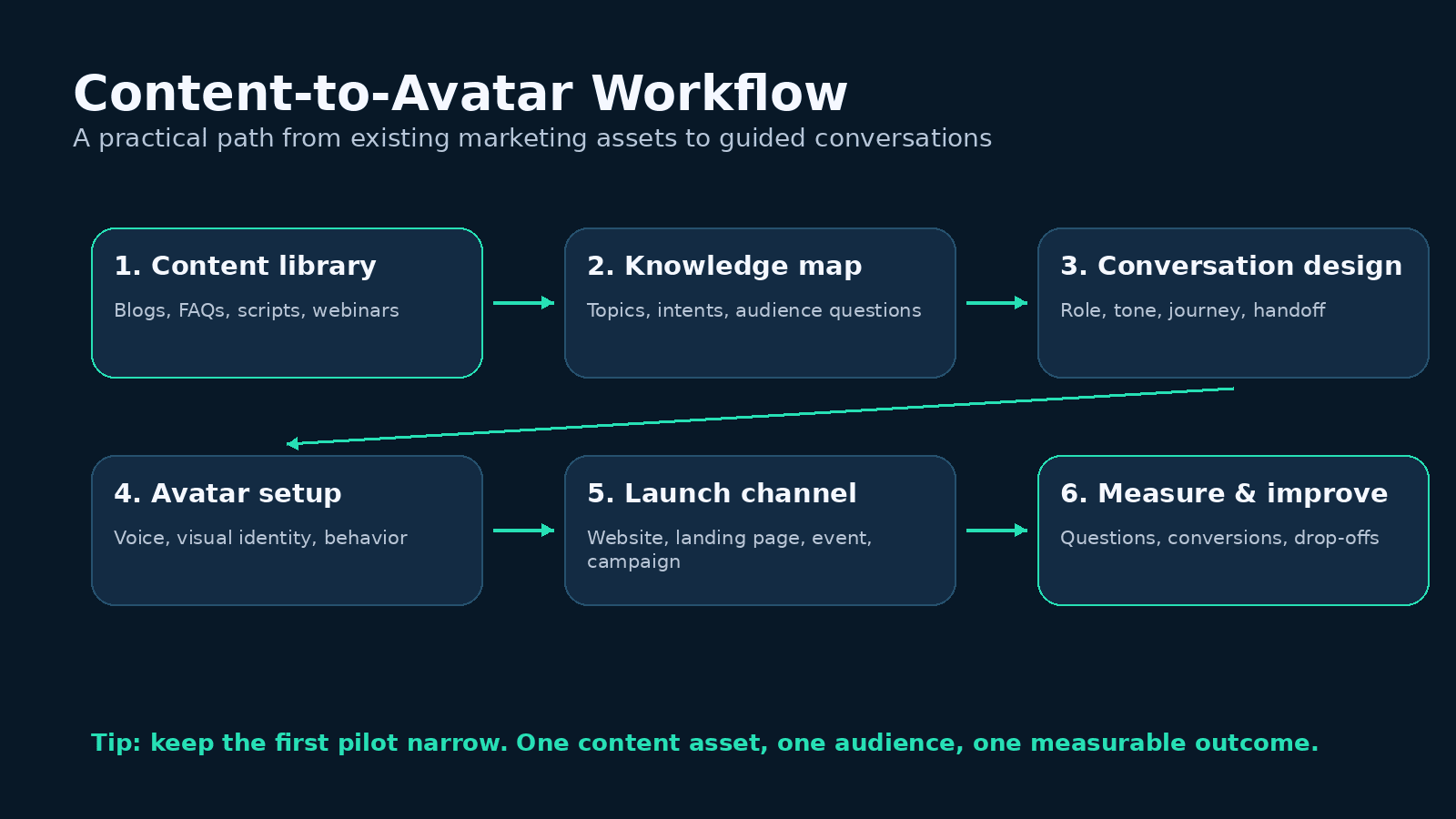
Figure 1: A practical workflow for turning existing content into an avatar-led experience. Credit: Original editorial diagram created for this article.
Where an AI Avatar Studio Fits
A basic content tool creates an output. A basic avatar generator creates a face or video. A business-ready AI avatar studio needs to connect both sides: content and interaction.
That means teams should be able to define the avatar identity, choose a voice, prepare a knowledge base, set the interaction role, embed the avatar where the audience is active and measure what happens after launch.
Mimic AI Studio describes a workflow for creating photorealistic 3D digital humans with custom voices, personalities and real-time conversations, then deploying them across websites, apps, XR and enterprise platforms. Its feature set also includes character building, embeddable widgets, analytics and LLM integration, which are the kinds of controls marketers need when moving from a creative concept into a live customer experience.
For marketing teams, the studio layer matters because the avatar must stay on brand. It needs the right visual style, tone, answer boundaries and handoff logic. Without those controls, the avatar can become another generic chatbot with a face.
Why Conversational Agents Matter
The avatar is the visible interface. The agent is the operating logic behind it. Well-designed conversational AI agents interpret user intent, retrieve approved content, follow brand and safety rules, and decide what should happen next.
A marketing agent might recommend a guide, qualify a lead, ask a follow-up question, summarize a product benefit or route a user to a sales conversation. The value comes from giving the avatar a specific job, not from making it answer everything.
Mimic Minds describes its personas as AI avatars with unique personalities, industry expertise and conversational abilities. That is a useful model for marketing because one avatar should not fit every audience. A product advisor, event host, onboarding guide and training character need different scripts, behaviors and success metrics.
Practical Use Cases for Marketing and Growth
1. Product Explainers
An avatar can turn a product page into a guided walkthrough. Instead of expecting users to read every section, the avatar can ask what the visitor wants to achieve and then explain the most relevant feature, example or next step.
2. Lead Qualification
A landing page avatar can ask a few simple questions about company size, use case, timeline or pain point. It can then route qualified visitors to a demo, content offer or human sales team.
3. Support and FAQ Conversations
Many brands already have strong help centers. An avatar can make that content easier to access by turning FAQ answers into a guided conversation and escalating anything unresolved.
4. Onboarding and Activation
New users often need help completing first steps. An avatar can guide them through setup, explain unfamiliar terms and remind them what to do next.
5. Social Video and Campaign Repurposing
Long-form content can be converted into avatar-led short videos for campaign teasers, LinkedIn posts, Reels, Shorts or event follow-up clips.
6. Event and Webinar Follow-Up
After an event or webinar, an avatar can answer common questions, summarize key takeaways and direct visitors to the most relevant content based on their interest.
For commercial use cases, AI avatars for business are most useful when they guide a defined workflow, such as customer support, sales guidance, onboarding, training or brand communication.
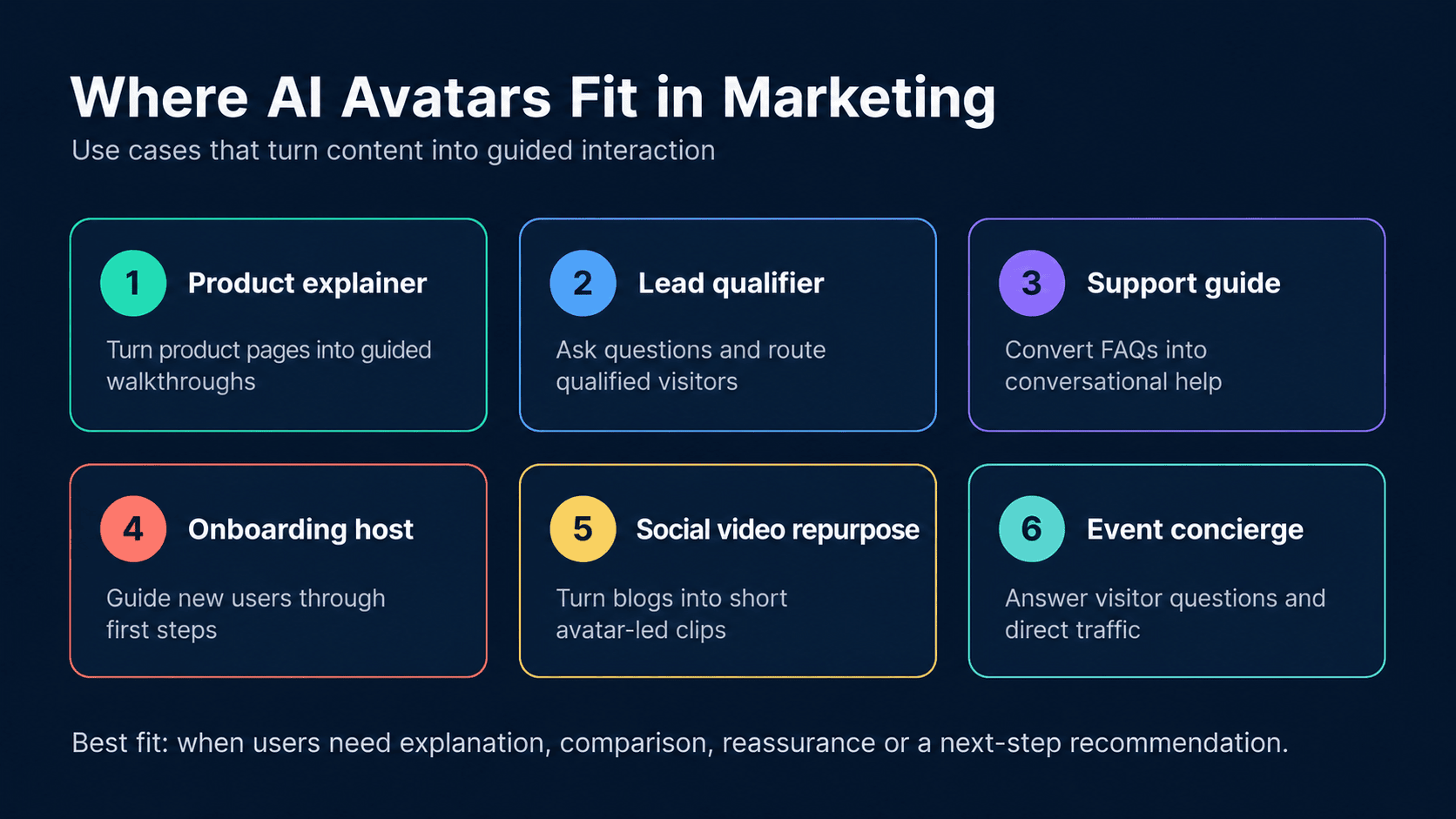
Figure 2: AI avatar use cases for content marketing, lead generation, onboarding and events. Credit: Original editorial illustration created for this article.
What Makes an Avatar Useful, Not Gimmicky
An avatar becomes gimmicky when it is added as decoration. It becomes useful when it removes friction from a real journey.
- Start with one audience: A buyer, learner, customer or event visitor will each need a different experience.
- Define one task: Do not launch with a vague goal like engagement. Choose a task such as booking a demo, explaining a product, answering setup questions or guiding onboarding.
- Use approved content: The avatar should answer from brand content, product documentation, FAQs and campaign material rather than unsupported general knowledge.
- Design the handoff: If the question is sensitive, complex or high-value, the avatar should route the user to a human or a safer workflow.
- Measure the right outcome: Track task completion, lead quality, support resolution, content gaps and conversion movement, not only views.
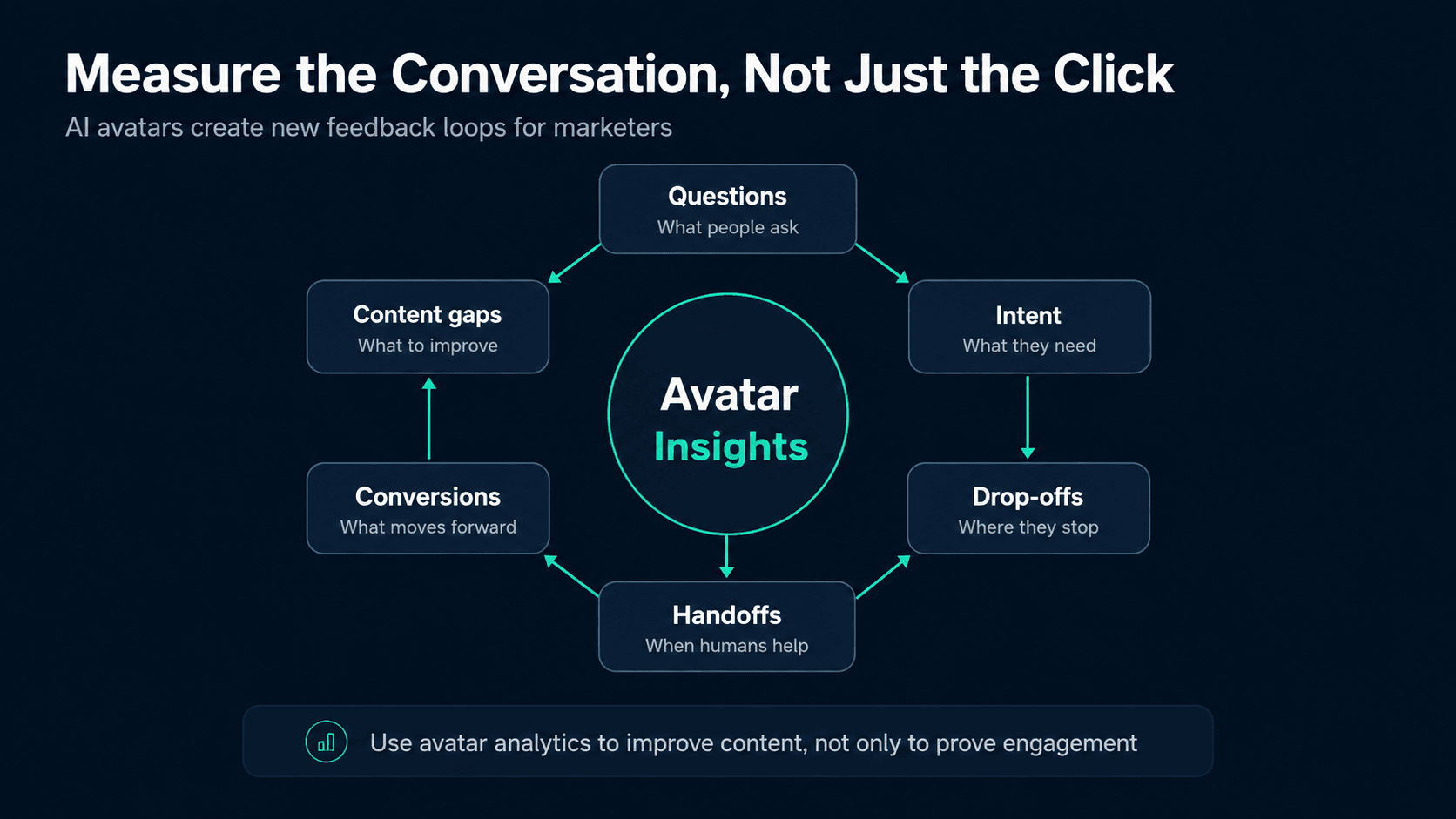
Figure 3: Avatar conversations create insight loops that help marketers improve content, customer journeys and campaigns. Credit: Original editorial diagram created for this article.
Responsible AI and Brand Trust
A human-facing interface can increase trust, so it also increases responsibility. Users should know when they are interacting with AI. The avatar should explain its role clearly and avoid pretending to be a real employee unless the experience is explicitly framed that way.
Marketing teams should also avoid giving the avatar too much freedom. The avatar should not invent pricing, make unsupported claims, collect unnecessary personal data or continue pushing a conversion when the user needs help.
Responsible avatar marketing is not about making the most human-looking character. It is about making the experience clear, useful and respectful. If the avatar cannot answer confidently, it should say so or hand off to a human.
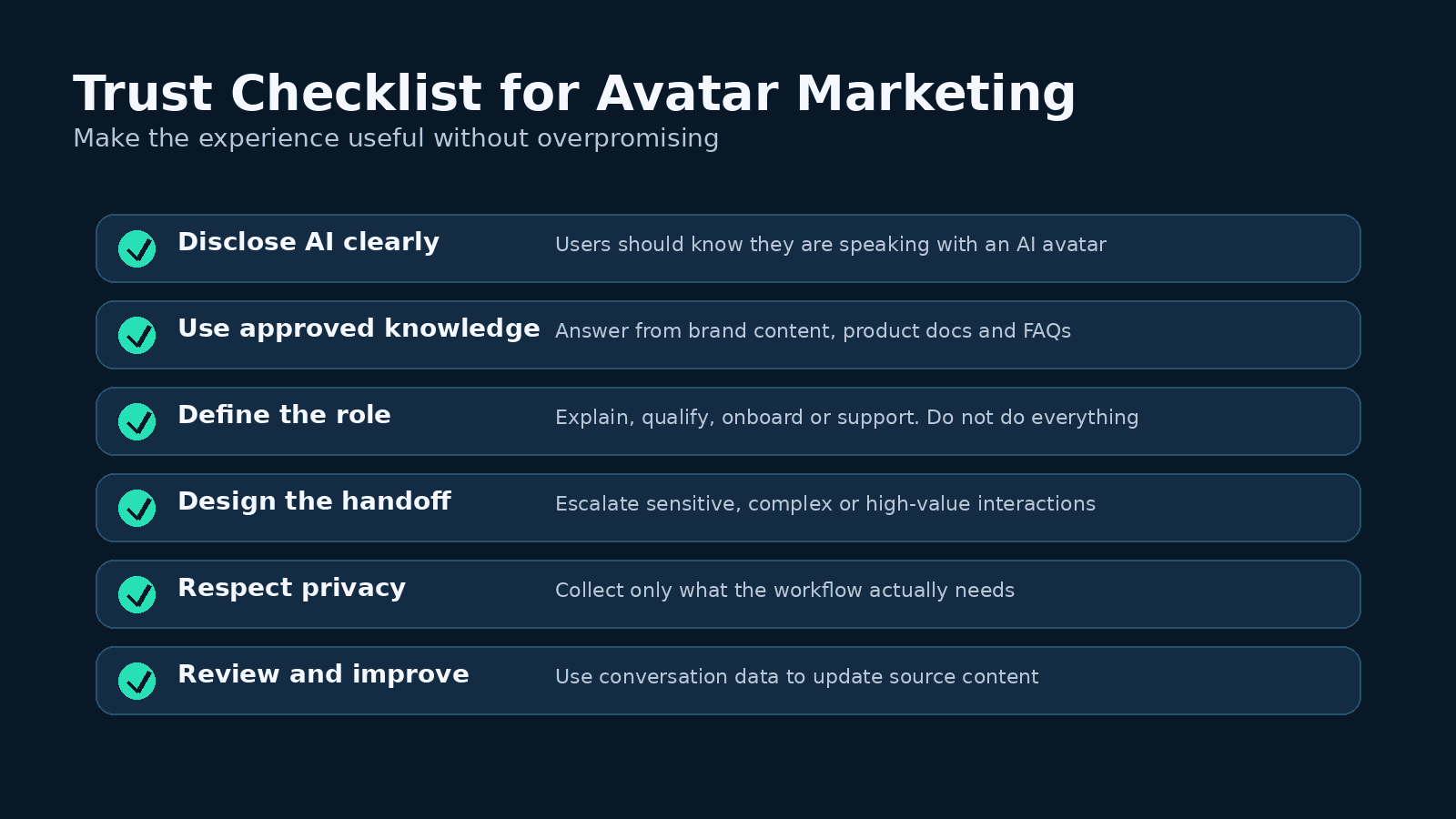
Figure 4: Trust checklist for marketers building AI avatar experiences. Credit: Original editorial diagram created for this article.
How to Start Small
The safest way to begin is with one existing content asset and one measurable journey. For example, choose a high-traffic product page, a support article, a webinar, a comparison guide or an onboarding checklist.
Next, define the avatar role. Is it explaining, qualifying, onboarding, supporting or summarizing? Then create a compact knowledge base from approved content. Design the greeting, the most common user paths, the escalation points and the success metric.
A good pilot does not need to cover every question. It needs to improve one customer moment. Once the first workflow is stable, the team can expand to additional content types, languages, channels or campaigns.
Conclusion: More Content Is Not Always the Answer
The future of content marketing is not only about publishing more. It is about making content more useful at the moment a person needs it.
AI content tools help teams create faster. AI avatars can help teams turn that content into a guided, conversational experience. The best use cases will not be the most futuristic. They will be the ones where an avatar helps a visitor understand, compare, decide, onboard or ask the next question.
For marketers, the opportunity is clear: turn static assets into interactive journeys. Treat the avatar as a content interface, not a novelty. Build from existing content, define the role, measure the result and improve the experience over time.
FAQ
How can AI avatars help content marketing?
They can turn static content into guided conversations, helping users understand products, compare options, ask questions and move toward the next step.
Should every blog post become an AI avatar experience?
No. Start with content that already has business value, such as product explainers, onboarding guides, support FAQs, webinars or high-intent landing pages.
How is an AI avatar different from a chatbot?
A chatbot is usually text-first. An AI avatar adds a visible character, voice, expression and guided interaction, making the experience more human-facing.
What should marketers measure?
Measure task completion, lead quality, handoff quality, content gaps, user satisfaction, conversion movement and drop-off points.
How many links should a guest article include?
Keep links limited and relevant. For this StoryLab.ai-style guest post, one to three Mimic Minds links plus source links is a safer editorial balance than keyword stuffing.
Author Bio
Mimic Minds develops conversational AI avatars and embodied digital humans for websites, events, training, customer engagement and enterprise experiences. Its platform combines 3D avatars, conversational AI and real-time interaction to help brands create more natural digital experiences.
Other Interesting Articles
- AI LinkedIn Post Generator
- Gardening YouTube Video Idea Examples
- AI Agents for Gardening Companies
- Top AI Art Styles
- Pest Control YouTube Video Idea Examples
- Automotive Social Media Content Ideas
- Plumber YouTube Video Idea Examples
- AI Agents for Pest Control Companies
- Electrician YouTube Video Idea Examples
- How Pest Control Companies Can Get More Leads
- AI Google Ads for Home Services
- 60-Second Training Videos Are the New Corporate Standard
- Cybersecurity PR Pricing: Retainers, Deliverables & ROI
- Best AI Tools for Product Consistency in E-Commerce Video
Master the Art of Video Marketing
AI-Powered Tools to Ideate, Optimize, and Amplify!
- Spark Creativity: Unleash the most effective video ideas, scripts, and engaging hooks with our AI Generators.
- Optimize Instantly: Elevate your YouTube presence by optimizing video Titles, Descriptions, and Tags in seconds.
- Amplify Your Reach: Effortlessly craft social media, email, and ad copy to maximize your video’s impact.