
How UX Writing Shapes the Overall Customer Experience

User experience is an exceptionally important factor that directly impacts website performance.
Great UX design can help businesses engage web visitors. Optimizing for usability directly contributes to desirable branding outcomes (such as trust or expertise-based positioning). And there’s even data to show a connection between UX and consumers’ willingness to spend money with a business (and remain loyal to it).
Yet while most business owners understand the value of investing in UX (which can generate $100 in ROI for every dollar spent), many still overlook the role of copy in creating enjoyable, user-friendly customer experiences.
But how does UX writing shape the overall customer experience? And are there any specific tips you can implement to create an online presence that your target audience will enjoy so much that they’ll be more likely to convert into customers?
Below, we’ll cover several UX writing strategies to help you leave a positive, confidence-inspiring impression on your website visitors, regardless of their position in the buyer’s journey.
Chapters
Clear Product Messaging Improves the Overall User Experience
One of the biggest factors preventing web users from enjoying a browsing experience is that some sites bombard them with information.
At its core, the desire to provide your target audience with extensive information isn’t wrong. However, when done wrong, it can lead to an effect that’s precisely the opposite of what you want to accomplish. Here’s why.
When interacting with online content, most people prefer simplicity. In fact, many don’t even read content, choosing instead to scan pages for relevant information.
So, what does this mean from a UX design standpoint? It shows that businesses must take action to make their landing and product pages easy to scan and understand, regardless of the complexity of the solutions they sell.
Clear product messaging can directly aid product understanding, reduce confusion, prevent cognitive fatigue, and guide prospects through the buyer’s journey without feeling forced.
How to make it work for your website:
- Use non-complex copy that your target audience will understand.
- Highlight high-value information that’s genuinely important to your prospects’ decision-making process.
- Prioritize information transparency over bait-like copy that’s attractive but could ultimately frustrate your visitors.
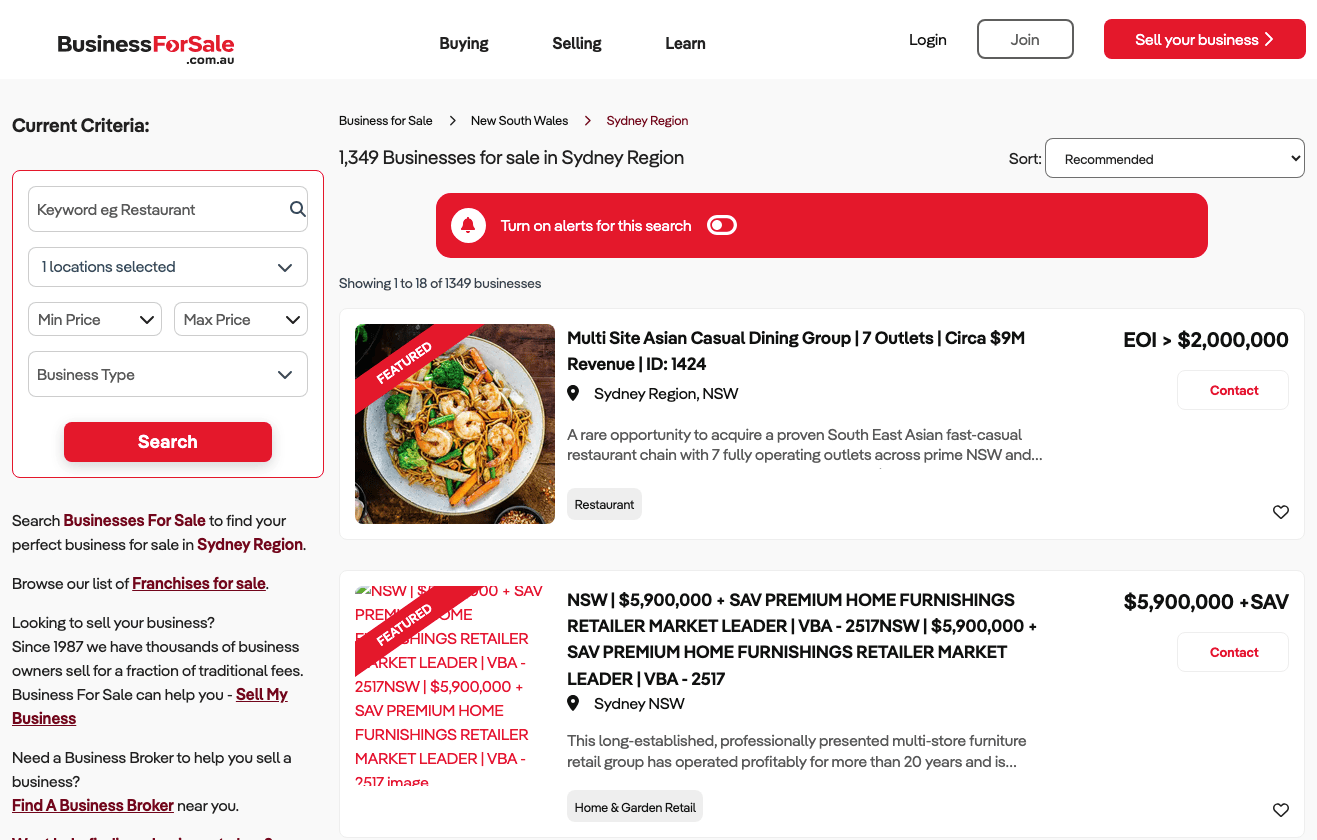
For a great example of how you can use clear product messaging to improve UX design, check out Business for Sale. This brand includes a wealth of information on its product listing pages.
Yet it doesn’t make it feel overwhelming. Instead, each piece of copy aims to present prospects with valuable data, an effect that Business for Sale achieves by focusing on clarity to describe and categorize each listing and provide clear financial information without confusion.
Source: businessforsale.com.au
Clear UX Writing Reduces Customer Frustration
Confused customers are almost guaranteed to become frustrated. And frustration commonly leads to the abandonment of the buyer’s journey.
So, it doesn’t matter whether you’re trying to help your audience understand your solutions or guide qualified leads toward a conversion. In either case, don’t make the mistake of allowing your web visitors to become overwhelmed.
Clear UX writing can be a great help with this. So, here’s how to use it to reduce informational overwhelm and prevent frustration:
- Tell your web visitors precisely what they need to know or do to move through the sales cycle.
- Provide clarifying information in ‘high-risk’ sections of your site, where you ask your prospects to commit to an action (such as your CTA buttons).
- Provide accessible explanations in sections where you describe complex product features — especially if you target a non-expert audience.
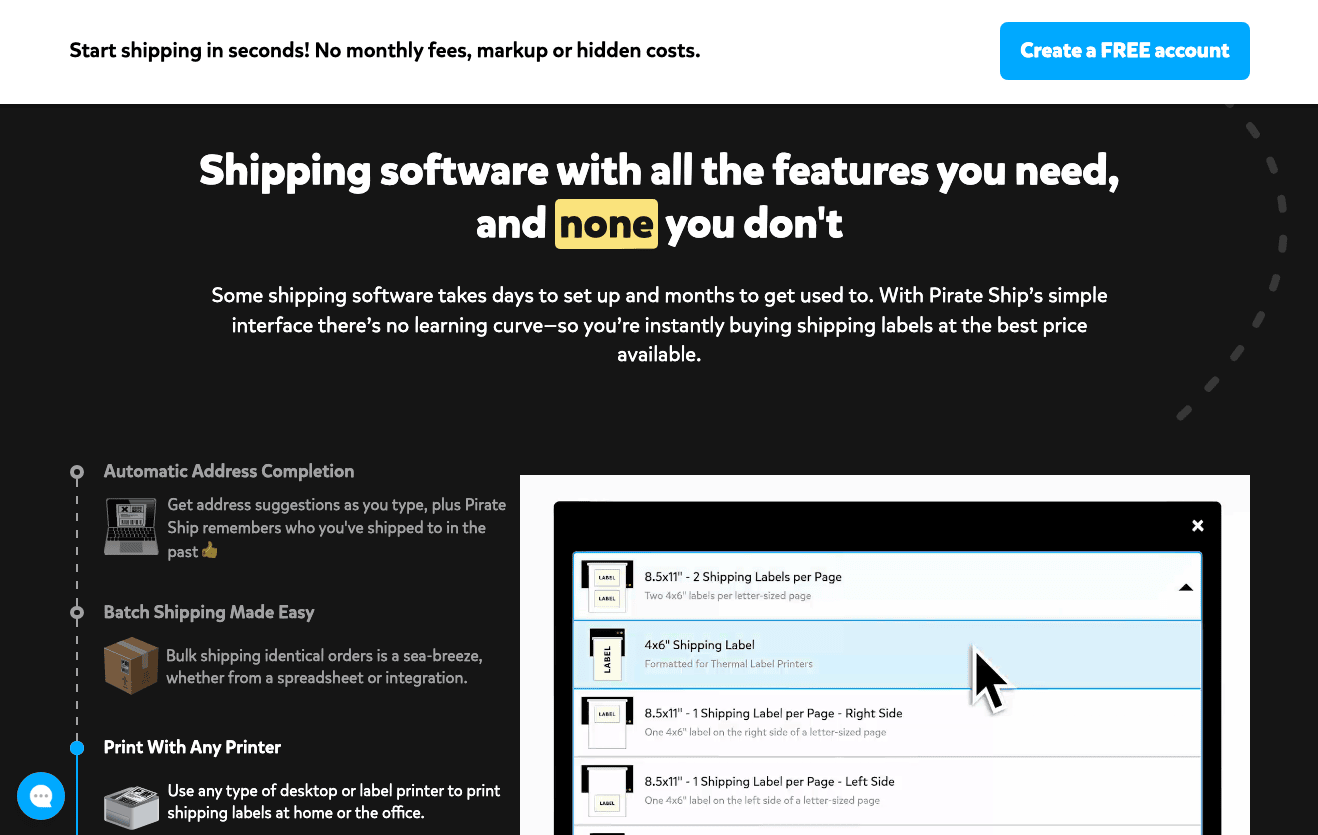
For example, if you check out Pirate Ship, you’ll notice how effectively this business employs clarity to prevent its target audience from becoming overwhelmed by the complexity of the solution.
In the Features section of its website, this brand slowly guides leads through each of the software’s capabilities, with in-app screenshots to maximize understanding. Of course, what stands out is that the UX copy is simple, goal-oriented, and highly readable, all factors that prevent prospects from becoming overwhelmed or frustrated and abandoning the buyer’s journey.
Source: pirateship.com
Building Trust Through Strategic UX Copy
Brand trust is a crucial consideration for consumers making buying decisions in 2026.
Research suggests that most people consider brand credibility and expertise as important as product price and quality. Moreover, studies have shown that earning your prospect’s confidence makes it considerably easier to convert new customers, and even charge more for your solutions.
According to Salsify, 68% of shoppers would pay more for products sold by brands they trust.
Of course, while there are multiple approaches to building brand trust, UX copy can represent one of the easiest methods to encourage your target audience to have confidence in your business.
Here’s how to do it right:
- Use reassuring and direct language that prioritizes clarity. It will make your audience feel comfortable while browsing your website (instead of apprehensive).
- Address your prospects’ fears and uncertainties.
- Explain your guarantees and return policies to reassure visitors about the safety of becoming your brand’s customer.
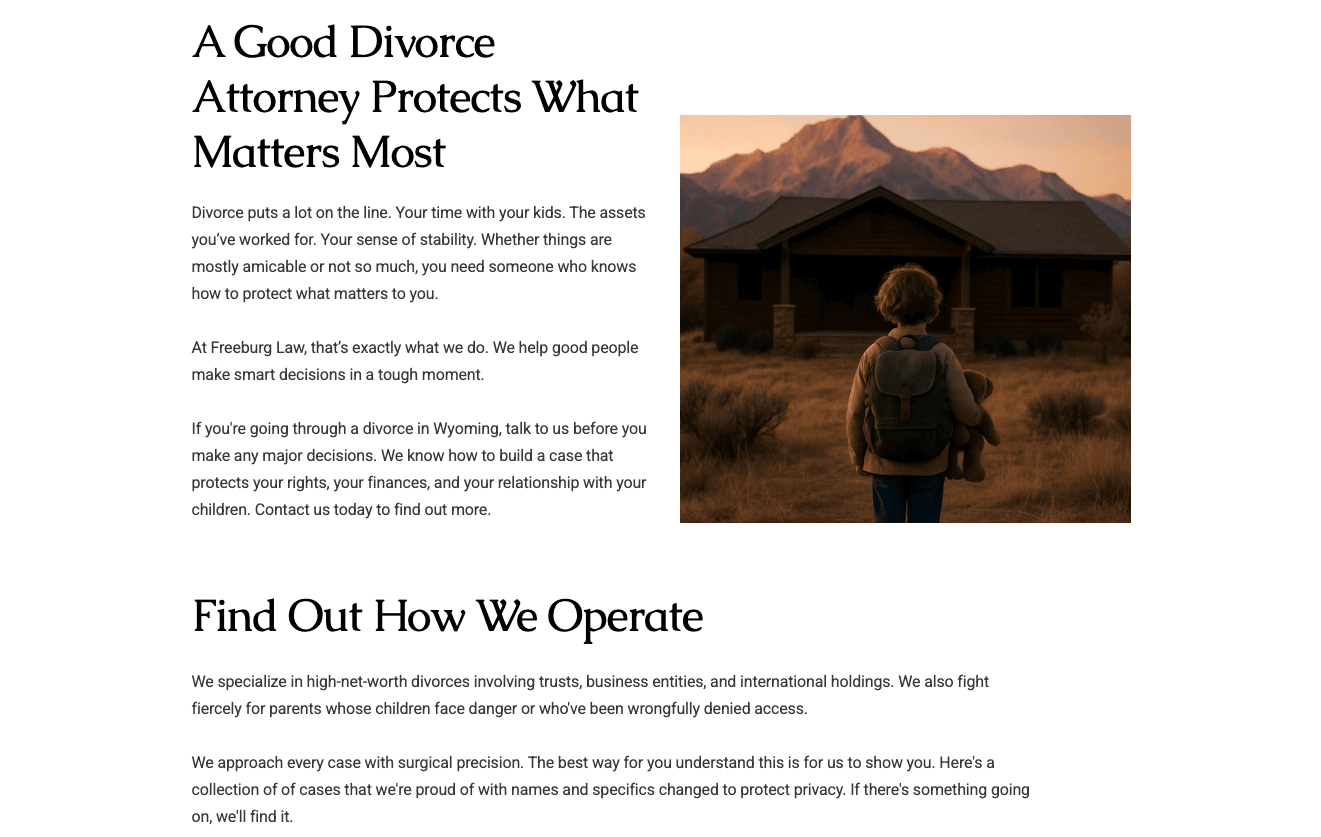
For a great example of what this looks like in practice, check out Freeburg Law. On its Divorce Attorney page, this business discusses an intricate subject with clarity and grace. It uses uncertainty-reducing wording.
Moreover, the brand reinforces its expertise and credibility without relying on too much technical language that could overwhelm web visitors. In doing so, Freeburg Law makes an otherwise stressful legal process feel more approachable and understandable, earning its web visitors’ trust and boosting their chances of converting new customers.
Source: tettonattorney.com
Better Microcopy Leads to Better User Decisions
Consumer confidence allows your web visitors to move through the buyer’s journey with ease. Moreover, it prevents shoppers from feeling uncertain or overwhelmed in ways that cause cart abandonment.
And, sure, clear product messaging and trust-building UX copy help overcome some of the most widespread conversion obstacles.
Nevertheless, it’s important to note that there’s one common consumer fear that significantly impacts the typical sales cycle.
Most shoppers don’t feel confident in their ability to make the right buying decision. It’s your job to empower your prospects to make smart and risk-free shopping choices. And the best way to do that is with better microcopy.
By employing UX writing to direct and ease the shopping process, you can help your prospects choose the right product, simplify technical purchasing decisions, and minimize confusion.
How to do it right:
- Use supporting copy to attract shoppers’ attention to relevant product features.
- Be exceptionally precise with product filters on collection pages to ensure web visitors only see products that are truly relevant to their needs.
- Present web visitors with information that can reduce risk perception, such as star ratings.
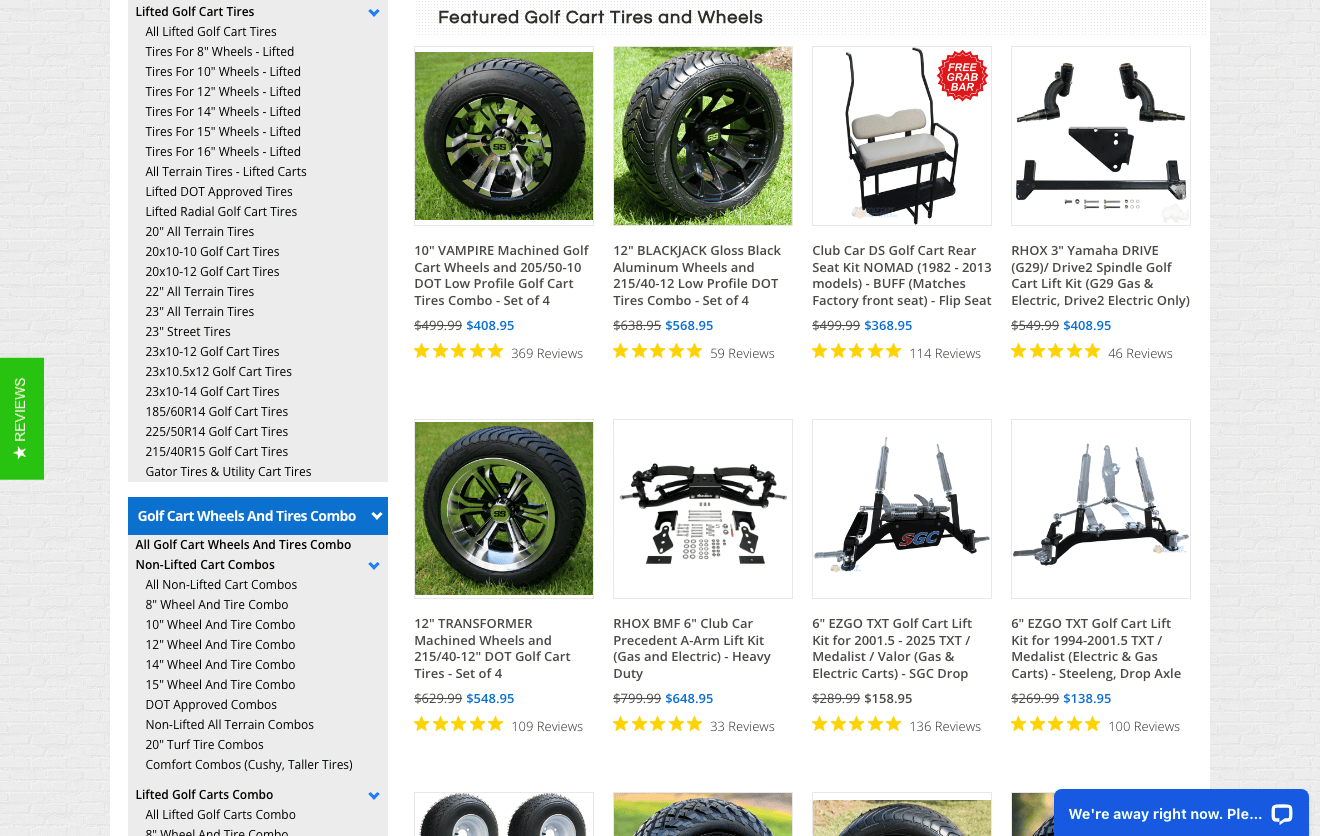
If you check out Golf Cart Tire Supply, you’ll notice that this business implements all of these microcopy tactics to ease its potential customers’ buying journey. The filters, product information, and supporting descriptions help customers confidently choose the right products for their needs.
And the star ratings prevent shoppers’ doubts from taking over, effectively allowing the brand to maximize its conversion rates through trust-building UX design.
Source: golfcarttiresupply.com
Using Conversational UX Writing to Humanize Your Brand
AI can be incredibly helpful in creating high-quality content for your business’s marketing goals. However, it’s not always sufficient to lead consumers through the sales cycle in a way that feels premium.
According to research, consumers want human-feeling brand interactions in 2026.
66% prefer human-led customer service. And 77% feel that AI still can’t match the ‘human touch.’
So, optimizing your UX writing to improve your prospects’ customer experience, consider exploring opportunities to humanize your brand.
What this can look like in practice:
- Use conversational language that is natural to your web visitors’ context.
- Speak directly to web visitors and avoid making your UX language seem like technical information.
- Inject your messages with personality and empathy.
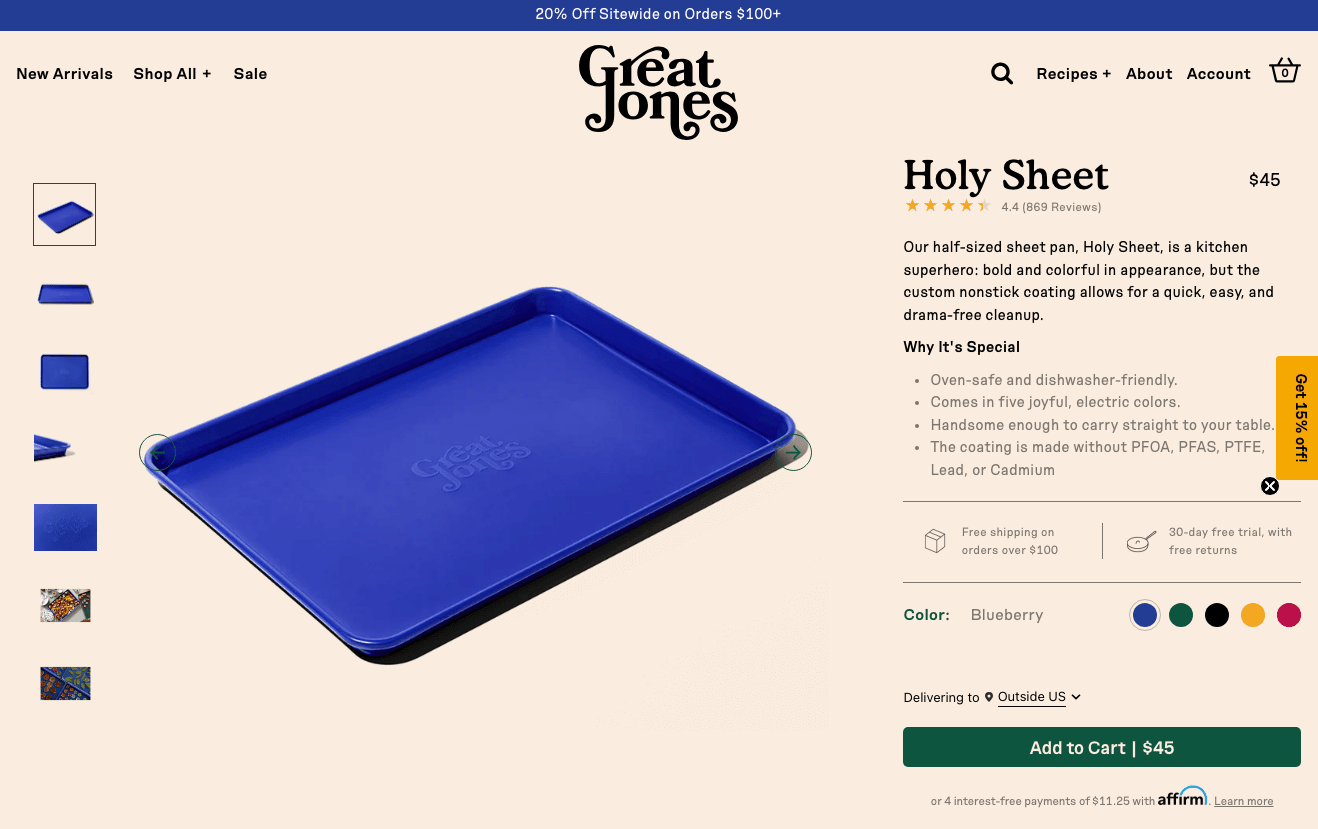
If you check out Great Jones’ product pages, you’ll notice that the UX copy is very laid-back. It provides shoppers with direct and relevant information about the product (that doesn’t just sound like sales-oriented language). It presents buyers with care and cleaning tips to maximize product longevity.
And it guides consumers toward a conversion with human-sounding UX messages, including the ‘Get 15% off’ offer for new newsletter subscribers.
Source: greatjonesgoods.com
Creating More Intuitive Navigation with UX Writing
Website navigation is one of the most commonly ruined aspects of user-friendly design.
According to benchmark data, between 58% and 67% of websites have navigation performance that ranks as ‘mediocre’ to ‘poor.’
And while this element of UX design may not rank high on your list of priorities, it can directly impact your ability to guide web visitors toward conversion, particularly when they have yet to discover relevant solutions to their pain points.
Great UX writing can be exceptionally helpful in this regard, seeing as it can gently direct your audience toward the lower stages of your sales funnel.
How to do it right on your website:
- Use clear and logical category labels in your site’s navigation menu.
- Categorize products and services based on your target audience’s needs.
- Make it easy for web visitors to find relevant information by making all content pages easily accessible in no more than three clicks.
The Hilton Head Island page on the John Sells Hilton Head website is a great example of this UX writing approach. It uses straightforward labels to help users find relevant information. The location-based organization aligns with how shoppers browse properties.
And the navigation menu includes several low-risk CTAs to encourage movement into the lower stages of the sales funnel. Overall, these UX design choices simplify an otherwise complex browsing journey, contributing to a more enjoyable customer experience and positioning the business as a reliable service provider in a saturated industry.

Source: johnsellshiltonshead.com
Consistent Messaging Creates a Smoother Customer Experience
When interacting with brands, consumers want consistency. Even if they’re not completely aware of this wish.
Sure, a buyer’s journey that feels broken up into unrelated bits may not cost you your target audience’s trust. But it can feel confusing or discontinuous to your prospects, making your brand’s customer experience seem less-than-perfect, thus positioning your offer as not being worth the cost.
And, yes, there are several ways to ensure consistency across the buyer’s journey.
Visual branding, for example, is an incredibly effective way to ensure uniform browsing experiences, promote brand memorability, and even create a preference for your company’s products or content.
Nevertheless, UX writing can also offer valuable perks.
How to get it right:
- Ensure your on-site copy remains consistent in terms of voice and tone.
- Use the same terminology across your site to prevent customer confusion.
- Write a few impactful value propositions and use them consistently throughout your online presence.
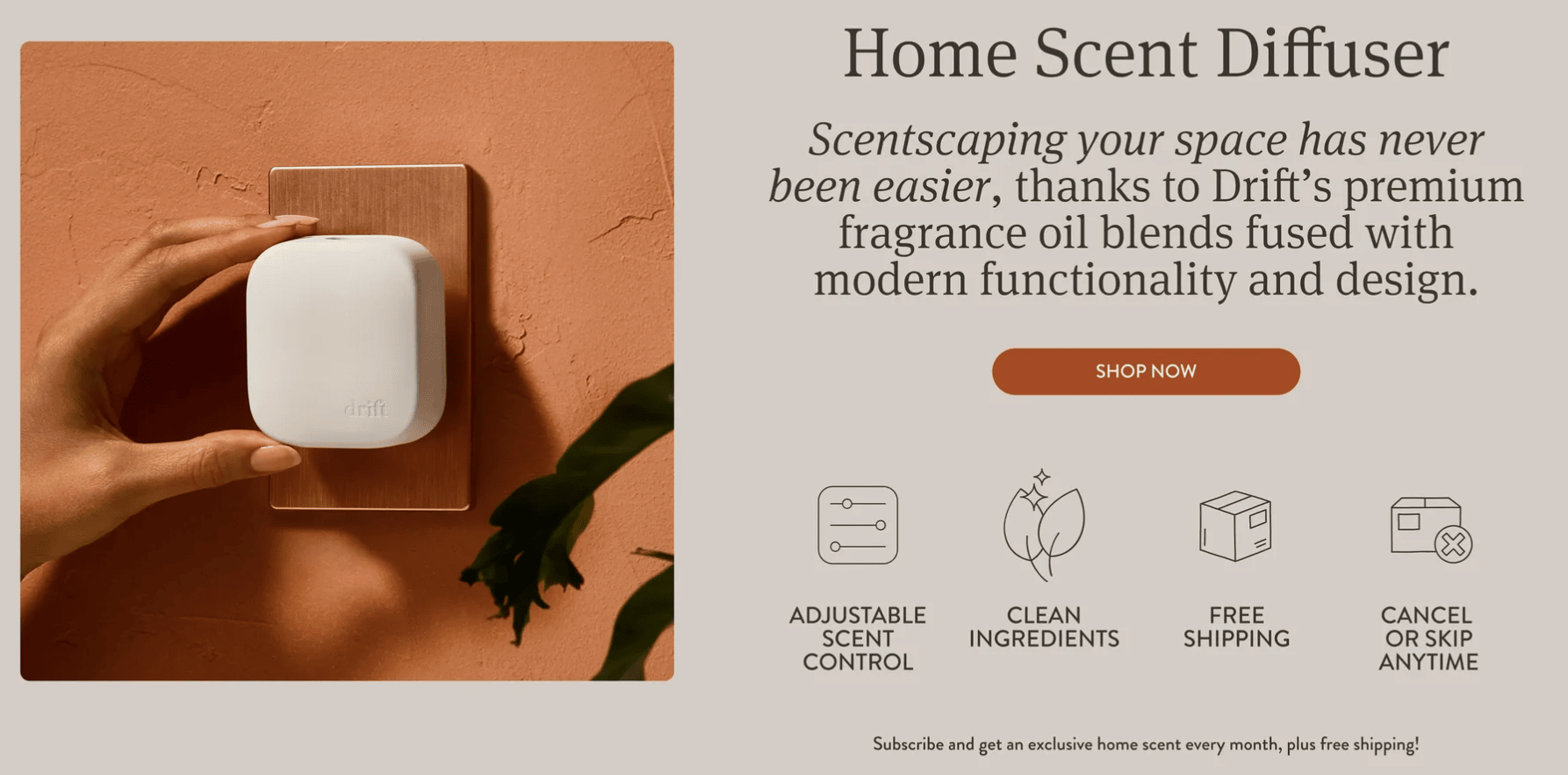
If you check out Drift, you’ll notice that this brand maintains highly consistent messaging across its homepage, product pages, and conversion-focused sections. The UX copy repeatedly reinforces the same core themes: high-quality and organic ingredients, distinctiveness, hygiene, etc.). This creates a smoother, more confidence-inspiring browsing experience.
Instead of overwhelming visitors with unnecessary explanations, the site uses concise, benefit-focused language to guide visitors through the buyer’s journey while making the brand feel trustworthy and professional. This consistency helps reduce friction, strengthens brand identity, and encourages users to feel more comfortable engaging with the platform.
Source: Drift.co
Final Thoughts
When producing copy for your website (or for any of your other distribution channels, for that matter), UX and microcopy may not be your main priority. But the truth is, they hugely influence your web visitors’ browsing experience and the overall customer experience your business offers.
The reason is simple. Clear, user-friendly text builds confidence and certainty. Furthermore, it helps shoppers move through the buyer’s journey without fear.
So, don’t hesitate to implement the tactics covered in this guide into your own UX design. Sure, they may not seem that powerful at first glance. But together, they create an enjoyable, cohesive user experience that will not only earn your target audience’s trust but also remove their conversion obstacles, allowing you to boost engagement, sales, and loyalty.
Other Interesting Articles
- AI LinkedIn Post Generator
- Gardening YouTube Video Idea Examples
- AI Agents for Gardening Companies
- Top AI Art Styles
- Pest Control YouTube Video Idea Examples
- Automotive Social Media Content Ideas
- Plumber YouTube Video Idea Examples
- AI Agents for Pest Control Companies
- Electrician YouTube Video Idea Examples
- How Pest Control Companies Can Get More Leads
- AI Google Ads for Home Services
- 60-Second Training Videos Are the New Corporate Standard
- Cybersecurity PR Pricing: Retainers, Deliverables & ROI
- Best AI Tools for Product Consistency in E-Commerce Video
Master the Art of Video Marketing
AI-Powered Tools to Ideate, Optimize, and Amplify!
- Spark Creativity: Unleash the most effective video ideas, scripts, and engaging hooks with our AI Generators.
- Optimize Instantly: Elevate your YouTube presence by optimizing video Titles, Descriptions, and Tags in seconds.
- Amplify Your Reach: Effortlessly craft social media, email, and ad copy to maximize your video’s impact.