
How AI-Powered Custom Software Helps Startups Scale

Startups rarely lose momentum because they lack ideas. More often, they lose momentum because their systems cannot keep up.
A tool that seemed good enough in the beginning starts creating friction. Teams stitch together too many platforms. Product workflows become messy. Customer data lives in too many places. Simple improvements suddenly require awkward workarounds. That is when off-the-shelf software stops feeling like a shortcut and starts feeling like a ceiling.
Custom software development gives startups a way to build around their actual product, workflow, and growth model instead of forcing the business to fit someone else’s template. That matters even more now because AI is changing what startups can automate, personalize, and optimize. McKinsey notes that AI can transform software product development by increasing the pace of the process and the quality of the final output, while Microsoft highlights that AI-assisted development can accelerate coding and reduce repetitive tasks.
In this guide, you will learn why startups hire custom software development services, how AI changes the value of custom builds, and where tailored software can create a real competitive edge.
Chapters
3 Reasons to Hire a Custom Software Development Service for Your Startup
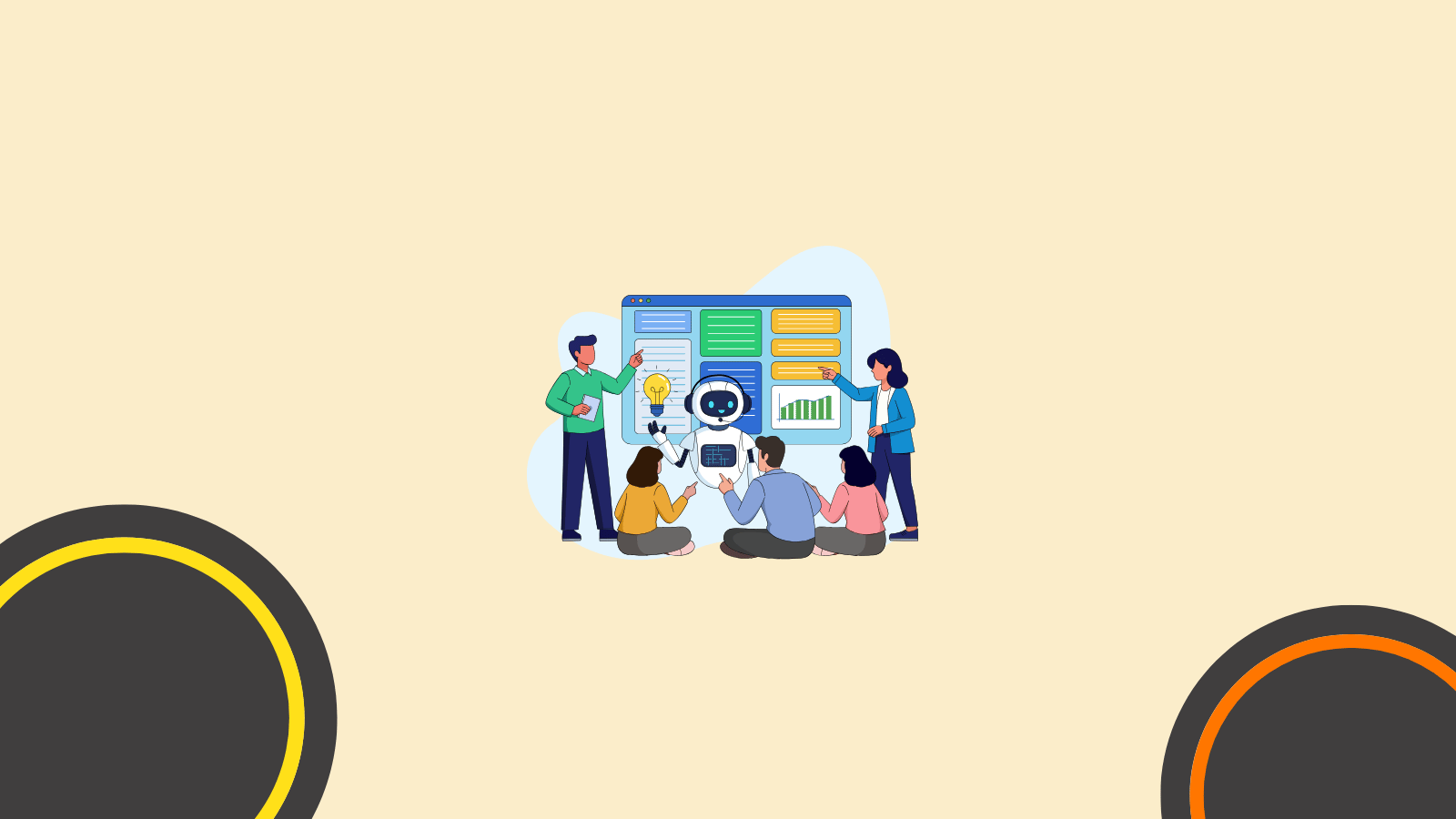
Here are some good reasons to invest in custom software development solutions for your startup in 2026 and beyond.
Find Tailored Business Solutions
Every startup operates with unique goals, workflows, and customer expectations. Generic software tools often force you to adjust your business around them. On the other hand, custom software eliminates those limitations by aligning perfectly with your business logic and growth strategy.
Experienced software building teams take the time to understand your vision, analyze your challenges, and craft tailor-made solutions that empower your operations. Whether you’re developing a marketplace platform, logistics app, or SaaS solution, you can be certain that every design element serves your core objectives.
Future-proof Your Startup with AI and Machine Learning
Artificial intelligence (AI) and machine learning technologies are redefining how startups compete. One report by Deloitte showed that nearly 73% of high-growth startups now use AI to enhance customer engagement, automate workflows, and make data-backed decisions. Custom software creators help brands integrate transformative technologies directly into their existing business applications.
From AI-powered chatbots and predictive analytics to intelligent process automation, you can trust professionals like the Uinno software development company experts to ensure that your system learns, adapts, and improves continuously. That means less manual work, faster decision-making, and smarter operations that position your brand as a leader in innovation.
Gain Competitive Advantage through Innovation

Custom software gives startups the opportunity to stand out in a competitive niche. Do you want to avoid offering what everyone else does? If yes, then it’s essential to create unique features and user experiences that set you apart.
Custom software development service providers have the skills to streamline every process from design thinking to innovation and emerging tech trends. These may include offering products relating to IoT, blockchain, and advanced data analytics to help your business stay ahead of competitors. This way, innovation becomes part of your DNA.
Many startups can’t afford to rely on outdated tools or generic systems, especially in this new corporate world where automation and AI drive over $5 trillion in global productivity gains annually.
It doesn’t matter whether you are launching your first MVP or scaling into international markets. Consulting Uinno’s team of experts can help you design AI-powered, data-driven, and scalable systems that future-proof your business.
Off-the-shelf software is often where startup friction begins
Off-the-shelf tools can help a startup move quickly in the early stage, but they often come with trade-offs. As the business grows, generic platforms can create limits around workflows, integrations, reporting, automation, and product differentiation.
That is a real problem for startups because speed alone is not enough. You also need flexibility. When your product or internal systems depend on a stack of tools that were not designed to work the way your business works, growth starts feeling harder than it should. Custom software helps solve that by aligning the system with your actual operations instead of forcing constant compromises.
Custom software helps startups build around real business needs
A startup usually has a different set of needs than an established company. It may need to validate a product, launch an MVP, connect customer data, automate manual work, or create a better user experience in a very specific niche.
That is where custom software becomes valuable. Instead of paying for a long list of features you do not need, you can build the features that directly support your model, your users, and your next stage of growth. The result is often cleaner operations, fewer unnecessary tools, and a product that fits the business better.
AI makes custom software development more valuable for startups
AI changes the case for custom software because it expands what startups can actually build into their systems. A custom platform is no longer just about dashboards, forms, and workflows. With the right AI software development services behind the product strategy, it can also include AI-assisted search, recommendation logic, support automation, workflow routing, summarization, prediction, and faster decision support.
McKinsey says AI-enabled software development can increase the pace of software product development and improve output quality. Microsoft also says AI-assisted development solutions can accelerate coding and reduce repetitive work. Those shifts matter for startups because they lower some of the friction involved in building and improving custom products.
That makes custom software more than a technical decision. It becomes a growth decision.
Startups can automate more when software is built for their workflow
One of the biggest advantages of custom software is workflow automation. Many startups still rely on repetitive manual tasks across operations, sales, support, onboarding, finance, and reporting. That may work for a while, but it gets expensive fast in both time and errors.
IBM notes that workflow automation reduces manual effort, lowers errors, and improves scalability. It also points out that businesses with outdated manual processes struggle to scale reliably.
Custom software helps because it can automate the work that matters most in your business instead of forcing you to adapt to a generic automation pattern that only partly fits.
Better scalability is a major reason startups invest in custom development
A startup does not just need software that works today. It needs software that can keep working when customers, transactions, users, and internal complexity all increase.
AWS highlights scalability as a key benefit of modern cloud application infrastructure, especially for startups facing growth in customer demand. AI in development pipelines can also support scaling by automating monitoring and related infrastructure tasks, according to IBM.
Custom software gives startups more control over how that scaling happens. Instead of waiting to hit the limits of a third-party product, the business can build for performance, flexibility, and future requirements from the beginning.
Custom software can create stronger product differentiation
A startup needs more than functionality. It needs a reason for customers to care.
When companies rely on the same tools, templates, and user flows as everyone else, their product starts to feel interchangeable. Custom software makes it easier to create workflows, features, and user experiences that reflect the product’s actual value instead of a generic software mold.
This matters even more in AI-heavy markets where many new tools sound similar on paper. A startup can use custom development to turn its insights, data, and customer understanding into something more defensible.
AI-powered development can help startups move faster
Custom software used to sound slow and expensive by default. AI is changing that perception. AI-assisted development can speed up coding, testing, modernization, and repetitive development tasks.
Microsoft says AI-assisted development can accelerate coding and reduce repetitive tasks. IBM says AI in software development can automate tasks in CI/CD pipelines, improve build efficiency, and support intelligent monitoring and scaling.
That does not mean custom development is suddenly effortless. It does mean the gap between buying generic software and building tailored software is starting to look different, especially for startups that need better product fit.
Startups need cleaner data and systems if they want AI to work well
AI features are only as useful as the systems behind them. If customer data is messy, workflows are disconnected, and business logic lives across too many tools, AI becomes harder to apply in a useful way.
Custom software helps startups build cleaner foundations for AI by structuring data, centralizing workflows, and giving the business more control over where automation or intelligence should be applied. That can make future AI adoption much more practical.
In other words, custom software is often what makes smarter AI use possible later.
When custom software makes the most sense for a startup
Custom software is not always the first move. Sometimes a startup should begin with simpler tools to validate demand. But custom development becomes much more attractive when the business needs one or more of the following: a differentiated product experience, tighter workflow automation, better integrations, scalable infrastructure, cleaner data, or AI features that generic platforms cannot support well.
That is usually the point where software stops being a support function and becomes part of the company’s actual competitive advantage.
When Custom Software Makes Sense for a Startup
Custom software is not the best choice for every startup at every stage.
Sometimes, a no-code tool, SaaS platform, marketplace plugin, or manual process is enough to test demand. That is especially true when the idea is still unclear or the founder has not validated the problem yet.
Custom development becomes more attractive when the startup already knows what it needs to build and standard tools keep getting in the way.
| Startup situation | Off-the-shelf tools may be enough | Custom software may be better |
|---|---|---|
| Idea validation | You are testing whether people care about the problem. | You already have evidence of demand and need a real product experience. |
| MVP development | The MVP can be tested with a landing page, prototype, spreadsheet, or no-code workflow. | The MVP needs custom logic, user accounts, integrations, payments, data flows, or automation. |
| Workflow automation | The process is simple and does not happen often. | The process is repeated often, creates errors, slows the team down, or affects customers. |
| Product differentiation | Your product is mainly content, service delivery, or simple ecommerce. | Your product needs features, workflows, or experiences competitors cannot easily copy with templates. |
| Data and reporting | Basic dashboard and analytics tools give you enough insight. | You need custom reporting, customer-specific dashboards, or cleaner data across multiple systems. |
| AI features | You only need simple AI tools outside the product. | You want AI search, summarization, recommendations, workflow routing, prediction, or assistants inside your own product. |
| Scalability | Your current tools still handle users, traffic, data, and transactions well. | Your current setup is becoming slow, expensive, fragile, or difficult to maintain. |
A simple rule:
Do not build custom software to avoid customer validation.
Build custom software when customer validation shows that a better system is worth creating.
Custom Software Development Roadmap for Startups
A startup does not need to build everything at once.
The better approach is to build in stages.
1. Define the business problem
Start with the pain point.
What is slowing the startup down?
Examples:
- Customers cannot complete an important action.
- The team manually copies data between tools.
- The current platform does not support the right user flow.
- Reporting is incomplete.
- The product needs features that no standard tool provides.
- Operations depend too much on spreadsheets.
- The current tool stack is becoming too expensive or messy.
- The startup wants to add AI features but the data is not structured well enough.
A clear problem helps the development team recommend the right solution.
2. Prioritize the MVP
The first version should focus on the smallest useful product.
That means choosing the features that prove the product can work.
Avoid building every idea into version one.
Prioritize:
- Core user flow
- Must-have functionality
- Security basics
- Payment or signup flow if needed
- Admin controls
- Key integrations
- Essential reporting
- Reliable data structure
- A simple feedback loop
A focused MVP is easier to test, improve, and scale.
3. Build for learning
A startup product should help the team learn from users.
Make sure the software can capture useful signals, such as:
- Signup behavior
- Activation steps
- Feature usage
- Drop-off points
- Support questions
- Search behavior
- Conversion actions
- Payment issues
- Retention patterns
- User feedback
This helps founders make better product decisions after launch.
4. Add automation where it saves real time
Automation should solve a real bottleneck.
IBM describes workflow automation as replacing manual tasks with software that executes all or part of a process, helping reduce inefficiencies and improve scalability.
For startups, that may include:
- Lead routing
- Customer onboarding
- Invoice workflows
- Support triage
- Internal approvals
- Data syncing
- Report generation
- Order processing
- Status updates
- Notification workflows
Automate the tasks that slow growth, create mistakes, or frustrate customers.
5. Improve after real usage
The first launch is not the finish line.
After launch, review:
- What users actually do
- Which features they ignore
- Where they get stuck
- Which integrations create problems
- Which workflows save time
- Which features need better UX
- Which data needs to be tracked
- Which parts need better performance
Custom software gives you more control, but that control is only valuable if you keep improving the product.
What to Ask Before Hiring a Custom Software Development Partner
Choosing a development partner is not only a technical decision.
It affects budget, speed, quality, ownership, and long-term flexibility.
Ask these questions before hiring:
| Area | Questions to ask |
|---|---|
| Startup experience | Have you built MVPs, SaaS products, marketplaces, portals, or internal tools for startups before? |
| Discovery | How do you turn a rough idea into clear requirements? |
| Scope | What is included in the first version, and what should wait? |
| Technology | Why do you recommend this tech stack for our stage and goals? |
| AI features | Can AI features be added safely, and what data structure is needed first? |
| Integrations | Which tools, APIs, payment systems, CRMs, or databases need to connect? |
| Security | How will authentication, permissions, sensitive data, and secure development be handled? |
| Scalability | What happens if users, data, transactions, or traffic grow quickly? |
| Communication | How often will we review progress, blockers, budgets, and priorities? |
| Testing | How will bugs, edge cases, performance issues, and user flows be tested? |
| Ownership | Who owns the code, accounts, documentation, design files, and infrastructure? |
| Handover | What documentation and support will we receive after launch? |
| Maintenance | What happens after the first version is live? |
FAQ
What is custom software development for startups?
Custom software development for startups means building software tailored to the startup’s specific product, workflow, and business needs instead of relying only on off-the-shelf tools. It is often used to create better product fit, stronger automation, and more scalable systems.
Why do startups hire custom software development companies?
Startups hire custom software development companies when generic tools create too much friction or cannot support their product, growth model, or automation needs. Custom development can help them build around real workflows, create differentiated features, and support long-term scalability.
How does AI improve custom software development?
AI improves custom software development by speeding up parts of the development lifecycle, reducing repetitive work, supporting testing and monitoring, and making it easier to build smarter features into products and workflows. McKinsey says AI can increase the pace of software product development and improve output quality, while Microsoft says AI-assisted development can accelerate coding and reduce repetitive tasks.
Is custom software better than off-the-shelf software for startups?
It depends on the stage and needs of the startup. Off-the-shelf software can be useful early on, but custom software often becomes the better option when the startup needs more flexibility, better integrations, stronger automation, product differentiation, or AI features that standard tools do not support well.
Can custom software help startups scale?
Yes. Custom software can help startups scale by giving them more control over infrastructure, workflows, integrations, and performance as demand grows. AWS specifically points to scalability as a major benefit of modernized cloud applications, and IBM notes that automation improves scalability by reducing manual bottlenecks.
Why is workflow automation important for startups?
Workflow automation is important because manual processes slow teams down, increase errors, and make scaling harder. IBM says automation reduces repetitive work and improves scalability, which is especially important for startups trying to grow without adding unnecessary operational drag.
Can custom software support AI features in a startup product?
Yes. Custom software can make it easier to add AI features such as automation, prediction, recommendations, intelligent search, summarization, and support workflows because the business has more control over the data, logic, and user experience behind the product.
What is the biggest mistake startups make with software decisions?
One of the biggest mistakes is waiting too long to fix system friction. Many startups patch together too many tools, workflows, and manual workarounds until the stack becomes hard to scale. At that point, software is no longer saving time. It is quietly slowing the business down.
Other Interesting Articles
- AI LinkedIn Post Generator
- Gardening YouTube Video Idea Examples
- AI Agents for Gardening Companies
- Top AI Art Styles
- Pest Control YouTube Video Idea Examples
- Automotive Social Media Content Ideas
- Plumber YouTube Video Idea Examples
- AI Agents for Pest Control Companies
- Electrician YouTube Video Idea Examples
- How Pest Control Companies Can Get More Leads
- AI Google Ads for Home Services
- 60-Second Training Videos Are the New Corporate Standard
- Cybersecurity PR Pricing: Retainers, Deliverables & ROI
- Best AI Tools for Product Consistency in E-Commerce Video
Master the Art of Video Marketing
AI-Powered Tools to Ideate, Optimize, and Amplify!
- Spark Creativity: Unleash the most effective video ideas, scripts, and engaging hooks with our AI Generators.
- Optimize Instantly: Elevate your YouTube presence by optimizing video Titles, Descriptions, and Tags in seconds.
- Amplify Your Reach: Effortlessly craft social media, email, and ad copy to maximize your video’s impact.