
Why Most SaaS Companies Get Content Marketing Wrong (And How to Fix It)

Most SaaS companies do not fail at content marketing because they do not publish enough.
They fail because they publish the wrong content for the wrong audience and measure the wrong results.
The usual pattern looks like this:
- A SaaS company starts a blog.
- The team targets broad keywords.
- They publish beginner guides.
- Traffic starts growing.
- Everyone feels good.
Then the harder question appears:
- Where are the signups?
- Where are the demo requests?
- Where are the qualified leads?
- Where is the pipeline?
That is where many SaaS content strategies break.
The problem is not that top-of-funnel content is useless. Educational content can build awareness, trust, and long-term visibility. But if your entire strategy is built around broad informational keywords, you may attract a large audience that is not ready to buy, not a good fit, or not even looking for software.
Meanwhile, buyers who are comparing tools, searching for alternatives, checking integrations, reading use-case pages, and looking for proof may never find your best product content.
That is a serious problem because modern B2B buyers often do a lot of research before speaking with sales. Gartner research found that many B2B buyers prefer independent digital research and that consistent information across platforms matters for buyer confidence.
SaaS content needs to do more than generate pageviews.
It should help the right people understand:
- What problem your product solves
- Who it is built for
- When it is a good fit
- How it compares to alternatives
- What use cases it supports
- What results customers can expect
- Why your approach is different
- What the next step should be
That means your content strategy should connect SEO, product marketing, sales enablement, customer education, and conversion optimization.
Google also recommends creating helpful, reliable, people-first content instead of content made mainly to manipulate search rankings. That matters for SaaS because generic SEO content rarely builds trust or converts serious buyers.
This article explains why most SaaS companies get content marketing wrong and how to build a smarter content strategy around buyer intent, product relevance, helpful content, AI-assisted workflows, and revenue-focused measurement.
Chapters
Mistake #1: Starting at the Top of the Funnel and Staying There
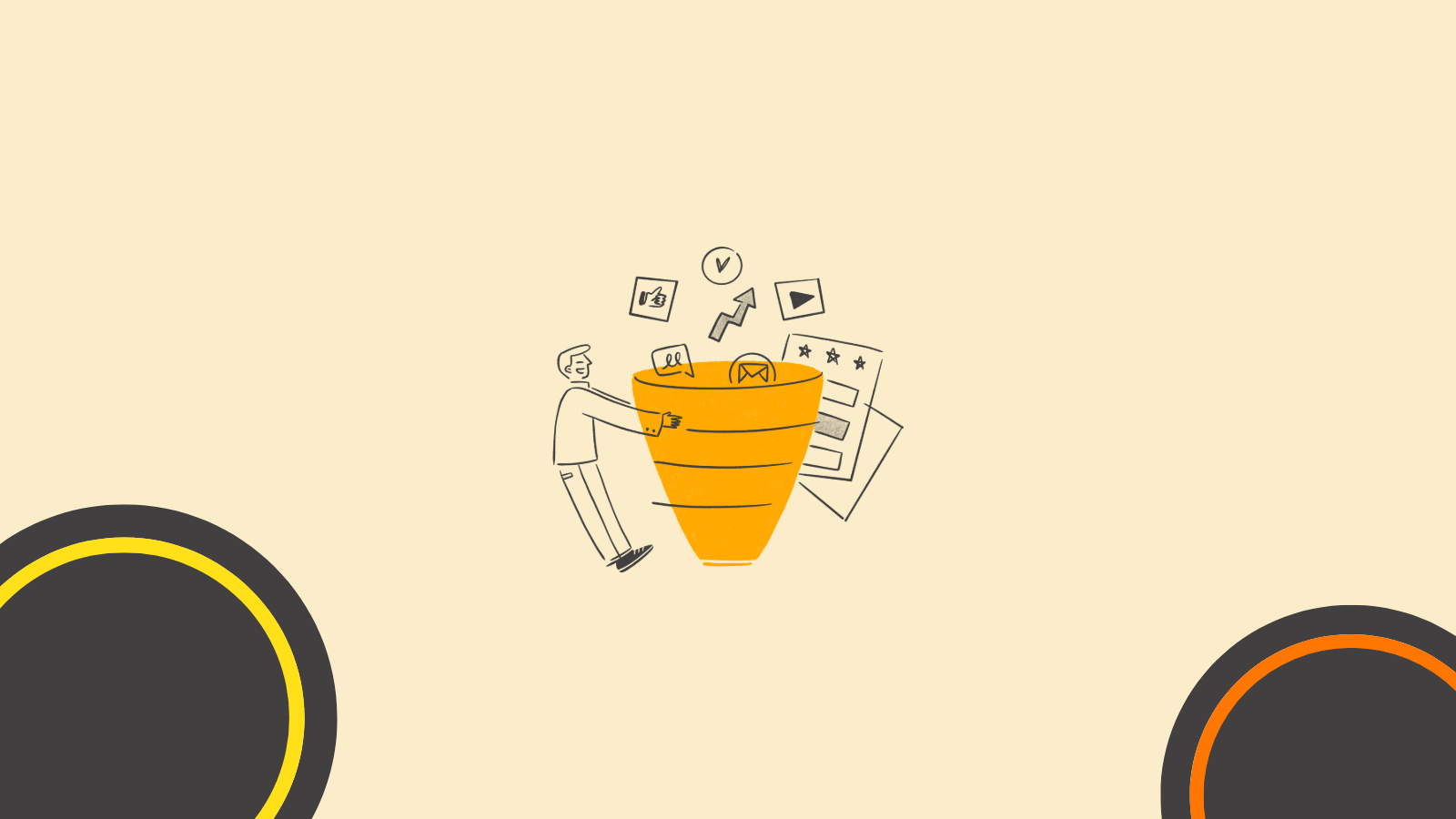
The most widespread SaaS content marketing mistake is an obsession with top-of-funnel content. The typical content calendar fills up with “ultimate guides,” broad industry explainers, and beginner-level educational posts targeting high-volume keywords.
The logic feels sound: cast a wide net, attract a large audience, and nurture them down the funnel. But here is what actually happens in practice. The person reading “What Is Project Management?” is almost never the person who will sign up for your project management tool next week.
Imagine a SaaS company that publishes a comprehensive guide targeting “what is marketing automation.” The post ranks on page one and brings in thousands of monthly visits. But when you check the conversion data, it has generated a handful of trial signups over six months. Now compare that to a post targeting “best marketing automation tools for small business,” which gets a fraction of the traffic but drives significantly more trial signups. The conversion rate difference between these two types of content is not marginal. It is exponential.
Mistake #2: Measuring Traffic Instead of Revenue
Traffic is the most seductive vanity metric in SaaS marketing. It feels great to watch the graph climb. But traffic without conversions is just an expense on your P&L statement.
The data backs this up. The average SaaS landing page converts at just 3.8%, which is 42% below the cross-industry median of 6.6%. For most SaaS blogs, the conversion rate on top-of-funnel content is even lower, often sitting below 1%.
The fix starts with redefining what success looks like. Stop building dashboards around organic sessions and keyword rankings. Instead, set up conversion tracking for the actions that actually matter: trial starts, demo requests, and account creations. Pairing that tracking with a strategic website redesign often reveals where the page itself is leaking conversions before traffic ever becomes the real problem.
Use attribution models to understand which specific blog posts are driving those outcomes. You will quickly discover that the posts bringing the most traffic are rarely the ones bringing the most revenue.
Mistake #3: Ignoring Bottom-of-Funnel Keywords
Here is the biggest missed opportunity in SaaS content marketing. For almost every software category, there are potential customers actively searching for a solution right now. They are typing queries like “best time tracking software for small business,” “HubSpot alternatives,” or “CRM tools with QuickBooks integration.”
These are high-intent, purchase-ready searches. The people behind these queries do not need a 3,000-word educational guide. They already understand their problem and are comparing options to find the best fit.
Yet most SaaS companies completely ignore these keywords in their organic content strategy, even though they happily bid on the exact same terms in Google Ads. This leaves a massive gap that competitors and software review sites like G2 and Capterra fill instead. If you are not showing up with your own content when a buyer is actively evaluating solutions, you are handing that conversion to someone else.
Here are the bottom-of-funnel keyword categories every SaaS company should cover first:
Software category keywords like “best [use case] software,” “[industry] [use case] tools,” and “[use case] software for [business size].” The more use cases, verticals, or integrations you serve, the more keyword variations you can target.
Comparison keywords like “[competitor] alternatives” and “[your brand] vs. [competitor].” For newer brands without much search volume around their own name, you can even target “[competitor A] vs. [competitor B]” and position yourself as a third option in the article.
These bottom-of-funnel keywords consistently convert at 5 to 7 times the rate of awareness-stage content because the reader already has buying intent.
Mistake #4: Never Mentioning Your Own Product in Your Content
Many SaaS blogs read like generic industry publications. The articles are well-researched and informative, but they never mention the company’s own product. This happens because marketers are afraid of being “too salesy.”
Here is the problem with that logic. When someone searches “best delivery route planning software,” they want to learn about specific products. Giving them a generic overview without showing how your product fits is not being helpful. You are literally withholding the information they came looking for.
The best SaaS content weaves the product naturally into the narrative. It uses screenshots, feature walkthroughs, and real use cases to show readers exactly how the product solves the problem being discussed.
This is not being pushy. It is being useful. A well-written comparison post that demonstrates your specific advantages through concrete details will always outperform a vague listicle that treats every tool the same. Think of it this way: your sales team would never get on a demo call and avoid mentioning your product. Your content should not either.
Mistake #5: Ignoring AI Search Optimization

There is a newer problem that makes all of these mistakes even more costly. AI search engines like ChatGPT, Perplexity, and Google AI Overviews are fundamentally changing how people find information online.
For broad educational queries, these AI tools now provide direct answers without sending users to your website. That means your top-of-funnel content is losing its ability to drive traffic, which was already its only real function since it rarely converted well.
But here is the opportunity. For product-related queries where users ask for recommendations or compare tools, AI search engines still cite and recommend specific brands. If your content ranks well for bottom-of-funnel keywords, it becomes source material that AI tools reference when recommending products.
This makes conversion-focused content more valuable than it has ever been, both for traditional SEO and for AI-driven discovery.
The Fix: A Smarter SaaS Content Prioritization Framework
So how do you actually fix this? The answer is not to create more content. It is to create the right content in the right order.
Month 1 to 2: Bottom of funnel first. Start with 2 to 3 software category keyword posts and 1 to 2 competitor comparison articles. These target buyers who are ready to convert right now. Simultaneously, create a “disruption story” or founding narrative that articulates the specific problem your company set out to solve and how your product is different. Promote this through paid social to drive early conversions while your SEO content gains traction.
Month 2 to 4: Middle of funnel. Move into use case keywords, template and checklist posts, and pain-point “how to” articles. For template content, the formula is straightforward: offer a free downloadable resource, explain why it is only a partial solution, then show how your product solves the problem more completely. For “how to” content, help readers accomplish the task with their current tools, then demonstrate why your product makes it easier.
Month 4 and beyond: Top of funnel (selectively). Only after you have covered your high-converting keyword opportunities should you expand into broader educational content. Even then, make sure every piece reaches the right audience and includes your product in a meaningful way.
A detailed SaaS content marketing strategy built around this bottom-up approach will consistently outperform the traditional top-down model because it captures existing demand before trying to create new demand.
Use AI Content Tools to Execute Faster (Without Sacrificing Depth)
The framework above requires significant research and writing output, especially in the first few months when you are building your content foundation. This is where AI content creation tools become genuinely valuable.
AI writing tools can dramatically speed up the ideation and drafting stages. Use them to generate keyword variations, brainstorm article angles, create first-draft outlines, and produce initial copy that your team can then refine with real product expertise and customer insights.
The key is understanding what AI can and cannot do here. AI is excellent at scaling content production and overcoming blank-page paralysis. But it cannot replace the product-specific knowledge, customer pain point research, and competitive positioning that make bottom-of-funnel content actually convert. The winning combination is AI for speed and human expertise for depth.
Why Traffic-First SaaS Content Usually Fails
Traffic is not the problem.
Traffic without the right audience is the problem.
A SaaS blog can attract thousands of visitors and still produce very few signups if the content does not match buying intent.
For example, a broad article like “What is project management?” may attract students, beginners, job seekers, bloggers, or people who simply want a definition.
A more focused article like “Best project management software for remote marketing teams” attracts a very different reader.
That person is closer to action.
- They may already know the problem.
- They may already be comparing tools.
- They may already have budget.
- They may already need a solution.
Use this table to understand the difference.
| Content type | Typical reader intent | SaaS risk | Better approach |
|---|---|---|---|
| Broad definition post | “I want to understand this topic.” | High traffic, low buying intent. | Use selectively and link to more specific use-case content. |
| Beginner guide | “Teach me the basics.” | May attract readers who are not ready for software. | Connect the guide to real problems your product helps solve. |
| How-to content | “Help me solve this problem.” | Can become generic if the product is never shown. | Show manual steps, then explain how your product makes the process easier. |
| Use-case page | “Can this help someone like me?” | Weak if it only lists features. | Focus on workflow, pain points, proof, and outcomes. |
| Comparison content | “Which solution should I choose?” | Can feel biased if it lacks detail. | Be honest, specific, and clear about best-fit scenarios. |
| Alternative content | “Is there a better option than this tool?” | Missed opportunity if you avoid competitor topics. | Explain when your product is a stronger fit and when it is not. |
The lesson is simple:
Do not build your SaaS content strategy around search volume alone.
Build it around audience fit, intent, product relevance, and business impact.
Build SaaS Content Around Your ICP
A lot of SaaS content fails because it is written for “everyone.”
That usually means it speaks to nobody clearly.
Before choosing topics, define your ICP: ideal customer profile.
For SaaS content, that means understanding:
- Company size
- Industry
- Role
- Team structure
- Budget level
- Current tools
- Main pain points
- Buying triggers
- Objections
- Decision criteria
- Integration needs
- Security or compliance concerns
- Success metrics
This helps you create content that feels specific.
Weak topic:
“How to improve productivity”
Stronger SaaS topic:
“How remote marketing teams can reduce campaign approval delays”
Even stronger:
“How a small B2B SaaS marketing team can manage campaign approvals without adding another project management tool”
The more specific the audience and situation, the easier it is to create content that converts.
| ICP question | Why it matters for SaaS content | Example content angle |
|---|---|---|
| Who is the buyer? | The buyer’s priorities shape the topic and language. | “CRM reporting for RevOps teams” |
| Who uses the product? | Users often search for workflow problems. | “How support teams can tag recurring customer issues faster” |
| What triggers the search? | Trigger events reveal urgency. | “What to do when spreadsheet-based reporting breaks” |
| What alternatives do they consider? | Comparison content needs to address real choices. | “Tool A vs Tool B for small SaaS teams” |
| What blocks the purchase? | Objection-handling content can support conversions. | “How to justify marketing automation software to leadership” |
| What result do they care about? | Outcome-led content is more persuasive than feature-led content. | “How to reduce reporting time without losing data quality” |
SaaS content should sound like it understands the buyer’s actual workday.
That is hard to do with generic keyword research alone.
Use sales calls, demo notes, support tickets, onboarding questions, reviews, competitor comparisons, and customer interviews to build a stronger content strategy.
Product-Led Content Without Sounding Too Salesy
Many SaaS marketers are afraid to mention the product.
They think product-led content will feel too promotional.
But avoiding your product completely can make the content less useful.
If someone searches for a solution, comparison, template, workflow, or software category, they often want to understand how a product helps.
The key is to show the product naturally.
Not as a sales pitch.
As part of the solution.
| Bad product mention | Better product-led content |
|---|---|
| “Our platform is the best solution for your business.” | “Here is how this workflow looks manually, and here is how the same workflow can be done inside the product.” |
| “Sign up now to grow faster.” | “If your team is already doing this in spreadsheets, this feature can help reduce manual work.” |
| “We offer powerful features.” | “This dashboard helps managers see campaign performance by channel, owner, and conversion stage.” |
| “Book a demo today.” | “Teams usually book a demo when they need to connect this workflow to CRM or revenue reporting.” |
Good product-led content includes:
- Screenshots
- Workflow examples
- Real use cases
- Templates
- Feature explanations
- Before-and-after examples
- Customer problems
- Honest limitations
- Integration examples
- Role-specific benefits
- Clear next steps
The goal is not to mention your product in every paragraph.
The goal is to make the article more useful by showing how the problem can actually be solved.
SaaS Content Should Support the Whole Buying Journey
SaaS buying is rarely linear.
A buyer might read a comparison page, leave, return through a webinar, check reviews, talk to their team, read pricing pages, search for alternatives, and then request a demo.
Gartner describes B2B buying as a set of jobs buyers revisit rather than a simple linear funnel. It also emphasizes the role of digital content and tools in helping buyers move through decisions.
That means SaaS content should support different buying tasks.
| Buying task | What the buyer needs | Useful SaaS content |
|---|---|---|
| Problem identification | Help naming the problem and understanding why it matters. | Problem guides, pain-point articles, workflow breakdowns. |
| Solution exploration | Different ways to solve the problem. | How-to guides, software category pages, templates, checklists. |
| Requirements building | What features, integrations, and workflows matter. | Buyer guides, feature checklists, integration guides. |
| Supplier comparison | How tools compare and which is best for the situation. | Alternative pages, comparison pages, product roundups. |
| Validation | Proof that the product works. | Case studies, testimonials, ROI pages, customer stories. |
| Consensus building | Content that helps internal teams agree. | Business case templates, security pages, onboarding guides, implementation content. |
Most SaaS companies overproduce problem-identification content and underproduce comparison, validation, and consensus-building content.
That is why the blog gets traffic but sales still asks for better enablement materials.
SaaS Content Measurement Checklist
If you only measure traffic, you will optimize for traffic.
If you want SaaS content to support growth, measure the full path from search visibility to revenue.
Use this checklist:
| Metric | What it tells you | Why it matters |
|---|---|---|
| Impressions | How often the page appears in search results. | Shows visibility and topic potential. |
| Clicks | How many visitors search sends to the page. | Shows whether the title and topic attract attention. |
| CTR | How often search impressions become clicks. | Helps identify pages that may need stronger titles or meta descriptions. |
| Content-assisted signups | How many users viewed content before creating an account. | Shows how content supports product adoption. |
| Demo requests | How many demo conversions came from or were assisted by content. | Important for sales-led SaaS companies. |
| Trial activation | Whether readers who sign up become active users. | Traffic is more valuable when it brings qualified users. |
| Pipeline influenced | How content contributes to opportunities. | Helps connect content to sales outcomes. |
| Revenue influenced | How content contributes to closed-won deals. | Shows business value beyond pageviews. |
| Sales usage | Which articles sales teams share with prospects. | Useful content often supports conversations, not only SEO. |
Google Search Console can help measure clicks, impressions, CTR, average position, and queries for Google Search performance. That is useful, but SaaS teams should combine search data with analytics, CRM, product signup, and revenue data to understand business impact.
A simple question to ask every month:
Which content helped create qualified opportunities?
That question leads to better decisions than:
Which content got the most traffic?
How AI Can Help SaaS Content Marketing
AI can help SaaS teams create content faster.
But it should not replace product knowledge, customer research, positioning, or expert review.
Use AI for:
- Keyword clustering
- Topic brainstorming
- Outline creation
- First-draft intros
- Social media promotion
- Email promotion
- Repurposing webinars
- Turning sales calls into content ideas
- Summarizing customer pain points
- Creating title variations
- Writing meta descriptions
- Drafting comparison tables
- Creating FAQ ideas
- Editing for clarity
Do not use AI to:
- Invent customer stories
- Fake product experience
- Create unsupported claims
- Generate generic comparison pages
- Write about features it does not understand
- Publish without review
- Replace customer research
- Hide weak positioning behind polished wording
Google says using AI-generated content is not automatically against its guidance, but content created mainly to manipulate rankings can violate spam policies.
That is especially important for SaaS.
AI can create a lot of words quickly.
But SaaS content needs real product detail, screenshots, use cases, proof, positioning, customer language, and accuracy.
The winning workflow is:
- AI for speed.
- Humans for strategy.
- Product experts for accuracy.
- Customers for real insight.
- Data for prioritization.
Quick Content Audit Checklist Before You Create Anything New
Before you start creating new content, audit what you already have. Research shows that updating existing content can yield dramatic results. In one documented case, a university saw a 250% increase in conversions simply by revamping existing page copy with clearer messaging and stronger calls to action.
Ask these five questions about every piece of content on your blog:
- Does this post target a keyword with real buying intent, or just high search volume?
- Does the content mention our product and demonstrate how it solves the reader’s problem?
- Are we measuring actual conversions from this post, not just traffic?
- Does the post rank for its target keyword, and if not, what is blocking it?
- Would this post still drive value in an AI search world where Google might summarize the answer directly?
If the answer to most of these is no, you have found your starting point for improvement.
Stop Publishing More and Start Publishing Smarter
Content marketing works for SaaS companies. The data proves it. B2B brands with active blogs generate 67% more leads than those without, and content marketing produces roughly $3 in value for every $1 invested. But those returns only materialize when the strategy is built around conversion, not just traffic.
A SaaS company that publishes four or five deeply researched, product-integrated, bottom-of-funnel articles per month will outperform a competitor publishing twenty generic blog posts every single time. The difference is not volume. It is intent.
Start from the bottom of the funnel. Measure what matters. Weave your product into every piece. And use AI tools to move faster without sacrificing the depth that makes content convert. Fix the foundation, and the results will follow.
Other Interesting Articles
- AI LinkedIn Post Generator
- Gardening YouTube Video Idea Examples
- AI Agents for Gardening Companies
- Top AI Art Styles
- Pest Control YouTube Video Idea Examples
- Automotive Social Media Content Ideas
- Plumber YouTube Video Idea Examples
- AI Agents for Pest Control Companies
- Electrician YouTube Video Idea Examples
- How Pest Control Companies Can Get More Leads
- AI Google Ads for Home Services
- 60-Second Training Videos Are the New Corporate Standard
- Cybersecurity PR Pricing: Retainers, Deliverables & ROI
- Best AI Tools for Product Consistency in E-Commerce Video
Master the Art of Video Marketing
AI-Powered Tools to Ideate, Optimize, and Amplify!
- Spark Creativity: Unleash the most effective video ideas, scripts, and engaging hooks with our AI Generators.
- Optimize Instantly: Elevate your YouTube presence by optimizing video Titles, Descriptions, and Tags in seconds.
- Amplify Your Reach: Effortlessly craft social media, email, and ad copy to maximize your video’s impact.