
6 AI Visibility Tools, Ranked By Measurement Method: How To Measure AI Search Visibility You Can Defend (2026)

Two AI visibility tools can report different numbers for one brand on one day: each number is a pipeline output of collection surface, market, session, sample count, parser, and formula. A Washington University in St. Louis team crawling AI Overviews with automated Chrome found 11.0% of 98,020 claims unsupported by the cited pages, a defect only a stored answer exposes. For teams deciding how to measure AI search visibility so an analyst can recompute it, SE Visible by SE Ranking leads this list: it keeps every answer verbatim with its engine, market, and date, and publishes its score method. The six are ranked by how much of that chain each discloses.
The Washington University crawl sets the standard for a production tracker: each query ran in a fresh, stateless browser profile with no cookies or cache, and every answer was expanded before citations were recorded.
These AI visibility tools are ranked for the person who owns the number: a technical SEO or search analytics lead, agency-side or in-house at a mid-market or enterprise company, whose figures get questioned downstream. A one-off score with no method is out of scope.
Chapters
How This List Measures AI Search Visibility: Six Method Checks

To know how to measure brand visibility in AI search, check the method before the dashboard. Six inputs decide whether a number is reproducible: collection surface, market and language, session state, sampling frequency, full-answer and citation storage, and how the score is calculated.
- Collection surface. Consumer interface or developer API. OpenAI’s web search documentation leaves `user_location` and `search_context_size` to the developer: a different configuration. Its preview search models shut down July 23, 2026, breaking baselines.
- Market and language. Market is location plus language. In a 12-country Dartmouth preprint on health AI Overviews, asking in Japanese instead of English raised local citations from 16.6% to 57.5%. In five US cities, AI Overview cited domains were identical for 47.05% of queries and disjoint for 6.34% in April 2025.
- Session state. Per OpenAI’s help center, ChatGPT may use IP-based location and, with memory on, saved memories to rewrite queries, so trackers need unpersonalized sessions.
- Sampling. A one-off AI visibility checker run is a single draw. AI visibility metrics need stated runs per prompt, engine, and day.
- Stored answer and citation parsing. Stored answer: full response plus cited URLs, with engine, market, and date. Across 10 platforms’ interfaces, a Fudan University preprint counted 6.52 to 52.20 citations per question, 8.0x apart: blended citation share is not like-for-like.
- Score computation. The last check in how to measure AI visibility is the formula: published or not, brand-absent answers scored zero, citations inside or apart, branded prompts split out. Otherwise GEO metrics cannot be recomputed.
How Do AI Visibility Tools Work, From Prompt To Score?
AI visibility is how often, and how prominently, a brand appears in AI-generated answers to a defined prompt set. AI visibility tools measure it by sending each prompt to each engine from a set market, capturing the answer, parsing mentions, positions, and citations, and aggregating them into per-engine and overall scores.
Technical: why an API reading is a different measurement. With Grounding with Google Search in the Gemini API, the model decides whether searching helps, may run one or several queries, and returns ‘url_citation’ annotations tied to text spans. Interface citations are parsed from the rendered answer. Neither path is wrong; they’re two measurements, and LLM monitoring should name the path behind each number.
Where Do Each Tool’s Numbers Come From? The Method Table
The table records what six AI visibility tools state publicly about where answers are collected, how the market is set, and whether the full answer is kept. “Not stated” means the public pages are silent, not that the capability is absent.
| Tool | Collection surface | Market control | Answer kept |
|---|---|---|---|
| SE Visible by SE Ranking | Real browser, engine interface | Country, city, or region per project | Full answer, engine, market, date |
| Promptwatch | Interface; API for API-only models | Country per monitor; city on Business | Full text, cited URLs |
| Otterly.AI | Web interfaces; API for Claude | Country per prompt | Answer text |
| Scrunch AI | Browser automation plus APIs | Brand location, prompt overrides | Not stated |
| Gauge | Logged-out browser sessions | Single location on Growth | Not stated |
| seoClarity | Not stated | Not stated | Full response via API |
How Are The Six Tools Ranked? By How Openly They Document Their Method
Rank order follows disclosure: how many of the six method checks each vendor documents publicly, from collection surface to score formula. The top two publish the most, including the score calculation. Lower ranks aren’t weaker AI visibility tools by default; they leave more for the buyer to ask.
1. SE Visible
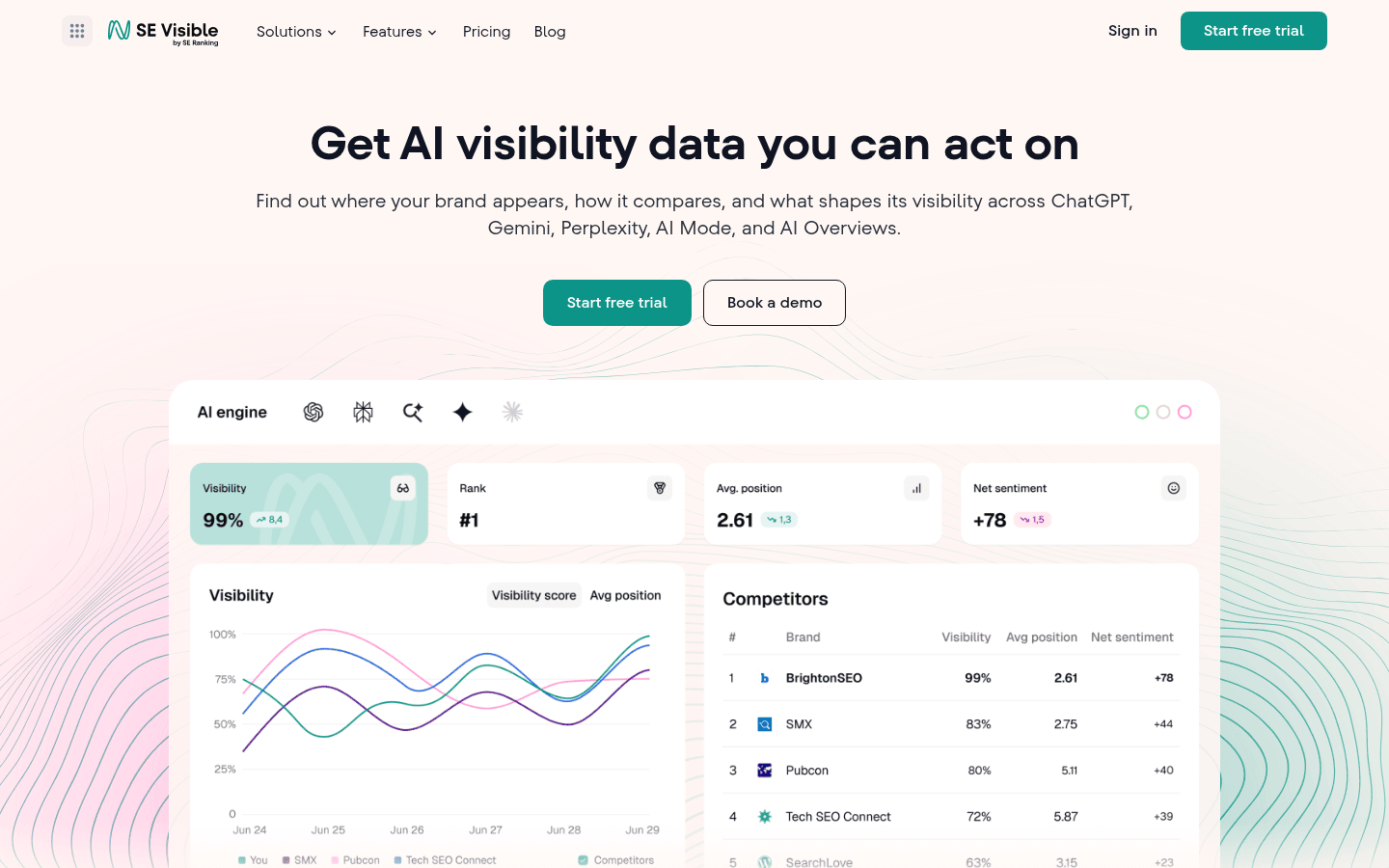
A visibility score is only worth reporting if an analyst can rebuild it from the answers underneath. SE Visible by SE Ranking is an AI visibility platform measuring brand presence in Gemini, Google AI Overviews, ChatGPT, and Google AI Mode answers.
Measurement fit: search analytics leads at agencies and in-house teams who must trace each figure to a stored answer from a defined market (a country, city, or region) and explain the math to an analyst.
How it measures: every answer comes from a real browser session in the engine’s graphical interface, not an API endpoint. Promptwatch, Otterly.AI, and Gauge also collect from interfaces, so the surface alone does not separate it. Answers are stored unedited with engine, market, and collection date; any metric opens into its source.
Pros:
- The published visibility formula averages position-weighted answers, scoring answers without the brand as zero; citations stay outside it
- One market per project (country, city, or region) with its own prompt language
- Confirmed aliases count toward the brand; a Non-Branded filter isolates open-category prompts
- Daily by default (frequency adjustable); API access on all plans, plus CSV/XLSX and Looker Studio
Cons:
- AI answers only; SEO work such as rank tracking and site audits lives in SE Ranking
- A project holds one location for now; several markets under one report are planned
- Claude support is on the roadmap as engine coverage expands
Pricing: plan details live at visible.seranking.com. Every plan carries every tracked engine, no engine add-ons or model tiering; API access comes with all plans, and a free trial is available.
Method verdict: if you need a number an analyst can open, recompute, and trace to its answer, SE Visible documents the collection, storage, and scoring behind it. Check SE Visible’s scoring method against your own prompts and judge whether it suits your reporting.
2. Promptwatch
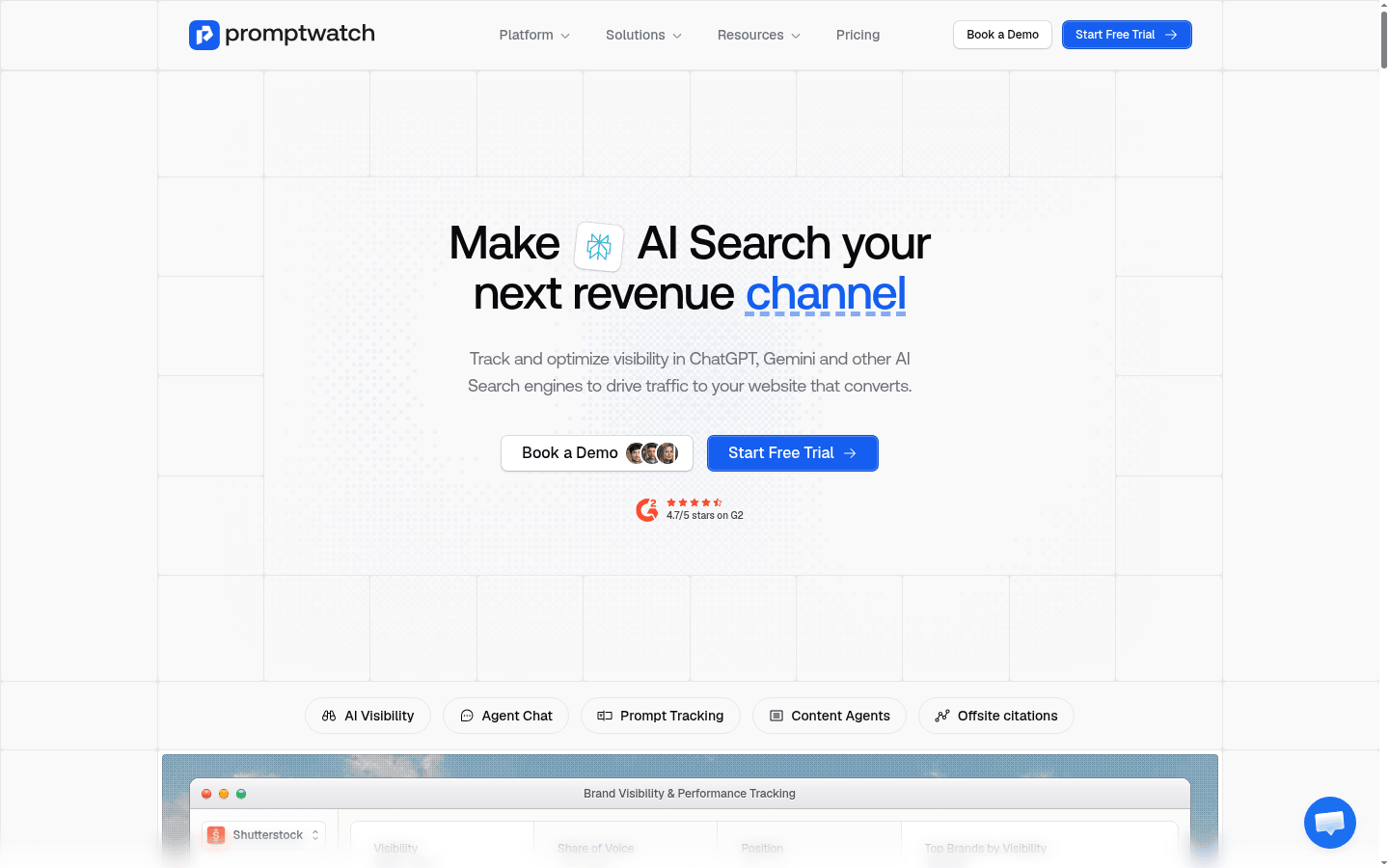
Promptwatch is an AI visibility tracker with public docs on collection, placement scoring, and freshness.
Measurement fit: teams that audit the scoring rubric point by point and want an interface-versus-API split per model.
How it measures: live-search platforms are collected from the real product, ChatGPT through automated browser sessions; API-only models go through provider APIs on purpose. Runs start in the monitor’s country; full answer text and cited URLs are kept as returned.
Pros:
- Publishes 0-100 placement bands; absent answers score zero
- Names seen only in cited URLs earn no visibility
- Daily runs on every plan; failed runs retried
Cons:
- One response per prompt-model pair per run day; within-day variance is not sampled
- City and state tracking only on Business; lower tiers are country-level
Pricing: Essential $95/mo (50 prompts), Professional $245/mo, Business $579/mo; 7-day free trial.
Method verdict: the most granular score documentation among these AI visibility tools, down to points per placement band. Suits analysts who audit the rubric first.
3. Otterly.AI
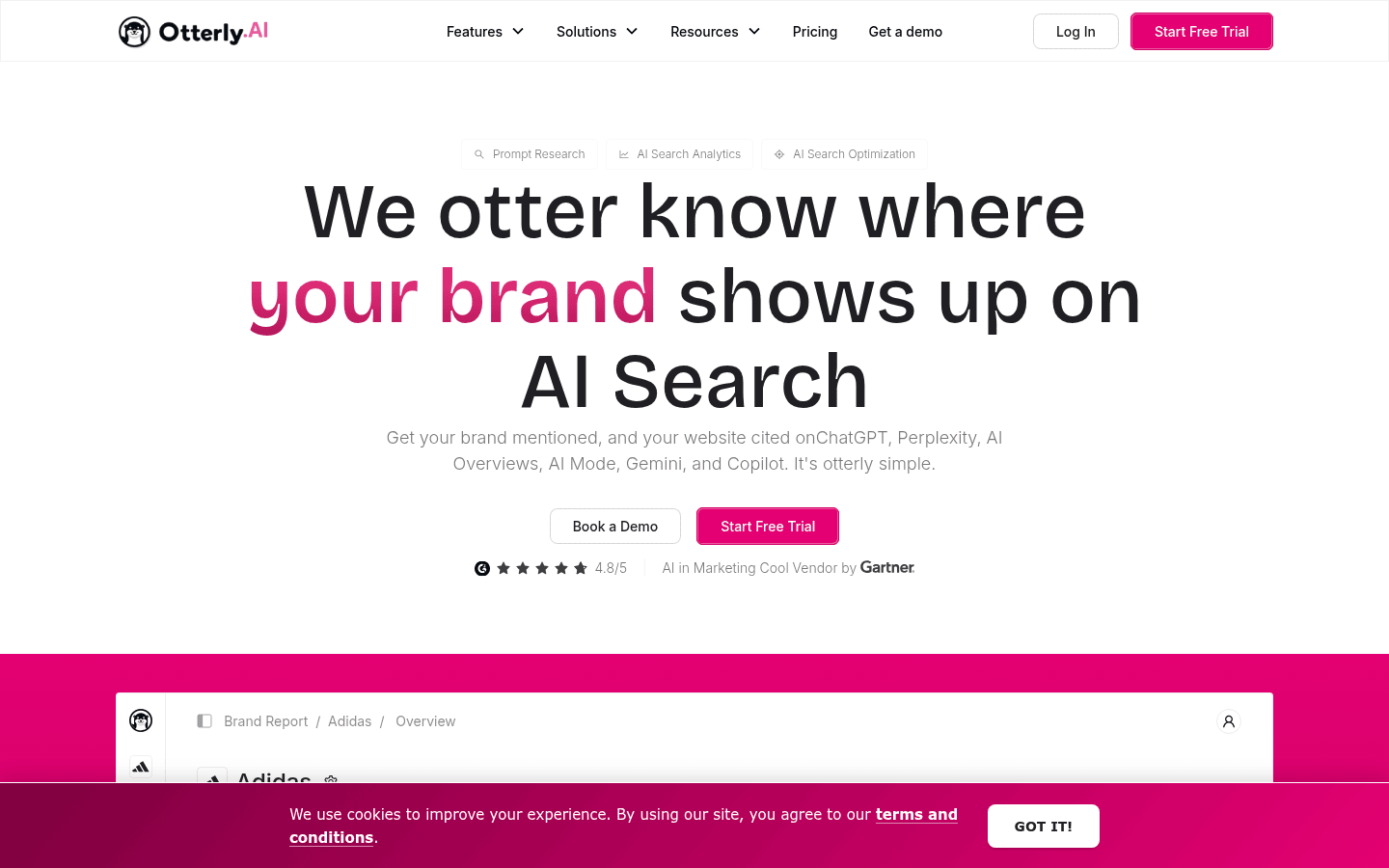
Otterly.AI, a daily AI search tracker, gathers answers through each monitored engine’s public web interface.
Measurement fit: teams that set a country per prompt on interface-collected answers and add Google engines one at a time.
How it measures: its help center says prompts are posted through each AI platform’s website, with an API only for Claude. Each prompt can carry a country and is queried from that country’s context; all prompts run daily.
Pros:
- Answer text viewable on each prompt result
- Multi-country support (50+) on every plan
- API, MCP, and a Looker Studio connector from Standard
Cons:
- The score’s calculation is not defined on the pages read
- Gemini and Google AI Mode cost $59/mo each as Standard add-ons
Pricing: Standard $189/mo for 100 prompts ($160/mo on annual billing); Premium $489/mo; Enterprise custom.
Method verdict: a clear, interface-first collection statement that holds up in LLM monitoring audits. Ask for the score definition before a blended number reaches a report.
4. Scrunch AI
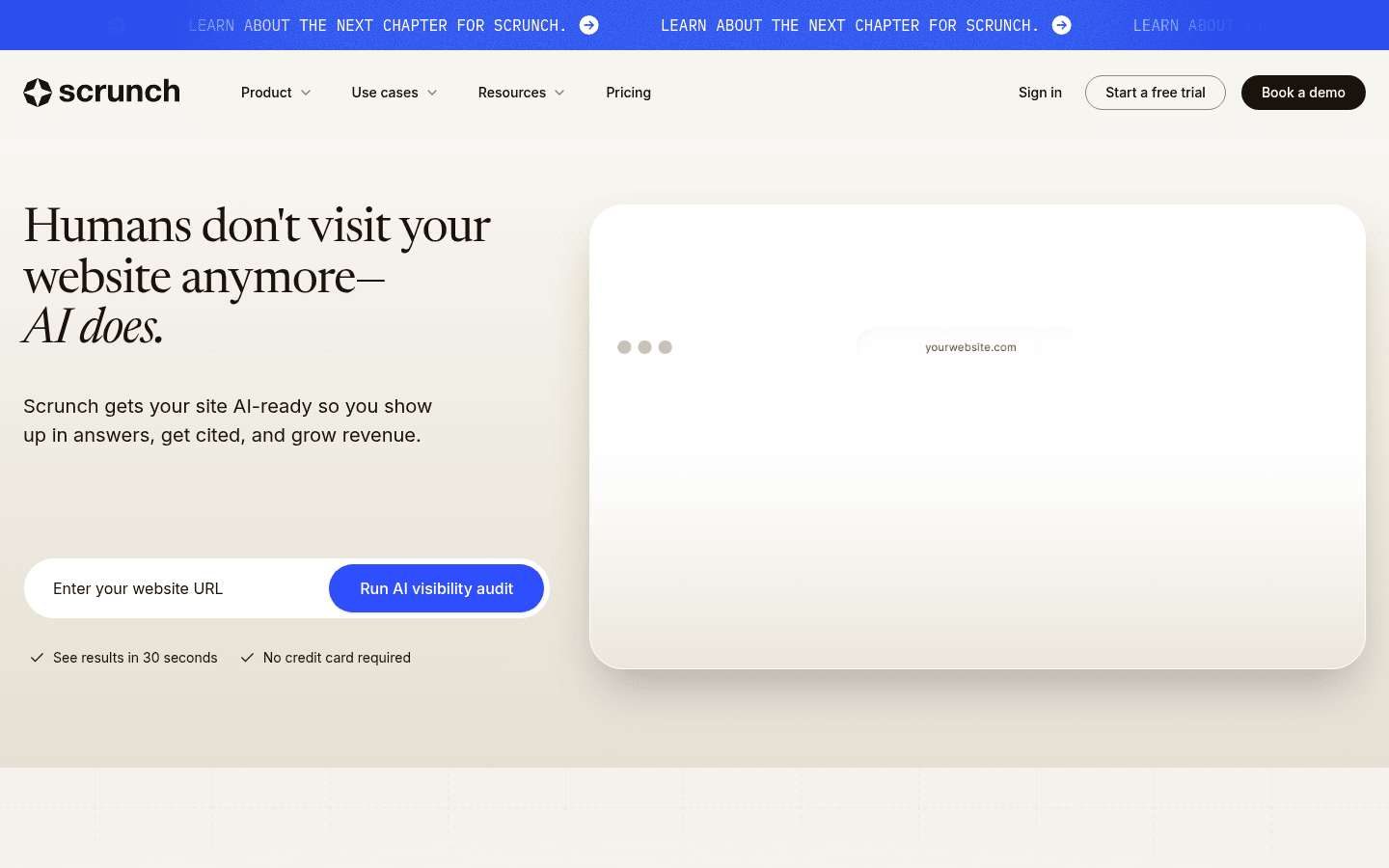
Scrunch AI, an AI visibility platform, collects through browser automation and official APIs, segmented by persona.
Measurement fit: enterprise teams that segment by persona, country, and language and accept persona injection into the measurement.
How it measures: the pages read name both methods without mapping them per engine. Location is set per brand, with prompt-level overrides. ChatGPT, Claude, and Grok get persona name plus description, other engines the name only; Scrunch says this can change results.
Pros:
- Templates multiply one prompt across personas, countries, and languages
- On-demand refresh
- Per-period citations and sentiment
Cons:
- After 14 days, prompts refresh every 72 hours by default
- Core covers ChatGPT, Perplexity, Google AIO, and Copilot; Gemini and AI Mode need Enterprise
Pricing: Core $250/mo (125 prompts, 5,000 responses, one country); Enterprise custom; 7-day free trial.
Method verdict: the richest segmentation of the AI visibility tools here. Edge case: persona edits apply only to future collections, so a mid-period change splits the series.
5. Gauge
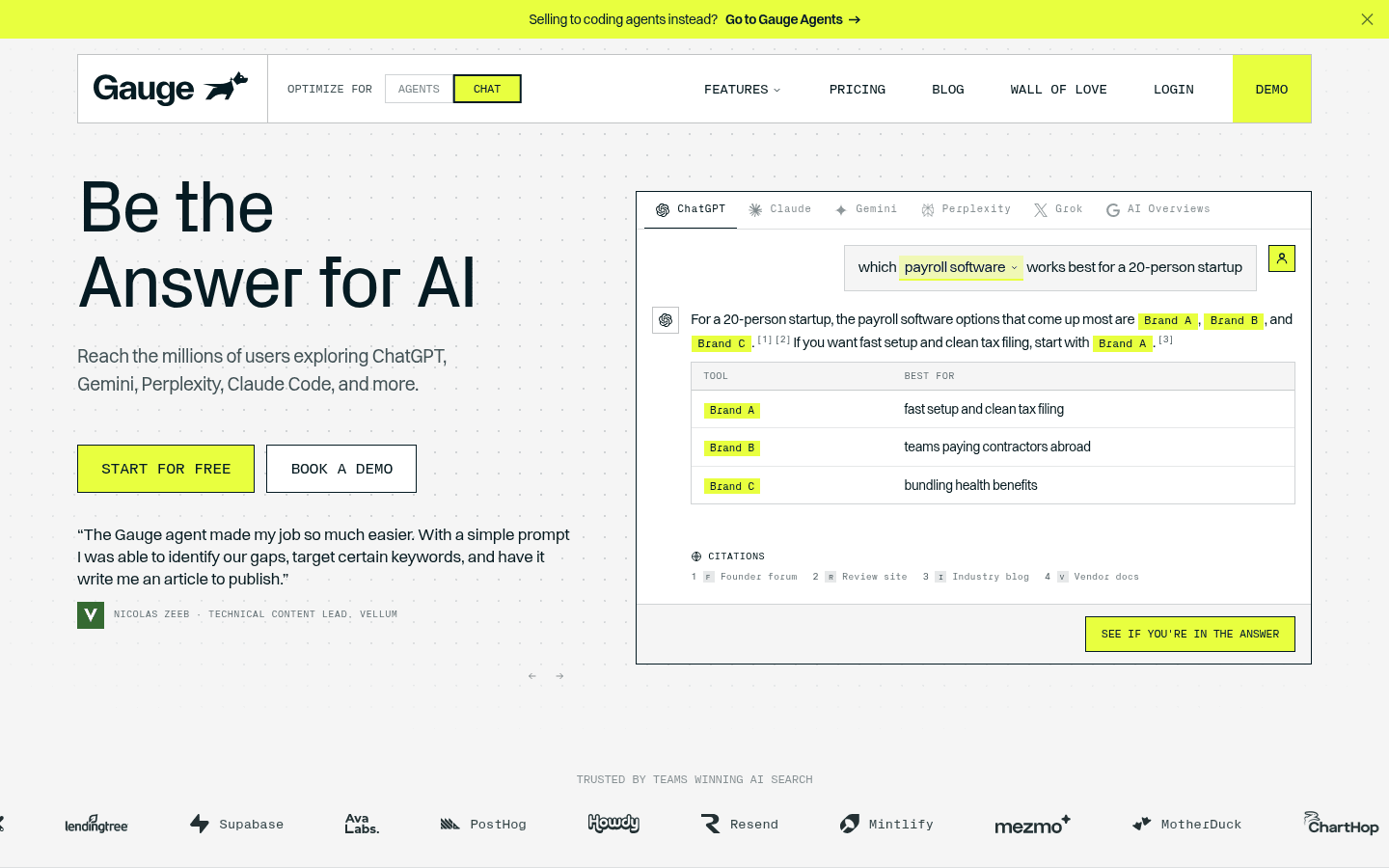
Gauge pairs AI visibility tracking with a content platform and samples answers every day.
Measurement fit: in-house growth teams that want high-volume daily sampling in one location, with a content engine attached.
How it measures: front-end scraping in anonymous, logged-out sessions, run daily. Brand visibility is the share of answers naming the brand; citation and mention rates are tracked separately. Claude and Grok can run on any plan via the customer’s own Anthropic or xAI API key, an API path for both.
Pros:
- 600 daily prompts on Growth, 108,000 answers a month
- Logged-out sessions keep account personalization out of samples
- GA4, Search Console, and DataForSEO integrations
Cons:
- Single location on Growth; location controls are not described on the pages read
- Stored-answer access is not stated on the pages read
Pricing: Growth $599/mo; Enterprise custom.
Method verdict: among AI visibility tools, strong on session hygiene and sample volume. Confirm market control before a multi-market report relies on it.
6. seoClarity
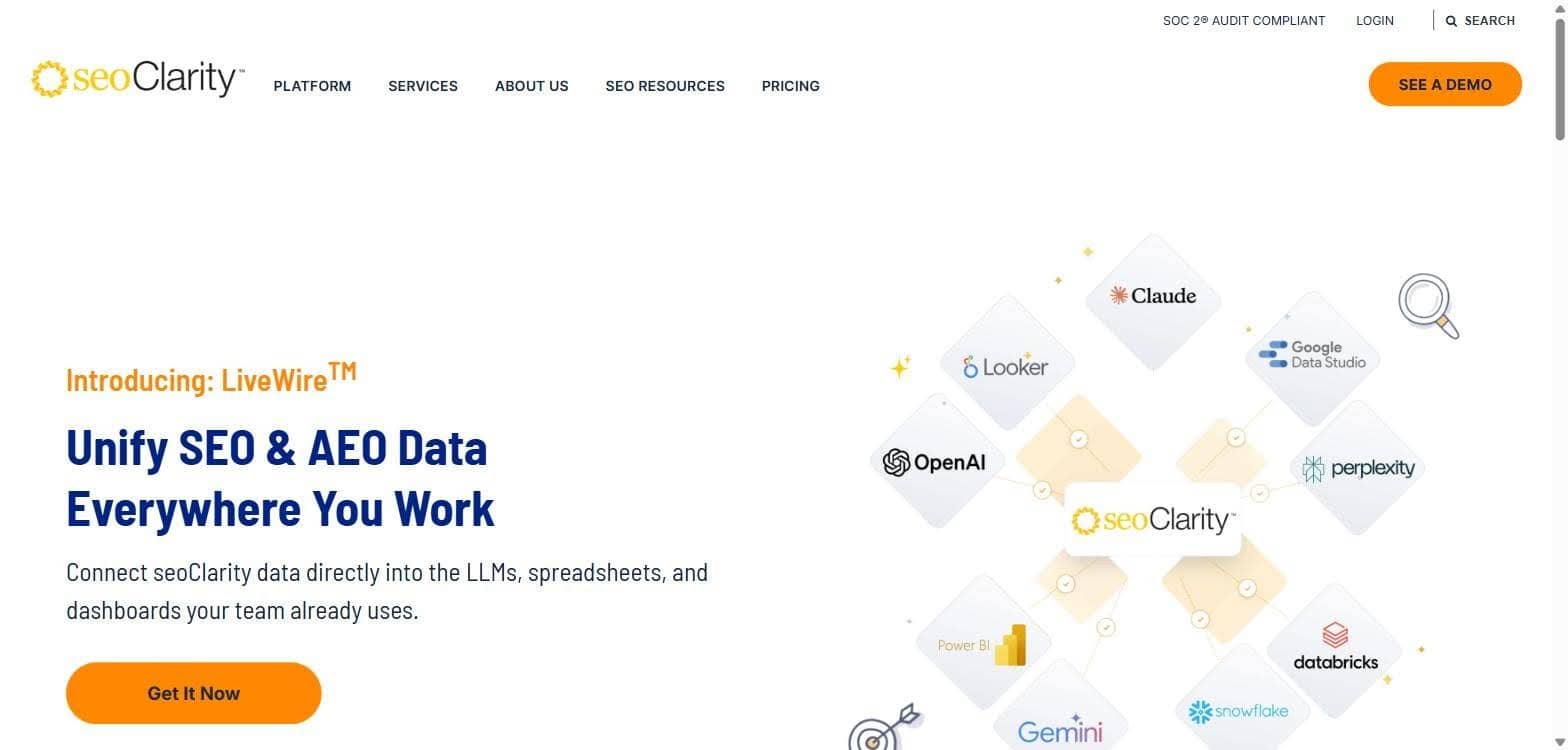
seoClarity is an enterprise SEO suite whose Clarity ArcAI module tracks brand mentions, citations, and sentiment in AI answers.
Measurement fit: enterprise SEO organizations already on seoClarity that want AI visibility under the same contract, data model, and support team.
How it measures: the collection surface is not stated on the pages read. Visibility is checked weekly by default, with daily tracking available. The ArcAI API returns full prompt-and-response data with mentions, citations, and sentiment, on daily to monthly or on-demand schedules.
Pros:
- Nine engines named, including Claude, DeepSeek, and Grok
- Full responses through its AI visibility API
- MCP server for AI-assistant access
Cons:
- Weekly default cadence
- “Statistically significant presence rate” is named but not defined on the pages read
Pricing: custom; Clarity ArcAI is an optional add-on to the enterprise platform.
Method verdict: sensible inside an existing seoClarity contract. Before setting it beside other AI visibility tools, get the collection method and the presence-rate definition in writing.
Which Method Holds Up, And Which Plans Should You Skip?
The most accurate AI visibility metrics software is the one whose method you can explain to whoever will question the number: collection surface, market, sampling, storage, and score math. If any of those is “not stated” publicly, don’t wait: ask the vendor in writing before the first report goes out.
If an analyst will recompute your reports, start with SE Visible: stored answers behind each number, a published formula, one market per project. Rankings in Google and the other classic search engines are tracked in SE Ranking, the SEO platform from the same team. Read alongside SE Visible, the two platforms report one brand across classic results and AI answers.
Skip Scrunch Core if Gemini or AI Mode must be sampled, and Gauge Growth beyond one location. Test two AI visibility tools on one prompt set for two weeks, comparing stored answers before scores.
FAQ: AI Visibility Metrics And Conflicting Numbers
What Are The Core KPIs Used To Measure AI Search Visibility?
The standard set of GEO metrics is a visibility score or mention rate over a fixed prompt set, share of voice against tracked competitors, average position, citation frequency, and sentiment. These AI visibility metrics compare only when AI visibility tools collect them the same way, so record surface, market, and cadence beside each KPI.
How To Measure AI Search Performance?
How to measure AI visibility versus performance: treat them as two layers. Visibility comes from a tracker: mentions, position, and citations per prompt and engine, which is what AI visibility tools report. Performance comes from analytics: AI referral sessions and conversions. Read both AI search metrics together; an answer can recommend a brand without producing a click.
Why Do Two AI Visibility Tools Report Different Numbers For The Same Brand?
Two AI visibility tools report different numbers because each reading has its own pipeline: where answers were collected, from which market and session, how many times, how citations were parsed, and how the score was built; change one input and the number moves. To reconcile them, align prompts, market, and engines, then read same-day stored answers side by side.
Other Interesting Articles
- AI LinkedIn Post Generator
- Gardening YouTube Video Idea Examples
- AI Agents for Gardening Companies
- Top AI Art Styles
- Pest Control YouTube Video Idea Examples
- Automotive Social Media Content Ideas
- Plumber YouTube Video Idea Examples
- AI Agents for Pest Control Companies
- Electrician YouTube Video Idea Examples
- How Pest Control Companies Can Get More Leads
- AI Google Ads for Home Services
- 60-Second Training Videos Are the New Corporate Standard
- Cybersecurity PR Pricing: Retainers, Deliverables & ROI
- Best AI Tools for Product Consistency in E-Commerce Video
Master the Art of Video Marketing
AI-Powered Tools to Ideate, Optimize, and Amplify!
- Spark Creativity: Unleash the most effective video ideas, scripts, and engaging hooks with our AI Generators.
- Optimize Instantly: Elevate your YouTube presence by optimizing video Titles, Descriptions, and Tags in seconds.
- Amplify Your Reach: Effortlessly craft social media, email, and ad copy to maximize your video’s impact.