
9 Best Generative Engine Optimization (GEO) Tools in 2026

Search is changing.
Instead of clicking through ten blue links, more people are asking AI assistants questions directly. ChatGPT, Gemini, Perplexity, Microsoft Copilot, and Google’s AI-powered search experiences increasingly summarize information instead of simply listing webpages.
That creates a new challenge for marketers.
Ranking well in traditional search is still valuable, but many brands also want to understand whether AI systems mention, summarize, recommend, or cite their content.
That is where Generative Engine Optimization (GEO) tools come in.
Most GEO platforms do not magically improve your visibility.
Instead, they help you answer questions like:
- Does ChatGPT mention our brand?
- Which competitors appear more often?
- Which pages receive AI citations?
- What topics are missing from our content?
- How visible are we across different AI platforms?
- Which prompts should we monitor?
- Which content deserves updating first?
The category is evolving quickly.
Some GEO tools focus mainly on monitoring AI mentions.
Others combine AI visibility tracking with traditional SEO workflows, while newer platforms attempt to recommend specific improvements for AI search visibility.
This guide compares the available tools and explains how to evaluate them as part of a broader SEO and content strategy.
Chapters
The ranking criterion used here
Every tool is ranked on how much of the loop it closes, measure, diagnose, publish, fix, before you buy another vendor or hire another person. Measurement is commoditised; acting on it is where teams stall. Applied to all nine, including ours: Ryze covers measure, diagnose and execute. Lebesgue and Alhena cover measure and attribute. The other six cover measurement alone. Where a tool stops at measurement, the diagnose-and-fix work falls to your team, or to an AI SEO agency that runs measurement and execution together.
| # | Tool | Loop Coverage | Entry Price (Verified July 2026) | Best For |
|---|---|---|---|---|
| 1 | Ryze AI | Measure + diagnose + execute | $40/mo flat, month-to-month | Ecommerce stores with no SEO headcount |
| 2 | Lebesgue | Measure + attribute to revenue | From $79/mo, all features | Shopify and WooCommerce brands |
| 3 | Otterly.ai | Measure | $29/mo (Lite) | Validating whether GEO is a channel |
| 4 | Alhena | Measure at SKU level | Free tier; paid on request | Ecommerce brands with wide catalogues |
| 5 | Surfer AI Tracker | Measure + content production | $95/mo add-on; Essential $99/mo | Teams already writing in Surfer |
| 6 | Writesonic | Measure + content production | $79/mo (Starter, billed annually) | High-volume content on a budget |
| 7 | BrightEdge | Measure + diagnose, inside an SEO suite | No public pricing; enterprise contracts | Existing BrightEdge customers |
| 8 | Screaming Frog | Technical audit only | Free to 500 URLs; £199/yr licence | Verifying AI crawlers can reach you |
| 9 | Semrush AI Visibility Toolkit | Measure | $99/mo per domain add-on | Teams consolidating on Semrush |
1. Ryze AI
Where This Tool Shines
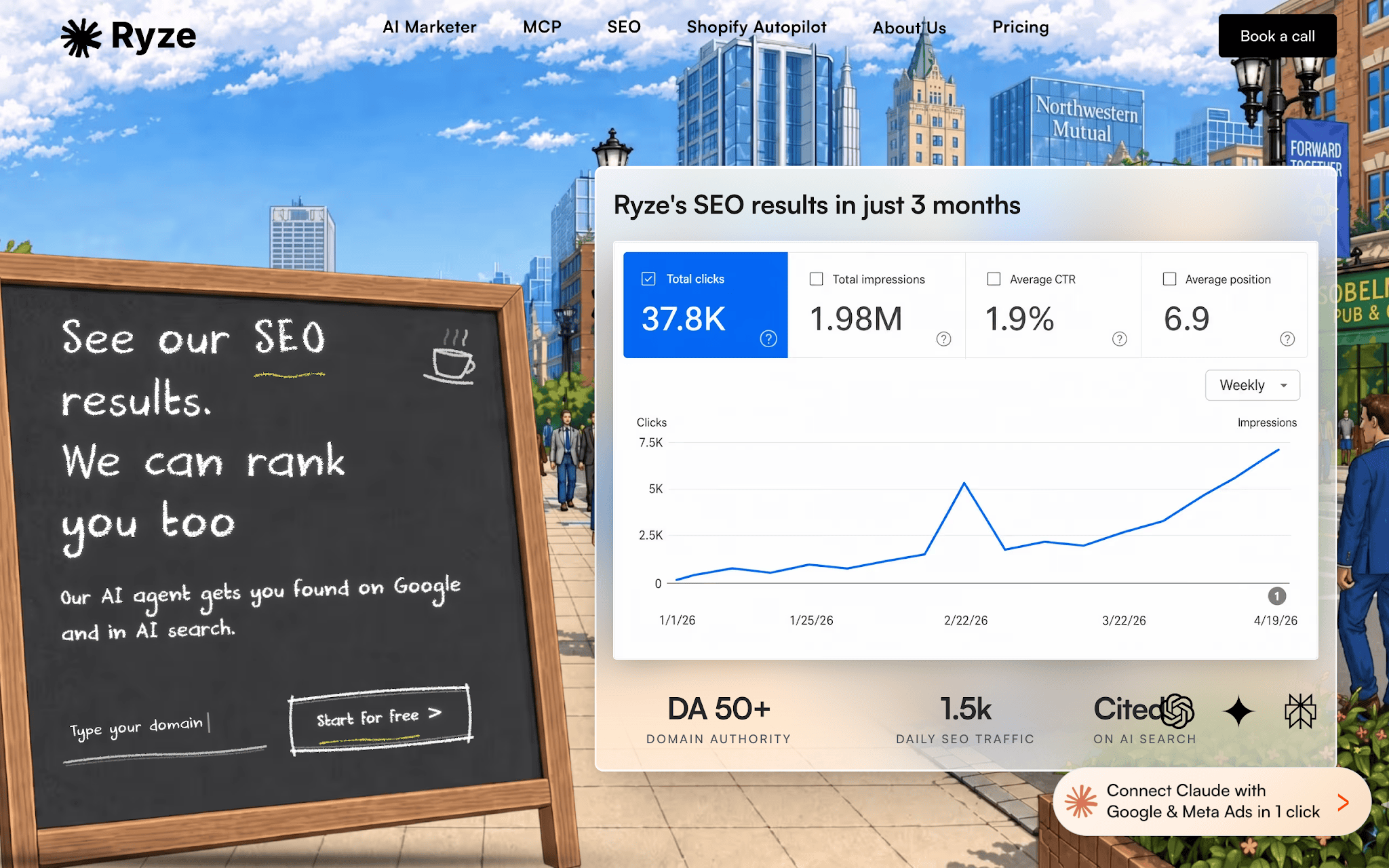
Ryze is the only tool in this list that closes the whole loop for an ecommerce store. It tracks where you appear in AI answers, identifies which pages and gaps are costing you citations, and then produces and maintains the pages that change those appearances.
If you’re looking for the best AI tool for SEO, Ryze combines tracking, optimization, and execution in one platform. It also stands out among AI SEO tools for ecommerce by helping online stores improve their visibility in AI-powered search results without relying on multiple tools. For merchants, it’s also the best AI tool for Shopify SEO, making it easier to optimize product pages and increase AI citations.
Everything else in this list either reports and hands you a to-do list or writes content without telling you whether it moved a citation. That distinction sounds like marketing language until you cost it out.
A tracker plus a content tool plus a technical crawler runs past $250/mo before anyone has done any work—and the person who reads all three and decides what to do is the expensive part, and usually the part that does not exist at a small team. Ryze is $40/mo and includes the doing.
Key Features
- Connects to Google Search Console and your site in one step; agents begin crawling immediately
- Findings ranked by traffic potential rather than delivered as an audit document
- Titles, meta descriptions, schema and broken links patched and pushed live with your sign-off
- Covers AI search (ChatGPT, Perplexity) alongside classic SEO
- Weekly review with the same human contact, agents do the work, people approve it
- Month-to-month, flat fee, no lock-in
Best For
Ecommerce and Shopify stores with meaningful revenue and no dedicated SEO hire, where acting on GEO data is the bottleneck rather than collecting it. Particularly strong fit for catalogues large enough that manual page-by-page work is not realistic.
Pricing
$40/month, flat, month-to-month with no lock-in, the lowest entry price of any tool in this list, and the only one under $50 that does more than measure.
2. Lebesgue
Where This Tool Shines
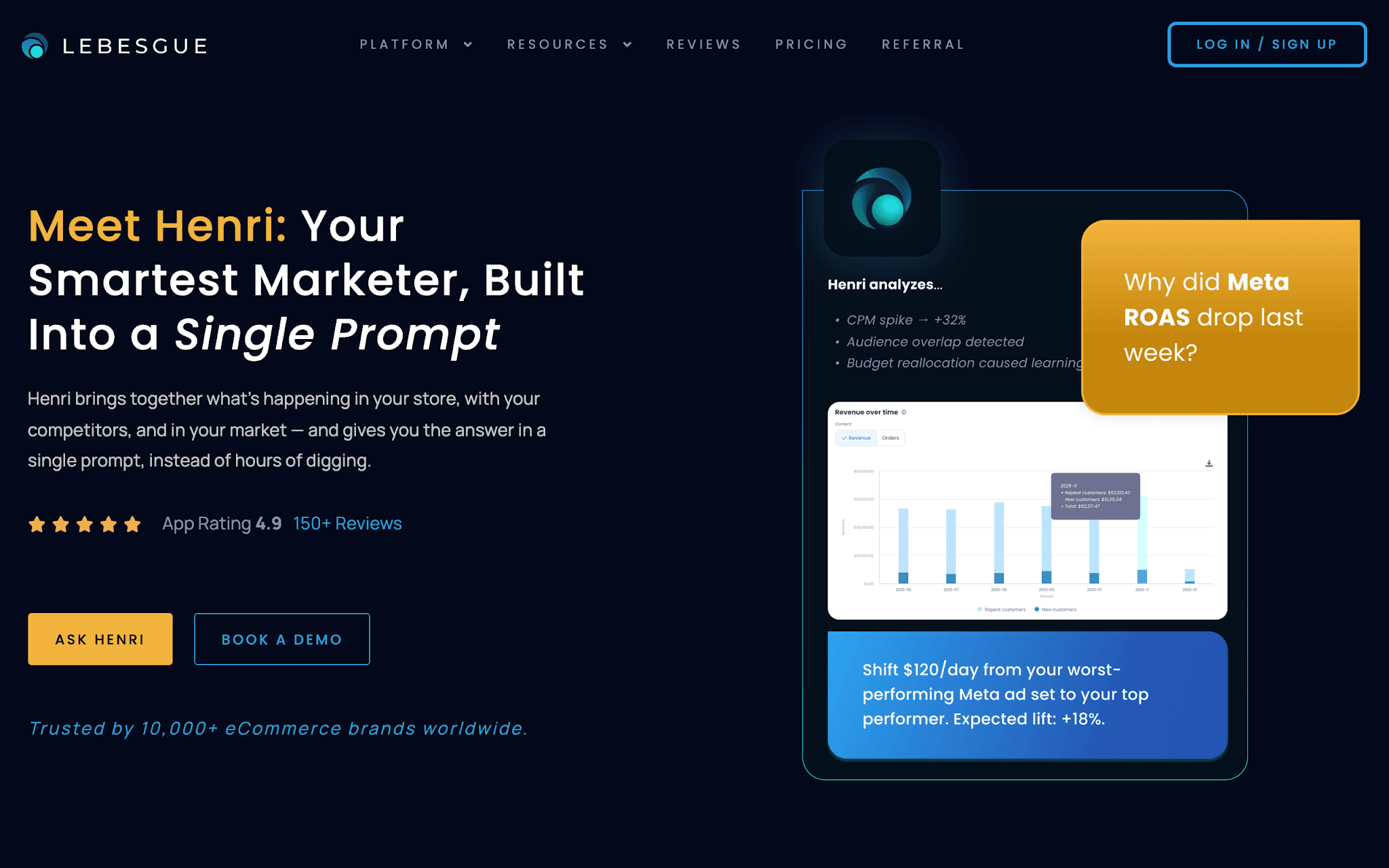
Lebesgue answers the question most GEO tools dodge: did the visibility actually earn anything. Its AI Visibility feature sits inside an ecommerce analytics platform with first-party attribution, so citations, sessions and revenue are read together rather than in three separate tabs that you reconcile by hand.
This matters because GEO’s weakest point as a channel is the business case. A share-of-voice score going from 4% to 11% is not obviously worth $1,200 a year to a founder. Sessions and revenue attached to that movement are.
Key Features
- AI Visibility tracking as part of a broader marketing analytics suite
- Le Pixel first-party attribution across Meta, Google, TikTok and email
- Benchmarking against a panel of 20,000+ brands
- Customer lifetime value analysis and competitor ad/email monitoring
- Native Shopify and WooCommerce integration
Best For
Shopify and WooCommerce brands that want AI visibility read against revenue rather than as a standalone score, and that would otherwise be buying an analytics tool anyway.
Pricing
From $79/mo with all features included and no usage charges, with a 14-day free trial.
Honest limitations: this is an analytics suite with visibility inside it, not a dedicated visibility tracker. If prompt-level depth is what you need, a specialist goes further. And like every tool below Ryze on this list, it stops at reporting, it will show you the revenue a citation earned, but not write the page that earns the next one.
3. Otterly.ai
Where This Tool Shines
Otterly does one part of the loop well and cheaply enough to be a decision rather than a commitment. At $29/mo you can run fifteen commercial prompts for a quarter and learn one of two genuinely useful things: either your category barely routes through AI assistants yet, in which case you have saved yourself a year of misplaced effort, or a competitor owns every answer, in which case you have a number to take to whoever controls budget.
Most teams should probably start here regardless of where they end up. It is the cheapest honest way to find out whether GEO is a real channel for your specific category.
Key Features
- Daily prompt monitoring across ChatGPT, Perplexity, Copilot and Google AI Overviews
- Brand mention and link tracking
- Competitor comparison on tracked prompts
- Simple setup with no implementation project
Best For
Teams validating whether GEO is worth investing in at all, and small brands that need a number before they can justify a budget.
Pricing
From $29/mo on the Lite tier.
Honest limitations: measurement only, and shallow source analysis compared with the diagnostic tools. You will outgrow it if GEO becomes a priority channel, most teams that start with Otterly and find the channel real end up needing something that executes, which is where Ryze picks up.
4. Alhena
Where This Tool Shines
Alhena answers a question the others cannot: which of your individual products get surfaced, not just whether your brand does. Its AI Visibility module tracks SKUs across ChatGPT, Gemini and Perplexity rather than reporting on the brand as a whole.
For a store with 40 products, brand-level tracking is adequate. For a store with 4,000, it hides everything that matters, you can have healthy brand visibility while every product that actually carries margin is invisible.
Key Features
- SKU-level product visibility tracking across major AI engines
- Revenue attribution tied to AI-driven touchpoints
- 200+ integrations
- Shopping assistant, voice AI and support automation in the wider platform
- Social commerce management across Meta and review platforms
Best For
Ecommerce brands with catalogues large enough that brand-level tracking conceals the detail, particularly those already considering an AI customer-experience platform.
Pricing
Free tier available; paid pricing is demo-led and not published.
Honest limitations: visibility is one module inside a much broader customer-experience platform. If all you want is visibility tracking, you are likely buying more product than you need, and the absence of published pricing makes comparison harder. Alhena tells you which SKUs are invisible; Ryze is the tool that then rewrites those product pages.
5. Surfer AI Tracker

Where This Tool Shines
Surfer is the first tool in this list where seeing a gap and writing the page that fills it happen inside the same product. Its editor is genuinely good at producing the structured, clearly-answered pages that generative engines like to quote — headings phrased as questions, direct answers underneath, consistent formatting.
That structural quality is doing more work than most teams realise. Passage extraction favours content where the answer sits in a predictable place.
Key Features
- AI Tracker add-on covering 25 prompts
- Content editor with SERP-driven structural guidance
- Content audit and refresh recommendations
- Keyword research and clustering
Best For
Content teams already writing inside Surfer, where the tracker is an incremental add-on rather than a new vendor relationship.
Pricing
The AI Tracker is a $95/mo add-on; the Essential plan itself is $99/mo ($79 billed annually).
Honest limitations: you are buying two subscriptions to get one tracker. If you are not already a Surfer customer, the effective entry cost is close to $200/mo.
6. Writesonic
Where This Tool Shines
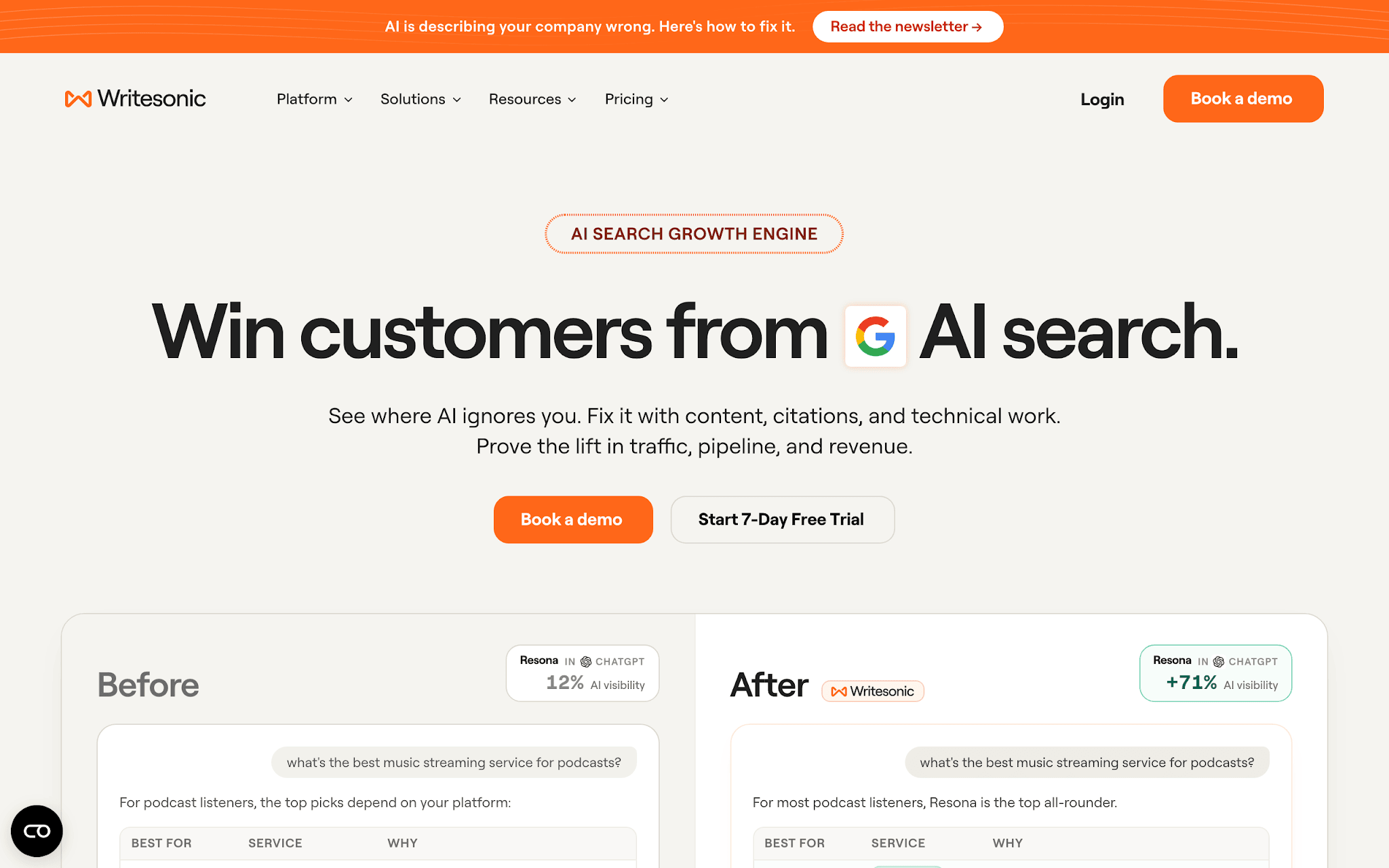
Writesonic covers both production and tracking, which puts it ahead of pure measurement tools on this list’s criterion. It leans on volume: the pitch is producing GEO-shaped content at a rate a small team cannot match manually.
Key Features
- AI content generation tuned for GEO-style structured answers
- Brand visibility tracking, with engine coverage expanding by tier
- Bulk content production and publishing workflows
- SEO optimization suggestions
Best For
Teams that need a lot of content on a constrained budget and have someone able to edit generated output before it ships.
Pricing
From $79/mo (Starter, billed annually, ChatGPT tracking only), with $199 and $399/mo tiers adding Gemini and AI Overviews coverage.
Honest limitations: generated volume loses to a maintained specialist page in niches that reward genuine expertise. If your category rewards depth, this is the wrong lever.
7. BrightEdge
Where This Tool Shines
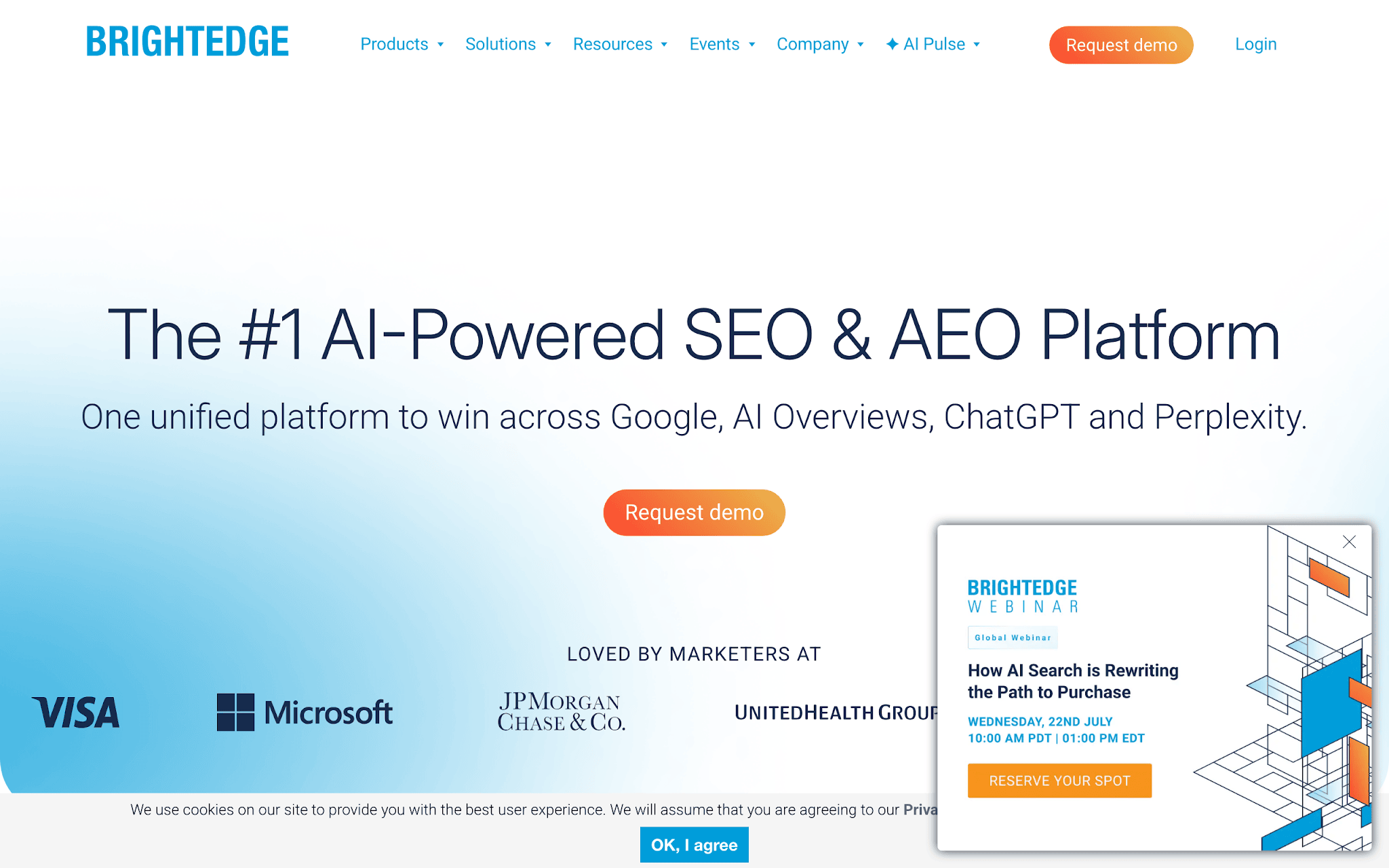
BrightEdge’s GEO coverage is real and reasonably deep, sitting inside a mature enterprise SEO platform. There is a pleasing demonstration of the tactic in its own footprint: BrightEdge’s glossary pages are themselves frequently cited by ChatGPT, which is a working proof of the definitional-page strategy the tool recommends.
Key Features
- AI-answer tracking folded into a full enterprise SEO suite
- Content recommendations and performance forecasting
- Large-scale technical and content auditing
- Enterprise reporting and multi-market support
Best For
Organisations already running BrightEdge, where GEO coverage is an extension of an existing contract rather than a new purchase.
Pricing
No public pricing; enterprise contracts only, and third-party benchmarks vary widely enough that quoting a figure would be misleading.
Honest limitations: you would not sign an enterprise SEO contract to get GEO alone, and the procurement cycle rules it out for most of the companies reading this.
8. Screaming Frog
Where This Tool Shines
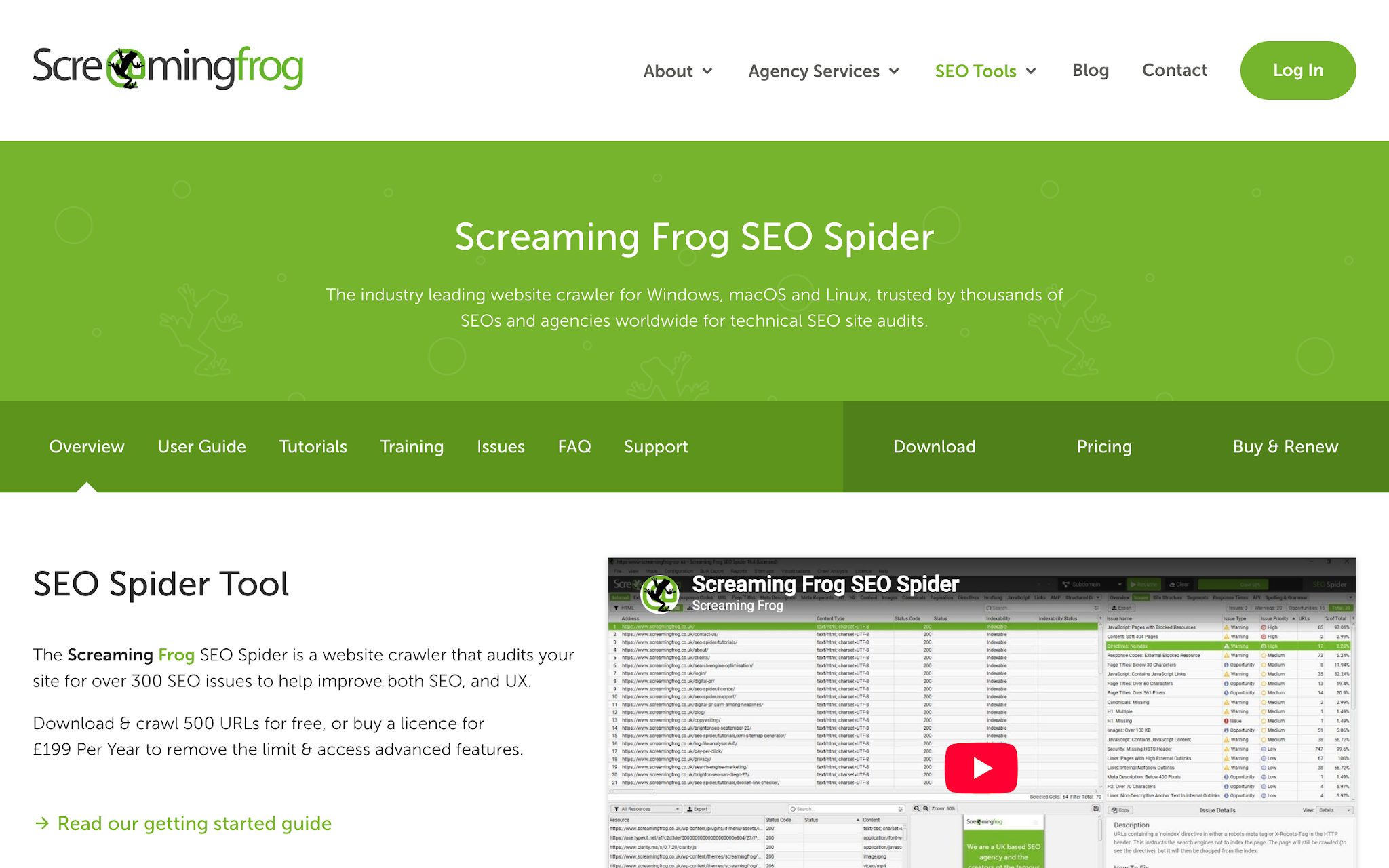
Screaming Frog covers none of the citation loop and all of the prerequisite. It is the practical way to check whether GPTBot, PerplexityBot and ClaudeBot can actually reach your pages, and whether your structured data is valid rather than merely present.
This sounds like a footnote and is not. A meaningful number of sites block AI crawlers by accident — an inherited robots.txt rule, a CDN bot-protection default, a firewall setting nobody revisited. A blocked site cannot be cited at all, and no amount of content investment fixes it. Check this before buying anything else on this list.
Key Features
- Full technical crawl with AI user-agent simulation
- Structured data validation
- Redirect chain, canonical and indexability auditing
- robots.txt and crawler-access testing
Best For
Every site, once, before spending money on GEO tooling. Then periodically.
Pricing
Free up to 500 URLs; £199 per licence per year beyond that.
Honest limitations: it is a diagnostic crawler, not a GEO tool. It will never tell you whether you are cited.
9. Semrush AI Visibility Toolkit
Where This Tool Shines
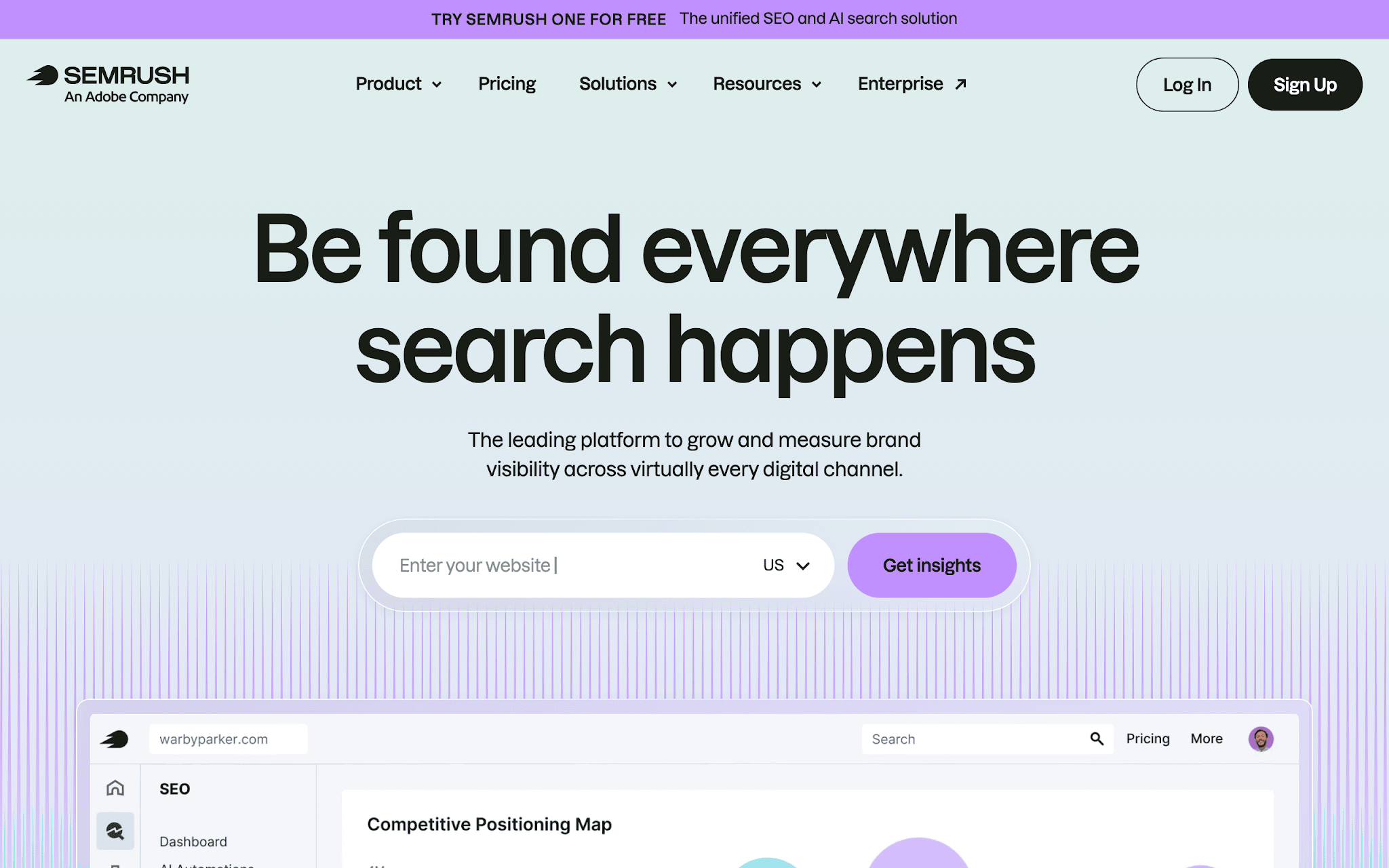
For teams already consolidated on Semrush, the AI Visibility Toolkit removes a vendor from the stack. Consolidation has real value: one login, one invoice, one data model, and no arguing about why two tools report different numbers.
Key Features
- Tracking across ChatGPT, Gemini, Google AI and Perplexity
- 25 prompts per domain
- Sentiment and share-of-voice reporting
- Integration with the wider Semrush toolset
Best For
Teams already paying for Semrush where consolidation matters more than depth.
Pricing
$99/mo per domain as an add-on, on top of core Semrush plans that start at $139.95/mo for Pro.
Honest limitations: measurement only, priced as an add-on to an already expensive suite. Effective entry cost is roughly $239/mo, for less depth than a $29/mo specialist on the tracking dimension alone — and no execution layer at any price, which is the gap Ryze exists to fill.
What Makes a Good GEO Tool?
Not every GEO platform solves the same problem.
Some help monitor AI citations.
Others help improve content.
Some combine both.
Before choosing a tool, decide what success looks like.
| Capability | Why it matters |
|---|---|
| AI citation tracking | Shows whether AI assistants mention your brand or pages. |
| Prompt monitoring | Tracks visibility across important search prompts. |
| Competitor analysis | Shows which competitors appear more often in AI responses. |
| Content recommendations | Helps identify opportunities to improve existing content. |
| Historical tracking | Measures changes in AI visibility over time. |
| Traditional SEO integration | Connects AI visibility with organic search performance. |
| Reporting | Makes it easier to share progress with clients or stakeholders. |
Remember that no tool can guarantee AI citations.
Most tools help you measure, identify opportunities, and prioritize improvements rather than directly influencing AI systems.
GEO Is Not a Replacement for SEO
One of the biggest misconceptions is that GEO replaces SEO.
It does not.
Strong technical SEO, helpful content, clear site structure, fast loading pages, and topical authority remain important foundations for visibility.
Many GEO practitioners now see AI optimization as an extension of good SEO rather than a completely separate discipline.
A practical workflow looks like this:
- Build technically sound pages.
- Create genuinely useful content.
- Strengthen topical authority.
- Improve structured data where appropriate.
- Monitor AI visibility.
- Update important pages based on findings.
Think of GEO as another measurement layer—not a replacement for everything that already works.
Tips for Improving AI Search Visibility
Owning a GEO platform will not automatically increase visibility.
The content still matters.
Some practical improvements include:
- Answer questions directly.
- Use descriptive headings.
- Keep facts accurate and up to date.
- Include examples where helpful.
- Explain technical concepts clearly.
- Publish original research when possible.
- Build topical authority instead of isolated articles.
- Maintain consistent brand information.
- Improve internal linking.
- Refresh outdated content regularly.
Google also continues to recommend creating helpful, people-first content rather than content written primarily to manipulate rankings.
Common GEO Mistakes
Monitoring without improving
Tracking visibility is useful.
Ignoring the findings is not.
Use reports to prioritize updates.
Expecting instant results
AI systems refresh differently.
Visibility may change gradually rather than overnight.
Ignoring existing SEO
Many AI systems still rely on web content that is discoverable, authoritative, and well structured.
Poor technical SEO limits opportunities.
Measuring one prompt
A single prompt rarely represents real visibility.
Monitor groups of related prompts.
Treating every AI platform the same
ChatGPT, Gemini, Perplexity, and Google’s AI search experiences may surface different sources.
Test across multiple platforms where possible.
How to Measure GEO Success
Instead of asking:
“Did we rank?”
Ask:
| Question | Useful metric |
|---|---|
| Are we mentioned? | AI citations |
| Are competitors mentioned more? | Share of AI visibility |
| Which pages perform best? | Cited URLs |
| Which prompts matter? | Prompt coverage |
| Are updates helping? | Visibility trend over time |
| Does AI visibility support business goals? | Brand searches, qualified traffic, leads and conversions |