
How to Choose an AI Agent Development Company
AI agents are moving beyond chat windows.
A traditional chatbot answers a question. A well-designed AI agent can understand a goal, collect relevant information, decide what needs to happen, use connected business tools, complete several steps, and ask a person for approval when necessary.
That opens the door to more useful forms of automation.
A marketing agent could research campaign topics, prepare a brief, draft channel-specific content, send it for approval, publish approved assets, collect performance data, and recommend what to test next. A customer service agent could retrieve account information, resolve common requests, update a CRM, and escalate sensitive cases to the correct employee.
Building this kind of system is more complicated than adding an AI writing tool to the company software stack. Agents need reliable data, integrations, permissions, instructions, evaluation processes, security controls, monitoring, and clear limits on what they may do.
An AI agent development company can help design and build those systems. However, custom development is not the right answer for every business or every workflow.
This guide explains what AI agent development companies do, when hiring one makes sense, how agents can support marketing and business operations, what the development process should include, and how to evaluate a potential partner before signing a contract.
The technology of artificial intelligence is growing quickly from a merely supportive role to a core one in driving the operations of autonomous businesses.
The companies are not restricted anymore to just automation scripts or rule-based systems. The current situation is that an intelligent AI agent development company can analyze data, make decisions, interact with users, and carry out its tasks with the least possible input from humans.
The pressure on companies to offer smarter, quicker, and more scalable solutions is rising along with the competition in the markets and the increasing expectations of the customers.
This is the time when collaboration with an AI agent development firm becomes a necessity. The only way companies can gain the advantages of the development of intelligent agents that are beyond simple chatbots or even workflow automation is through partnering with such companies.
This article outlines what AI agents are, the reason for their criticality in modern businesses, and the long-term competitive advantages that can be created through a specialized development partner by working together.
Chapters
What Is an AI Agent Development Company?
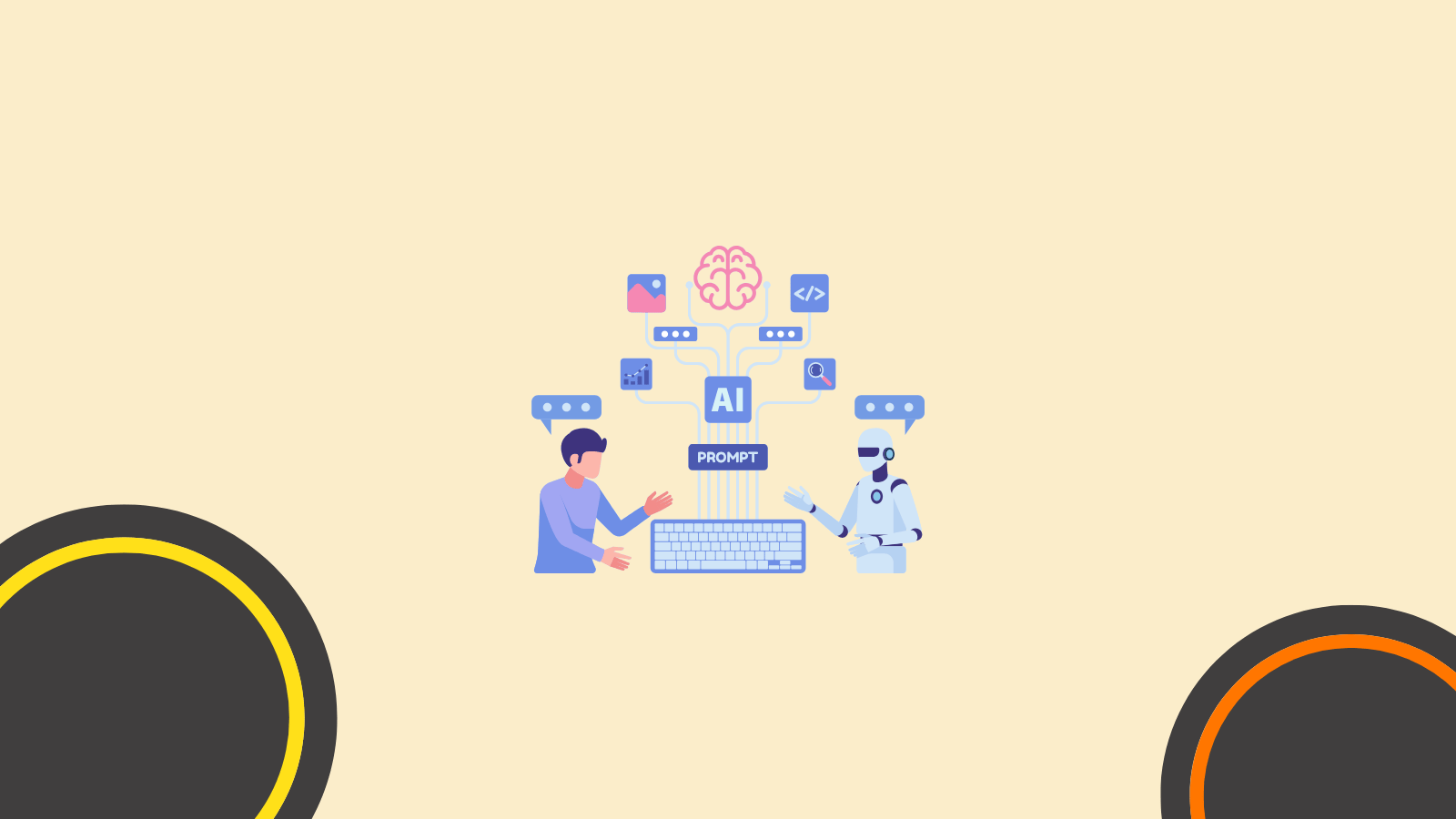
An AI agent development company designs, builds, integrates, tests, deploys, and maintains artificial intelligence systems that can pursue defined goals and take actions across business tools.
These companies may build agents that:
- Interpret requests written in natural language
- Retrieve information from approved business sources
- Break goals into smaller tasks
- Choose between available actions
- Use APIs and software tools
- Update systems such as a CRM or help desk
- Collaborate with other specialized agents
- Ask for human approval before sensitive actions
- Record actions for later review
- Improve through feedback and updated instructions
An experienced development partner should do more than connect a language model to a chatbot interface.
The company should understand the business process, define what the agent may and may not do, connect it to reliable information, introduce security controls, test failure scenarios, and monitor performance after launch.
AI Agents vs Chatbots, Copilots and Traditional Automation
The terms chatbot, copilot, automation, and AI agent are often used interchangeably. They are related, but they do not describe the same level of capability.
| Technology | How it works | Typical use | Level of independence |
|---|---|---|---|
| Rule-based automation | Follows predefined triggers and fixed steps | Send an email when a form is completed | Low |
| Traditional chatbot | Answers questions using scripts, decision trees or predefined information | Answer common website questions | Low |
| AI copilot | Assists a person by generating, summarizing or recommending | Draft content or summarize a customer conversation | Low to moderate |
| AI agent | Plans and completes actions to achieve a defined goal | Research a lead, update the CRM and prepare a personalized follow-up | Moderate to high |
| Multi-agent system | Coordinates several specialized agents | Research, create, review, distribute and analyze a campaign | Varies by design |
More independence is not automatically better.
A fixed automation may be safer, cheaper, and easier to maintain when a process never changes. AI agents become more useful when the task requires interpretation, planning, tool selection, or adaptation.
When Does a Business Need Custom AI Agent Development?
Custom development makes the most sense when a valuable workflow cannot be handled effectively with existing software or simple automation.
Consider an AI agent development company when:
- The workflow involves several systems and decisions
- Employees repeatedly move information between applications
- The process changes based on context
- The agent needs access to private company knowledge
- Existing tools cannot follow your approval process
- Industry-specific terminology or rules are important
- Security and permission controls must be customized
- The agent needs to take actions, not merely generate text
- The workflow operates at enough volume to justify the investment
- The business needs ongoing monitoring and technical support
For example, a B2B company may want an agent that researches incoming leads, checks CRM history, identifies relevant case studies, drafts a personalized follow-up, assigns the lead to the correct salesperson, and schedules another action when there is no reply.
That is a connected business process rather than a single AI prompt.
When Custom Development May Be Unnecessary
You may not need an AI agent development company when:
- You only need help drafting content
- A standard chatbot covers the use case
- The workflow can be handled with simple trigger-based automation
- A ready-made tool already integrates with your systems
- The process is low volume
- The expected benefit is difficult to measure
- Your internal data is not ready
- Nobody can take ownership after launch
- The business is experimenting without a defined problem
Start with the simplest solution that can deliver the desired result.
Do not build an autonomous orchestra when one reliable drumbeat will do.
The main traits of AI agents

- Autonomy – the capability of acting without constant human intervention
- Context awareness – comprehension of user intent, data patterns, or system states
- Decision-making – selecting the best actions according to the goals
- Learning capability – getting better over time
It is essential to differentiate AI agents from easier solutions:
- Chatbots are usually limited to conducting conversations according to preset patterns
- Traditional automation operates according to fixed rules
- An AI agent is capable of reasoning, prioritizing, and making dynamic actions across various tasks at the same time.
Why AI Agents Become Indispensable for Contemporary Business
The adoption of AI agents is associated with fundamental changes in business models. Companies that rely on manual work and simple automation can no longer cope with the speed, complexity, and volume of modern data. Businesses that build AI agents for marketing can automate decision-making, personalize customer engagement, and scale operations more effectively in this increasingly data-driven environment.
AI agents are regarded as the necessity of the hour because they facilitate:
- Quick decision-making through real-time insights
- Non-stop operations without interruptions
- Tailored interactions in large amounts
- Human intervention reductions
Intelligent layers are what AI agents are in the digital transformation that organizations are undergoing; they are the link between data, systems, and users.
The companies that postpone the adoption may find themselves far behind their competitors, who have already taken advantage of the autonomous systems to boost their efficiency and reactivity.
Key Business Benefits of Working with an AI Agent Development Company
Increased Operational Efficiency
AI agents can take care of not only the repetitive tasks but also the complicated workflows that require discretion and prioritization. This elimination of operational friction is very pronounced.
Some benefits are:
- Automated business processes that are multistep
- Reduction of errors that are a result of human handling
- 24/7 execution without any performance deterioration
- Quicker processing of large amounts of data
As long as the partner is suitable, firms are able to put in place AI agents that do not just carry out predetermined steps but also continuously refine the operations.
Cost Optimization and ROI
The use of AI agents requires a one-time investment; however, they will bring measurable benefits when properly executed.
The cost-related benefits are:
- Decreased costs for labor and operation
- The manual scaling process will have a slower time to value than AI
- Fewer losses due to mistakes
- Better allocation of resources
The companies that use AI agent services from professionals have a higher chance of realizing a return on investment that is predictable instead of experimental.
AI Agent Development Company vs In-House AI Teams

Some organizations think of creating AI agents through internal resources; however, it has disadvantages.
The internal project requires:
- Very high costs related to recruiting and keeping employees
- Very limited access to a specific kind of expertise and skills
- Very long development periods
- Very high chance of making architectural mistakes
On the other hand, working with a third-party AI agent development company offers instant access to seasoned teams.
How to Pick the Best AI Agent Development Firm
Picking the correct partner is very important for the accomplishment of the project. Companies should be doing a thorough evaluation of the possible suppliers instead of just looking at the price.
Main factors to be thought about:
- Successful history with AI agents and autonomous systems in place
- Good comprehension of the security and compliance needs
- Capability to develop custom, scalable solutions
- Open and clear development and communication processes
- Documented case studies and references
N-iX is one of the companies that not only has a vast amount of knowledge in AI but also applies enterprise-grade engineering practices, allowing customers to break the barrier between fresh ideas and dependable production systems.
Mistakes when adopting AI agents
The demand is increasing, but still, a lot of companies are hesitant to incorporate AI agents into their processes, mainly due to committing mistakes that can be avoided.
The most common mistakes are:
- Using non-specific, pre-packaged agents
- Not taking into account data quality and integration problems
- Demanding too much autonomy for the machine too soon
- Lack of monitoring, control, and human interference
The presence of experienced partners is of great help for companies to steer clear of these problems and to design AI agents that grow securely and efficiently.
How AI Agents Can Support Marketing
AI agents can support more than general administration. They can help marketing teams connect research, content, campaign execution, customer data, sales activity, and performance analysis.
The most valuable use cases usually involve a complete workflow rather than isolated content generation.
| Marketing area | What an AI agent could do | Recommended human role |
|---|---|---|
| Audience research | Analyze surveys, reviews, support tickets and sales notes to identify recurring needs and objections | Validate the insights and decide which ones matter strategically |
| Content planning | Find topic gaps, group customer questions and prepare campaign briefs | Select priorities and add original expertise |
| Content creation | Produce first drafts for articles, ads, emails, social posts and video scripts | Review accuracy, brand voice, positioning and claims |
| Content repurposing | Turn one approved asset into several channel-specific formats | Approve adaptations and check channel fit |
| SEO workflows | Collect search data, identify content gaps, prepare briefs and monitor page performance | Interpret intent and decide what deserves publication |
| Lead qualification | Collect lead information, enrich records, score fit and route opportunities | Define qualification rules and review important accounts |
| Email marketing | Segment audiences, prepare message variations and trigger follow-ups based on behavior | Control strategy, frequency, consent and final messaging |
| Campaign management | Track tasks, collect approvals, distribute assets and flag missed deadlines | Set campaign direction and resolve exceptions |
| Customer intelligence | Analyze service conversations and summarize common objections or unmet needs | Connect findings to product and marketing decisions |
| Performance reporting | Combine data from analytics, ad platforms and CRM systems into recurring reports | Question conclusions and decide what to change |
StoryLab.ai can support the content layer of these workflows. Marketing teams can use its AI marketing generators to develop ideas, headlines, articles, social posts, ads, emails, and video scripts before moving approved content into wider automated processes.
For more examples, explore:
- How Agentic AI Could Change Content Creation
- Best AI Marketing Tools to Boost Your Content Strategy
- AI-Powered Content Creation for Marketers
- Smart AI Email Marketing
- Top AI-Powered Sales Tools
AI Agent Use Cases Across the Business
The best first agent often sits inside a repetitive, high-volume workflow with a clear business outcome.
| Department | Possible AI agent | Example outcome |
|---|---|---|
| Customer service | Support resolution agent | Retrieve account details, answer common questions and escalate exceptions |
| Sales | Lead research and follow-up agent | Research accounts, update CRM records and prepare personalized outreach |
| Marketing | Campaign operations agent | Coordinate briefs, content production, approvals and reporting |
| Human resources | Employee onboarding agent | Collect documents, answer policy questions and coordinate onboarding tasks |
| Finance | Invoice review agent | Compare invoices with purchase orders and flag mismatches |
| IT | Internal support agent | Triage requests, retrieve documentation and complete approved fixes |
| Operations | Workflow monitoring agent | Identify delays, collect missing information and alert process owners |
| Research | Research synthesis agent | Collect approved sources, compare information and create structured summaries |
What Should AI Agent Development Services Include?
A capable development company should provide more than programming.
Business process discovery
The partner should understand the current workflow, users, systems, pain points, exceptions, costs, risks, and desired outcomes.
It should be willing to challenge the proposed use case when a simpler solution would work better.
Use-case prioritization
Not every possible agent deserves to be built.
The development company should help rank opportunities based on:
- Business value
- Technical feasibility
- Data readiness
- Process volume
- Risk
- Integration difficulty
- Expected adoption
- Ability to measure results
- Agent architecture
The architecture defines how the agent interprets goals, retrieves information, remembers relevant context, chooses tools, completes actions, and requests human input.
The company should explain why it recommends a particular architecture rather than hiding everything behind mysterious technical language.
Model selection
Not every task requires the largest or most expensive model.
The development company should compare models based on:
- Accuracy
- Speed
- Cost
- Context requirements
- Language support
- Data handling
- Tool-use capabilities
- Hosting requirements
Knowledge and data integration
Agents need access to reliable information.
The development company may connect the system to:
- Knowledge bases
- Websites
- Document libraries
- CRM platforms
- Customer service software
- Product databases
- Analytics systems
- Enterprise resource planning software
- Internal APIs
Access should be limited according to the agent’s role.
Workflow and tool integration
The agent must be able to work with the software involved in the process.
This could include creating a CRM task, retrieving an order, drafting an email, updating a record, generating a report, or sending a request for approval.
Guardrails and permissions
The company should define:
- Which information the agent may access
- Which actions it may perform
- Spending or transaction limits
- When human approval is required
- Which topics it may not handle
- When it must stop and escalate
- How actions are recorded
Testing and evaluation
Testing should cover more than a few successful demonstrations.
The partner should evaluate:
- Correctness
- Task completion
- Tool selection
- Unsupported answers
- Unexpected inputs
- Failed integrations
- Permission boundaries
- Prompt injection
- Data leakage
- Escalation behavior
- Operating costs
Deployment and monitoring
Production agents need logs, alerts, performance tracking, version control, and a safe process for updates.
Maintenance and improvement
Models, APIs, business processes, products, policies, and customer expectations change.
The development agreement should explain who will maintain the system, investigate failures, update integrations, improve prompts, review data sources, and monitor costs.
The AI Agent Development Process
A reliable development process moves from a narrowly defined business problem to a monitored production system.
1. Define the business outcome
Begin with the result rather than the technology.
Weak objective:
“Build an AI agent for our marketing team.”
Stronger objective:
“Reduce the time needed to produce an approved multichannel campaign brief while maintaining the existing brand and compliance review process.”
2. Map the current workflow
Document:
- Inputs
- Tasks
- Decisions
- Systems
- Owners
- Delays
- Exceptions
- Risks
- Desired outputs
This reveals whether AI is actually needed and where it can create value.
3. Assess data and integrations
Identify which information the agent needs and whether it is complete, current, consistent, and accessible.
Poor data does not become wise simply because an agent can read it faster.
4. Define autonomy and approval levels
Decide which tasks the agent may complete independently.
A practical system may allow the agent to research and draft while requiring human approval before publishing, contacting a customer, changing a campaign budget, or modifying an important record.
5. Build a limited prototype
Start with one workflow and a controlled group of users.
The purpose is to test whether the agent can deliver useful outcomes, not to impress stakeholders with a theatrical demo.
6. Test failure scenarios
Test what happens when:
- Information is missing
- A system is unavailable
- Instructions conflict
- A user asks for an unauthorized action
- An external document contains malicious instructions
- The agent is uncertain
- The task exceeds its permissions
- A human rejects its recommendation
7. Run a pilot
Use real workflows with defined limits.
Collect feedback from the employees who will use or supervise the system. Their experience often reveals problems that do not appear in technical tests.
8. Measure results
Compare performance with the original process.
Measure time, cost, quality, errors, adoption, completion, escalation, and business outcomes.
9. Expand gradually
Increase autonomy, user access, data access, or workflow coverage only after the system performs reliably.
Build, Buy or Hire an AI Agent Development Company?
Businesses usually have four options.
| Approach | Best suited for | Main advantage | Main limitation |
|---|---|---|---|
| Buy a ready-made agent | Common use cases with standard integrations | Fast implementation | Limited customization |
| Use a low-code agent builder | Teams with some technical skills and moderate customization needs | More control without complete custom development | May become difficult to govern at scale |
| Build internally | Organizations with experienced AI, data, security and software teams | Maximum internal control and knowledge | Requires considerable talent and ongoing resources |
| Hire a development company | Complex, custom or integration-heavy workflows | Access to specialized skills and implementation support | Partner selection and vendor dependency require care |
| Use a hybrid approach | Businesses that want outside expertise while retaining internal ownership | Balances speed, customization and knowledge transfer | Responsibilities must be clearly divided |
The hybrid approach is often practical.
An external partner can design the architecture and build the first production system while internal employees learn how to monitor, operate, and improve it.
How to Choose an AI Agent Development Company
Do not select a partner based only on a polished demonstration.
A successful agent must work inside your actual business environment, with imperfect data, changing conditions, permission limits, and real users.
| Evaluation area | What to look for | Warning sign |
|---|---|---|
| Business understanding | The company asks about workflows, outcomes, users and exceptions | It recommends technology before understanding the problem |
| Relevant experience | Case studies involving similar complexity, systems or regulations | Only basic chatbot examples are available |
| Integration skills | Experience with APIs, data systems, identity, CRM and workflow tools | The proposed agent operates as an isolated demo |
| Security | Clear controls for permissions, secrets, data, logging and testing | Security is described only as “enterprise-grade” without details |
| Evaluation | A documented plan for testing quality, failures and business results | Success is based on several hand-picked examples |
| Human oversight | Approval points, escalation rules and manual override options | The company promotes maximum autonomy from the first release |
| Transparency | Clear documentation of models, tools, data flows and limitations | The architecture is treated like a secret |
| Scalability | The design can handle growth in users, tasks, data and integrations | The proposal covers only the prototype |
| Cost management | Usage estimates, monitoring and methods for limiting unnecessary model calls | There is no clear operating-cost model |
| Ownership | Contracts clearly cover code, data, prompts, documentation and access | The business cannot export or control important assets |
| Ongoing support | Defined maintenance, incident response and improvement services | Support ends immediately after deployment |
Leading AI Agent Development Companies of 2026
When evaluating AI agent development companies, businesses should look for expertise in agent architecture, system integrations, security, and ongoing support. Here are three companies to consider:
- CodingCops: An AI-native technology and engineering partner focused on custom AI solutions, enterprise AI agents, multi-agent systems, LLM applications, RAG, and intelligent automation. Its AI development capabilities include generative AI, machine learning, NLP, and AI-powered business solutions. It also supports integrations, deployment, testing, and ongoing engineering.
- N-iX: A software engineering and technology services company focused on large-scale AI automation, enterprise software, AI, data engineering, and cloud solutions.
- Relevant Software: A software development and consulting company focused on AI consulting, AI integrations, and custom software engineering.
Questions to Ask a Potential Development Partner
Ask these questions before choosing an AI agent development company:
- What business problem do you believe we are trying to solve?
- Is an AI agent the simplest suitable solution?
- Which part of the workflow should remain rule-based?
- Which actions will require human approval?
- What data will the agent need?
- How will you prevent unauthorized access?
- How will the agent connect with our existing systems?
- Which models and frameworks do you recommend, and why?
- Can we change models later?
- How will you test accuracy and task completion?
- How will you test prompt injection and tool misuse?
- What happens when the agent is uncertain?
- How are actions logged and audited?
- How will operating costs be monitored?
- Who owns the code, prompts, data connections and documentation?
- Can our internal team maintain the system?
- What happens when an API or model changes?
- How will we measure business value?
- What support is included after deployment?
- Can you provide references from comparable projects?
A capable partner should welcome these questions.
Red Flags When Selecting an AI Agent Company
Be cautious when a provider:
- Promises complete automation before reviewing the workflow
- Uses “AI agent” to describe a basic chatbot
- Cannot explain how the system will be evaluated
- Ignores data quality
- Has no clear security testing process
- Cannot describe human approval and escalation
- Promises perfect accuracy
- Avoids discussing operating costs
- Pushes multi-agent architecture without a business reason
- Has no production case studies
- Provides no maintenance plan
- Creates heavy vendor lock-in
- Cannot explain where your information is stored
- Treats every business process as an AI problem
Good development partners talk about limitations as openly as capabilities.
Why Data Readiness Matters
AI agents depend on the quality and accessibility of the information behind them.
A development company may be technically capable of connecting an agent to ten systems, but the result will remain unreliable when those systems contain conflicting, outdated, or poorly structured information.
Before development, review:
- Data ownership
- Access permissions
- Duplicate records
- Missing fields
- Outdated documents
- Conflicting policies
- Unstructured files
- Sensitive information
- Retention requirements
- System reliability
Give the agent access only to the information required for its role.
A marketing research agent may need campaign, analytics, customer feedback, and content data. It probably does not need payroll records or administrator access to financial software.
AI Agent Security and Governance
AI agents create additional risks because they can use tools and take actions.
Potential risks include:
- Prompt injection
- Unauthorized tool use
- Excessive permissions
- Leakage of sensitive information
- Incorrect actions
- Manipulated external content
- Poisoned memory or knowledge
- Untraceable decisions
- Unexpected interaction between agents
- Overreliance by employees
Practical controls include:
- Give each agent a clearly defined role
- Apply least-privilege access
- Separate read and write permissions
- Require approval for high-impact actions
- Limit transaction values and action frequency
- Use approved data sources
- Record tool calls and decisions
- Monitor abnormal behavior
- Test hostile and unusual inputs
- Provide a manual shutdown option
- Review access regularly
- Keep people accountable for final business outcomes
Governance should be part of the architecture, not a document written after the agent has already been launched.
Single-Agent vs Multi-Agent Systems
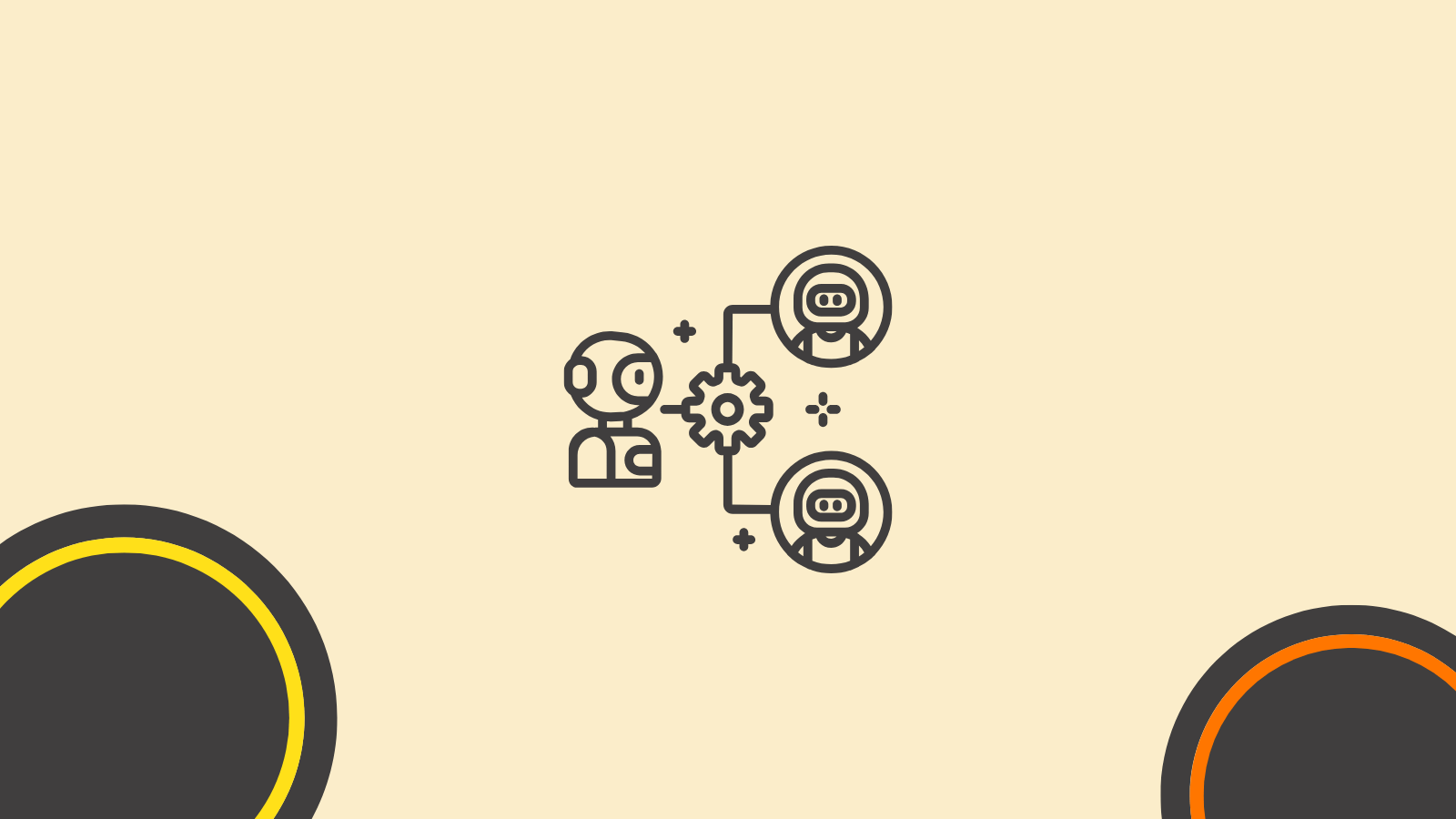
More agents do not automatically produce a better system.
A single agent is often easier to build, test, monitor, and debug. It may be the right choice when one clearly defined agent can complete the workflow with a limited collection of tools.
A multi-agent design may be useful when the workflow contains several distinct roles.
For example, a marketing system might include:
- A research agent
- A campaign planning agent
- A content creation agent
- A brand review agent
- A distribution agent
- A performance analysis agent
Each agent can have its own instructions, knowledge, tools, and permissions.
However, adding agents also creates additional communication, cost, testing, and governance requirements. Start with a single agent unless dividing responsibilities solves a real architectural problem.
How to Measure AI Agent ROI
Measure the change in the business process rather than the number of AI-generated actions.
| Measurement area | Possible metrics | What it reveals |
|---|---|---|
| Efficiency | Process time, handling time and hours saved | Whether the agent reduces manual work |
| Completion | Task completion rate and abandonment rate | Whether the agent finishes useful work |
| Quality | Error rate, correction rate and approval rate | Whether outputs are accurate enough to use |
| Reliability | System failures, integration failures and unnecessary escalations | Whether the system performs consistently |
| Adoption | Active users, repeat usage and employee satisfaction | Whether people find the agent helpful |
| Cost | Cost per completed task and monthly operating cost | Whether the agent is financially sustainable |
| Customer experience | Response time, satisfaction and repeat-contact rate | Whether automation improves customer outcomes |
| Marketing | Campaign production time, qualified leads, conversions and cost per acquisition | Whether the agent supports growth rather than activity alone |
| Revenue | Revenue influenced, conversion rate and sales-cycle length | Whether the workflow affects commercial results |
Create a baseline before implementation.
Without a baseline, every improvement risks becoming a cheerful guess wearing a spreadsheet.
A Practical AI Agent Adoption Roadmap
Phase 1: Identify opportunities
Interview employees and examine processes for repeated manual steps, delays, system switching, customer frustration, errors, and missed follow-ups.
Phase 2: Select one use case
Choose a process with a measurable outcome and manageable risk.
Phase 3: Prepare data and rules
Clean the required information, define ownership, document exceptions, and establish permission boundaries.
Phase 4: Build a controlled prototype
Limit the number of users, tools, actions, and data sources.
Phase 5: Test and pilot
Evaluate quality, security, escalation, cost, and employee experience with real tasks.
Phase 6: Measure business value
Compare the pilot with the original workflow.
Phase 7: Improve and expand
Add capabilities only after the first use case proves useful and reliable.
The Future of AI Agents in Business
AI agents have an exciting journey ahead of them. The future trends predict that the systems will be more collaborative and intelligent.
Some of the most significant advancements that are taking place are:
- Cooperation among multiple agents
- Communication between agents
- AI agents functioning like digital workers
- More stringent governance and regulatory measures
Current businesses that make investments now will be the ones that can easily transition when AI agents become the main part of company processes. Firms like N-iX, for example, are already developing sophisticated solutions based on agents that facilitate and support this forthcoming phase of transformation.
Conclusion: Why Partnering with an AI Agent Development Company Is a Strategic Move
An AI agent development company can help a business move from isolated AI experiments to connected systems that complete meaningful work.
But custom agent development should begin with a business problem, not a fear of falling behind.
Define the workflow. Decide what success looks like. Prepare the data. Limit the agent’s permissions. Keep people responsible for high-impact decisions. Then choose whether the best path is a ready-made platform, an internal build, an external partner, or a combination of all three.
For marketing teams, AI agents can connect research, content creation, distribution, customer insight, lead management, and performance reporting. The value does not come from producing more activity. It comes from creating a smoother path between customer information and measurable growth.
The right development partner will not simply ask, “What kind of agent do you want?”
It will ask, “What should become easier, faster, safer, or more valuable after this system is introduced?”
AI agents are no longer a dream of the future—they are becoming the basis for modern business operations, their competition, and global reach. AI agents contribute to the value of the whole organization through the areas of efficiency, customer satisfaction, and even decision-making.
An AI agent development company would be the perfect partner for your business, as it would let you adopt the technology in a way that is strategic, secure, and measurable. You wouldn’t have to isolate your experiments, as your company would have access to tested know-how, scalable designs, and a long-term support system. With digital landscapes changing at a fast pace, AI agents are not only a benefit but rather a requirement.
Frequently Asked Questions
What is an AI agent?
An AI agent is a software system that uses artificial intelligence to pursue goals and complete tasks on behalf of a user or organization. Depending on its design, it may reason, plan, use memory, access tools, retrieve information, and take actions with varying levels of independence.
What does an AI agent development company do?
An AI agent development company helps businesses identify use cases, design agent architecture, connect models and data, integrate business systems, build workflows, introduce safeguards, test performance, deploy agents, and maintain them after launch.
What is the difference between an AI agent and a chatbot?
A chatbot generally focuses on conversation and answering questions. An AI agent can also plan tasks, choose between actions, connect to tools, update systems, and work toward a defined goal.
Some advanced chatbots include agentic capabilities, so the categories can overlap.
Does every business need a custom AI agent?
No.
Many businesses can achieve their goals using existing AI tools, standard automation, chatbots, or low-code platforms. Custom development becomes more valuable when the workflow is specific, complex, integration-heavy, high volume, or commercially important.
What should a business automate with AI agents first?
Start with a repetitive process that has a measurable result, reliable data, clear rules, and manageable risk.
Possible starting points include ticket classification, lead research, conversation summaries, knowledge retrieval, content repurposing, reporting, and routine follow-ups.
Avoid beginning with high-risk decisions or processes that nobody fully understands.
Can AI agents be used for marketing?
Yes. Marketing agents can support research, campaign planning, content production, personalization, lead qualification, email workflows, distribution, customer insight, and reporting.
Human marketers should remain responsible for strategy, brand positioning, customer understanding, factual accuracy, approvals, and final campaign decisions.
Should a company build or buy an AI agent?
Buying is often faster and less expensive for common workflows. Custom development provides more flexibility when the agent must follow specialized processes, use private data, connect with several systems, or operate under specific security rules.
A hybrid approach can combine a ready-made platform with custom integrations and workflows.
How much does custom AI agent development cost?
The cost depends on the workflow, integrations, data preparation, security requirements, models, number of agents, user volume, testing, hosting, monitoring, and ongoing support.
Request a cost breakdown covering both initial development and ongoing operation. A low build price can become expensive when model usage, maintenance, and integration work are ignored.
How long does it take to build an AI agent?
The timeline varies according to complexity.
A limited prototype connected to one or two systems may be developed relatively quickly. A production agent involving several departments, private data, custom integrations, advanced permissions, and extensive testing will take longer.
Ask potential partners to separate discovery, prototype, pilot, production deployment, and post-launch improvement in the project plan.
What data does an AI agent need?
The answer depends on its role.
An agent may need product information, process documentation, customer records, analytics, campaign data, support history, transaction records, or access to business systems.
It should receive only the data and permissions required to complete its assigned tasks.
What are the main security risks of AI agents?
Risks include prompt injection, tool abuse, excessive permissions, data leakage, memory poisoning, unauthorized actions, and manipulation through untrusted external information.
Controls should include limited permissions, approval requirements, monitoring, action logs, security testing, trusted data sources, and a manual override.
How should companies manage AI agent risk?
Organizations should assign ownership, define approved use cases, document permissions, assess impact, test failures, monitor performance, record actions, and review systems regularly.
The NIST AI Risk Management Framework provides a voluntary structure for governing, mapping, measuring, and managing AI risks.
Is a multi-agent system better than one AI agent?
Not always.
A single agent is usually easier to develop, test, monitor, and troubleshoot. Multi-agent systems may be useful when a complex workflow contains several clearly separate roles that require different tools, data, instructions, or permissions.
How can a business measure AI agent ROI?
Compare the new process with a baseline.
Measure time saved, task completion, corrections, operating cost, employee adoption, customer outcomes, revenue impact, and error rates. The correct metrics depend on the workflow the agent was built to improve.
Can AI agents replace employees?
AI agents can automate tasks and parts of workflows, but people remain important for goal setting, judgment, accountability, relationship building, creative direction, complex exceptions, and sensitive decisions.
The most practical model usually involves people supervising and collaborating with specialized agents.
When AI Shopping Agents Compare Your Offers: What Ecommerce Marketers Should Change [...]
How to Build a Consistent AI Influencer Series [...]
AI Marketing Research: What Small Teams Should Review [...]
How Does AI Content Detection Work? AI [...]
Email Marketing Automation: How to Maintain and Measure Flows That Earn Their [...]
Why Your Content Strategy Needs a Revenue Model Before It Needs a [...]
Master the Art of Video Marketing
AI-Powered Tools to Ideate, Optimize, and Amplify!
- Spark Creativity: Unleash the most effective video ideas, scripts, and engaging hooks with our AI Generators.
- Optimize Instantly: Elevate your YouTube presence by optimizing video Titles, Descriptions, and Tags in seconds.
- Amplify Your Reach: Effortlessly craft social media, email, and ad copy to maximize your video’s impact.