
Tips to Elevate Your Brand’s Online Visibility with AI Marketing

Building online visibility is not about showing up in one place. It is about making your brand easier to find, easier to remember, and easier to trust across the channels your audience already uses. That includes search, social media, content, email, and the experience people have when they actually land on your website.
A lot of brands put too much focus on reach alone. They want more impressions, more clicks, and more traffic, but visibility without clarity rarely leads to growth. A stronger online presence usually comes from a better mix of discoverability, helpful content, consistency, and conversion-focused pages that support the next step.
If you want to elevate your brand’s online visibility, the goal is not just to be seen more often. It is to show up with the right message, in the right places, with enough consistency to build momentum over time. The current page already focuses on landing pages, SEO, content strategy, PPC, influencer work, email marketing, and analytics, so the strongest update is to make the article feel more current, more AI-aware, and more actionable for modern marketers.
Chapters
Work on your landing pages
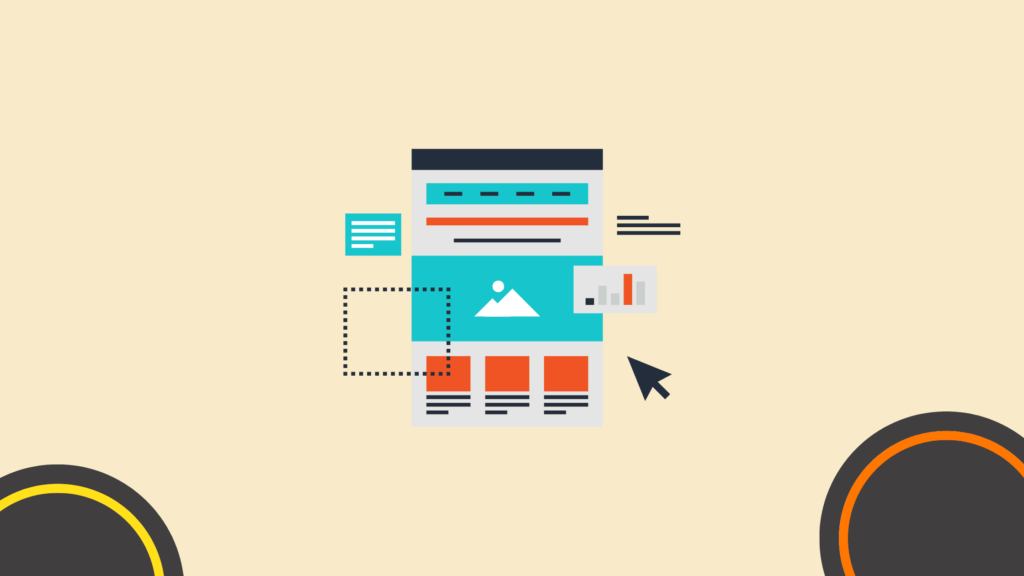
Many people make the mistake of seeing visibility as a standalone feature. Nothing can be further from the truth. You see, the visibility doesn’t end when people “SEE” your page in the results. People who enter your landing page to check it out will also affect the results.
Traffic is one of the most important factors. It’s the first KPI that everyone focuses on. However, it does end when the person clicks on the link.
- Duration of visit
- Return visit
- Bounce rate
- CTR
These metrics affect your ranking, and your landing page determines them. For instance:
- One’s inability to find your CTA button will lower your CTR.
- Poor landing page design will reduce your duration of visits, increase your bounce rate, and make return visits unlikely.
Overall, making a good first impression affects your visibility, SEO rank, and even brand reputation in more ways than you know. So, if you want to improve your online visibility, your first stop should be the quality of your landing pages.
There are just a few principles you should focus on to get the most out of it. First, you want a clear and compelling headline. You want a great introduction and a clear CTA. Most importantly, you want the layout to be responsive and intuitive. By achieving just these few things, you’ll drastically improve the situation.
Hire SEO specialists
While, in theory, you can do SEO on your own, this is usually not the best course of action. Now, when looking for the right agency, it’s pivotal that you pick specialists in your industry. Earlier, when we said SEO specialist, what you probably had in mind was just people with experience in SEO. In reality, e-commerce SEO, real estate SEO, and SaaS SEO require completely different approaches.
Do the same SEO principles still apply? Yes, some of them do! However, it’s these subtle differences that make all the difference.
For instance, SaaS SEO focuses on the lifetime value of each customer. While the primary focus of e-commerce SEO would be shopping cart abandonment, the priority for SaaS SEO is the churn rate.
Every industry has a unique audience. This is not just about segmentation and targeting; it’s about understanding the audience’s browsing habits. For instance, an SEO for a small business is more concerned with the GMB registry than actual SERPs (although the two are tightly intertwined).
Most importantly, SEO takes months to give the desired effects. It’s worth it, but it requires tracking subtle changes, adjusting, and coordinating a long-term SEO campaign. All of this requires experience and in-depth knowledge.
Invest in a quality content strategy

A good content marketing strategy is consistent, which is why you need to set a tone, voice and establish a connection with regular creators. AI content, although time-saving, is still not on the mark.
Ideally, you would have an in-house writer or a couple of regular contributors. People will grow accustomed to this writing style, and a change won’t necessarily be for the better.
Quantity is just as important. Even if you have the best post on the internet, people will come, read it, and see that there’s not much else on your blog/page. Then, they’ll leave and, very soon, forget about you. You must fill your blog and post regularly so your audience develops a habit of engaging with your content.
For this, you must develop an editorial calendar.
Remember that producing a quality piece of content takes more than you expect. So, you must streamline content creation and curation into a continuous process.
Don’t expect to do it all with a single content format. Explore and play. Recycle your old content to get the most of its value. Also, revamping your content is incredibly important. Don’t ignore it.
4. Don’t ignore PPC
If you have to wait for the SEO campaign to give results, PPC will deliver immediately. This is not an organic way to get to the top, but it is quick to get there. Does this make it a bad thing? Not at all. Especially since you don’t have to choose between PPC and SEO, they work best in unison.
PPC will drive a lot of traffic your way, and with your improved on-site optimization, it will be easy to farm all those positive KPIs we’ve discussed. A great, well-optimized landing page will provide a longer average duration of visits, and with greater traffic coming from PPC, your success will be amplified.
Another great thing about PPC is that you only pay for what you use. Since this is the mechanism (pay per click), you have a much easier task at setting budget control. Just keep in mind that you want to set a generous budget.
You shouldn’t neglect the significance of an instant morale boost from these quick results. Many entrepreneurs are anxious while waiting for SEO to pay itself off. This might just placate them.
5. Team up with influencers
Picking the right influencers gives you more targeting power than you would expect. Let’s say that you’re selling dental products. What better way to increase your reach among your target audience than to strike a collaboration deal with pages about mental health or collaborate with dentists with a strong following?
Keep in mind that an influencer deal gives you an instant credibility boost. People always make assumptions, and sometimes these assumptions work in your favor. For instance, by default, they will believe that influencers wouldn’t risk their online reputation if they didn’t believe in you or your message. In other words, they believe that you were verified by someone else.
Also, remember that you want to establish a long-term relationship, not just strike a short-term deal. This is why it’s so important that you negotiate the deal to everyone’s benefit.
Just keep in mind that, to team up, you’ll probably have to pay. Sure, cross-promotion is always a potential, but chances are that you won’t have a strong following for your endorsement to mean anything.
6. Improve your email marketing
While it may sound a bit strange that email marketing will increase your online visibility, this holds true in many ways.
First of all, email marketing will increase your website traffic. You’ll drive many people your way by encouraging people to visit your site, giving them special codes with discounts, and engaging them via email.
Second, email marketing boosts your brand recognition, which is one of the requirements for increased online visibility.
Your audience may share a link that you send in an email. You just need to know how to boost your trustworthiness and include a call to action encouraging recipients to forward the email to their friends and colleagues.
Email marketing is also amazing for remarketing. You can convince people to return (after shopping cart abandonment), which will increase your rate of return visitors. You can also target people who have abandoned the shopping cart or canceled the subscription and give them a chance for a renewed engagement.
All in all, digital marketing still heavily relies on email marketing. You can drastically improve your SEO efforts by learning how to use them to increase your online visibility.
7. Analyze

Lastly, you need to analyze all the points we’ve talked about so far, break them down into relevant KPIs, and find a way to improve every one of them.
For instance, if you’re looking at your landing pages, you should analyze and test their mobile friendliness and responsiveness. You should measure load times and improve navigation with each added page.
A similar principle applies to every single point we’ve listed so far. The bottom line is that you need to do it continuously. Just because your pages are loading fast, this doesn’t mean it will remain so in perpetuity. Also, just because your PPC advertising is doing well now, this doesn’t mean it will always remain as effective.
Without adjustment, there’s no growth; this is something that you need to accept as soon as possible. This is not a one-and-done project; visibility is always changing since your competitors aren’t sitting idly. As General Patton once said – the enemy also gets a vote.
Improving visibility and growing your business takes a multi-channel effort
Ultimately, you need to work on your site, collaborate with professionals, and employ many tactics to increase your reach. Using every new method amplifies your results exponentially, which is why a multi-channel effort is so effective.
How AI can Elevate Your Brand’s Online Visibility
One of the most transformative tools is artificial intelligence (AI). By integrating AI into your marketing strategies, your brand can enhance its online visibility, reach a broader audience, and achieve better customer engagement. Let’s explore how AI can elevate your brand’s online presence.
AI-Powered SEO Optimization
Search engine optimization (SEO) is essential for online visibility, and AI is revolutionizing the way brands approach SEO. AI-powered tools like RankBrain and BERT (used by Google) help search engines understand the context and intent behind search queries. AI-driven keyword research tools can analyze search trends, predict popular keywords, and even optimize content for voice search.
Benefits of AI in SEO:
- Better Keyword Research: Tools like SEMrush and Ahrefs use AI algorithms to discover high-performing keywords and assist in finding high-intent keywords that drive conversions.
- Content Optimization: AI tools help you optimize blog posts, meta descriptions, and on-page content to align with SEO best practices.
- Real-time Data Analysis: AI can analyze vast amounts of data in real-time, providing actionable insights to improve your SEO strategy.
Personalized Content Creation
Content marketing plays a crucial role in boosting your brand’s visibility. AI enhances this by delivering personalized content to users. AI-powered content creation tools like Copy.ai or Jarvis help you create SEO-friendly blog posts, product descriptions, and social media content that align with user preferences.
AI’s Role in Content Creation:
- Topic Generation: AI can analyze market trends and suggest topics that will resonate with your audience.
- Content Personalization: AI tailors content based on user behavior, delivering the right message to the right audience at the right time.
- Automated Writing: AI can generate drafts for blog posts, newsletters, or product descriptions, speeding up the content creation process.
Improved User Experience with AI Chatbots
AI chatbots provide instant customer support, enhancing the user experience (UX) on your website. Chatbots can answer customer inquiries 24/7, recommend products, and even assist with purchases. A better UX leads to increased dwell time and lower bounce rates, two key factors that improve your search engine ranking.
Key Benefits:
- Enhanced Engagement: AI chatbots increase engagement by providing instant responses to customer queries.
- Data Collection: Chatbots gather valuable customer data, helping you understand user intent and refine your SEO strategy.
- Personalized Recommendations: Based on user behavior, AI chatbots can offer personalized product or service recommendations.
Predictive Analytics for Targeted Marketing
AI excels at analyzing historical data and making predictions. By using predictive analytics, brands can anticipate customer behavior, identify trends, and adjust their marketing strategies accordingly. Tools like HubSpot and Salesforce utilize AI to predict customer journeys, helping businesses deliver targeted campaigns.
AI in Predictive Marketing:
- Customer Behavior Insights: AI predicts what products customers are likely to buy, allowing brands to tailor their advertising strategies.
- Ad Campaign Optimization: AI analyzes ad performance in real-time, enabling brands to optimize campaigns for maximum visibility and ROI.
- Improved Lead Scoring: AI predicts which leads are most likely to convert, allowing your sales team to focus on high-potential prospects.
Voice Search Optimization
With the rise of AI-powered assistants like Siri, Alexa, and Google Assistant, optimizing for voice search is more important than ever. AI helps businesses adapt their SEO strategies to accommodate natural language search queries, improving their chances of being featured in voice search results.
Voice Search Benefits:
- Natural Language Processing: AI understands conversational language, helping brands optimize content for voice queries.
- Featured Snippets: AI can help optimize content for Google’s featured snippets, which are often used as responses in voice search.
- Local Search Optimization: AI-driven tools help brands optimize for local search, which is essential for businesses relying on location-based traffic.
AI-Enhanced Social Media Marketing
Social media platforms are increasingly powered by AI, with algorithms determining which content users see. AI can help your brand optimize its social media presence by analyzing engagement patterns and predicting the types of content that will perform best.
AI in Social Media:
- Content Scheduling and Analysis: AI tools like Buffer and Hootsuite automate posting schedules and analyze post-performance, increasing your reach and engagement.
- Hashtag Optimization: AI suggests the most relevant hashtags to boost content visibility.
- Sentiment Analysis: AI monitors social media conversations to gauge public sentiment about your brand, enabling timely responses and reputation management.
AI is more than a trend, it’s a game-changer for brands seeking to enhance their online visibility. From SEO optimization to personalized content creation, predictive analytics, and voice search, AI-driven tools offer countless opportunities for brands to stand out in the digital landscape. By leveraging AI, your brand can achieve higher search engine rankings, engage with your target audience more effectively, and ultimately boost your online presence.

Build online visibility around search intent, not just keywords
A lot of brands still treat online visibility like a ranking problem only. They chase keywords, publish broad pages, and hope search traffic will follow. But stronger visibility usually starts with understanding what people are actually trying to solve when they search.
That means creating pages and content for real intent categories such as:
- people comparing options
- people learning a topic for the first time
- people ready to buy
- people looking for proof, trust signals, or examples
- people trying to solve one very specific problem
When your content matches search intent, your brand becomes easier to discover in a way that feels relevant. That also improves the quality of the traffic you attract. Instead of trying to rank for everything, focus on the topics where your brand can be genuinely useful and commercially relevant.
This is also where AI marketing becomes practical. AI can help you group keyword themes, identify content gaps, generate outlines, and create multiple content angles around one core topic faster.
Create topic clusters that make your brand easier to find
One blog post rarely builds meaningful visibility on its own. Stronger online visibility often comes from content depth, not just content volume. That is why topic clusters are so effective.
Instead of publishing isolated posts, build connected content around one core subject. For example, if your brand helps with social media marketing, your cluster could include:
- beginner guides
- tool comparisons
- workflow articles
- platform-specific tutorials
- FAQs
- case-study-style content
- short practical checklists
This helps your brand show up for broader and narrower searches at the same time. It also improves internal linking, strengthens your site structure, and gives readers more reasons to stay engaged after the first click.
A stronger content ecosystem usually leads to stronger visibility than a scattered publishing habit.
Turn one strong idea into a multi-channel visibility system
Brands often lose momentum because they treat every channel like a separate creative task. A better approach is to start with one strong idea and expand it across formats.
One useful article or campaign theme can become:
- a blog post
- LinkedIn posts
- Instagram carousels
- short-form videos
- email content
- a downloadable checklist
- multiple search-friendly supporting articles
This makes online visibility easier to scale because your message appears in more places without requiring a completely new idea every time.
It also supports a stronger AI marketing workflow. AI tools can help you repurpose one asset into multiple outputs faster, which makes consistency more realistic for smaller teams and growing brands.
Improve landing pages so visibility turns into action
Being visible is only part of the equation. What happens after the click matters just as much. If your landing pages are unclear, slow, weakly structured, or disconnected from the message that brought people in, visibility does not turn into growth.
Stronger landing pages usually do a few things well:
- they match the promise of the traffic source
- they explain value quickly
- they guide attention with a clear structure
- they remove friction around the next step
- they support trust with proof, clarity, and relevance
A page should not only look good. It should make it easy for visitors to understand what your brand offers and why it matters. The current article already covers landing pages as a major visibility factor, so adding more conversion-focused depth here will make the page stronger and more useful.
Use AI to speed up content production without making it generic
AI can help brands increase visibility faster, but only when it supports a smart workflow. Publishing generic AI text at scale usually adds noise, not authority. The better use case is using AI to speed up quality work you already understand.
For example, AI can help with:
- outline creation
- headline and title variations
- FAQ drafts
- content repurposing
- caption writing
- summarizing research
- rewriting content for different channels
- generating first drafts for supporting pages
That means AI works best when humans still guide the positioning, strategy, and editing. Used this way, AI helps brands publish more consistently while keeping the content aligned with audience needs.
Strengthen brand visibility with platform-specific social content
A lot of brands say they are active on social media, but they are really just reposting the same message everywhere. That weakens visibility because each platform rewards different behaviors and content styles.
A stronger approach is to adapt the same core idea to fit the channel:
- LinkedIn for insight and authority
- Instagram for visual storytelling and brand personality
- X for quick takes and ongoing relevance
- YouTube for search-driven long-form value
- short-form video for hooks, reach, and repurposed education
This helps your brand become more visible in ways that feel native to each platform. It also makes your marketing feel more intentional instead of repetitive.
Earn visibility by publishing more proof, not just more claims
Many brands talk about what they do, but far fewer show it well. If you want stronger visibility and trust at the same time, create more proof-driven content.
That can include:
- examples
- mini case studies
- before-and-after breakdowns
- customer stories
- process screenshots
- campaign lessons
- common mistakes and fixes
- expert commentary based on real work
Proof-driven content is often easier to remember, easier to trust, and easier to share. It also makes your brand feel more credible when someone discovers you for the first time.
Combine SEO, paid promotion, and distribution instead of treating them separately
Online visibility improves faster when channels support each other. SEO helps your brand get discovered over time. Paid promotion helps create immediate reach. Social and email help distribute ideas repeatedly. Content gives all of them something useful to point to.
Instead of thinking in isolated tactics, think in reinforcement:
- publish a strong page
- support it with social distribution
- test paid promotion on promising assets
- retarget visitors with relevant follow-up content
- keep improving based on what earns attention and conversions
The current page already includes SEO, PPC, email marketing, influencers, and analytics, so a stronger update is to connect these parts into one clearer visibility system rather than presenting them as separate activities.
Make analytics more useful by measuring visibility quality
Not all visibility is valuable. A pageview without relevance, engagement, or conversion potential is less useful than a smaller amount of traffic from the right audience.
That is why brands should track more than reach alone. Look at signals like:
- branded search growth
- engagement time
- return visits
- assisted conversions
- email signups
- content saves and shares
- demo requests or product interest from specific channels
This gives you a better view of whether visibility is turning into trust, consideration, and business momentum.
Common mistakes that keep brands invisible online
A lot of visibility problems come from process issues, not a lack of effort. Brands often stay harder to find because they:
publish without a clear topic focus
create content without matching search intent
rely on random social posting
fail to repurpose strong ideas
drive traffic to weak landing pages
use AI to create volume without relevance
ignore distribution after publishing
measure only impressions instead of meaningful engagement
Fixing even a few of these issues can make a noticeable difference in how discoverable and credible your brand feels online.
Build a stronger online visibility engine with AI marketing
The brands that improve online visibility fastest are often not the ones publishing the most. They are the ones with a better system. They know which topics matter, how to repurpose ideas, how to connect channels, and how to keep publishing without reinventing everything every week.
That is where AI marketing can help most. It can support ideation, drafting, repurposing, content planning, and workflow speed. When combined with strong positioning and useful content, it helps brands build a more consistent visibility engine instead of relying on scattered effort.
FAQ
What does online visibility mean for a brand?
Online visibility means how easily people can find your brand across search engines, social media, content platforms, and other digital channels. It also includes how clearly and consistently your brand shows up when people are researching a problem, comparing options, or looking for trusted information.
Why is online visibility important for business growth?
Online visibility matters because people cannot consider a brand they rarely see or cannot easily find. Strong visibility helps increase awareness, supports trust, brings in relevant traffic, and creates more chances for people to engage with your content, offers, or services.
How can I elevate my brand’s online visibility?
Elevating your brand’s online visibility involves implementing strategies such as search engine optimization (SEO) to improve your website’s ranking in search results, creating high-quality content that resonates with your target audience, engaging with your audience on social media platforms, and leveraging online advertising and influencer partnerships to increase brand exposure.
What role does search engine optimization (SEO) play in enhancing brand visibility online?
SEO plays a crucial role in enhancing brand visibility online by optimizing your website’s content and structure to rank higher in search engine results pages (SERPs). This increases the likelihood of your brand being discovered by users searching for relevant keywords and topics related to your products or services.
How can creating valuable content help increase brand visibility online?
Creating valuable content, such as blog posts, articles, videos, and infographics, helps increase brand visibility online by attracting organic traffic to your website, establishing your brand as a thought leader in your industry, and encouraging social sharing and backlinks from other websites, which can further amplify your brand’s reach. Utilizing an AI video maker can enhance this strategy by enabling the rapid production of high-quality videos that engage your audience, making it easier to share insights and connect with potential customers on various platforms. Moreover, videos created with AI video makers can be optimized for search engines, further increasing visibility and driving more traffic to your website.
What are some effective strategies for engaging with your audience on social media to enhance brand visibility?
Effective strategies for engaging with your audience on social media include regularly posting relevant and engaging content, responding promptly to comments and messages, running interactive polls or Q&A sessions, collaborating with influencers or brand advocates, and using hashtags and tagging relevant accounts to increase visibility and reach.
How can online advertising help increase brand visibility?
Online advertising, such as pay-per-click (PPC) ads, display ads, and social media ads, can help increase brand visibility by targeting specific demographics or interests, reaching users who may not be aware of your brand, and driving traffic to your website or social media profiles through targeted ad campaigns.
What role do influencer partnerships play in elevating brand visibility online?
Influencer partnerships play a significant role in elevating brand visibility online by leveraging the influencer’s existing audience and credibility to promote your brand or products to their followers. This can help increase brand awareness, drive traffic to your website, and generate authentic endorsements and recommendations from trusted sources.
How can leveraging user-generated content (UGC) enhance brand visibility online?
Leveraging user-generated content (UGC), such as customer reviews, testimonials, and social media posts featuring your products or brand, can enhance brand visibility online by showcasing real-life experiences and endorsements from satisfied customers, which can resonate with and influence potential customers.
What are some effective ways to optimize your website for search engines to improve brand visibility?
Effective ways to optimize your website for search engines include conducting keyword research to identify relevant search terms, optimizing meta tags and descriptions, creating high-quality, relevant content, improving website speed and mobile responsiveness, optimizing images and multimedia content, and earning backlinks from reputable websites.
How can monitoring online mentions and brand sentiment contribute to improving brand visibility?
Monitoring online mentions and brand sentiment allows you to stay informed about conversations surrounding your brand, identify opportunities to engage with your audience or address customer concerns, and track the effectiveness of your marketing efforts in real-time. This proactive approach helps maintain a positive brand image and enhances visibility online.
What role does consistent branding across all online channels play in elevating brand visibility?
Consistent branding across all online channels helps reinforce your brand’s identity and messaging, making it easier for consumers to recognize and remember your brand. By maintaining consistent branding elements such as logos, colors, fonts, and tone of voice across your website, social media profiles, and marketing materials, you can increase brand visibility and establish a strong brand presence online.
How can guest blogging contribute to increasing brand visibility online?
Guest blogging allows brands to reach new audiences by contributing valuable content to other websites or blogs within their industry. By showcasing expertise and providing relevant insights, guest bloggers can attract traffic back to their own website, thus increasing brand visibility.
What role does online reputation management play in enhancing brand visibility?
Online reputation management involves monitoring and managing online reviews, comments, and mentions to ensure a positive brand image. By addressing negative feedback promptly and promoting positive testimonials, brands can enhance their reputation and visibility online.
How can participating in online communities and forums boost brand visibility?
Participating in online communities and forums relevant to your industry allows brands to engage with potential customers and establish themselves as authoritative voices. By providing valuable insights and solutions, brands can increase visibility and attract new followers.
What are some strategies for optimizing social media profiles to improve brand visibility?
Strategies for optimizing social media profiles include using consistent branding elements such as logos and colors, providing complete and up-to-date information, including relevant keywords in profiles and descriptions, and regularly posting engaging content to attract followers and increase visibility.
How can influencer marketing campaigns be tailored to enhance brand visibility?
Influencer marketing campaigns can be tailored to enhance brand visibility by partnering with influencers whose audience aligns with the brand’s target demographic. By collaborating on sponsored content or endorsements, brands can increase visibility among the influencer’s followers.
What role do online partnerships and collaborations play in boosting brand visibility?
Online partnerships and collaborations with complementary brands or organizations allow for cross-promotion and exposure to new audiences. By leveraging each other’s networks, brands can increase visibility and reach online.
How can leveraging user-generated content (UGC) through contests or campaigns enhance brand visibility?
Encouraging user-generated content (UGC) through contests or campaigns incentivizes customers to create and share content related to the brand. By showcasing UGC on social media or websites, brands can increase visibility and credibility among potential customers.
What impact can online PR and digital outreach efforts have on brand visibility?
Online PR and digital outreach efforts, such as press releases, guest contributions, and media outreach, can help secure placements on reputable websites and publications. By earning media coverage and backlinks, brands can increase visibility and authority online.
How can local SEO strategies contribute to improving brand visibility for brick-and-mortar businesses?
Local SEO strategies, such as optimizing Google My Business profiles, acquiring local citations, and targeting location-specific keywords, help brick-and-mortar businesses appear in local search results. By increasing visibility to local audiences, brands can attract more foot traffic and customers.
What role does monitoring and analyzing website analytics play in optimizing brand visibility online?
Monitoring and analyzing website analytics allows brands to track key metrics such as traffic sources, user engagement, and conversion rates. By understanding user behavior and preferences, brands can optimize their online presence to maximize visibility and effectiveness.
By Srdjan Gombar
 Veteran content writer, published author, and amateur boxer. Srdjan is a Bachelor of Arts in English Language & Literature and is passionate about technology, pop culture, and self-improvement. His free time he spends reading, watching movies, and playing Super Mario Bros. with his son.
Master the Art of Video Marketing
AI-Powered Tools to Ideate, Optimize, and Amplify!
- Spark Creativity: Unleash the most effective video ideas, scripts, and engaging hooks with our AI Generators.
- Optimize Instantly: Elevate your YouTube presence by optimizing video Titles, Descriptions, and Tags in seconds.
- Amplify Your Reach: Effortlessly craft social media, email, and ad copy to maximize your video’s impact.